Short, practical writing on visibility, conversion and capacity, from the team doing the work for 120+ UK startups, SMEs and enterprises.
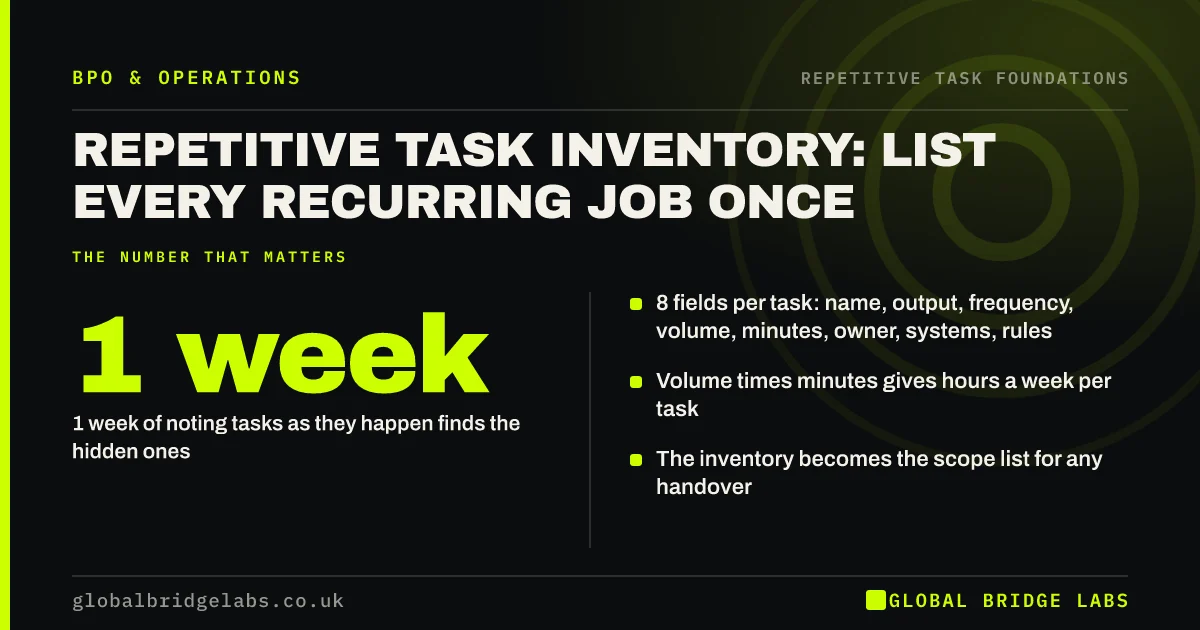
How to build a repetitive task inventory for a small business: the fields to record, finding hidden tasks and choosing what to hand over.
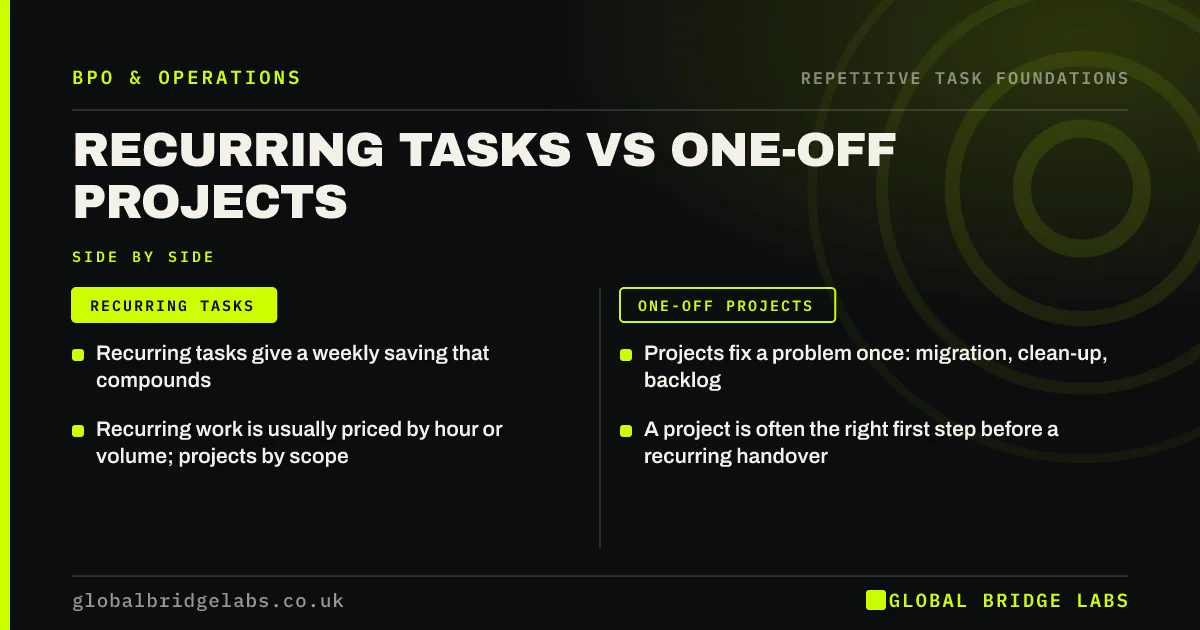
Should you outsource recurring tasks or one-off projects? How each works, what they cost, and why most UK SMEs start with recurring work for lasting gains.
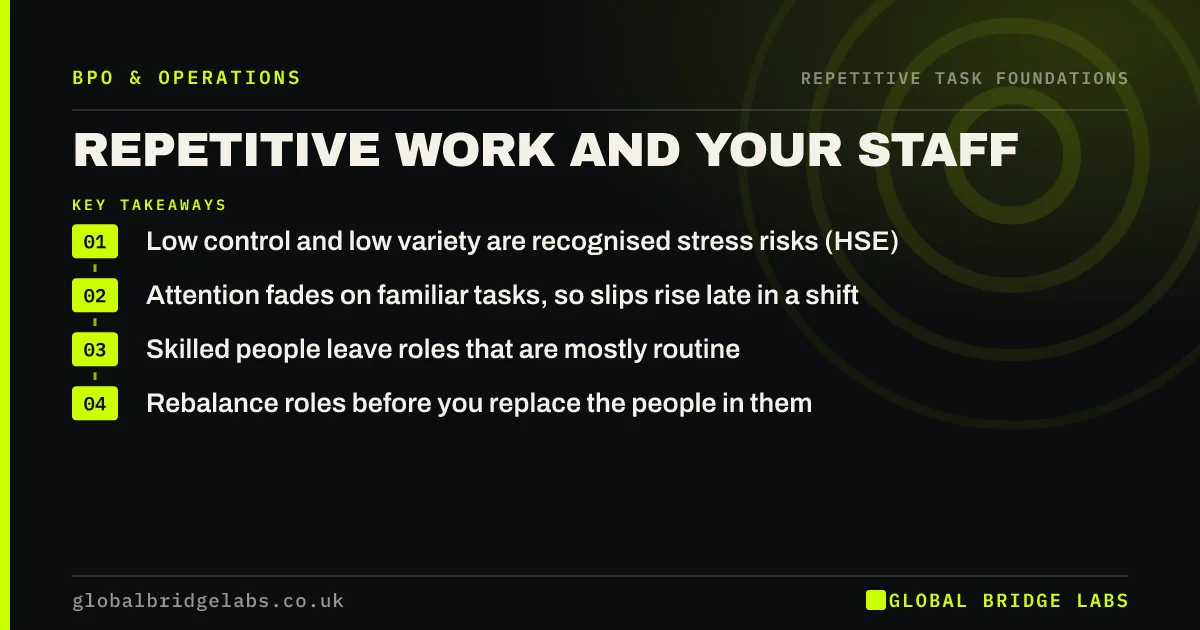
How repetitive work affects employees: boredom, slips, stress and turnover, what HSE guidance says, and how to rebalance routine roles.
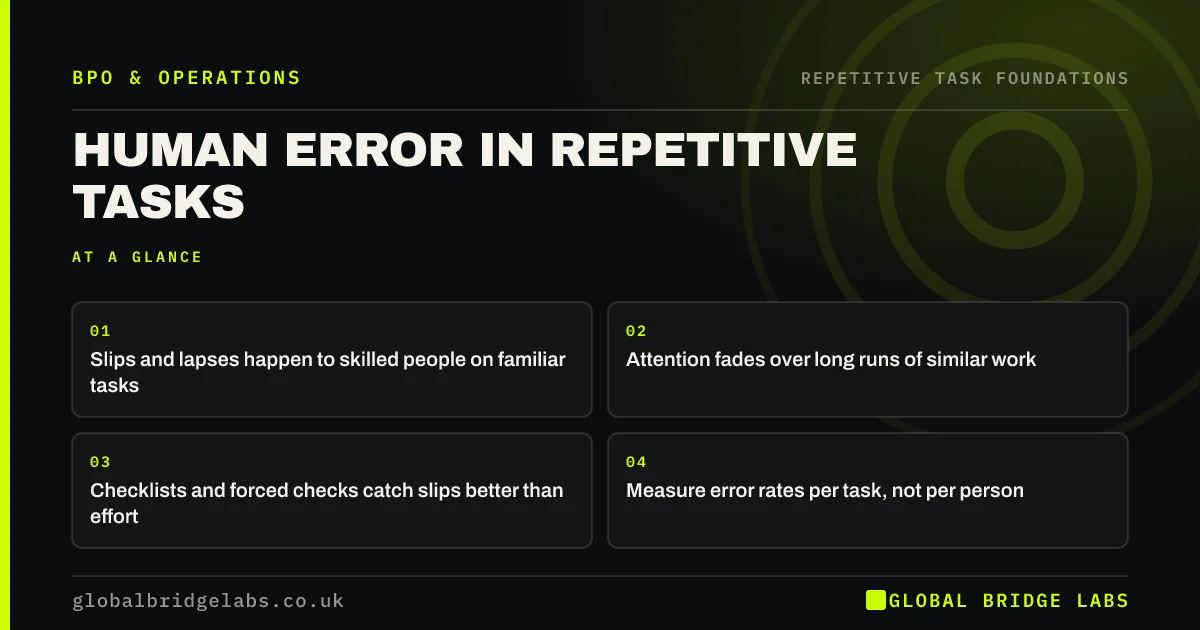
Why human error happens in repetitive tasks: slips, lapses and mistakes as HSE describes them, fading attention and how to design errors out.
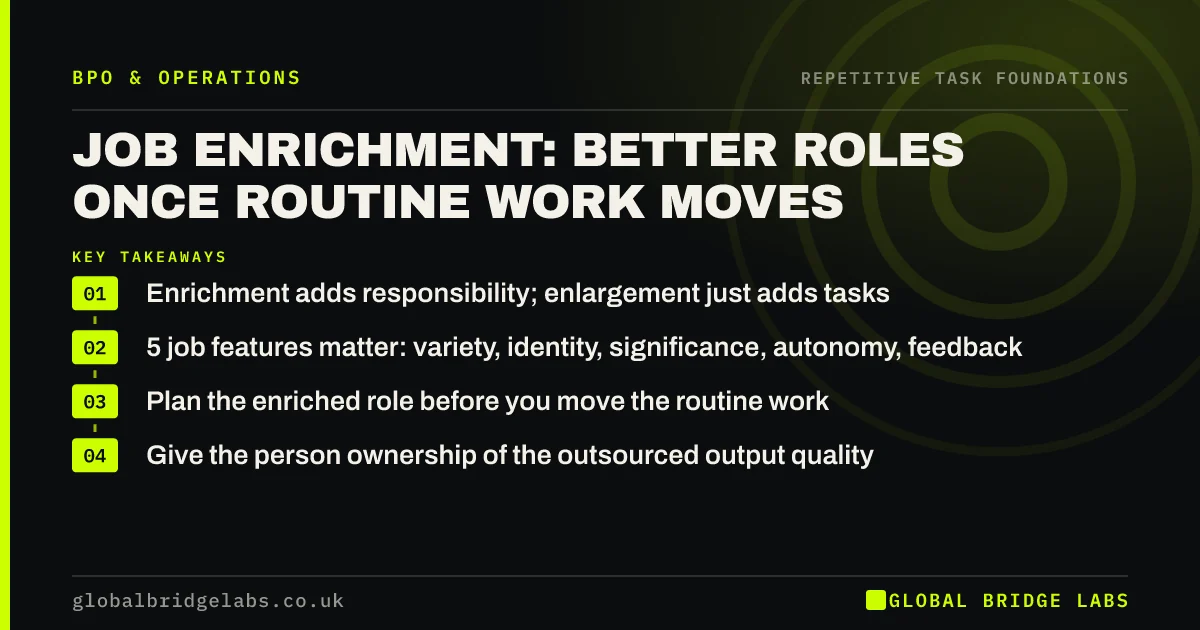
Job enrichment for small businesses: what it means, how it differs from job enlargement, and how to rebuild roles once repetitive tasks are handed over.
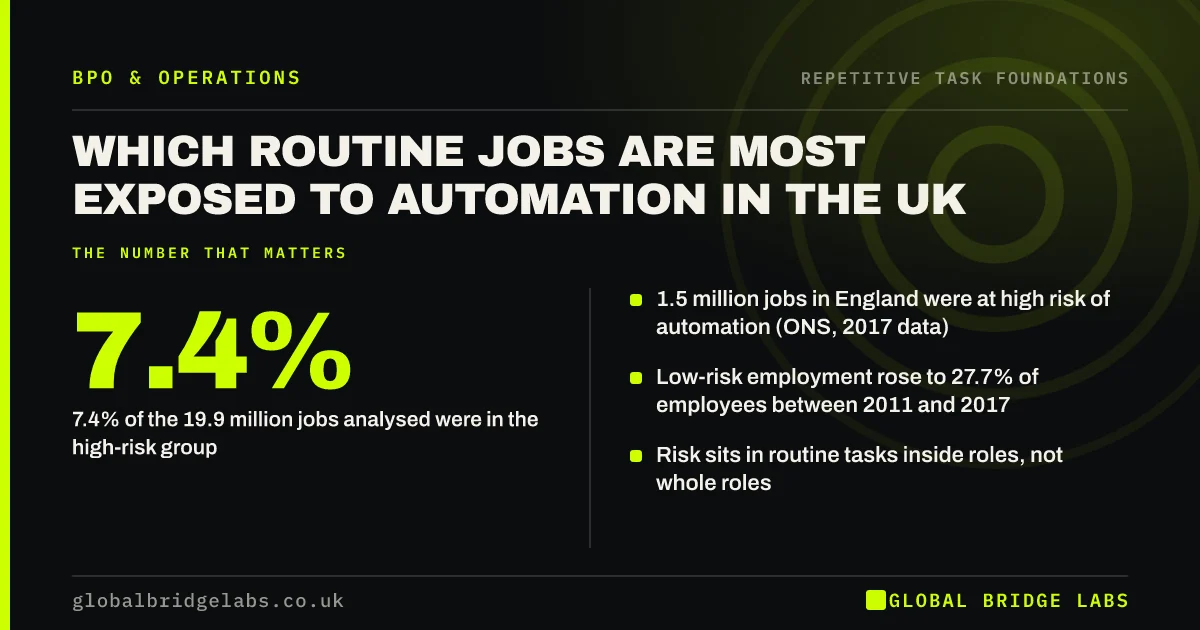
What ONS data says about routine jobs at high risk of automation in England, which tasks are most exposed, and what it means for small business staffing.
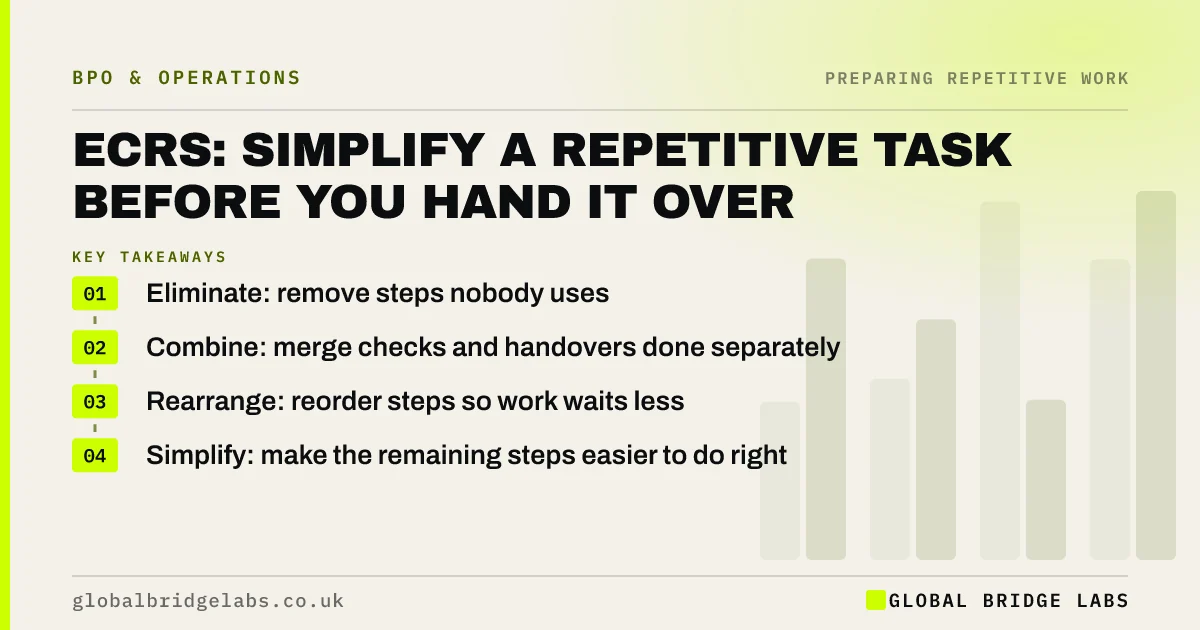
The ECRS method (eliminate, combine, rearrange, simplify) applied to office work: how to strip waste from a repetitive task before outsourcing it.
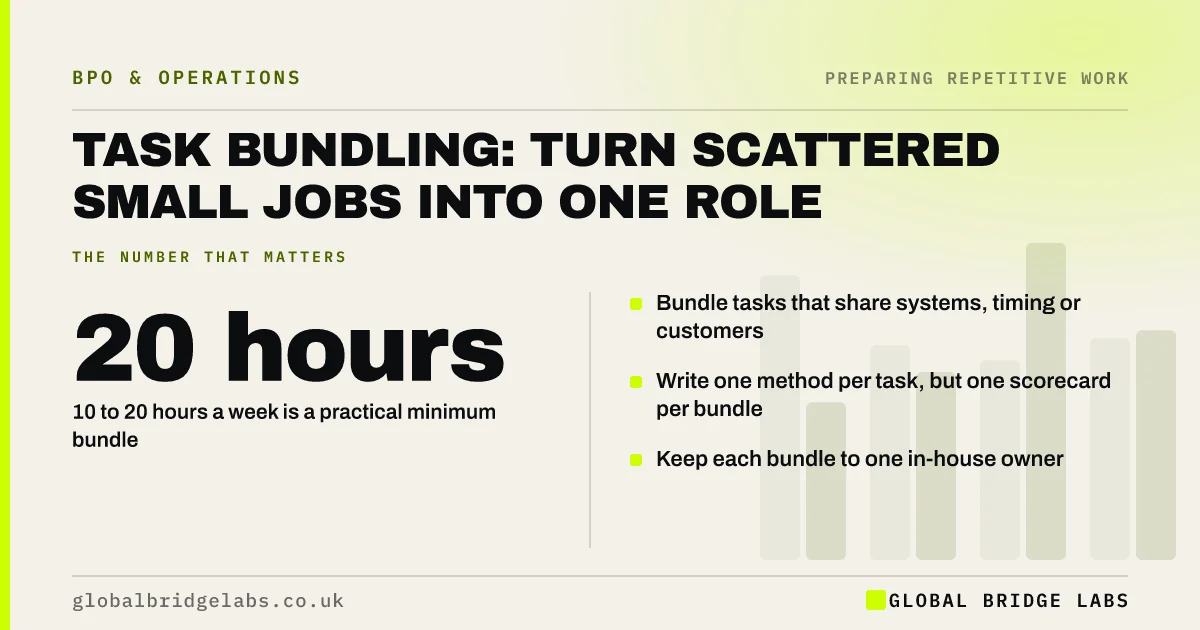
How to bundle small repetitive tasks into one outsourced role: which tasks group well, how big a bundle needs to be, and how to keep it manageable.
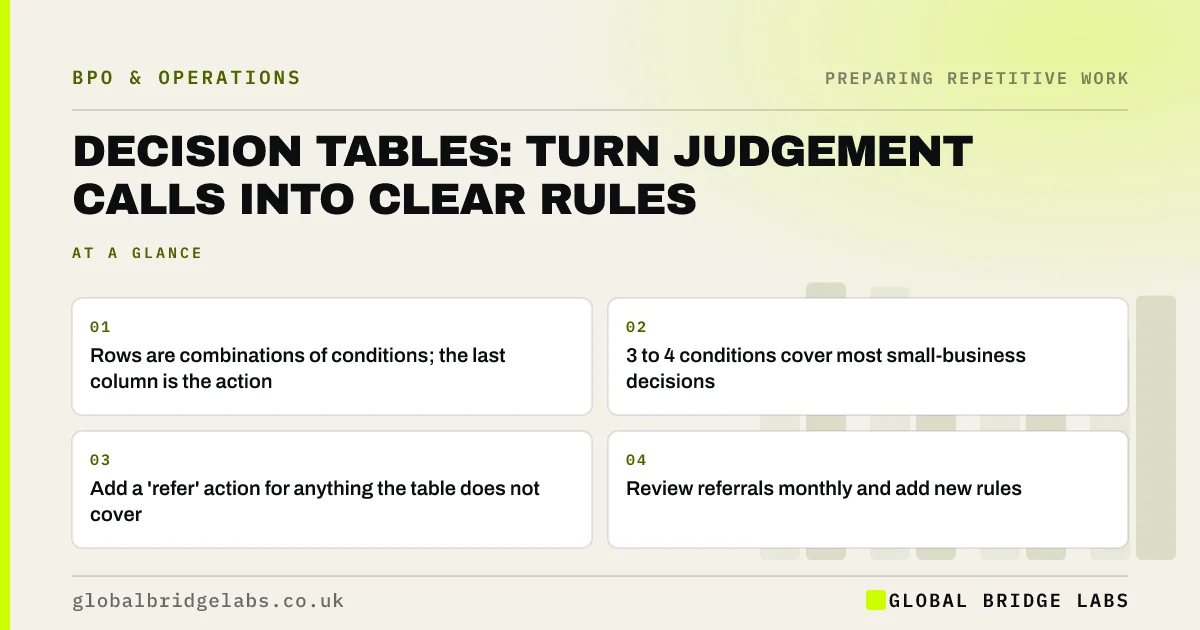
How to write a decision table for a repetitive business decision, so an outsourced team applies your rules and refers only real exceptions.
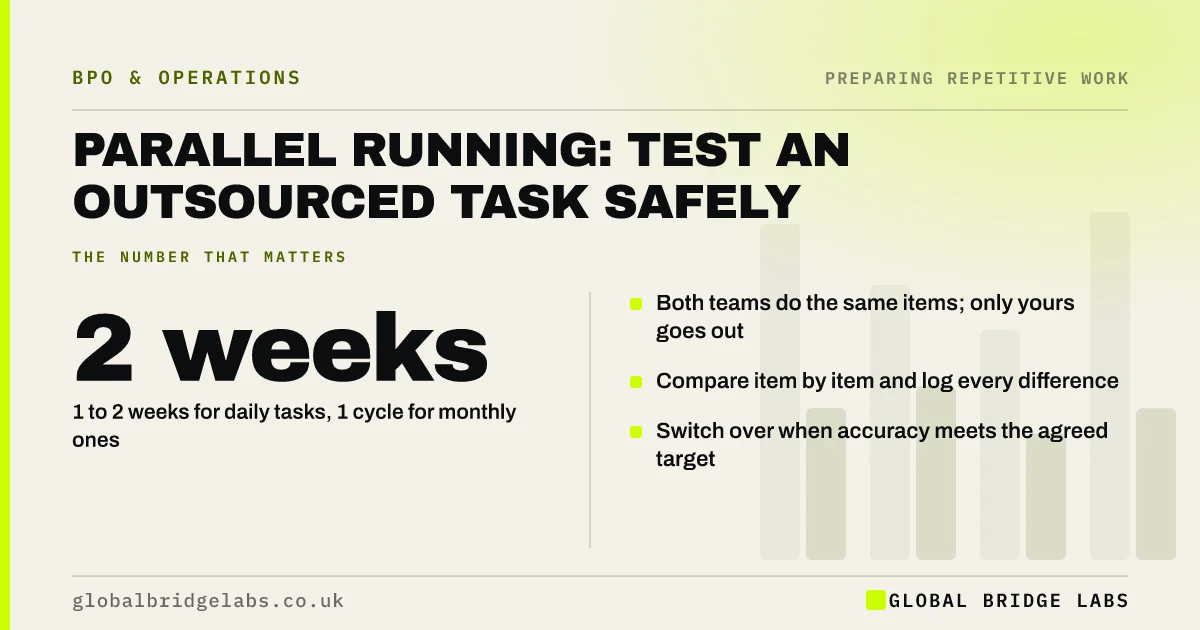
How to run an outsourced repetitive task in parallel with your own team before go-live: how long to run, what to compare and when to switch over.
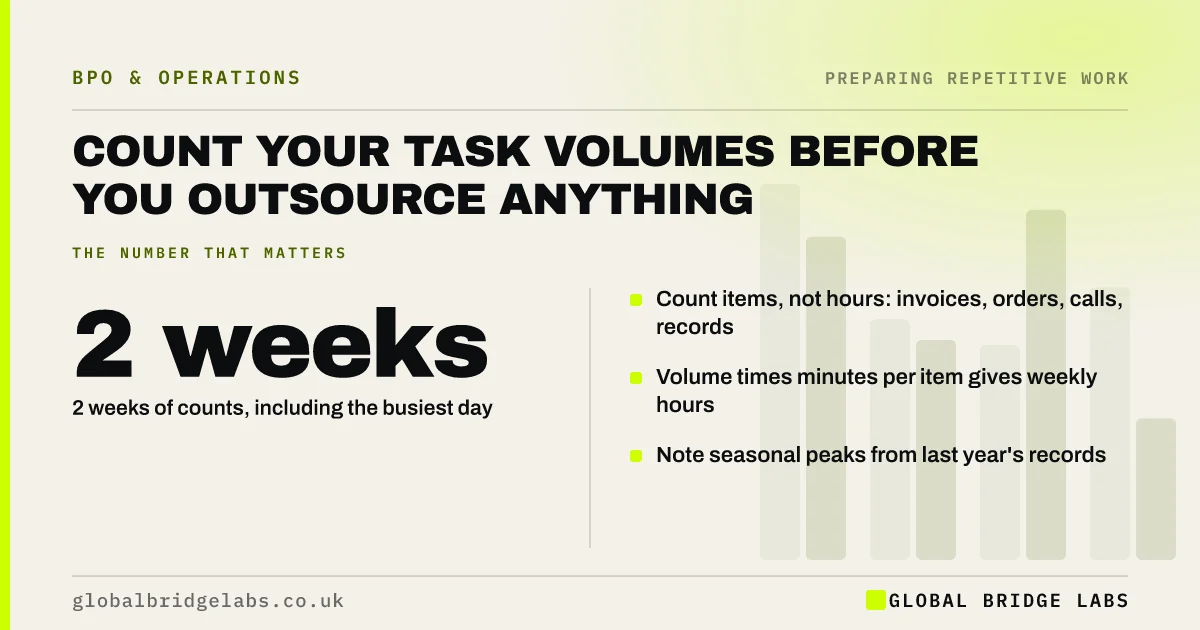
How to count the volume of each repetitive task in a small business: what to count, for how long, and how volumes turn into hours, cost and team size.
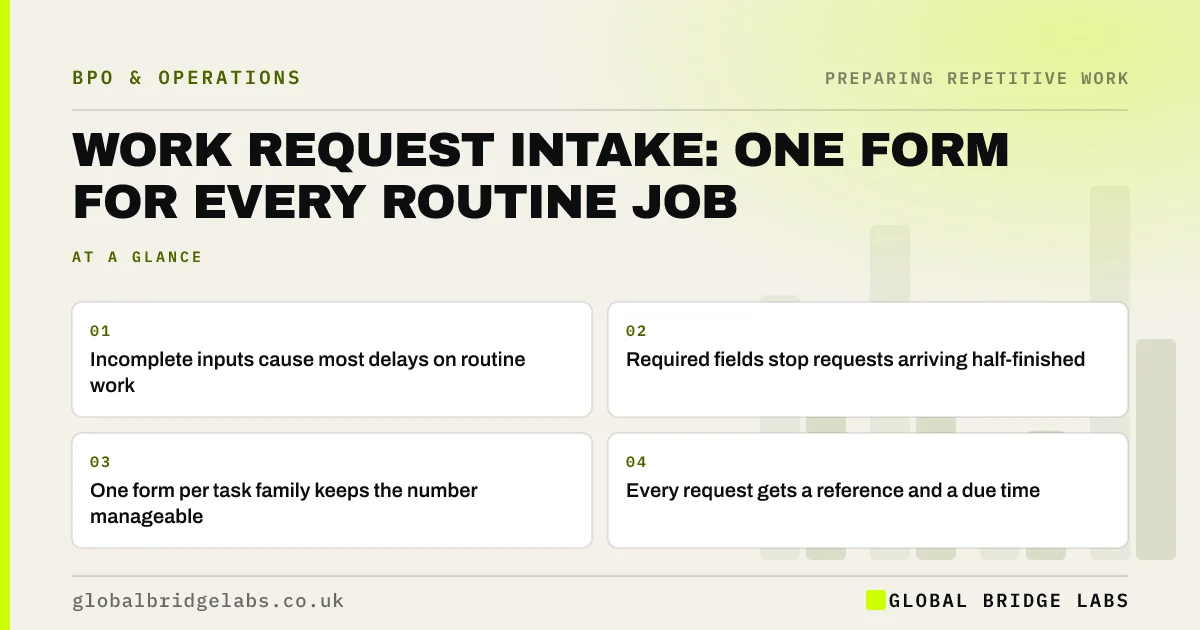
How a work request intake form stops repetitive tasks arriving incomplete: what fields to include, where to put it and how it speeds up an outsourced team.
30 minutes with our team and you'll know exactly which of the three problems to fix first.
