Short, practical writing on visibility, conversion and capacity, from the team doing the work for 120+ UK startups, SMEs and enterprises.
Tree testing for small business websites: how to check that customers can find key pages in your menu structure before design, with tasks and success rates.
User flows for website design: how to map the steps for each key task, from landing page to enquiry or booking, and remove the steps buyers do not need.
Audience-based navigation explained: when splitting menus by customer type helps buyers, when it confuses them, and how UK small businesses can test it.
Map website content to the customer journey: a simple audit that tags each page by stage and question, finds gaps and overlaps, and sets what to write next.
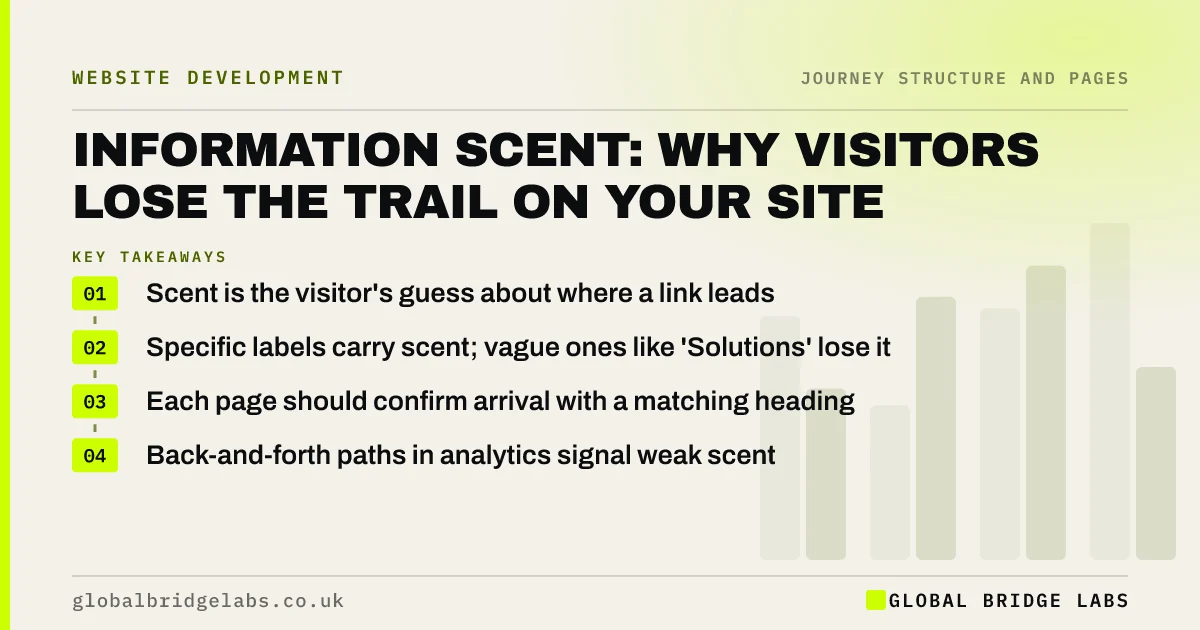
Information scent explained: how link labels and page cues tell visitors they are on the right track, and how to fix weak scent that stops journeys.
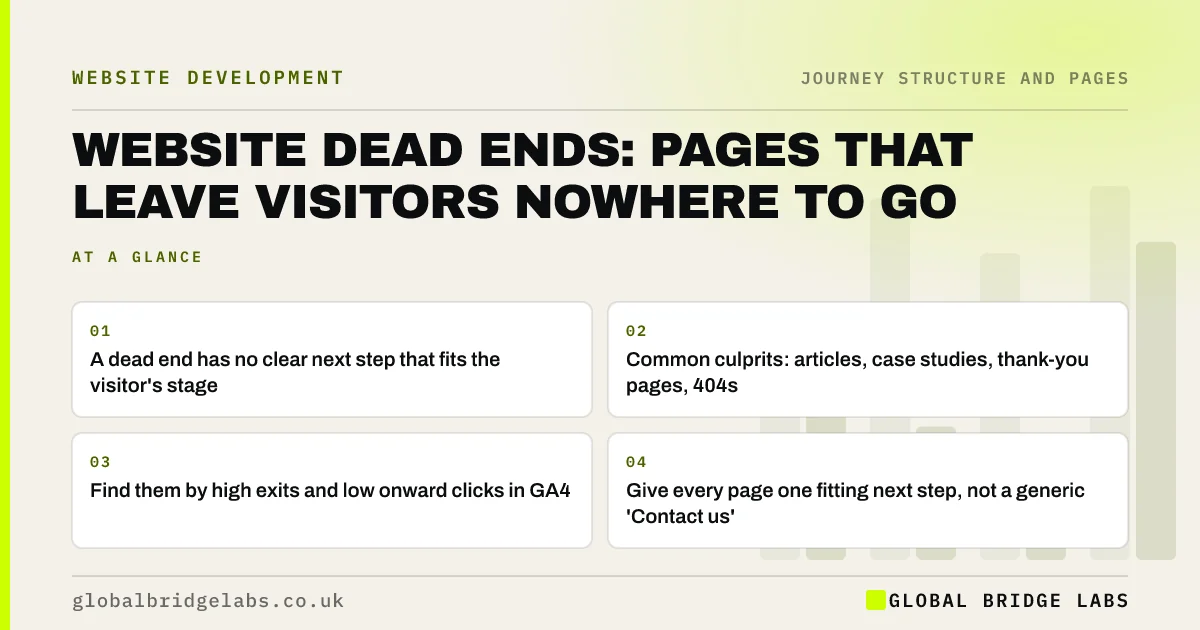
Website dead ends explained: how to find pages with no clear next step, from blog posts to thank-you pages, and give every page a route forward.
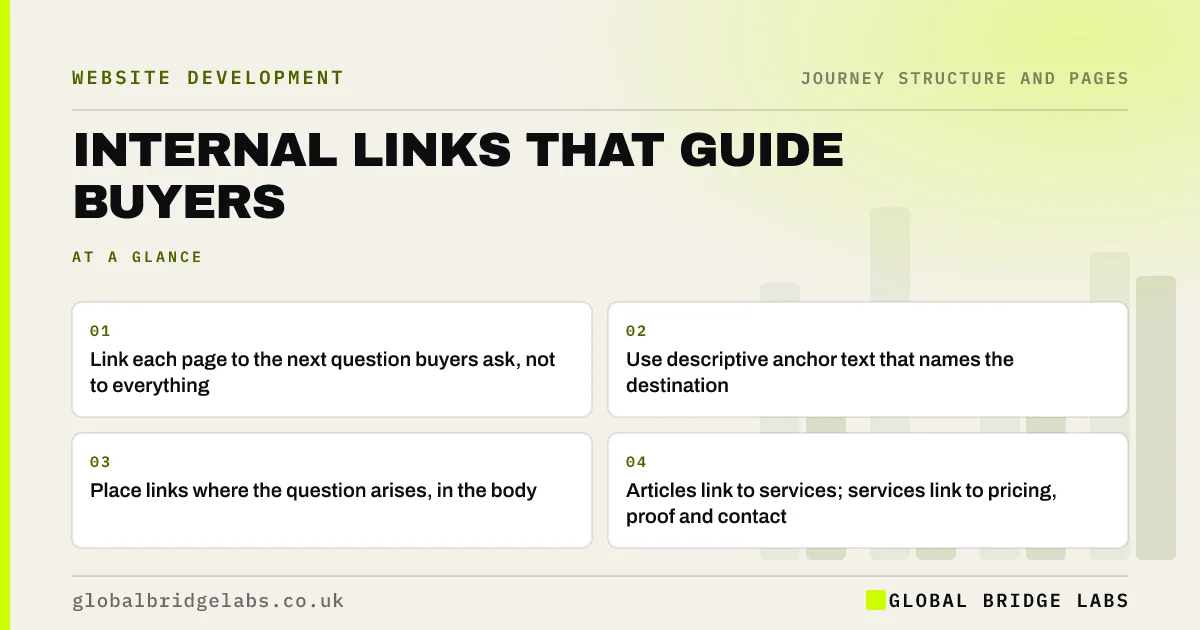
Internal linking for the customer journey: how to link pages in the order buyers ask questions, write descriptive anchors and avoid links that distract.
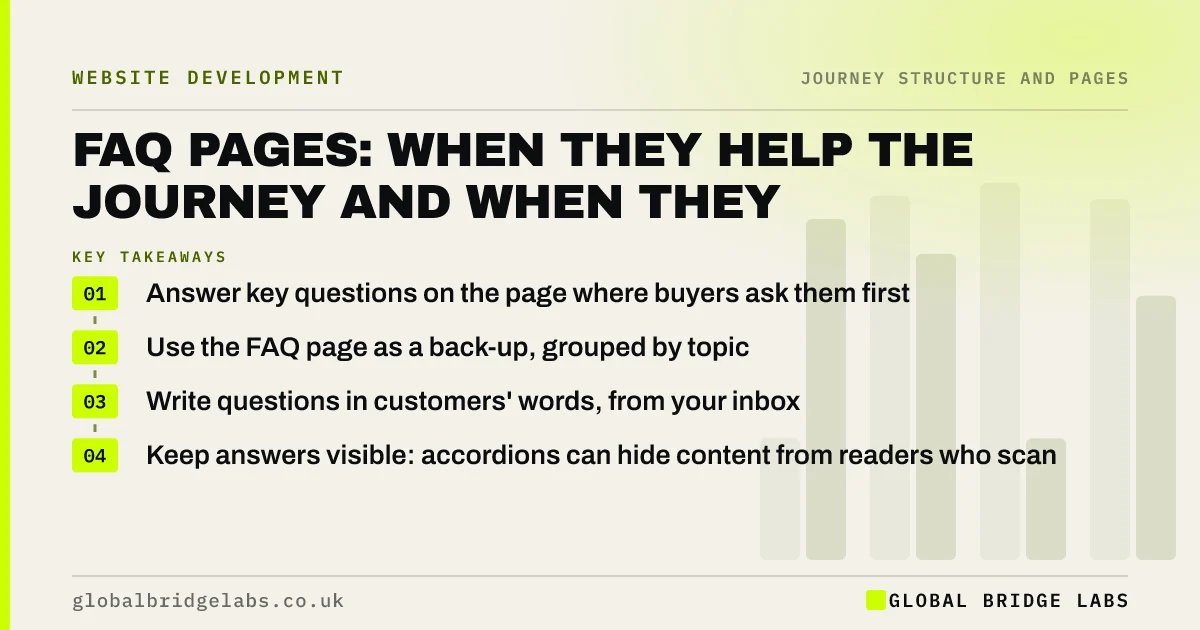
FAQ page design for small business websites: when an FAQ page helps buyers, when it hides answers that belong on service pages, and how to structure one.

How to use GA4 path exploration to see the routes visitors take through your website, from landing page to enquiry, and spot loops and dead ends.
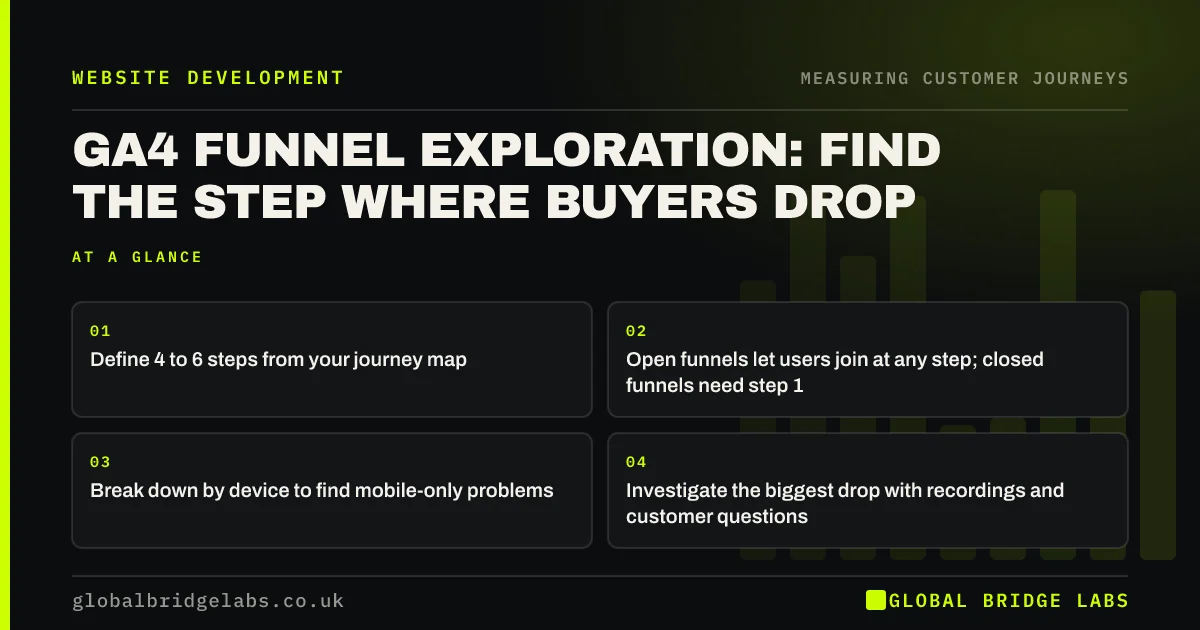
How to build a GA4 funnel exploration for a small business website: choose journey steps, read drop-off, compare devices and decide what to fix first.
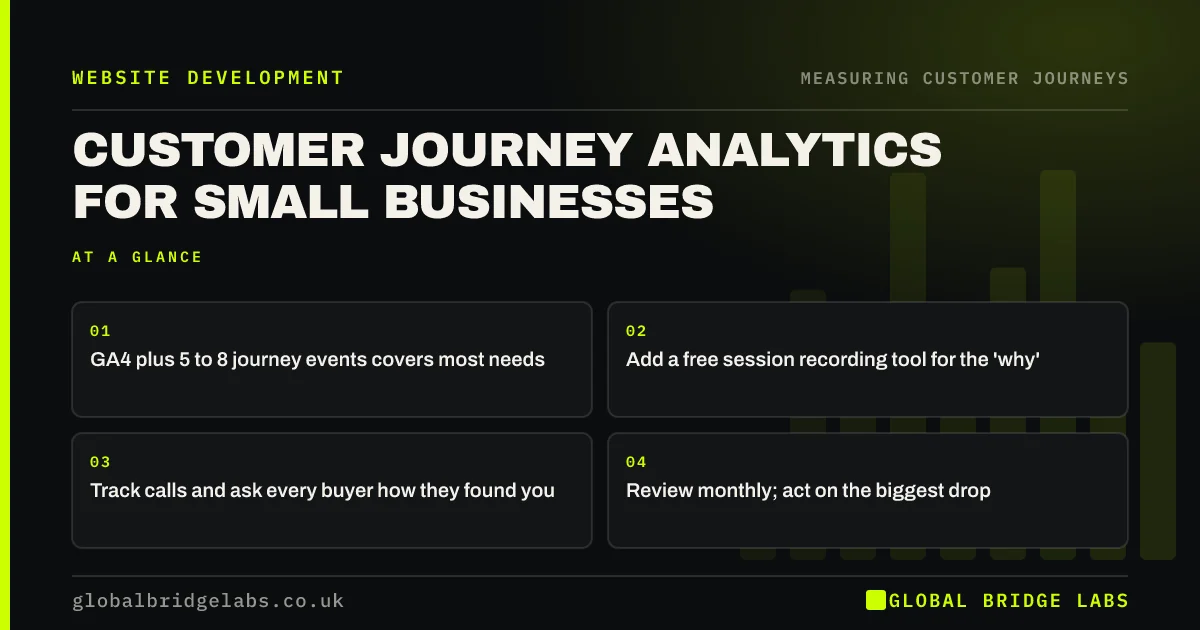
Customer journey analytics for small businesses: the GA4 events, reports and simple tools that show how buyers move from first visit to enquiry and beyond.
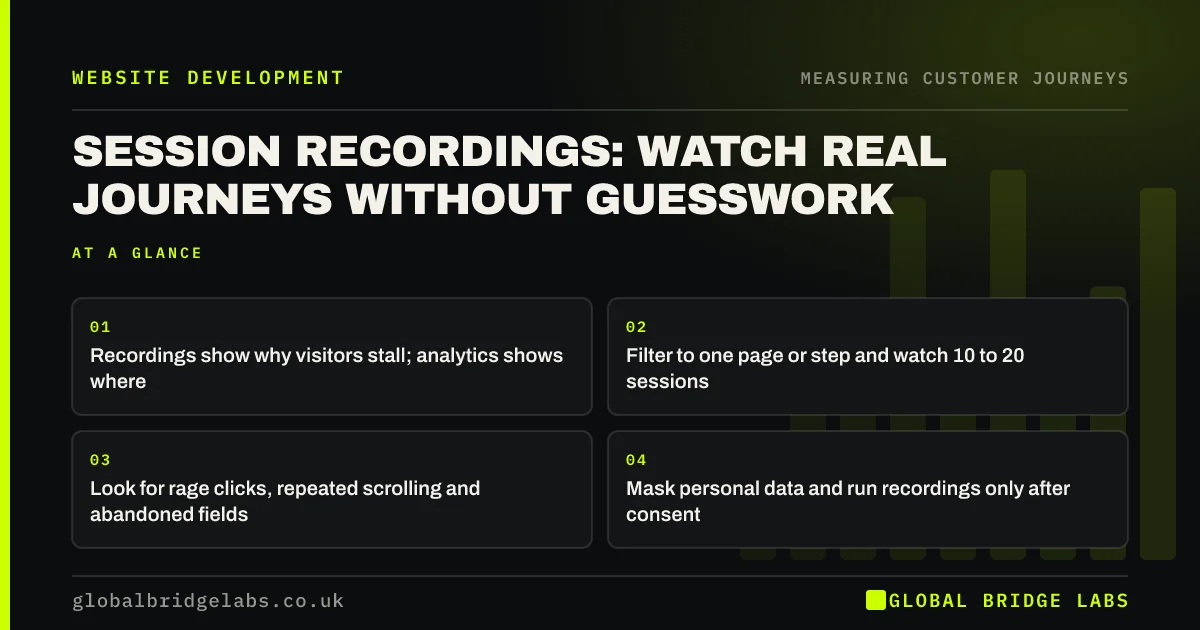
Session recordings for small business websites: how to watch real visitor journeys, what to look for and how to stay within UK privacy rules.
30 minutes with our team and you'll know exactly which of the three problems to fix first.
