On this page
- 01Key takeaways
- 02What breaks when hospitality businesses grow?
- 03Which work is the same at every site?
- 04What must stay at the venue?
- 05How do you staff a shared team for long hours?
- 06What does a shared back office cost?
- 07When is a head office team justified?
- 08What does this look like in practice?
- 09Hospitality scaling checklist
- 10Next step
- 11Sources and further reading
- 12Frequently asked questions
Key takeaways
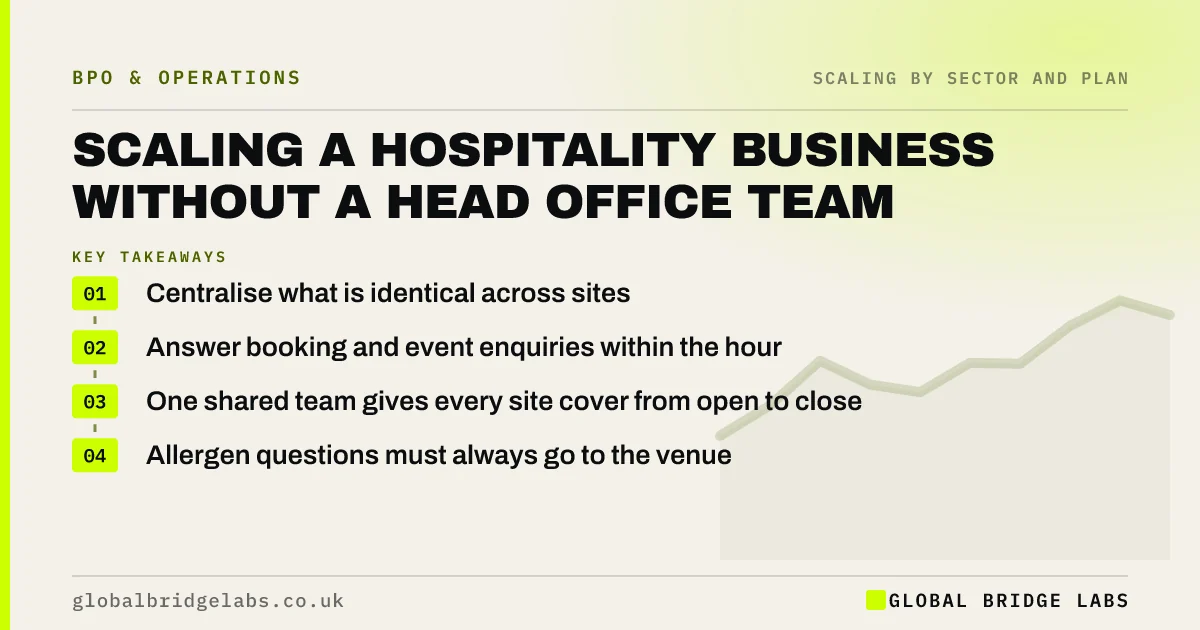
To scale a hospitality business beyond one site, centralise the work that is the same at every venue: reservations, event enquiries, guest messages, supplier invoices and rota paperwork. A managed team can run that as a shared back office from day one, so each site's managers stay on the floor and no head office is needed early.
- Centralise what is identical across sites. Keep service local.
- Answer booking and event enquiries within the hour.
- One shared team gives every site cover from open to close.
- Allergen questions must always go to the venue.
Opening a second site or stretched at one? Message us on WhatsApp with your enquiry volumes.
Chat on WhatsApp →What breaks when hospitality businesses grow?
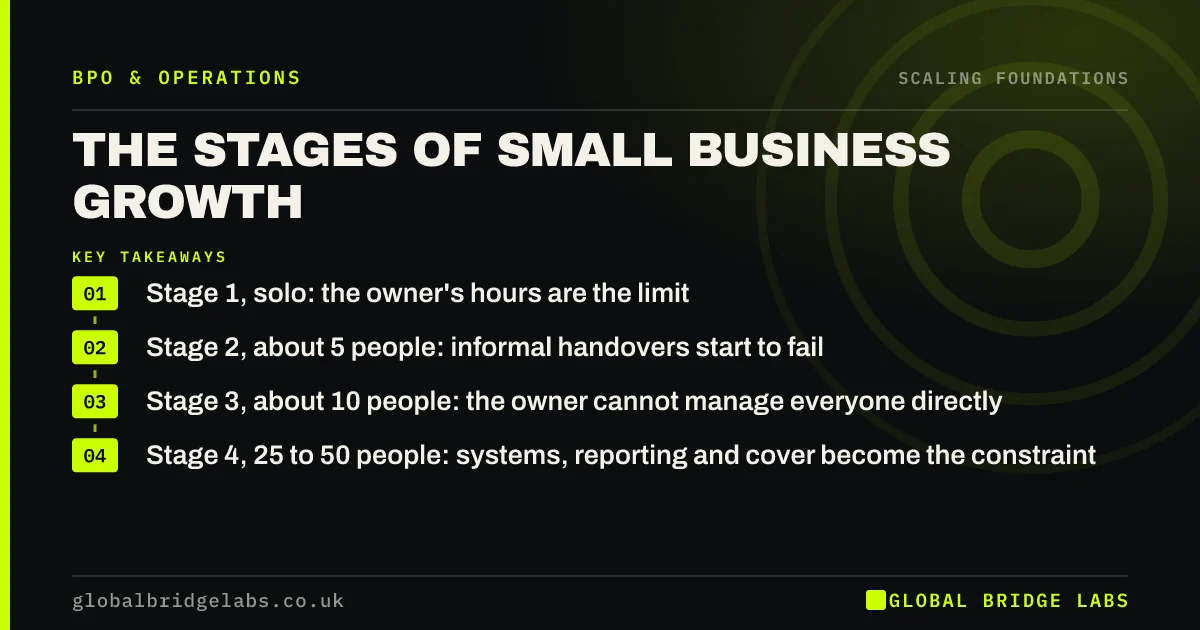
When a hospitality business grows, managers are pulled off the floor. Phones ring during service, event enquiries wait until closing, and invoices pile up in the office. With a second site, each problem doubles and the owner cannot be in both places. Standards slip in exactly the hours when guests are present.
Which work is the same at every site?
A surprising amount is the same. Taking and changing reservations, replying to enquiries, quoting for private hire, answering social messages, entering supplier invoices and preparing onboarding paperwork follow the same rules at each venue. That is the work to centralise.
- Reservations by phone, web and message.
- Private hire and event enquiries.
- Guest messages and review replies.
- Supplier invoice entry and statements.
- Rota and new starter paperwork.
What must stay at the venue?
Service, food, atmosphere and anything safety-critical stay at the venue. Food businesses must provide accurate allergen information, so any allergen or dietary question should be passed to the kitchen or duty manager, never answered from a script. Complaints about a visit are also best resolved by the site manager.
How do you staff a shared team for long hours?
Hospitality hours are long and peaks are sharp. A shared team covering all sites can be staffed for lunch and evening peaks and for the hours before opening when guests plan their day. Seasonal weeks need more. Agree the pattern from last year's booking data.
Want to discuss your requirements for reservations and enquiry cover? Send us your opening hours on WhatsApp.
Chat on WhatsApp →What does a shared back office cost?
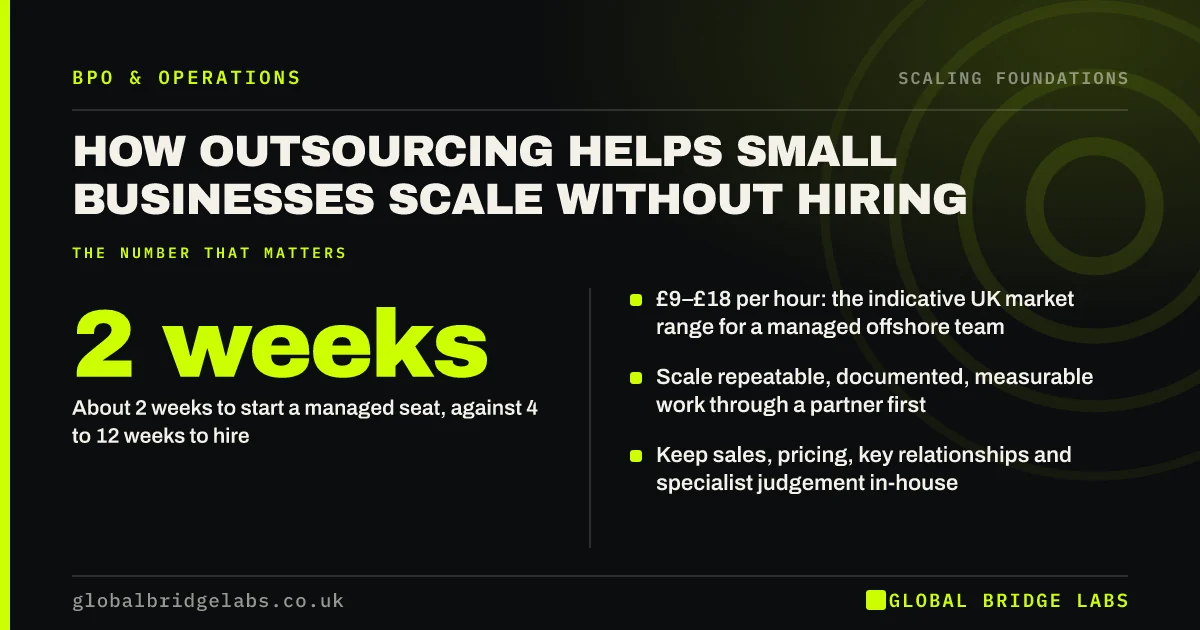
As indicative market ranges, managed offshore teams cost £9–£18 per hour and onshore providers £20–£35 per hour. From April 2026 the National Living Wage is £12.71 an hour, or about £16.27 per worked hour with employer costs, so a dedicated in-house reservations role at each site is a significant fixed cost.
When is a head office team justified?
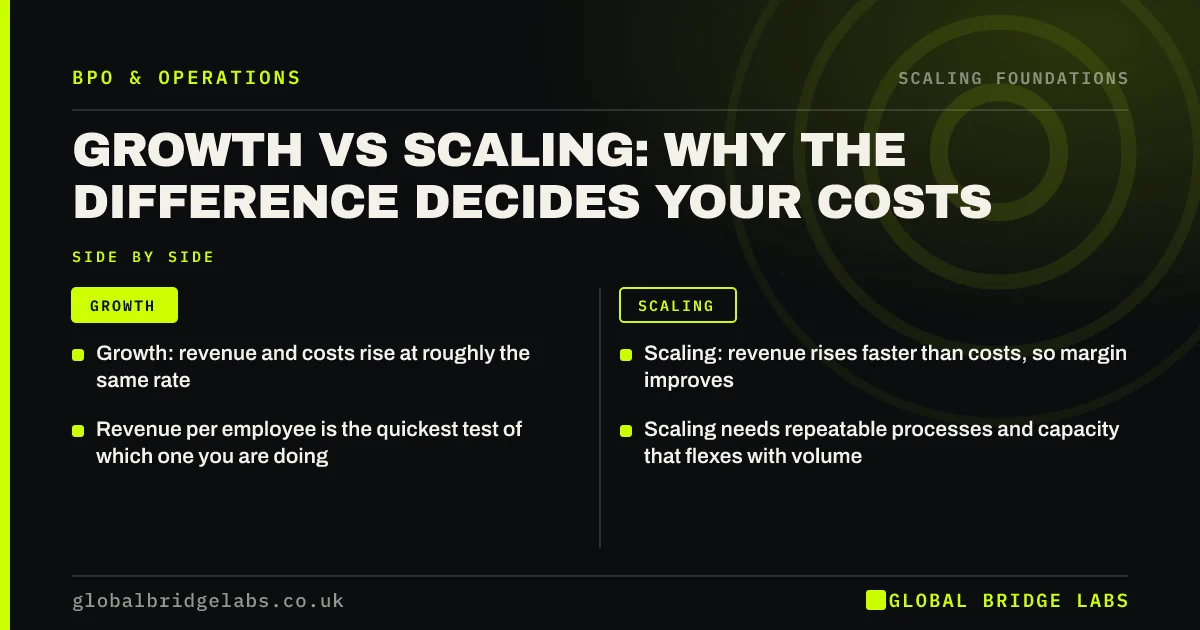
A head office team is justified when the group needs full-time leadership in operations, finance, people and marketing, often from around five or more sites. Until then, a small central leadership with a managed back office gives consistency without the fixed overhead.
What does this look like in practice?
A pattern we see in UK restaurant and venue groups at two or three sites: each general manager answers private hire enquiries after service, a day or two late. A shared team that replies within the hour with availability and a standard package, then hands confirmed events to the venue, wins bookings that slow replies were losing.
Hospitality scaling checklist
Prepare these before the next opening.
- List tasks that are identical at every site.
- Write booking, deposit and cancellation rules.
- Create standard event packages and replies.
- Set a route for allergen and complaint queries.
- Give shared access to the reservation system.
- Plan cover hours from last year's data.
- Centralise supplier invoice entry.
Next step
Tell us how many sites you run, your opening hours and how bookings and enquiries arrive. We will outline what could be centralised and what cover it needs.
Message us on WhatsApp for a hospitality operations review, or book a 30-minute consultation.
Chat on WhatsApp →Sources and further reading
- Allergen guidance for food businesses · Food Standards Agency
- National Minimum Wage and National Living Wage rates · GOV.UK
- Rates and thresholds for employers 2026 to 2027 · HM Revenue & Customs
Frequently asked questions
How do you scale a restaurant business?
Scale a restaurant business by making the first site run consistently without the owner, then centralising tasks common to every site, such as reservations, event enquiries, purchasing admin and payroll paperwork. Keep service and food quality in the hands of strong on-site managers.
What can a hospitality business outsource?
Hospitality businesses commonly outsource reservations and call answering, private hire enquiry handling, guest messaging, review responses, supplier invoice entry, bookkeeping, rota paperwork and marketing production. Anything involving food safety, allergens or on-the-day guest recovery should remain with venue staff.
When does a restaurant group need a head office?
A restaurant group needs dedicated head office roles when coordination across sites becomes a full-time job, often at around five sites or more. Before that, a small leadership team supported by a shared, outsourced back office usually provides enough structure at lower fixed cost.
Can reservations be handled remotely?
Yes. With shared access to the reservation system and clear rules on deposits, party sizes and special requests, a remote team can take and manage bookings for several venues. Allergen and dietary questions should be recorded and passed to the venue for confirmation.
Written by

Global Bridge Labs (GBL) is a UK–Sri Lanka partner for social media, websites and BPO. Everything here comes from client delivery, not theory.