On this page
- 01Key takeaways
- 02What is seasonal customer service outsourcing?
- 03Why is peak season so hard to staff?
- 04How do you forecast peak volumes?
- 05When should peak seats start?
- 06What does seasonal outsourcing cost?
- 07How do you scale down cleanly?
- 08When is seasonal outsourcing not the answer?
- 09What does this look like in practice?
- 10Checklist: plan peak cover
- 11Next step
- 12Sources and further reading
- 13Frequently asked questions
Key takeaways
Seasonal customer service outsourcing adds trained seats for your busy period, such as Black Friday, Christmas, summer bookings or tax deadlines, then removes them afterwards. It avoids hiring temporary staff for a few weeks and keeps response times steady when volumes jump. The key is starting early enough to train.
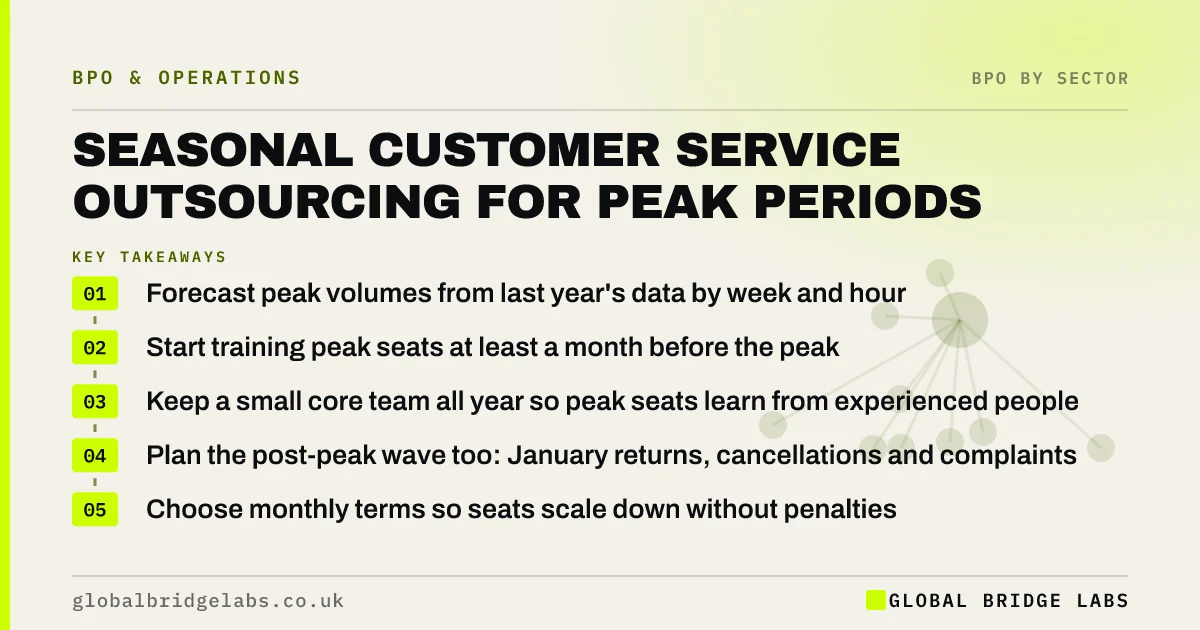
- Forecast peak volumes from last year's data by week and hour.
- Start training peak seats at least a month before the peak.
- Keep a small core team all year so peak seats learn from experienced people.
- Plan the post-peak wave too: January returns, cancellations and complaints.
- Choose monthly terms so seats scale down without penalties.
Busy season coming? Message us on WhatsApp with last year's peak volumes and we will plan the cover.
Chat on WhatsApp →What is seasonal customer service outsourcing?
Seasonal customer service outsourcing is using a business process outsourcing (BPO) provider to add customer service capacity for predictable busy periods, with seats scaled up before the peak and down after it. It can be the whole service or extra capacity alongside your in-house team.
It suits any business with a clear seasonal pattern: retailers at Christmas, travel and hospitality in summer, accountants in January, garden and outdoor businesses in spring.
Why is peak season so hard to staff?
Peak season is hard to staff because recruiting and training temporary employees takes weeks, the good candidates are in demand elsewhere, and they leave once the peak ends, taking their training with them. Response times slip exactly when customer volumes are highest and first impressions matter most.
Temporary employees still carry employer costs. From April 2026 the National Living Wage is £12.71 an hour, employer National Insurance is 15% above the threshold, and holiday accrues on hours worked.
How do you forecast peak volumes?
Start from last year's contact data by week, day and hour, then adjust for growth, promotions and any changes to products or delivery. Break it down by channel and contact type, because a returns wave needs different skills from a pre-sale rush.
- Pull last year's contacts by week, day and hour.
- Adjust for order growth and planned promotions.
- Split by channel: phone, email, chat, WhatsApp.
- Split by type: pre-sale, order status, returns, complaints.
- Add the post-peak wave, such as January returns.
When should peak seats start?
Start training four to six weeks before the peak, so seats are fully productive when volumes rise. A staged ramp-up works best: a few seats early on lower-risk contacts such as order status, more seats as the peak approaches, and the most experienced people handling complaints and exceptions.
Keeping a small core team all year makes each peak easier, because new seats learn from people who already know your products.
What does seasonal outsourcing cost?
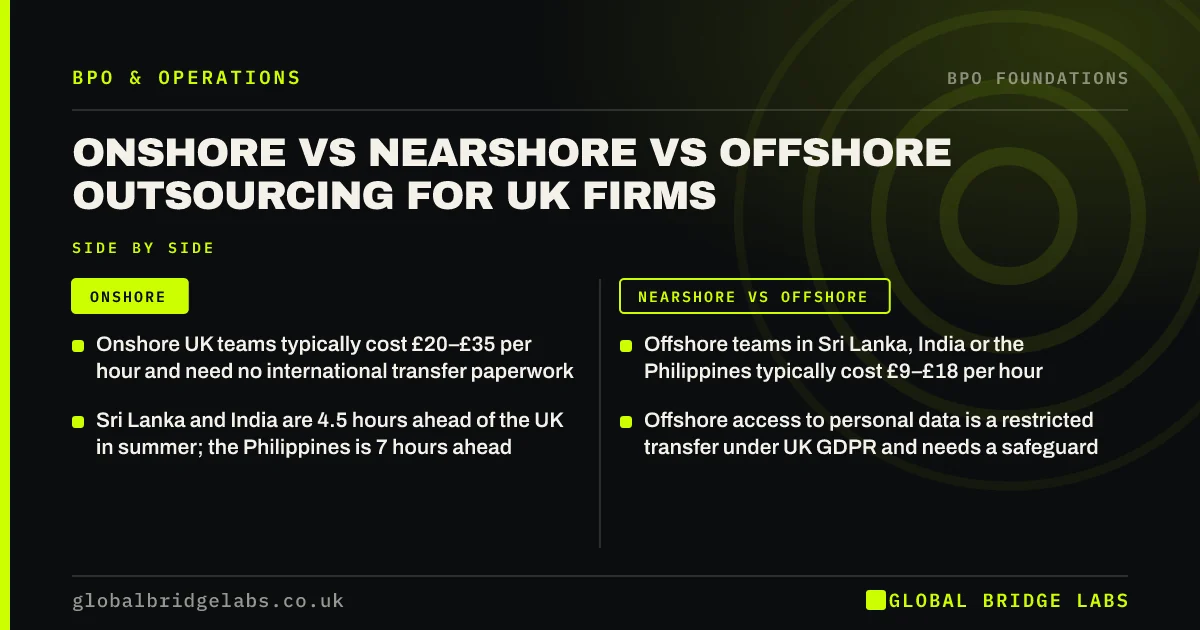
As indicative market ranges, managed offshore seats cost around £9–£18 per hour and onshore UK around £20–£35, with premiums for evenings, weekends and bank holidays. Check the terms: monthly or short seasonal contracts matter more than the rate, because long minimum terms defeat the purpose.
Compare the total with temporary hires plus recruitment, training and management time, and with the cost of slow responses during your most valuable weeks.
Want peak cover planned and costed? Send us last year's volumes on WhatsApp and we will discuss your requirements.
Chat on WhatsApp →How do you scale down cleanly?
Plan the scale-down before the peak starts. Keep seats through the post-peak wave, reduce them in stages as volumes fall, and capture what the peak team learned in the procedures before they move off your account. Review what went well and what to change for next year while it is fresh.
When is seasonal outsourcing not the answer?
It is not the answer if your peak is a few days with no warning, because trained seats cannot appear overnight. In that case, use automation for simple queries, clear expectations on response times, and a smaller standing overflow arrangement. It is also not the answer if the peak work needs deep product expertise that takes months to learn.
What does this look like in practice?
A pattern we see with UK online retailers: every November the founder and warehouse team answer tickets late into the night, response times stretch to days, and January brings a wave of returns and complaints. A core outsourced seat all year, with extra seats trained in October and kept through January, keeps replies inside a day through the whole season.
Checklist: plan peak cover
Start this at least two months before the peak.
- Forecast volumes by week, hour, channel and type.
- Decide core and peak seat numbers.
- Book training four to six weeks before the peak.
- Update procedures and model replies for peak issues.
- Agree short terms and holiday premiums.
- Plan the post-peak wave and scale-down.
- Review results and lessons after the season.
Next step
Send us last year's volumes and dates, and we will plan and cost your peak cover. 30 minutes, no pitch.
Message us on WhatsApp for a peak cover plan, or book a 30-minute consultation.
Chat on WhatsApp →Sources and further reading
- National Minimum Wage and National Living Wage rates · GOV.UK
- Rates and thresholds for employers 2026 to 2027 · HM Revenue & Customs
- Holiday entitlement · GOV.UK
Frequently asked questions
Can I outsource customer service just for Christmas?
Yes, if you plan early. Providers can add trained seats for a peak period on short terms, but training takes weeks, so start four to six weeks before volumes rise and keep seats through the January returns wave. Keeping a small core team all year makes it easier.
How far ahead should I plan peak season staffing?
At least two months. Use the first month to forecast volumes, update procedures and agree terms, and the four to six weeks before the peak to recruit and train seats, with a staged ramp-up on lower-risk contacts first.
Is outsourcing cheaper than temporary staff for peak season?
Often, once recruitment, training, employer costs and management time for temporary hires are counted. Temporary employees carry employer National Insurance and accrue holiday. Outsourced seats arrive trained by the provider and scale down without redundancy, but check terms for minimums.
What happens after the peak ends?
Plan it in advance: keep seats through post-peak contacts such as returns and cancellations, reduce them in stages as volumes fall, and capture what the peak team learned in your procedures. Review the season while it is fresh to plan next year.
Written by

Global Bridge Labs (GBL) is a UK–Sri Lanka partner for social media, websites and BPO. Everything here comes from client delivery, not theory.