On this page
- 01Key takeaways
- 02Why do hospitality businesses miss bookings?
- 03What can a reservations team handle?
- 04How should allergen and dietary questions be handled?
- 05Why do event enquiries need special attention?
- 06What does hospitality reservations outsourcing cost?
- 07When should bookings stay in the venue?
- 08How do you handle cancellations and no-shows?
- 09What hours should cover run?
- 10What does this look like in practice?
- 11Checklist: outsource reservations
- 12Next step
- 13Sources and further reading
- 14Frequently asked questions
Key takeaways
Hospitality reservations outsourcing means a remote team takes bookings, answers enquiries, handles group and event leads and drafts review replies, so staff on the floor can focus on guests. It suits restaurants, pubs, hotels and venues whose phones ring hardest exactly when service is busiest.
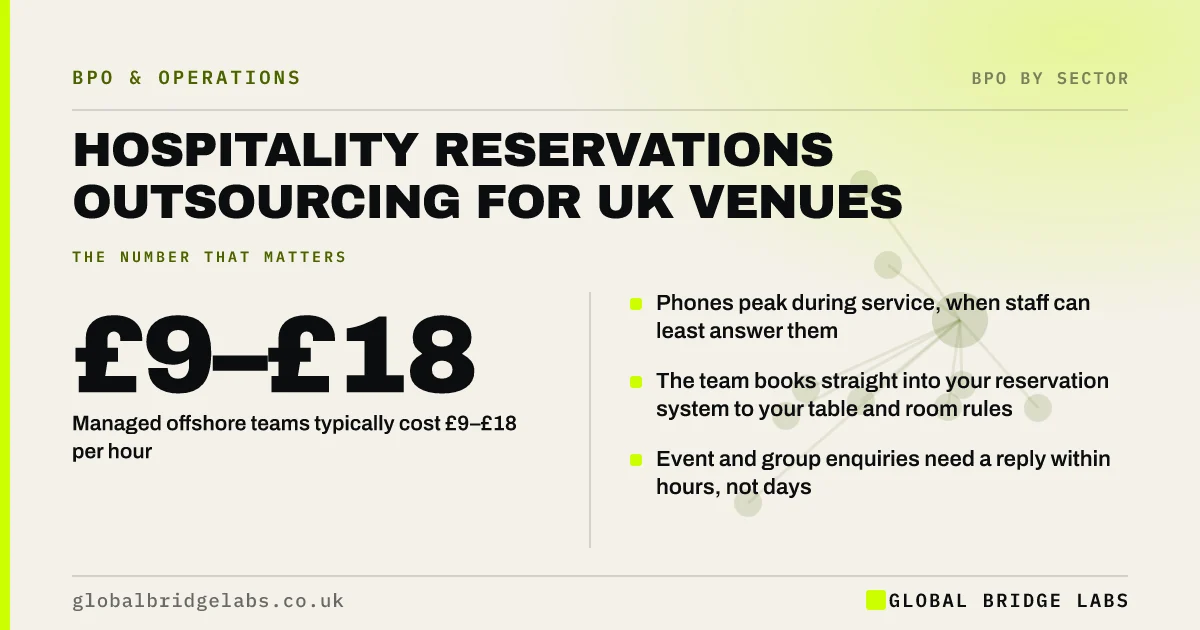
- Phones peak during service, when staff can least answer them.
- The team books straight into your reservation system to your table and room rules.
- Event and group enquiries need a reply within hours, not days.
- Allergen questions go to the venue; the team never guesses.
- Managed offshore teams typically cost £9–£18 per hour.
Phone ringing through every service? Message us on WhatsApp with how many booking calls you get.
Chat on WhatsApp →Why do hospitality businesses miss bookings?
Hospitality businesses miss bookings because the busiest times for calls are the busiest times for service. At 7pm on a Friday nobody can leave a table to answer the phone, and the caller books elsewhere. Emails and event enquiries sit until a manager catches up, often a day or two later.
Business process outsourcing (BPO) puts a trained reservations team on the phone and inbox while your staff serve.
What can a reservations team handle?
A remote team works inside your reservation or property management system, following your rules.
- Table and room bookings, amendments and cancellations.
- General enquiries: menus, opening hours, parking, accessibility.
- Group, private dining and event enquiries, qualified and passed on.
- Confirmation and reminder messages.
- Deposit requests using secure payment links.
- Drafting replies to online reviews for manager approval.
How should allergen and dietary questions be handled?
Food businesses must provide accurate allergen information, and the Food Standards Agency's guidance is clear that it must be correct. A remote team should never guess. The safe rule is to record the guest's requirement on the booking, share the venue's published allergen information where it exists, and pass specific questions to the venue team who can check with the kitchen.
Why do event enquiries need special attention?
Group and event enquiries are often the most valuable contacts a venue receives, and the ones most likely to be lost to a slow reply. A team can respond within an hour with availability, packages and a proposed call, capture the details in your CRM and hand a warm lead to the events manager.
What does hospitality reservations outsourcing cost?
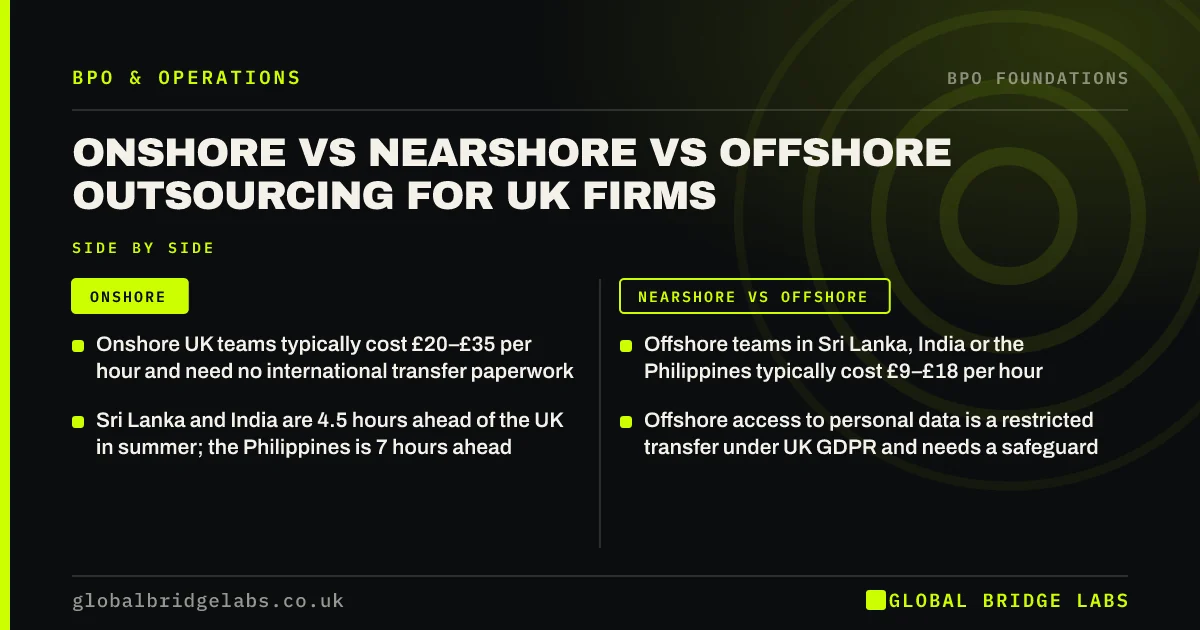
As indicative market ranges, managed offshore reservations teams cost around £9–£18 per hour and onshore UK providers around £20–£35. Many venues cover peak booking hours only, such as late afternoon through evening service.
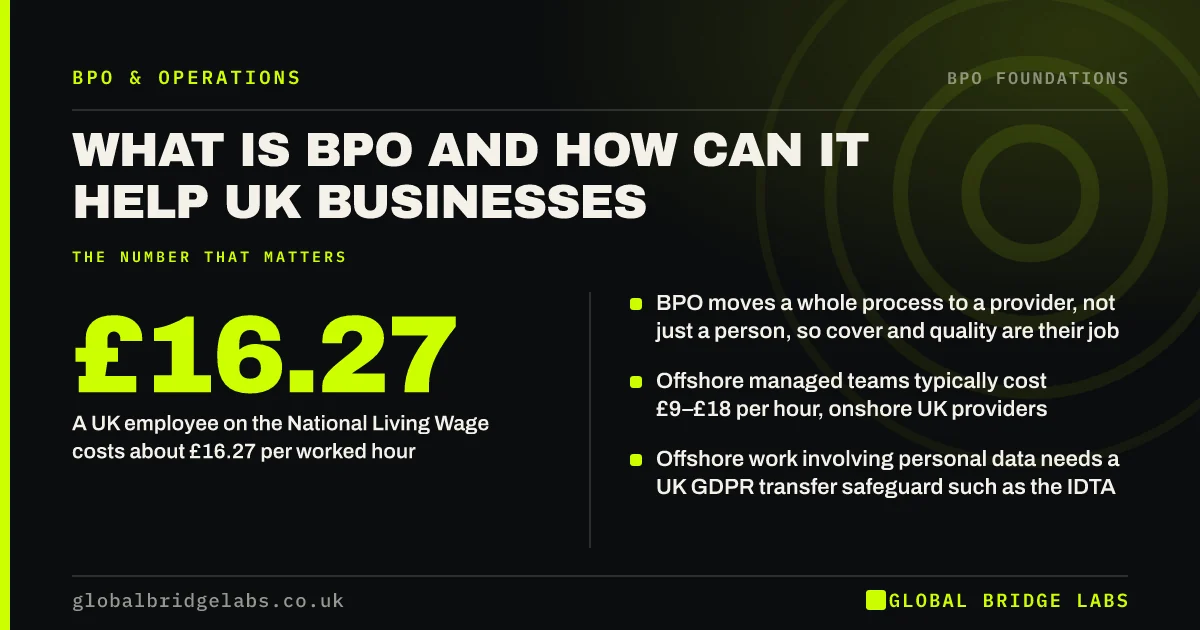
Compare with the value of bookings missed during service and with the cost of a dedicated host. A UK employee on the April 2026 National Living Wage costs about £16.27 per worked hour after employer National Insurance, pension and holiday.
Want a costed plan for reservations cover during your busiest hours? Send us your call volumes by day on WhatsApp and we will discuss your requirements.
Chat on WhatsApp →When should bookings stay in the venue?
Keep bookings in the venue if you are small enough that online booking handles most of them, or if your regulars expect to speak to the owner. A remote team can still handle overflow during service and event enquiries during the day.
How do you handle cancellations and no-shows?
Cancellations and no-shows cost venues covers they could have sold. A reservations team reduces both by sending confirmations at booking and reminders a day before, making it easy to cancel or amend rather than simply not turning up, and filling freed tables or rooms from a waiting list.
For busy nights, large groups and events, deposits or card guarantees taken through secure payment links make no-shows rarer. Write the policy clearly so the team applies it consistently and guests know where they stand.
What hours should cover run?
Match cover to when guests actually call, which is usually late morning, mid-afternoon and the hours around evening service. Your phone system's call log will show the pattern. Many venues start with evening and weekend cover, when staff are busiest, then add daytime cover for event enquiries.
What does this look like in practice?
A pattern we see in busy restaurants: the phone goes unanswered through Friday and Saturday service, and the manager returns calls the next morning to find most callers have booked elsewhere. A remote team answering during service, booking directly into the reservation system and flagging special requests, keeps those covers and lets staff focus on the room.
Checklist: outsource reservations
Prepare these first.
- Count calls and missed calls by hour and day.
- Write table, room and booking-length rules.
- Write the allergen and dietary handling rule.
- Set deposit and cancellation policies.
- Create an event enquiry template and hand-off route.
- Give access to the reservation system with limited rights.
- Track bookings taken and event leads monthly.
Next step
Tell us when your phone rings most and we will design reservations cover for those hours. 30 minutes, no pitch.
Message us on WhatsApp for a reservations plan, or book a 30-minute consultation.
Chat on WhatsApp →Sources and further reading
- Allergen guidance for food businesses · Food Standards Agency
- Payment Card Industry Data Security Standard · PCI Security Standards Council
- National Minimum Wage and National Living Wage rates · GOV.UK
Frequently asked questions
Can a restaurant outsource its phone bookings?
Yes. A remote team can answer calls, book directly into your reservation system, handle amendments and send confirmations, following your table and timing rules. Many restaurants cover peak service hours only, when staff cannot answer the phone.
How do outsourced teams handle allergy questions?
They should never guess. The safe approach is to record the requirement on the booking, share the venue's published allergen information where available, and pass specific questions to the venue team, who can check with the kitchen before the guest arrives.
Can a remote team take deposits?
Yes, by sending a secure payment link from your booking or payment system. The team should never take card details verbally or in writing unless your process meets the PCI Data Security Standard. Payment links keep card data out of the conversation.
Should hotels outsource reservations?
Smaller hotels often benefit, especially for calls, email enquiries and group bookings outside front-desk capacity. The team works in your property management system to your rate and availability rules. Keep complex negotiations and VIP guests with your own staff.
Written by

Global Bridge Labs (GBL) is a UK–Sri Lanka partner for social media, websites and BPO. Everything here comes from client delivery, not theory.