Short, practical writing on visibility, conversion and capacity, from the team doing the work for 120+ UK startups, SMEs and enterprises.

How outsourcing improves business efficiency: the five gains (flow, focus, accuracy, capacity, visibility), a worked example and when it backfires.

What is business efficiency? A plain definition for UK owners, how to measure it in a small firm, what drags it down and where to start improving it.

Efficiency vs effectiveness in business: what each means, why effectiveness comes first, and how to improve both without making the wrong work faster.
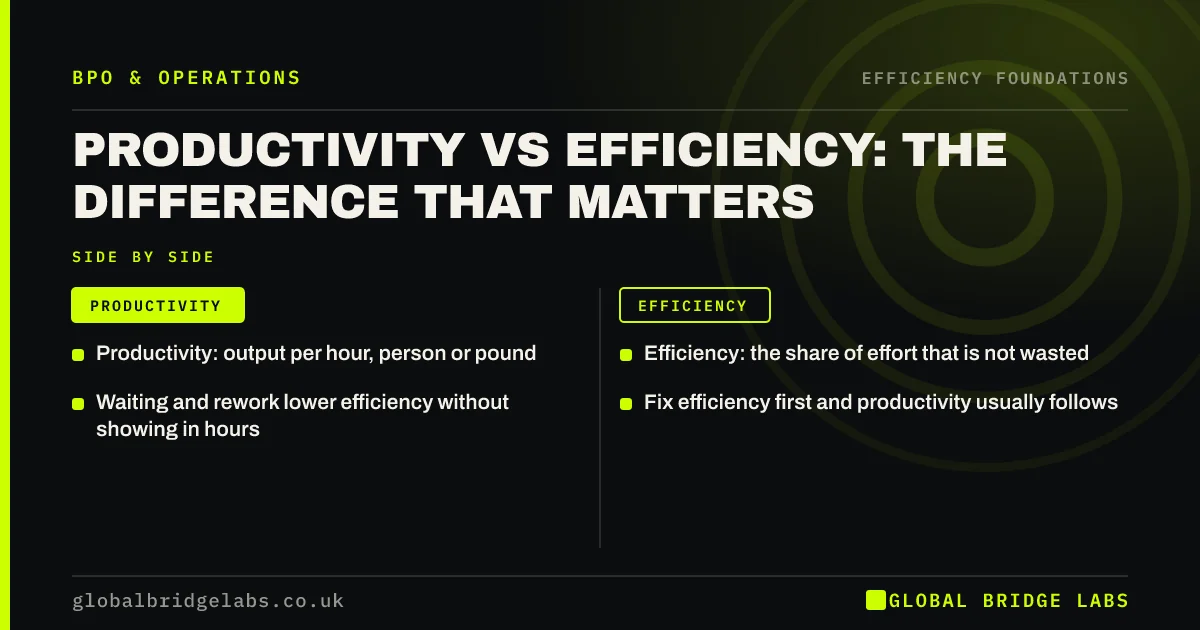
Productivity vs efficiency explained for UK small businesses: how each is measured, why a busy team can be inefficient, and which to improve first.
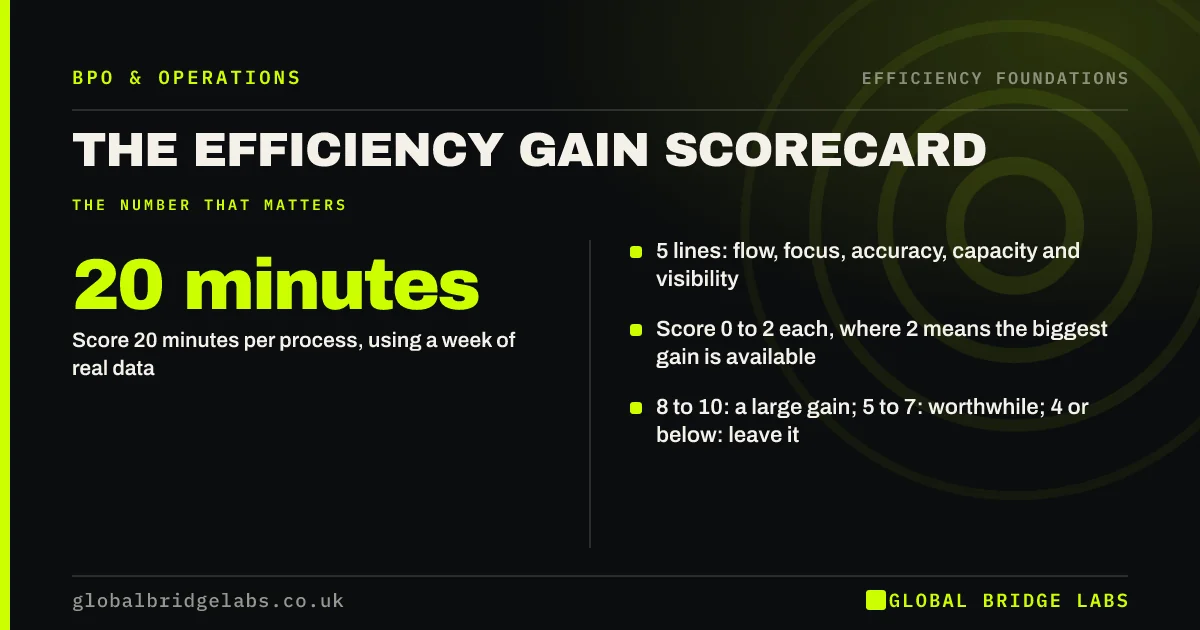
Score any process on the five efficiency gains (flow, focus, accuracy, capacity, visibility) to see where outsourcing would help most, in about 20 minutes.
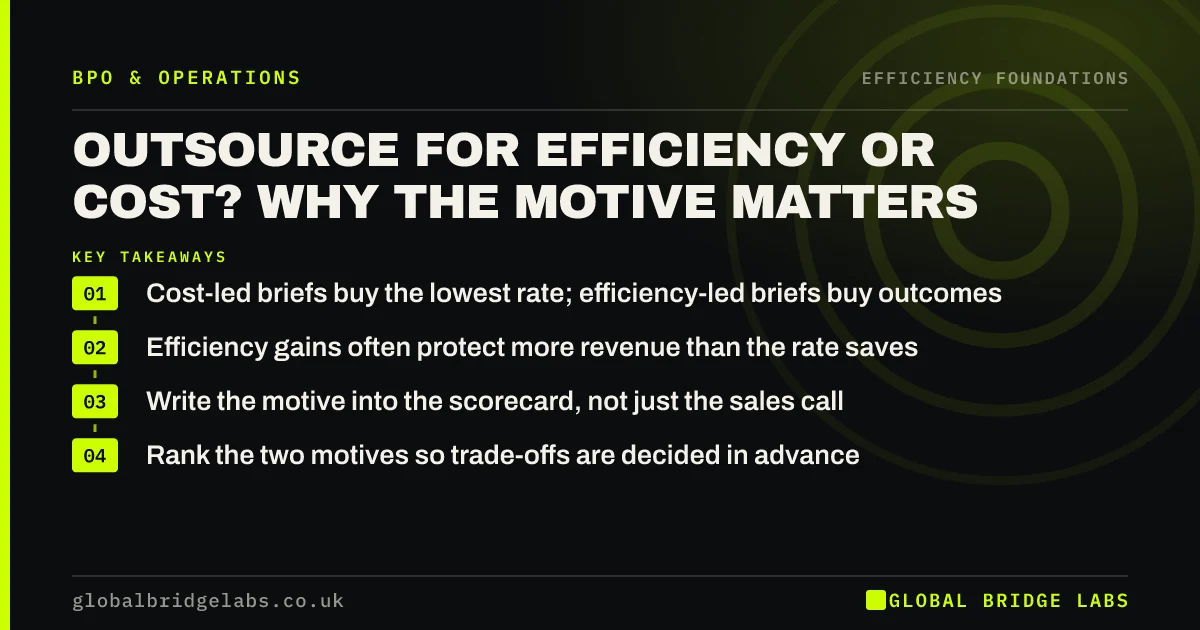
Outsourcing for efficiency or cost savings leads to different briefs, providers and measures. How to choose your motive and write it into the contract.
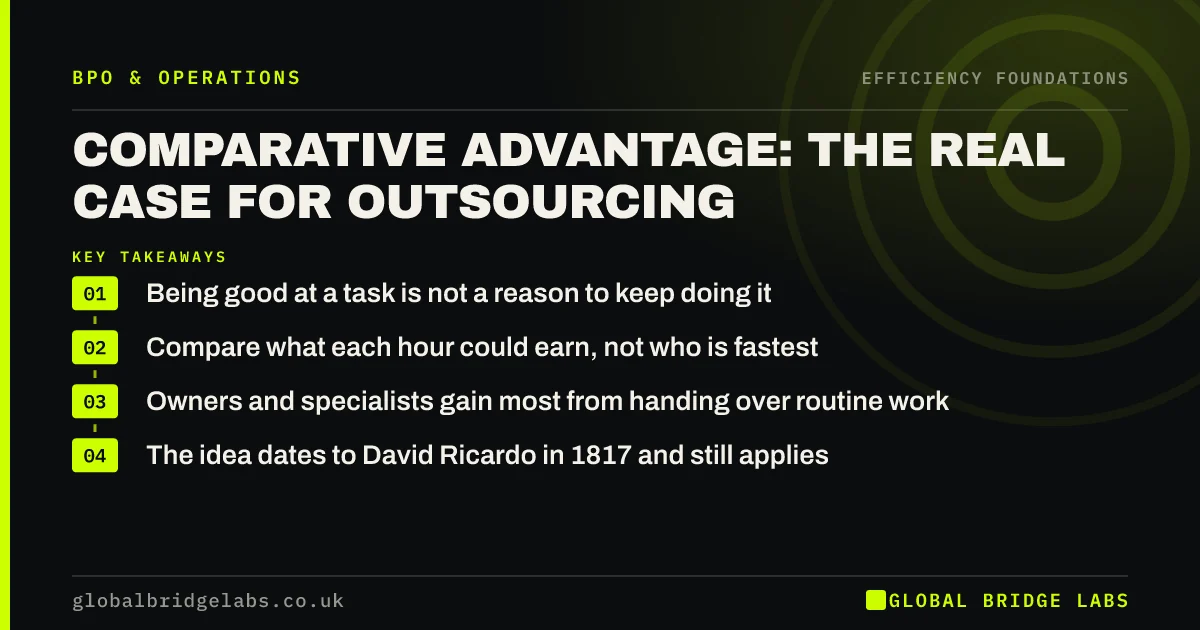
Comparative advantage explains why outsourcing helps even when you do a task well yourself: what the idea means for UK owners and how to apply it.
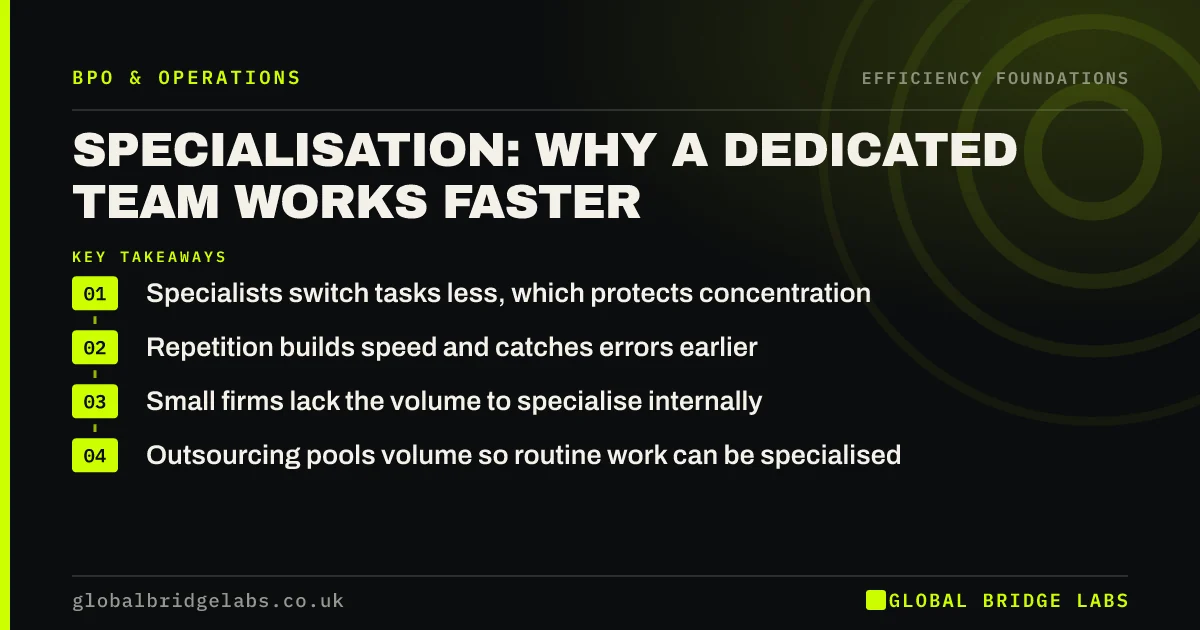
Division of labour in business explained: why specialised teams do routine work faster and more accurately, and how small firms get the benefit.
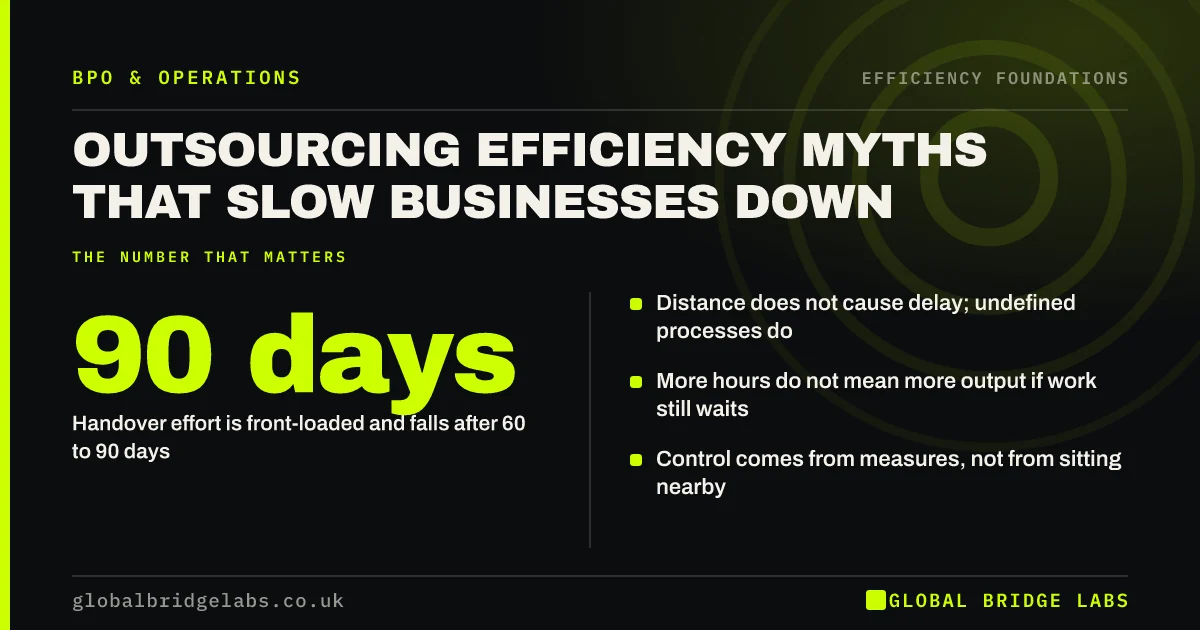
Six outsourcing efficiency myths UK owners still believe, from 'offshore is always slower' to 'more hours means more output', and what is true instead.
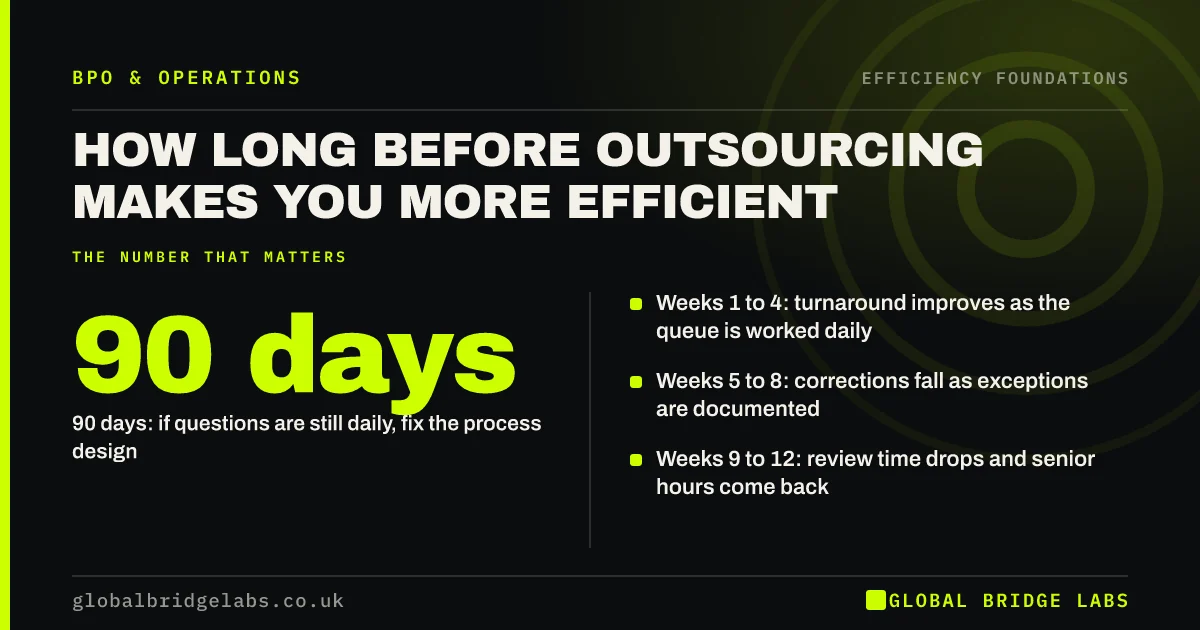
How long before outsourcing improves efficiency: a realistic 90-day timeline for UK small businesses, what changes each month and the signs it is on track.
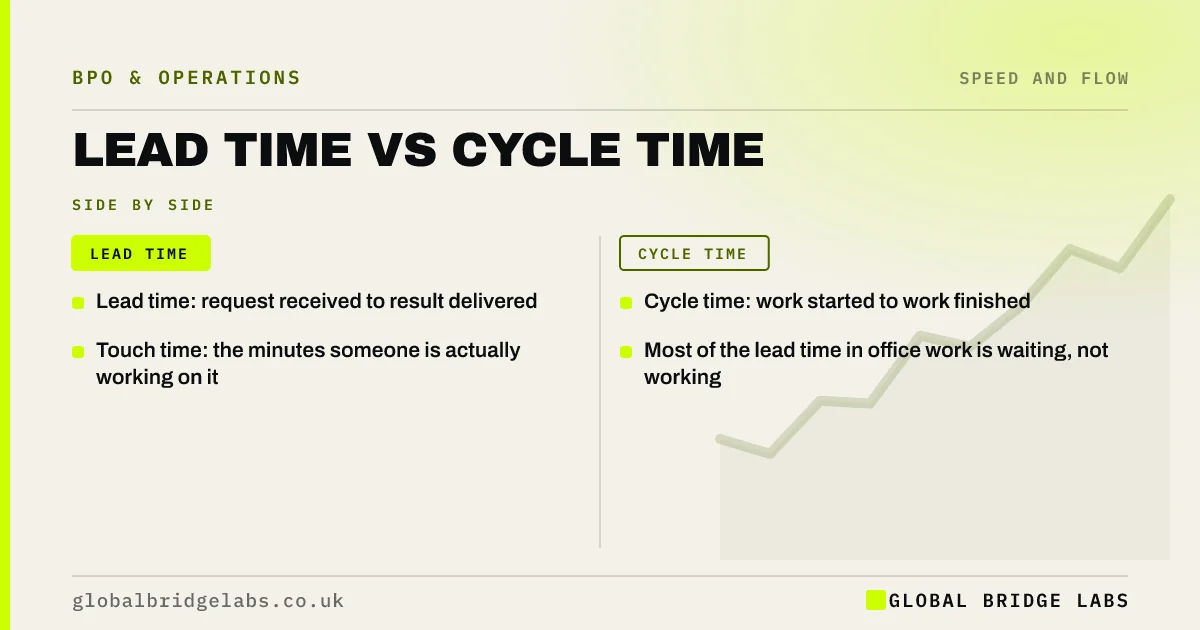
Lead time vs cycle time explained for UK service businesses: what each measures, why customers feel lead time, and how to shorten the wait between steps.
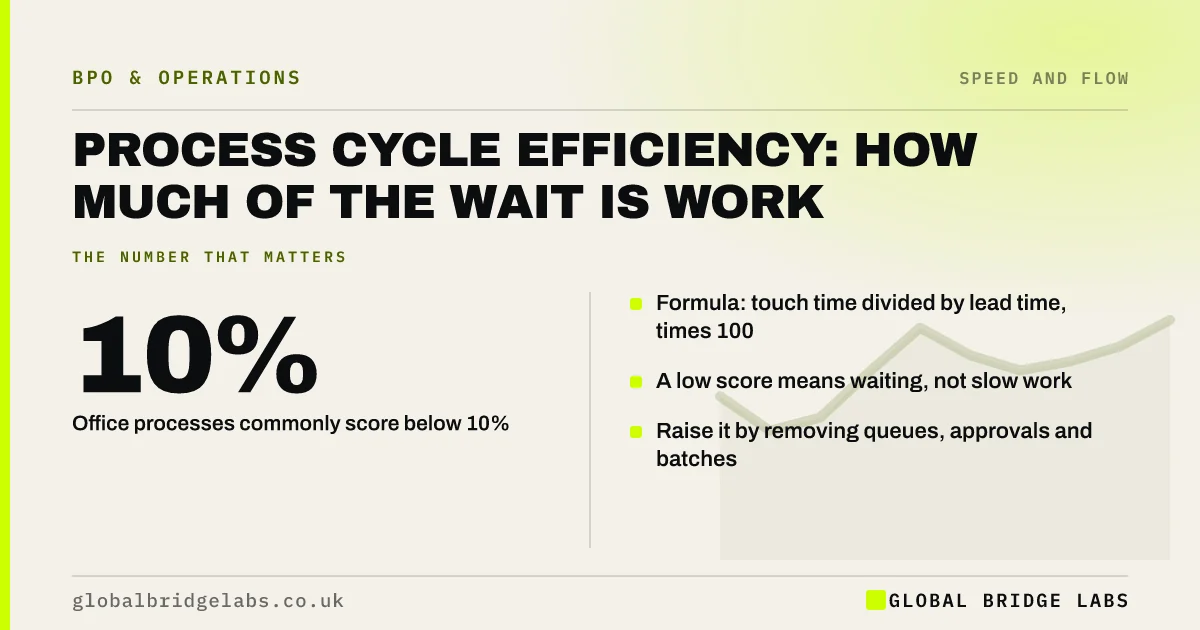
Process cycle efficiency is touch time divided by lead time. How to calculate it for an office process, what a low score means and how to raise it.
30 minutes with our team and you'll know exactly which of the three problems to fix first.
