Short, practical writing on visibility, conversion and capacity, from the team doing the work for 120+ UK startups, SMEs and enterprises.
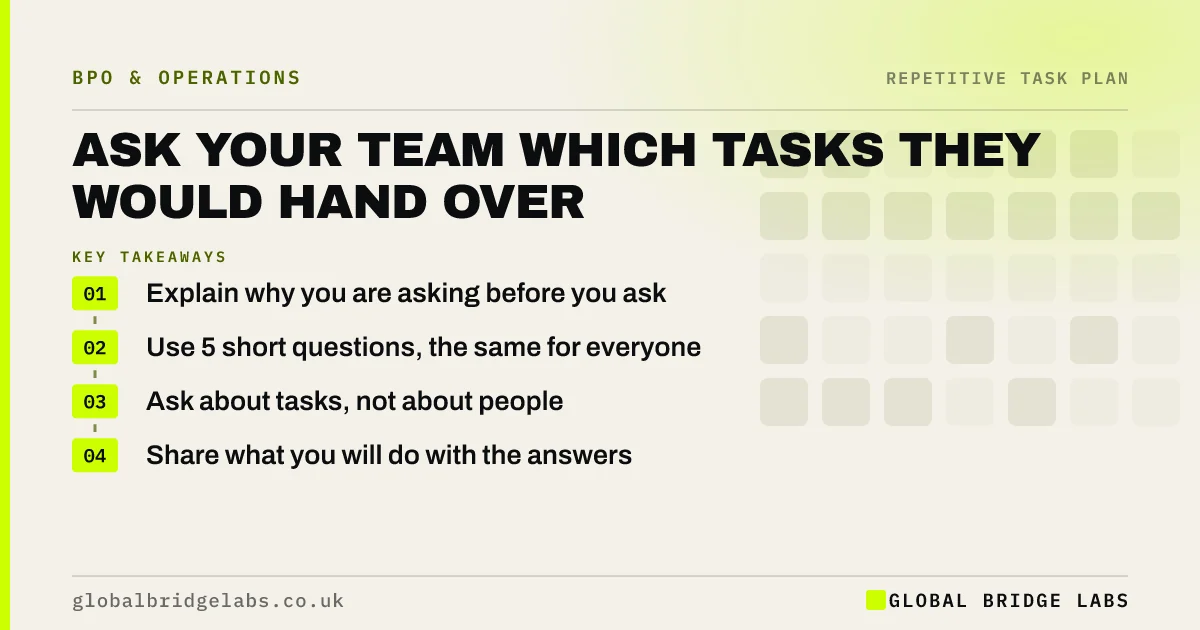
How to ask employees which repetitive tasks they would hand over: the questions to ask, how to run it without worrying people, and how to use the answers.
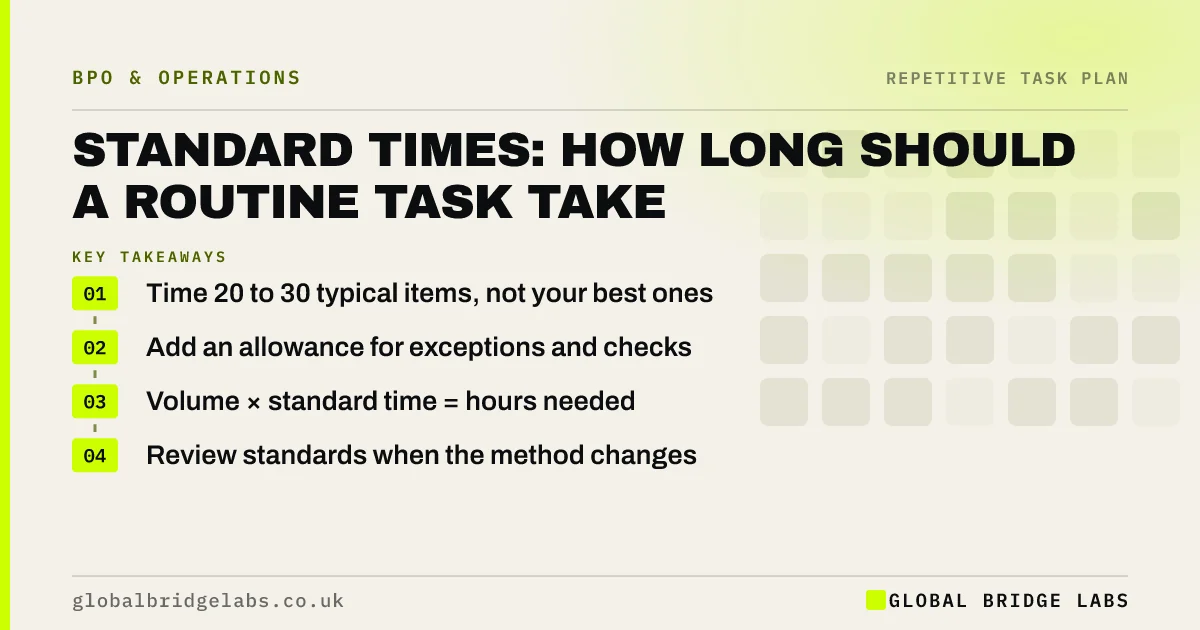
How to set standard times for routine admin tasks: timing a sample, allowing for exceptions, planning capacity and cost, and the limits.
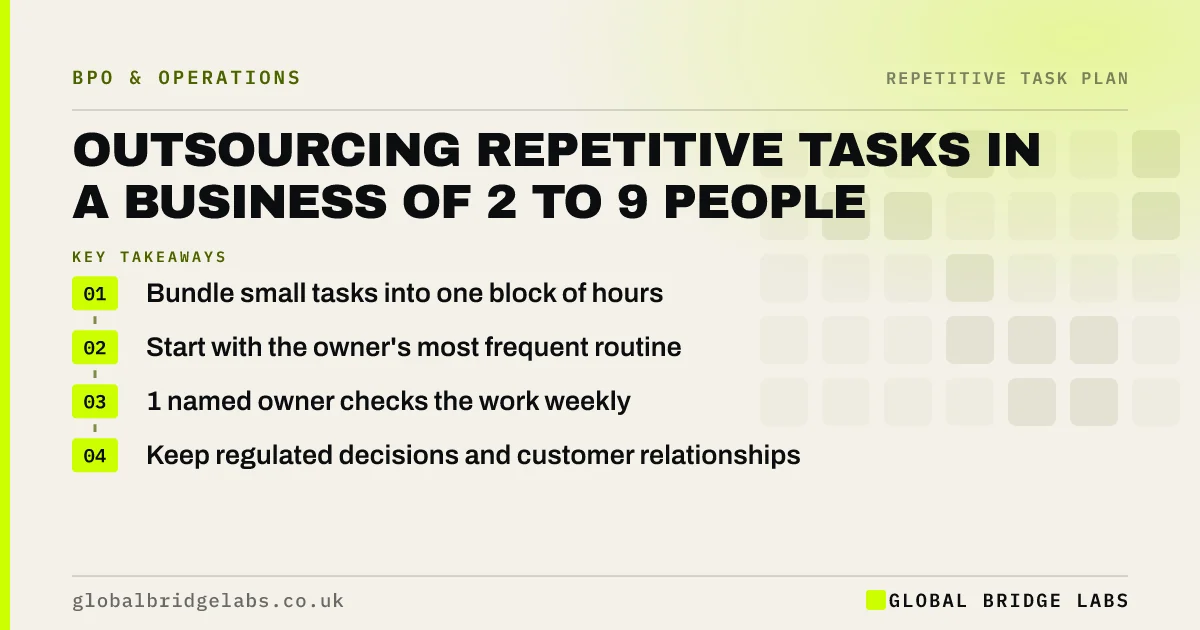
How micro businesses of 2 to 9 people can outsource repetitive tasks: bundling small jobs, starting small and keeping control.
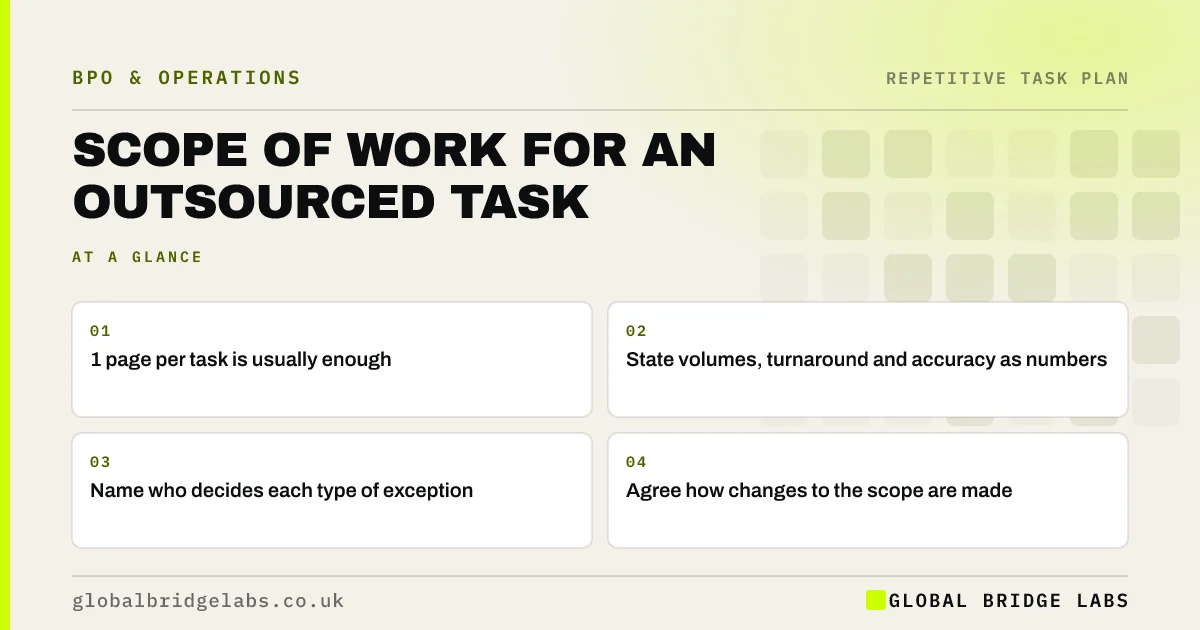
How to write a scope of work for an outsourced repetitive task: inputs, outputs, volumes, turnaround, accuracy, exceptions and change rules.

How clear website navigation improves user experience: faster finding, less effort, more trust and more enquiries, plus five qualities to check.
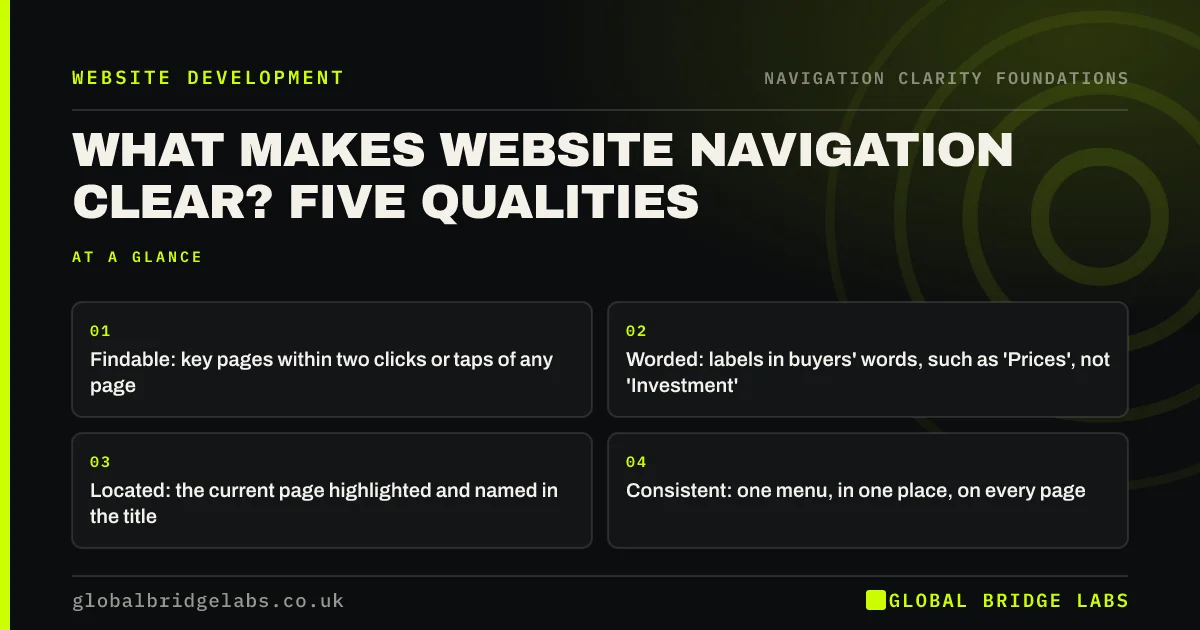
What makes website navigation clear: the five qualities of findable, worded, located, consistent and onward navigation, and how to spot each on your site.
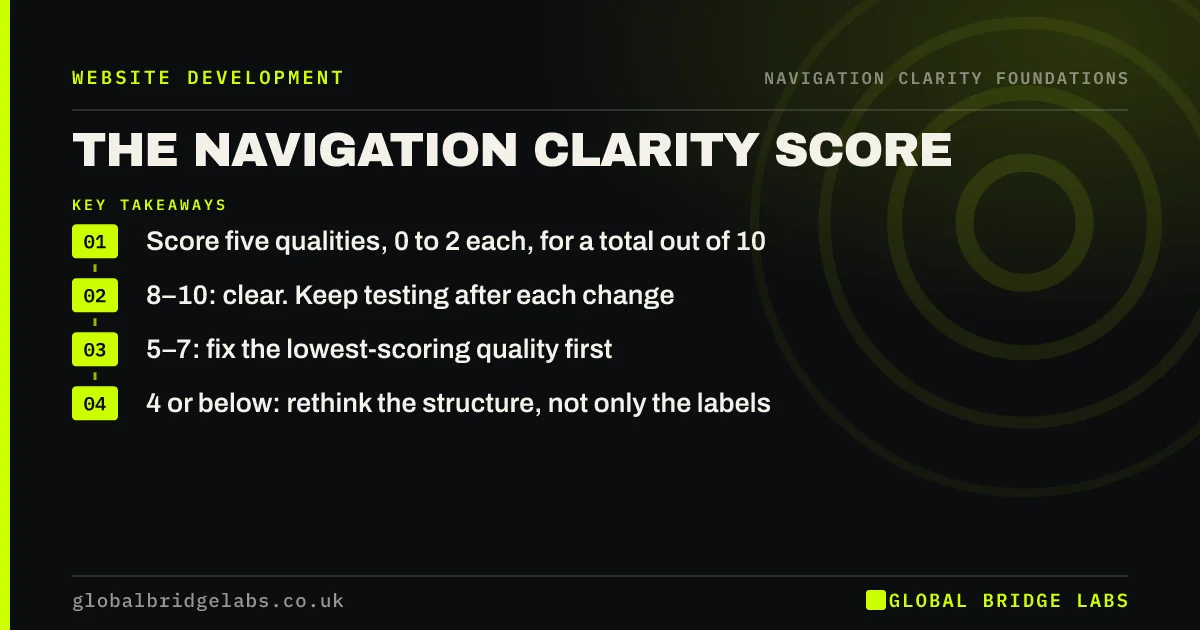
Score your website navigation out of 10 in 20 minutes: five qualities scored 0 to 2, with thresholds for whether to tweak labels or restructure.
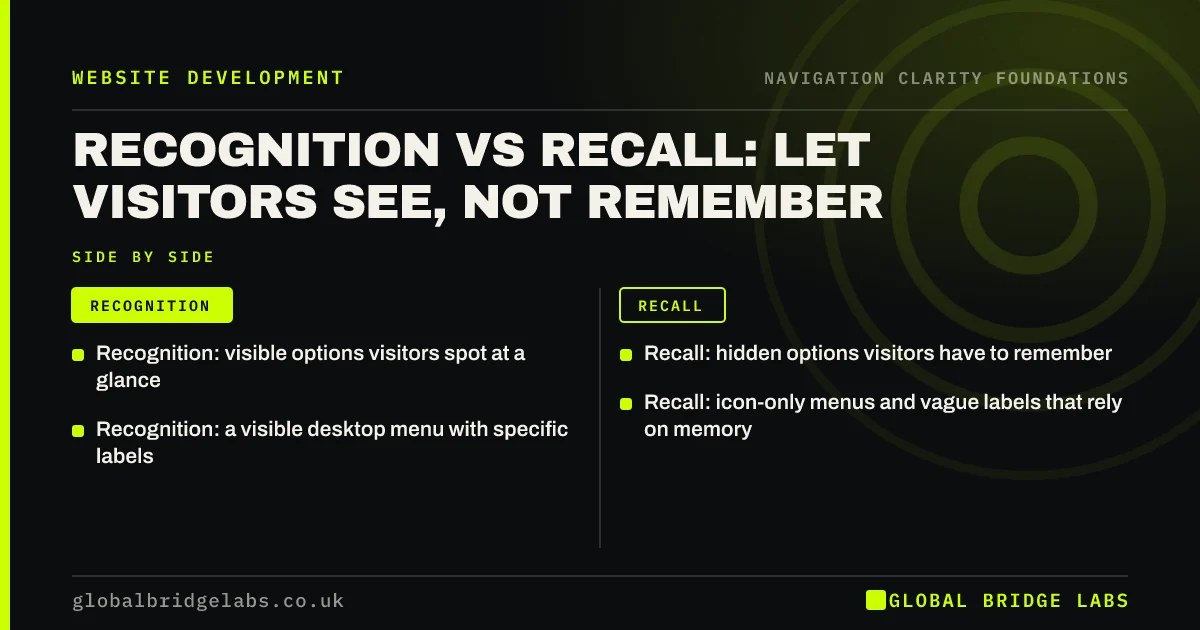
Recognition vs recall in web design: why visitors find pages faster when options are visible, and how to apply the principle to menus, labels and search.
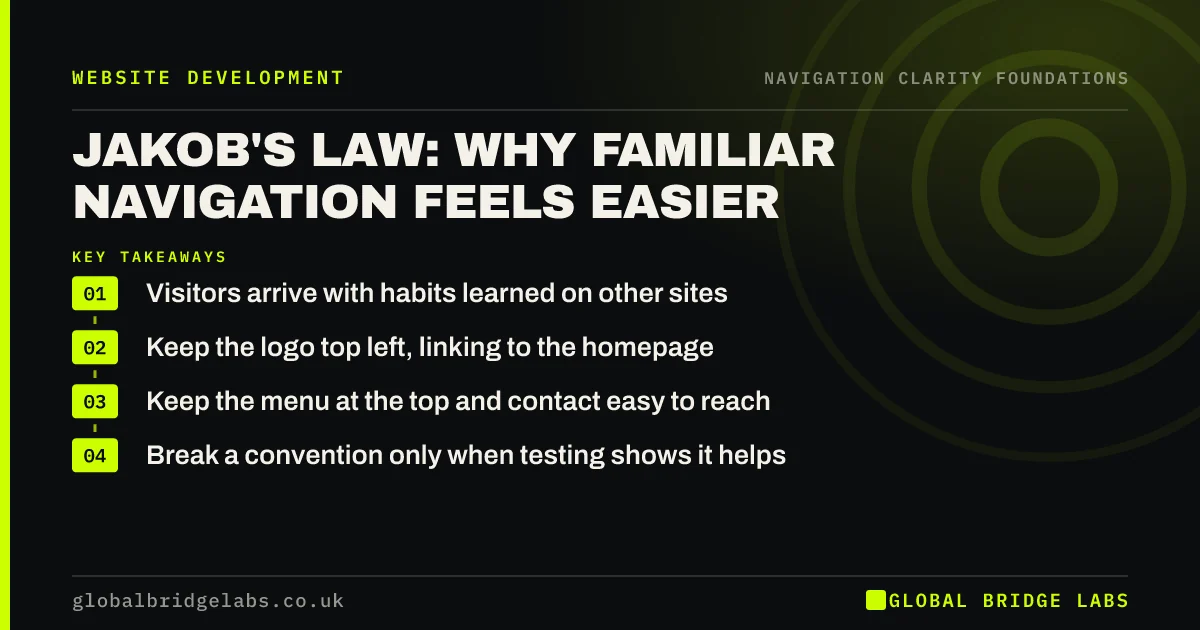
Jakob's law explained for business websites: why visitors expect your navigation to work like other sites, which conventions to keep and when to break one.
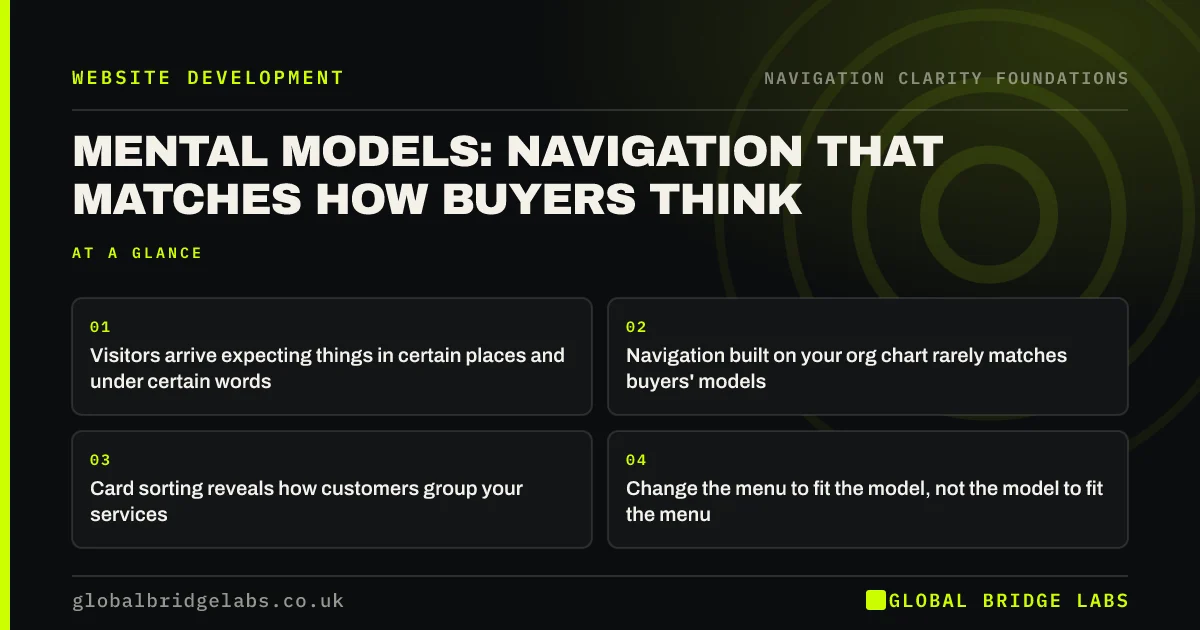
Mental models in UX: how visitors' expectations shape where they look for your services, prices and contact details, and how to design navigation to match.
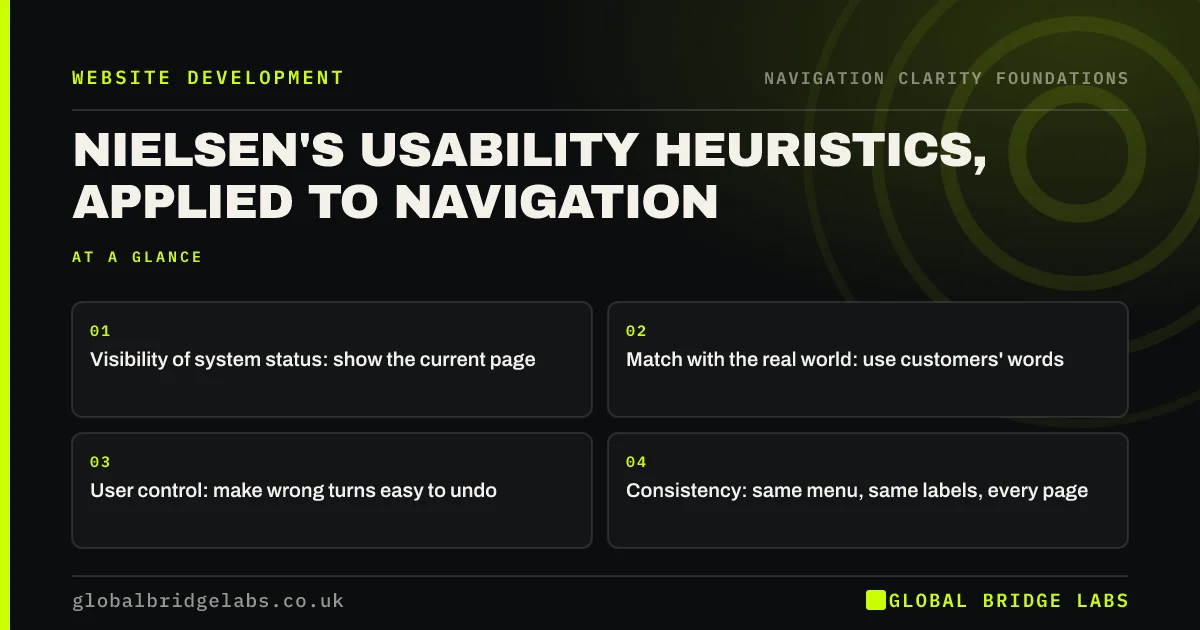
Nielsen's 10 usability heuristics applied to website navigation: what each means for menus, labels and links, and the quick checks to run on your own site.

Progressive disclosure explained: show visitors the essentials first and reveal detail on request, so menus stay clear without hiding what matters.
30 minutes with our team and you'll know exactly which of the three problems to fix first.
