On this page
- 01Key takeaways
- 02Why ask the team?
- 03Which questions should you ask?
- 04How do you ask without worrying people?
- 05What do the answers usually show?
- 06When should you not run it as a survey?
- 07What does this look like in practice?
- 08Team input checklist
- 09Next step
- 10Sources and further reading
- 11Frequently asked questions
Key takeaways
The people who do repetitive tasks know best which ones waste time, go wrong and could be handed over. Asking them, with a short set of questions and a clear explanation of why, finds tasks owners never see and builds support for change. Be honest about what happens to roles, and act on what you hear.
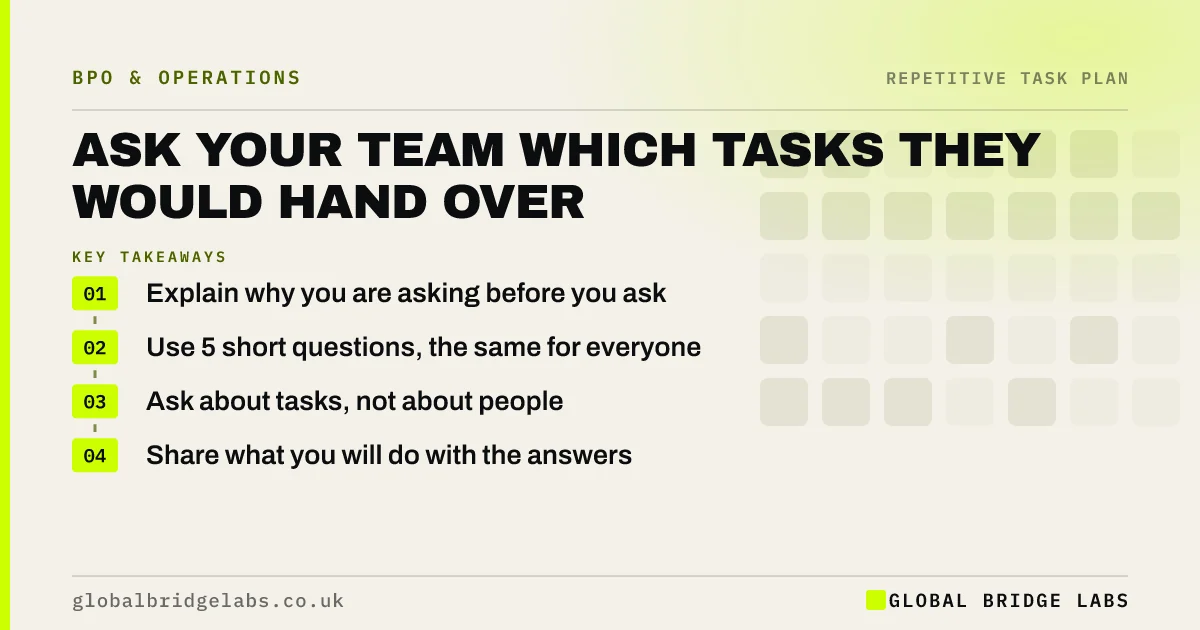
- Explain why you are asking before you ask.
- Use 5 short questions, the same for everyone.
- Ask about tasks, not about people.
- Share what you will do with the answers.
Want a question set you can use with your team? Message us on WhatsApp.
Chat on WhatsApp →Why ask the team?
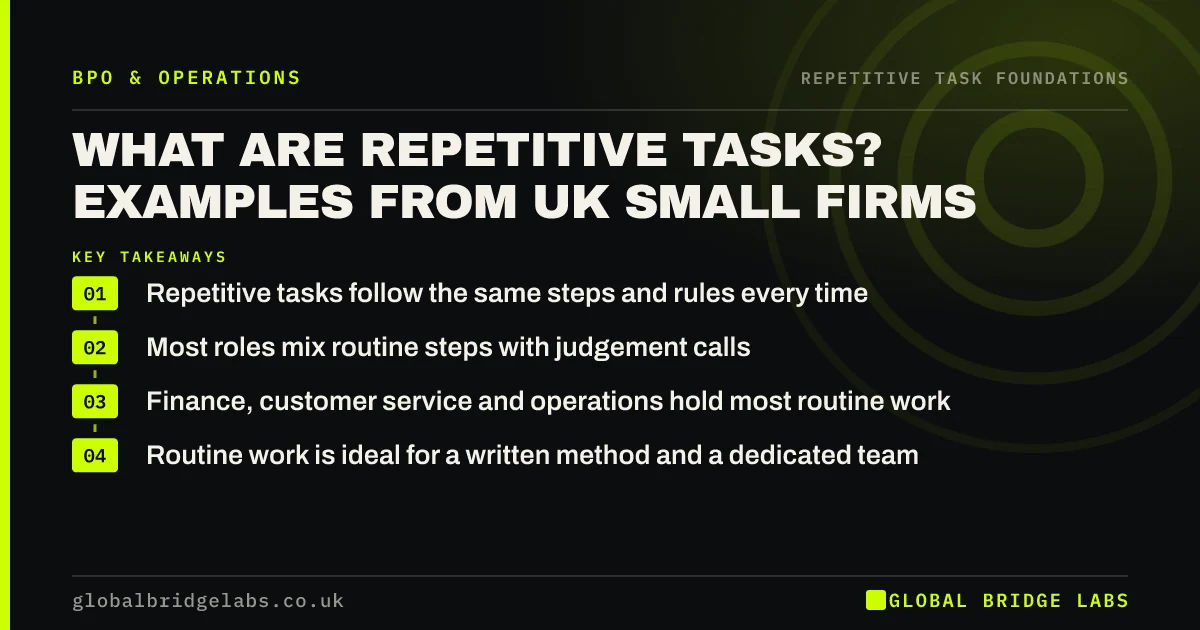
Owners see outcomes; staff see the work. The person who reconciles the supplier statements knows which supplier causes most of the work and which step adds nothing. Asking finds hidden tasks, sharpens the inventory and makes people part of the change rather than subject to it.
Which questions should you ask?
Keep it short and practical. The same questions for everyone make the answers easy to compare.
- Which tasks do you repeat every week?
- Which take longest for the value they add?
- Which most often go wrong or need redoing?
- Which interrupt work you would rather be doing?
- Which would you hand over first, and why?
How do you ask without worrying people?
Be clear about the purpose. If the aim is to free time for better work, say so, and say what that work could be. If roles might change, be honest and follow proper consultation, including TUPE where it applies. People answer openly when they trust the reason and see the results.
What do the answers usually show?
In an illustrative example, asking eight people in a 15-person firm surfaces 12 tasks the owner had not listed, three of which take over two hours a week each. These are example figures. Staff also tend to name the same few tasks, which makes the first choice easy.
- Count your task volumes before you outsource anything
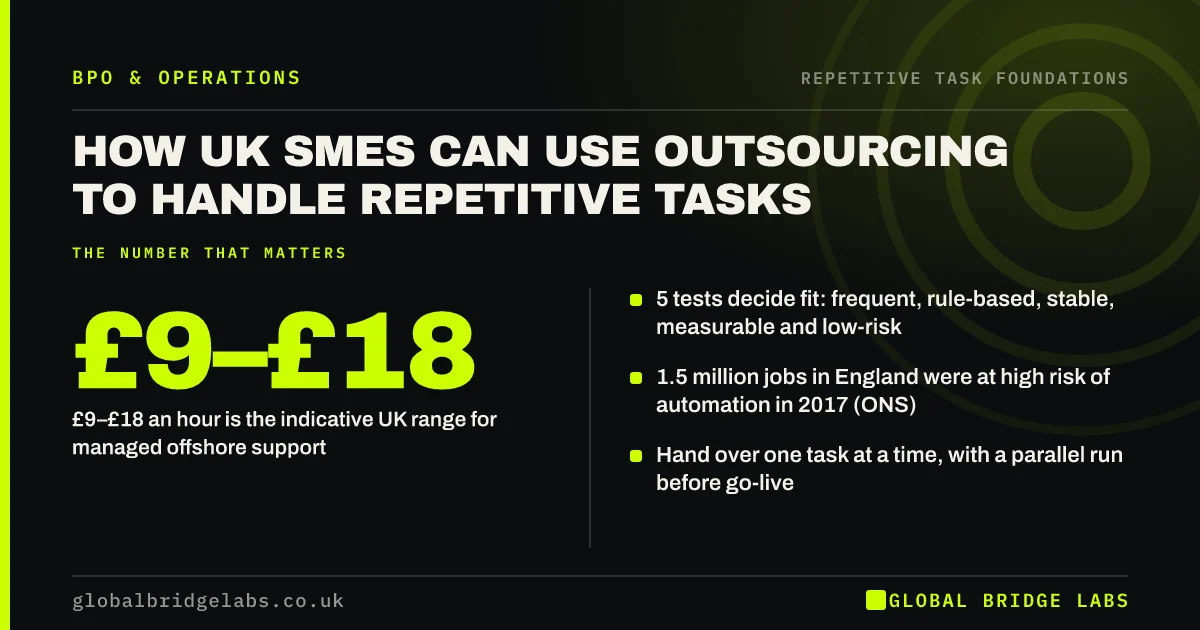
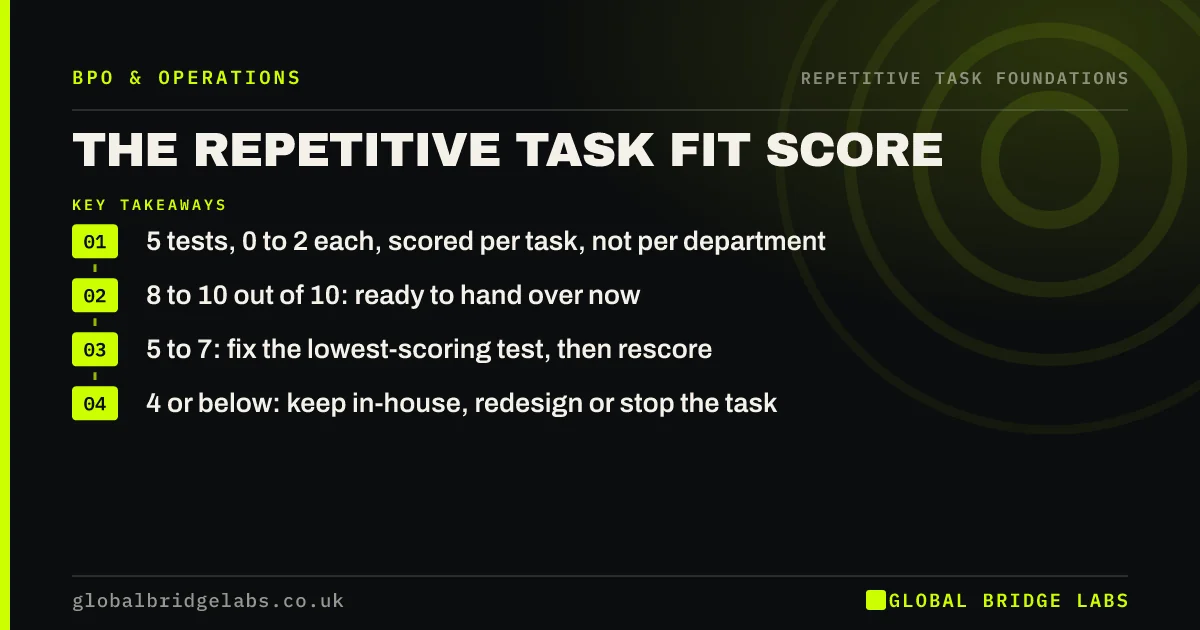
- The repetitive task fit score: ready to hand over?
Send us your team's answers on WhatsApp and we will help you turn them into a shortlist.
Chat on WhatsApp →When should you not run it as a survey?
In a team of three or four, a conversation works better than a form. During a restructure or redundancy process, take advice first, because the questions can be read as part of the process. Never use the answers to judge individual performance.
What does this look like in practice?
A pattern we see: the task staff most want to hand over is one the owner had assumed they liked. Asking changes the order of handover and the mood around it.
Team input checklist
Run the exercise with these points.
- Purpose explained first.
- Same five questions for everyone.
- Answers grouped by task, not person.
- Results shared with the team.
- First action taken within a month.
Next step
Send us your team's answers, or ask us for the question set. We will help you turn the results into a shortlist of tasks worth handing over.
Message us on WhatsApp about team input, or book a 30-minute consultation.
Chat on WhatsApp →Sources and further reading
- What are the Management Standards for work-related stress? · Health and Safety Executive
- Business transfers, takeovers and TUPE · GOV.UK
Frequently asked questions
Should you ask staff before outsourcing tasks?
Yes. The people doing repetitive tasks know which waste time and go wrong, and asking them finds tasks owners miss. Explain the purpose honestly, ask about tasks rather than people and share what you will do with the answers. Take advice if roles could change.
What questions should you ask employees about their tasks?
Ask which tasks they repeat every week, which take longest for the value they add, which most often go wrong, which interrupt more important work and which they would hand over first. Use the same questions for everyone so the answers can be compared.
Will staff worry about their jobs if you ask?
They may, so be clear about the purpose. If the aim is to free time for more valuable work, say what that work is. If roles might change, be honest and follow proper consultation. Trust grows when people see their answers lead to sensible changes.
Written by

Global Bridge Labs (GBL) is a UK–Sri Lanka partner for social media, websites and BPO. Everything here comes from client delivery, not theory.