On this page
- 01Key takeaways
- 02Why is outsourcing different in a micro business?
- 03How should a micro business start?
- 04What does it cost and save?
- 05When should a micro business wait?
- 06What does this look like in practice?
- 07Micro business checklist
- 08Next step
- 09Sources and further reading
- 10Frequently asked questions
Key takeaways
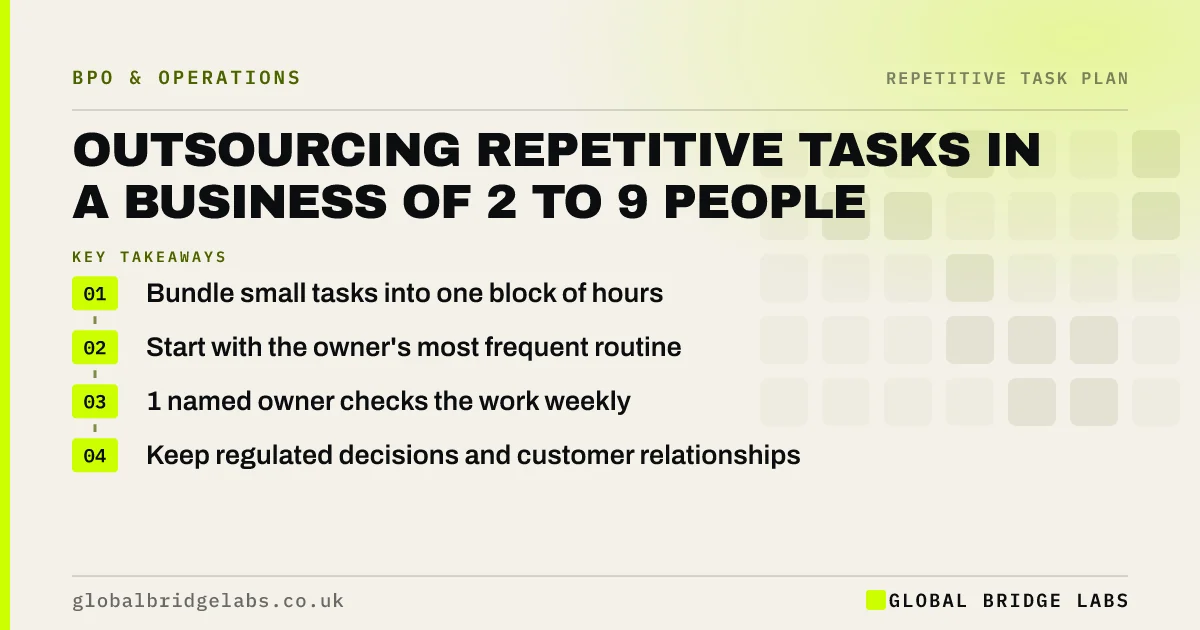
In a micro business of 2 to 9 people, repetitive tasks are scattered across everyone, often the owner. Outsourcing works when small tasks are bundled into one block of hours, the owner writes down the top few methods, and one person keeps a weekly check. Micro businesses are the majority of UK firms, and the time freed matters most at this size.
- Bundle small tasks into one block of hours.
- Start with the owner's most frequent routine.
- 1 named owner checks the work weekly.
- Keep regulated decisions and customer relationships.
Running a small team and doing all the admin yourself? Message us on WhatsApp with your team size.
Chat on WhatsApp →Why is outsourcing different in a micro business?
Micro businesses rarely have a single task big enough to hand over, there is no operations manager to oversee it, and the owner is both the expert and the bottleneck. Department for Business and Trade figures show micro businesses make up the large majority of UK businesses, so this is the most common situation, not the exception.
How should a micro business start?
List the routine tasks for one week, bundle the ones that share a system or rhythm, and write short methods for the three most frequent. Start with a few hours a week, run in parallel briefly, and check samples every Friday. Add tasks only as the first ones settle.
- List a week of routine tasks.
- Bundle by system or rhythm.
- Write three short methods.
- Start small and check weekly.
What does it cost and save?
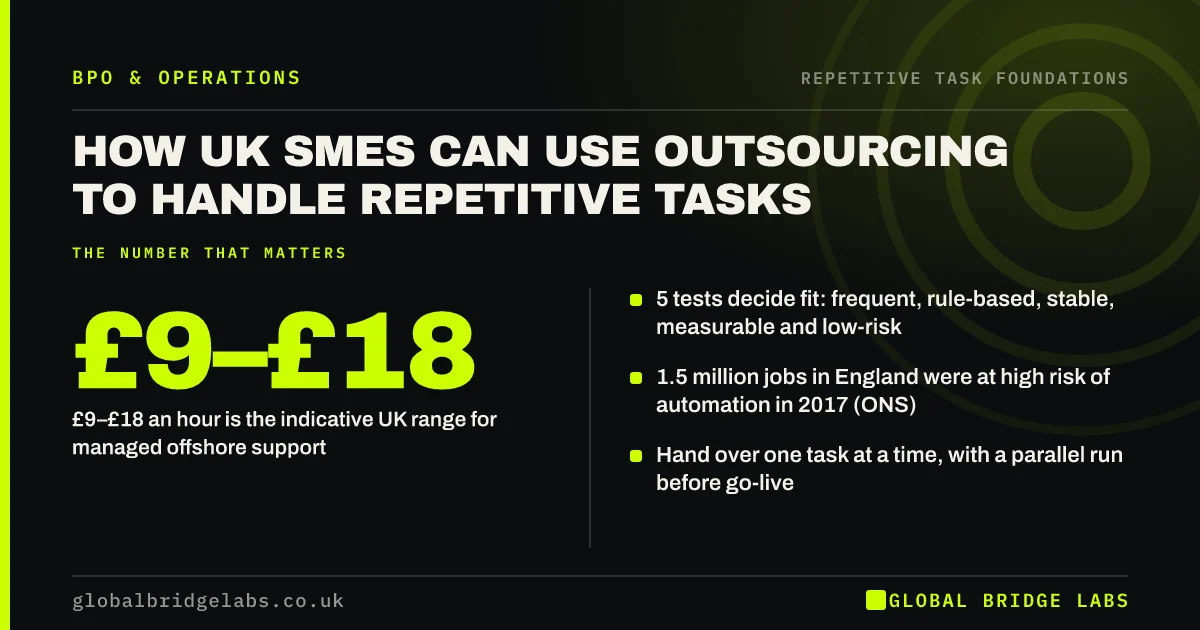
In an illustrative example, a five-person firm bundles invoicing, reminders, data updates and supplier chasing into 10 hours a week. At an indicative offshore rate of £9–£18 an hour that is £90–£180 a week, not a GBL price, against 10 owner hours worth far more. These are example figures.
- What is your time worth as a business owner?
- BPO cost per hour in the UK
- Outsourcing vs a part-time hire
Send us your weekly routine tasks on WhatsApp and we will help you size a first bundle.
Chat on WhatsApp →When should a micro business wait?
Wait if routine tasks total only a couple of hours a week, if methods change constantly while the business finds its feet, or if cash flow cannot support a regular commitment. A simple automation or a better tool may help more for now.
What does this look like in practice?
A pattern we see: a small firm's owner spends evenings on invoices and reminders. A 10-hour weekly bundle frees those evenings, and the owner's Friday check takes 20 minutes once the routine settles.
Micro business checklist
Use these points to start.
- One week of tasks listed.
- A bundle of related tasks chosen.
- Three methods written.
- A weekly check in the diary.
- Data protection paperwork in place.
Next step
Tell us your team size and the routine tasks that land on you. We will suggest a first bundle and say plainly whether it is worth doing yet.
Message us on WhatsApp about outsourcing in a small team, or book a 30-minute consultation.
Chat on WhatsApp →Sources and further reading
- Business population estimates for the UK and regions 2025 · Department for Business and Trade
- Contracts and liabilities between controllers and processors · Information Commissioner's Office
Frequently asked questions
Can a very small business outsource admin?
Yes. The key is to bundle small repetitive tasks into one block of hours, write short methods for the most frequent ones and keep a weekly check. Starting with a few hours a week is common, and more tasks can be added once the first settle.
What should a micro business outsource first?
The routine that takes the owner most time each week and follows clear rules, such as invoicing, reminders or data updates. Bundling it with related tasks that use the same system usually makes a block worth handing over.
How does a small business keep control of outsourced work?
Name one person, often the owner, to answer questions and check a sample each week. Keep a short scorecard of volume, turnaround and errors, and keep customer relationships and regulated decisions in-house.
Written by

Global Bridge Labs (GBL) is a UK–Sri Lanka partner for social media, websites and BPO. Everything here comes from client delivery, not theory.