On this page
- 01Key takeaways
- 02What is a mental model?
- 03How do mental models affect navigation?
- 04How do you find your visitors' mental models?
- 05What if different visitors have different models?
- 06When should you not follow the visitor's model?
- 07What does this look like in practice?
- 08Mental model checklist
- 09Next step
- 10Sources and further reading
- 11Frequently asked questions
Key takeaways
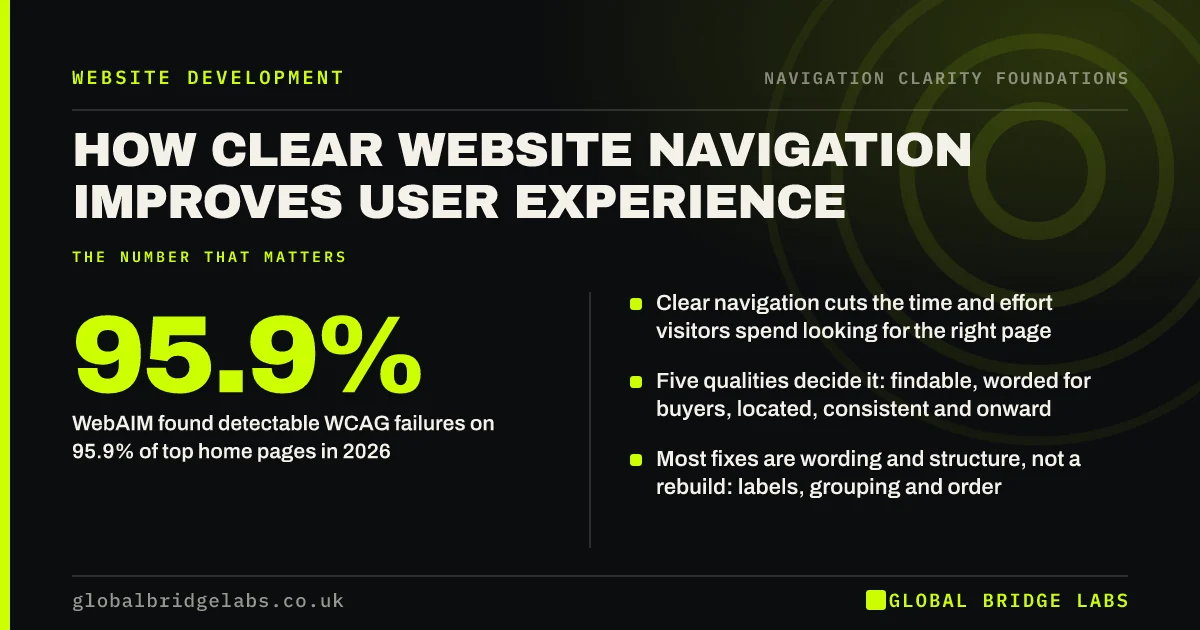
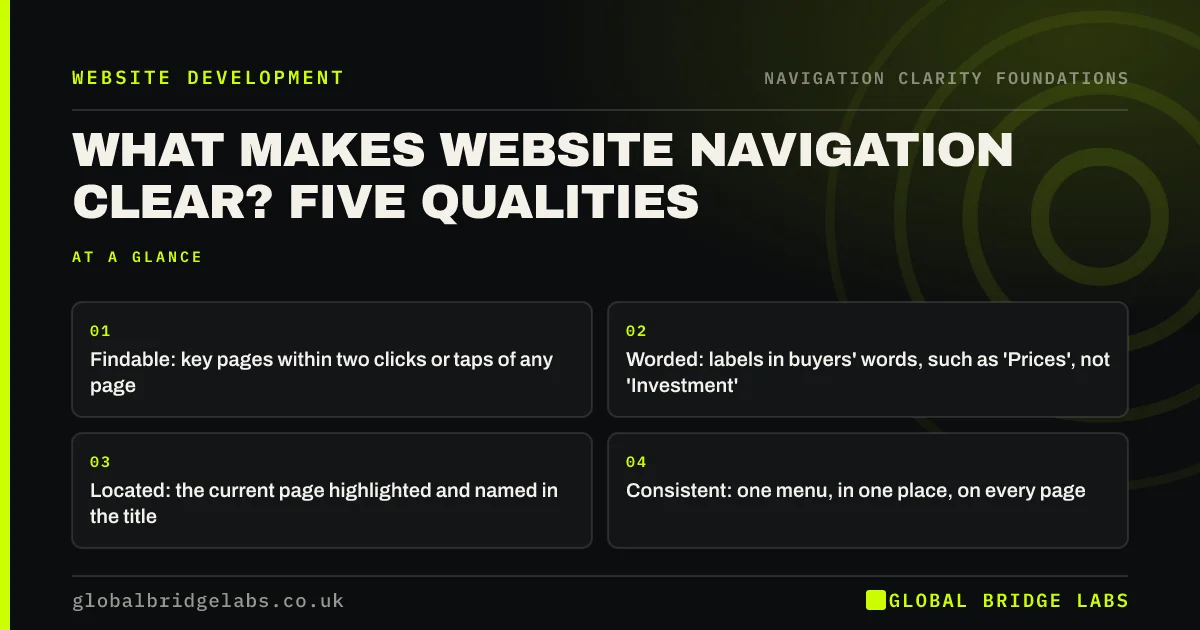
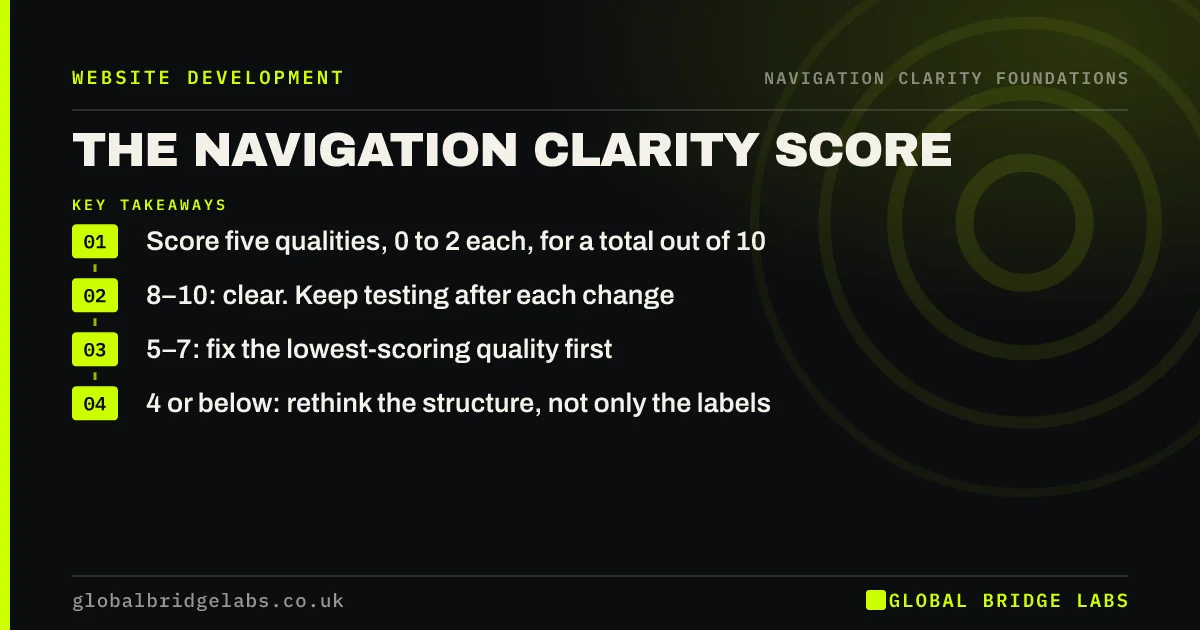
A mental model is what a visitor believes about how your site works and where things should be. Navigation feels clear when it matches that belief and confusing when it does not. Find visitors' mental models through customer language, card sorting and watching people use the site, then organise the menu around them rather than around your company.
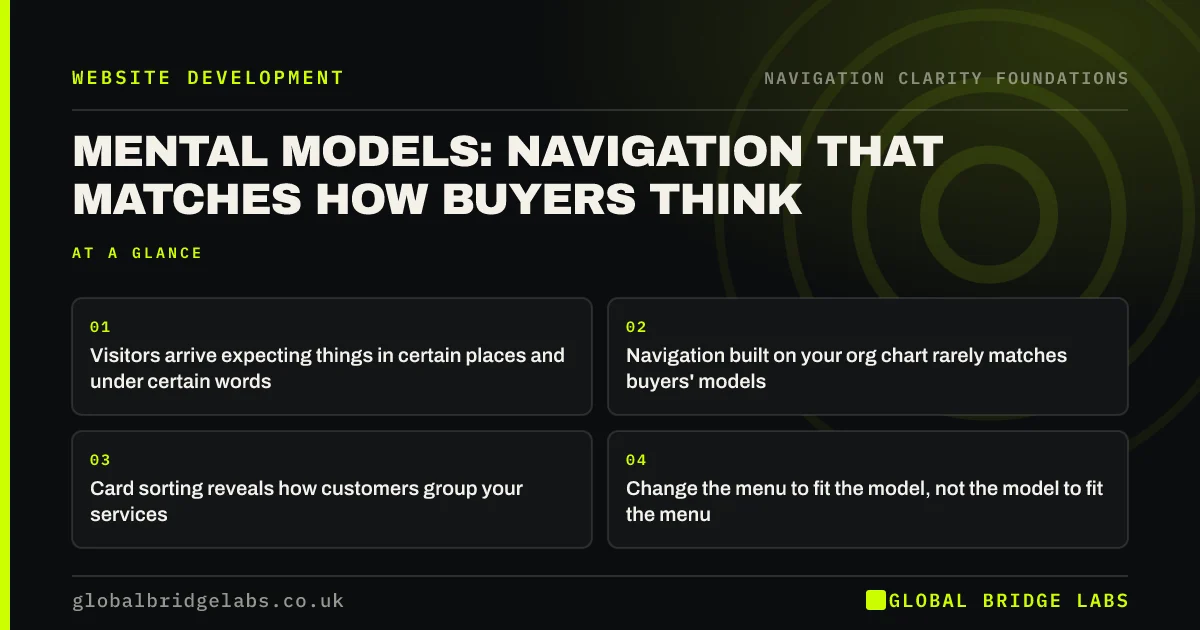
- Visitors arrive expecting things in certain places and under certain words.
- Navigation built on your org chart rarely matches buyers' models.
- Card sorting reveals how customers group your services.
- Change the menu to fit the model, not the model to fit the menu.
Want to know how your customers would group your services? Message us on WhatsApp.
Chat on WhatsApp →What is a mental model?
A mental model is a person's internal picture of how a system works, built from past experience. Nielsen Norman Group defines it as what the user believes about the system at hand. On a website, it covers where visitors expect to find prices, what they think a label means and what will happen when they click.
How do mental models affect navigation?
When the site matches the visitor's model, they find things without thinking. When it does not, they look in the wrong place, misread labels and feel lost. A homeowner thinks in jobs, such as 'leaking roof', not in trade categories such as 'remedial works'. A menu built on the second will fail the first.
How do you find your visitors' mental models?
Start with the words customers already use in calls, emails, reviews and search queries. Then run a card sort, where customers group your pages into categories that make sense to them. Finally, watch a handful of people use the site and note where they look first. The pattern across these sources is the model.
- Search Console queries and site search terms.
- Words used in enquiry emails and calls.
- Card sorting with 15 or so customers.
- Tree testing of the proposed structure.
- Watching where people look and click first.
What if different visitors have different models?
Some sites serve groups who think differently, such as homeowners and landlords, or patients and referrers. If the groups need different pages, audience-based routes can help. If they need the same pages, use labels that work for both and add cross-links from audience pages.
When should you not follow the visitor's model?
When the model is wrong in a way that harms the customer, such as expecting a legal service to be cheaper than it can be, the site should correct it in content, not in navigation. Keep the menu where visitors expect it, then explain on the page.
What does this look like in practice?
A pattern we see: a firm organises its menu by department because that is how the business is run. Customers looking for one service find it split across three. Regrouping by customer problem, with the departments listed on the About page, matches how buyers think.
Mental model checklist
- Collect the words customers use for each service.
- Run a card sort before changing the structure.
- Tree test the new structure with real tasks.
- Label items in customer words.
- Watch five people use the new menu.
Next step
Read your last ten enquiry emails and list the words customers used for what they wanted.
Message us on WhatsApp for a navigation review, or book a 30-minute consultation.
Chat on WhatsApp →Sources and further reading
- Mental models and user experience design · Nielsen Norman Group
- Card sorting: uncover users' mental models · Nielsen Norman Group
- Tree testing: fast, iterative evaluation of menu labels and categories · Nielsen Norman Group
Frequently asked questions
What is a mental model in UX?
A mental model is a user's belief about how a system works, based on past experience. In web design, it shapes where visitors expect to find information, what they think labels mean and how they expect menus and links to behave. Matching it makes a site feel intuitive.
How do you identify user mental models?
Use customer language from enquiries and search queries, run a card sort to see how people group your content, and observe real users completing tasks. Interviews help too. Look for consistent patterns rather than individual opinions.
Can you change a user's mental model?
Slowly, through clear content and consistent design, but it is usually cheaper to match the model than to fight it. Keep navigation where visitors expect it and use page content to explain anything that differs from their assumptions.
Written by

Global Bridge Labs (GBL) is a UK–Sri Lanka partner for social media, websites and BPO. Everything here comes from client delivery, not theory.