On this page
- 01Key takeaways
- 02What should a scope of work include?
- 03How is a scope different from the method?
- 04What does a scope look like in numbers?
- 05When does a scope need reopening?
- 06What does this look like in practice?
- 07Scope of work checklist
- 08Next step
- 09Sources and further reading
- 10Frequently asked questions
Key takeaways
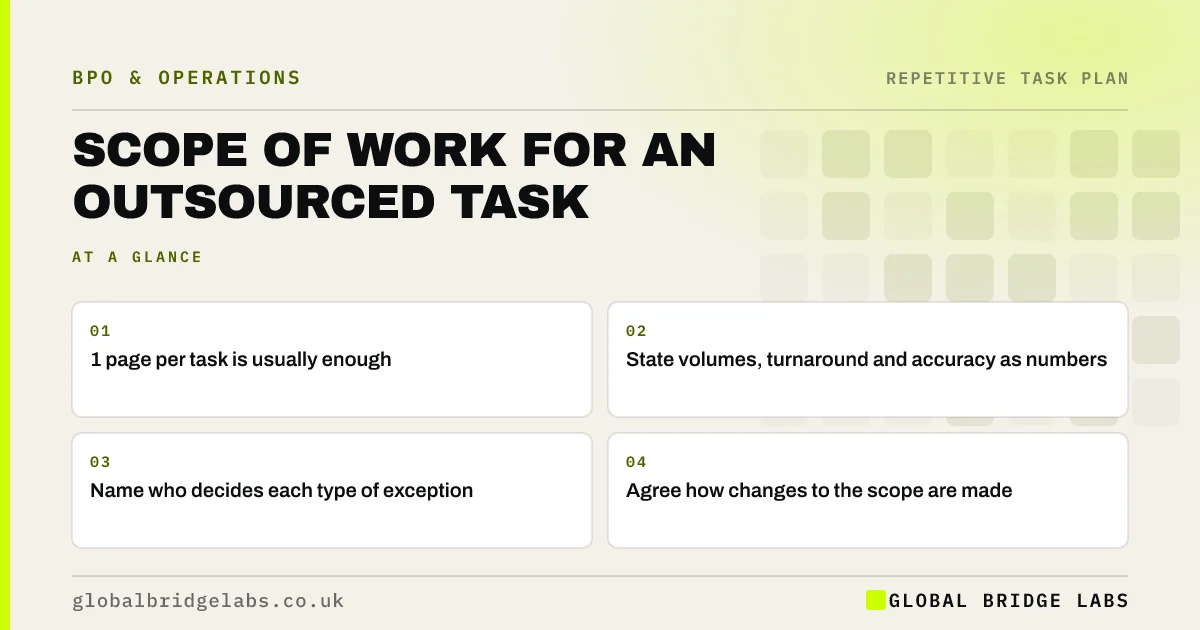
A scope of work for an outsourced task sets out exactly what the team does: inputs, outputs, expected volumes, turnaround, accuracy target, exceptions and who decides them, systems access, reporting and how changes are agreed. One page per task is usually enough. A clear scope prevents disputes, scope creep and quality drift.
- 1 page per task is usually enough.
- State volumes, turnaround and accuracy as numbers.
- Name who decides each type of exception.
- Agree how changes to the scope are made.
Want a scope of work template for your first task? Message us on WhatsApp.
Chat on WhatsApp →What should a scope of work include?
Cover the points that would otherwise cause a disagreement later. Write them in plain language with numbers wherever possible.
- Task and output: what done looks like.
- Inputs: what arrives, from where, by when.
- Volumes: expected range and peaks.
- Turnaround and cut-off times.
- Accuracy target and sampling plan.
- Exceptions: what is referred, to whom.
- Access, reporting and change process.
How is a scope different from the method?
The scope says what is done and to what standard; the method says how. Keep them separate so the method can be improved without renegotiating the scope, while any change to volumes, turnaround or task boundaries goes through the agreed change process.
What does a scope look like in numbers?
In an illustrative scope for supplier invoice processing: 350 to 450 invoices a month, received by 2pm processed same day, 98% accuracy on sampling, invoices over £5,000 or without a PO referred to the finance lead, weekly report on volume, turnaround and errors. These are example figures.
- Purchase order processing: raise, match and close POs
- Quality sampling: how many outsourced items to check
Send us your task on WhatsApp and we will help you draft its scope.
Chat on WhatsApp →When does a scope need reopening?
Reopen the scope when volumes move outside the agreed range, new task types are added, turnaround needs change or exceptions grow. Small, unrecorded additions are how scope creep starts, so route every change through the agreed process, even when it seems minor.
What does this look like in practice?
A pattern we see: a dispute about whether a task was 'included' turns out to be a scope that said 'admin support' without detail. One page of specifics would have settled it in advance.
Scope of work checklist
Check every scope against these points.
- Output and done standard defined.
- Inputs and cut-offs stated.
- Volumes as a range.
- Turnaround and accuracy as numbers.
- Exceptions and decision owners named.
- Change process agreed.
Next step
Send us the task you plan to hand over. We will help you draft a one-page scope and say plainly what needs agreeing before go-live.
Message us on WhatsApp about your scope of work, or book a 30-minute consultation.
Chat on WhatsApp →Sources and further reading
- Contracts and liabilities between controllers and processors · Information Commissioner's Office
- Late commercial payments: charging interest and debt recovery · GOV.UK
Frequently asked questions
What is a scope of work in outsourcing?
A scope of work defines what an outsourced team will do for a task: the inputs, outputs, volumes, turnaround, accuracy, exceptions, access, reporting and how changes are agreed. It sets the standard both sides work to and prevents disagreements about what is included.
How detailed should a scope of work be?
Detailed enough that someone outside the business could tell whether the work met the standard. For most repetitive tasks, one page with numbers for volumes, turnaround and accuracy is enough. The step-by-step method belongs in a separate document.
How do you change a scope of work?
Agree a simple change process at the start: either side proposes the change in writing, the effect on volumes, turnaround and cost is noted, and both sides confirm before it takes effect. Routing every change this way prevents scope creep.
Written by

Global Bridge Labs (GBL) is a UK–Sri Lanka partner for social media, websites and BPO. Everything here comes from client delivery, not theory.