Short, practical writing on visibility, conversion and capacity, from the team doing the work for 120+ UK startups, SMEs and enterprises.
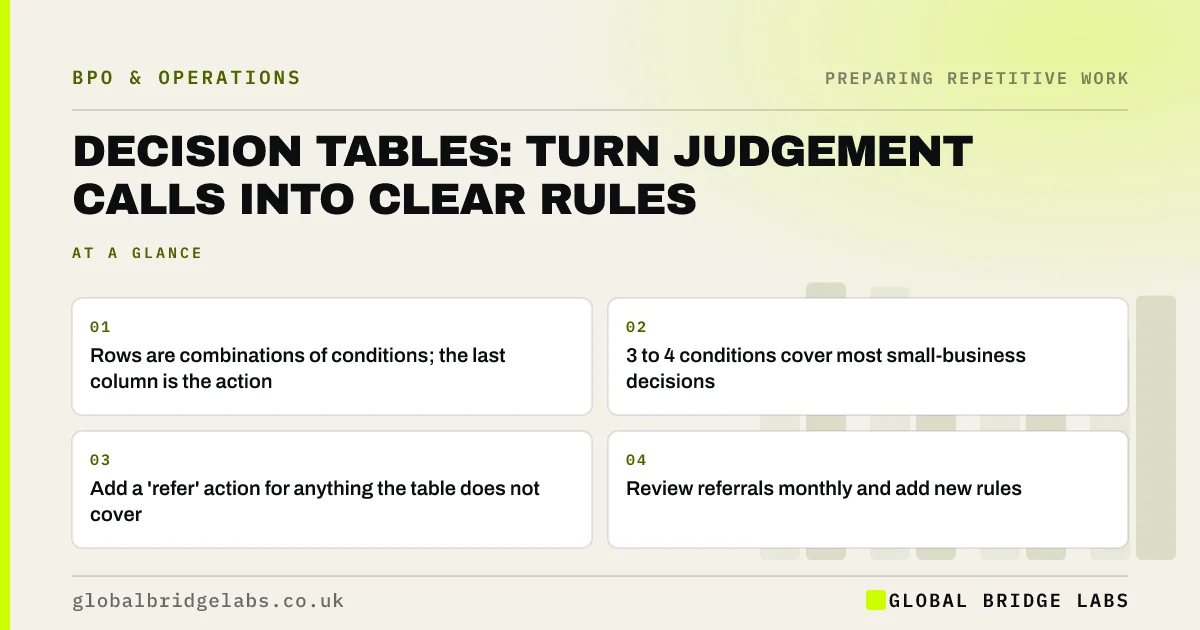
How to write a decision table for a repetitive business decision, so an outsourced team applies your rules and refers only real exceptions.
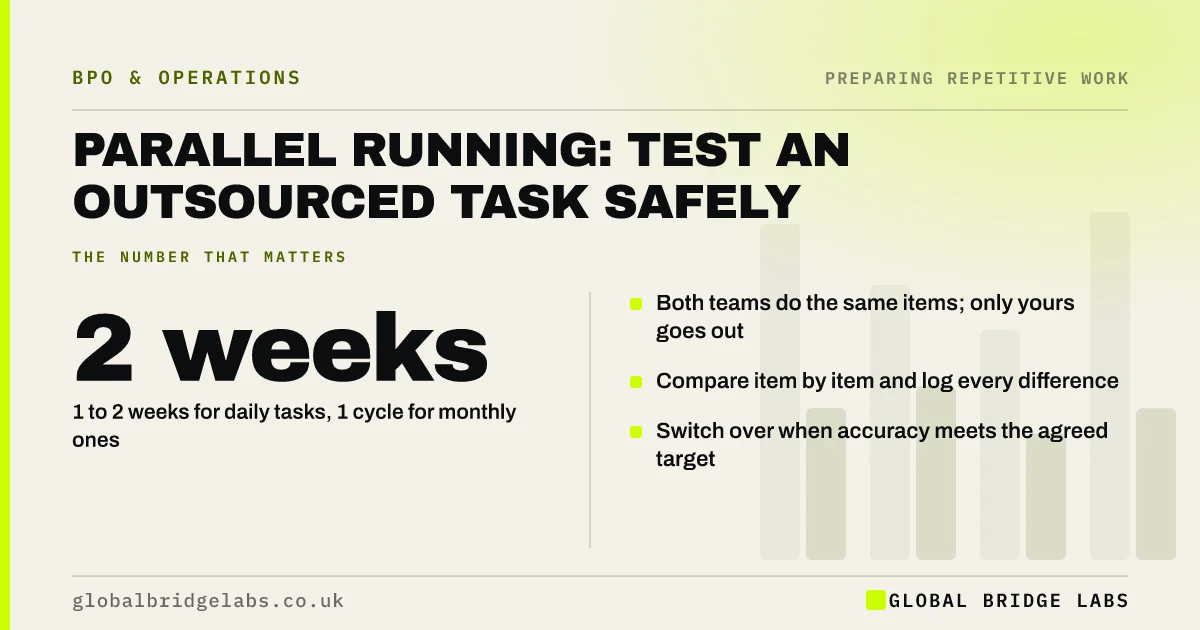
How to run an outsourced repetitive task in parallel with your own team before go-live: how long to run, what to compare and when to switch over.
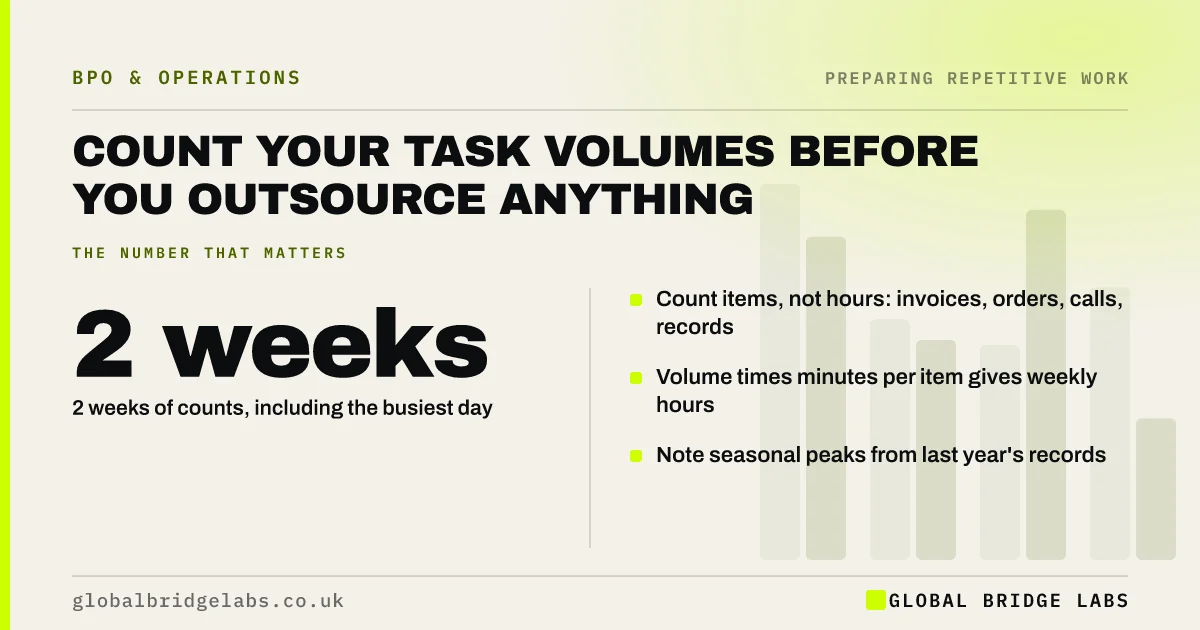
How to count the volume of each repetitive task in a small business: what to count, for how long, and how volumes turn into hours, cost and team size.
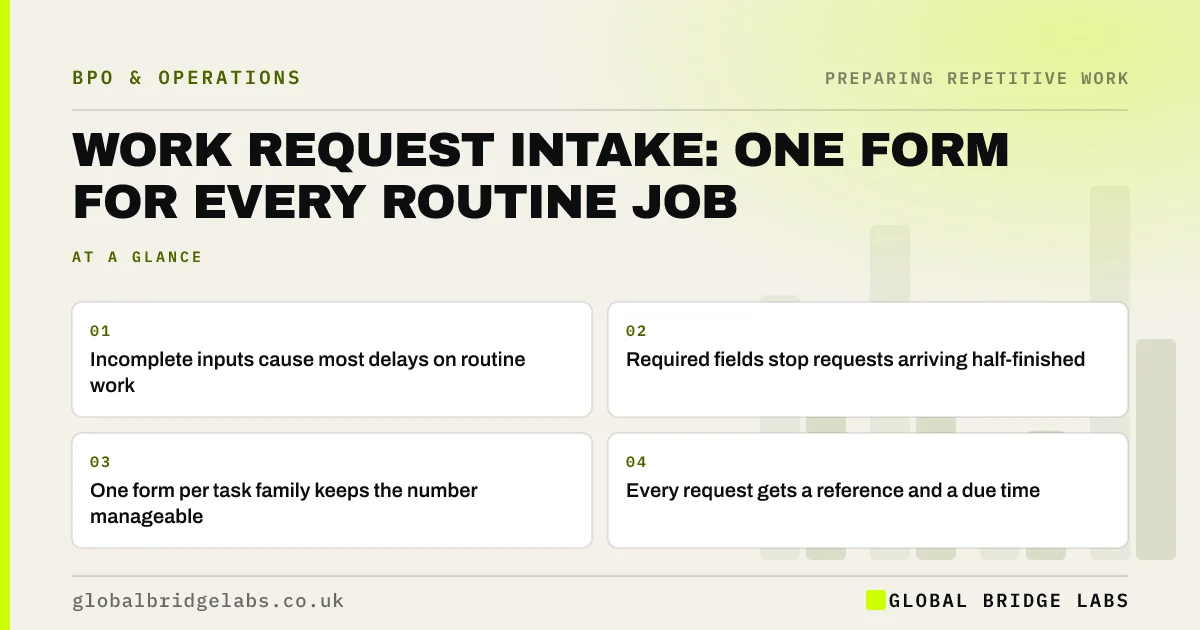
How a work request intake form stops repetitive tasks arriving incomplete: what fields to include, where to put it and how it speeds up an outsourced team.
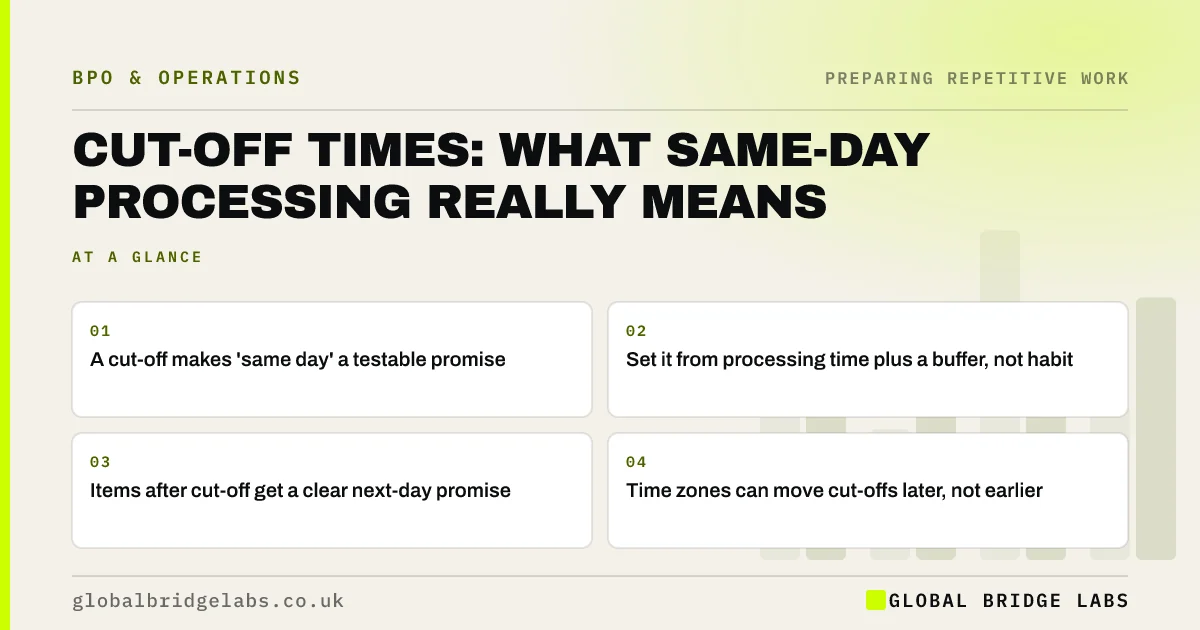
How to set cut-off times for repetitive tasks such as orders, payments and requests, so same-day promises hold and outsourced teams know what to finish.
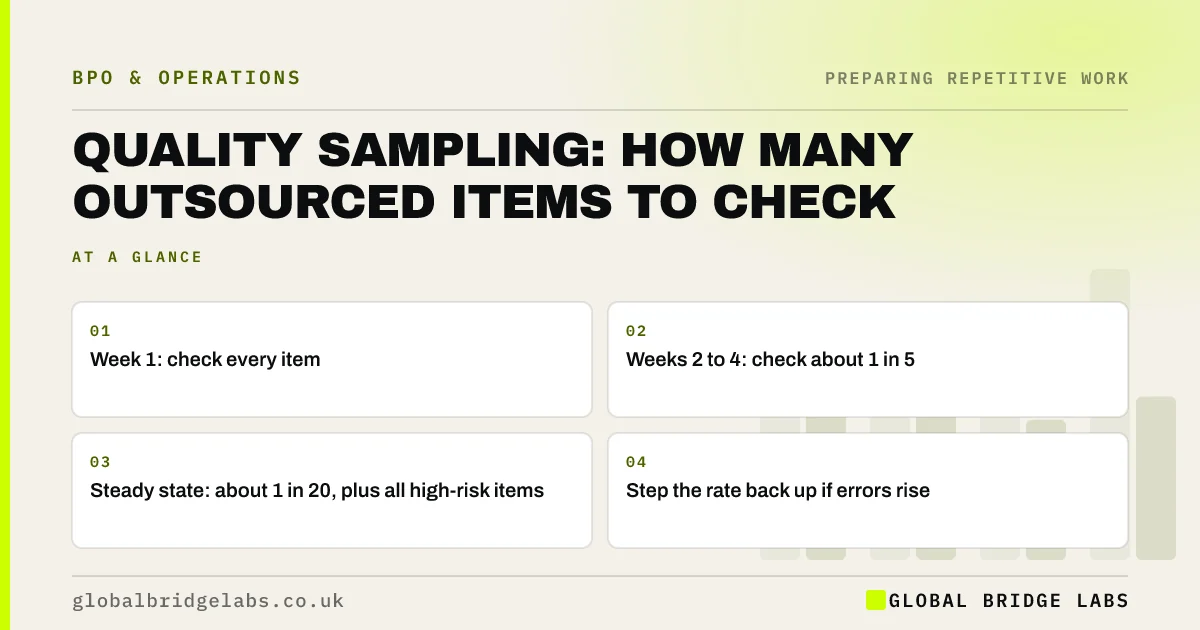
How to set a quality sampling plan for outsourced repetitive work: how many items to check, when to raise or lower the rate, and what to log each week.
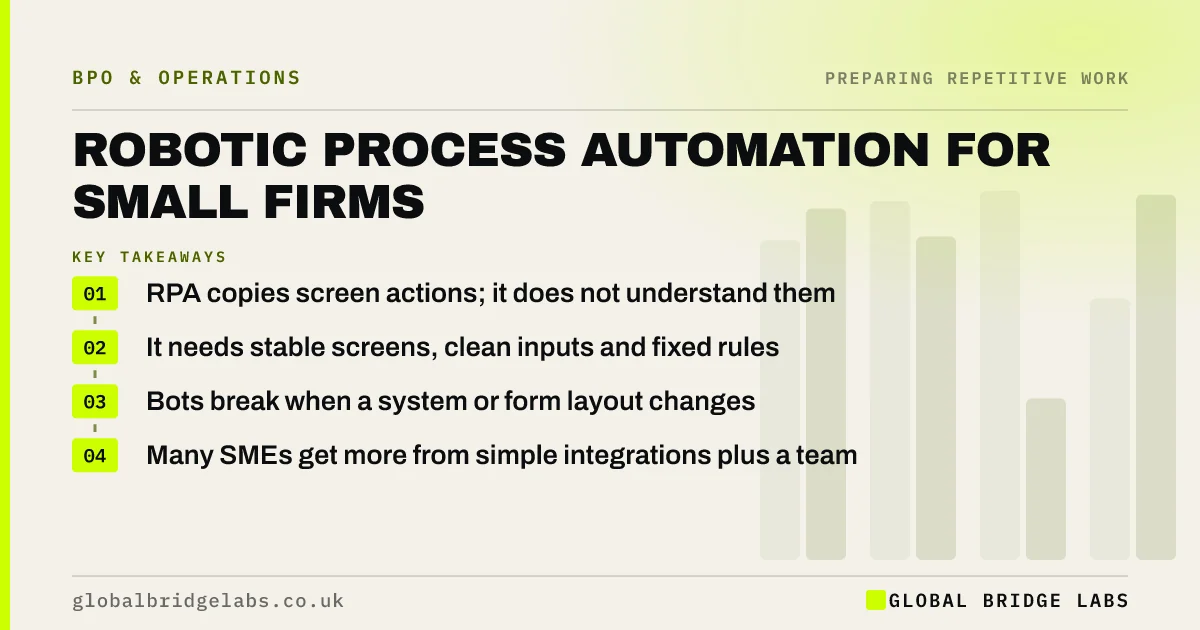
What robotic process automation is, which repetitive tasks it suits in a small business, what it really takes to run, and when people beat software bots.
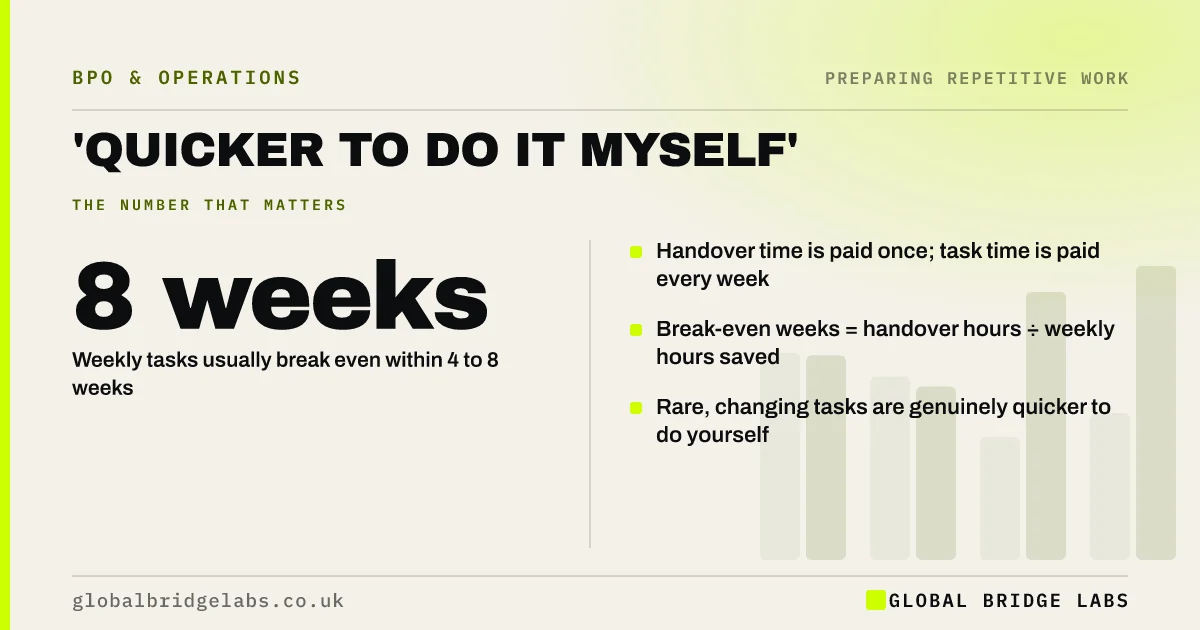
Is it really quicker to do it yourself? How to test the claim on repetitive tasks, the break-even for handing work over, and when you win.
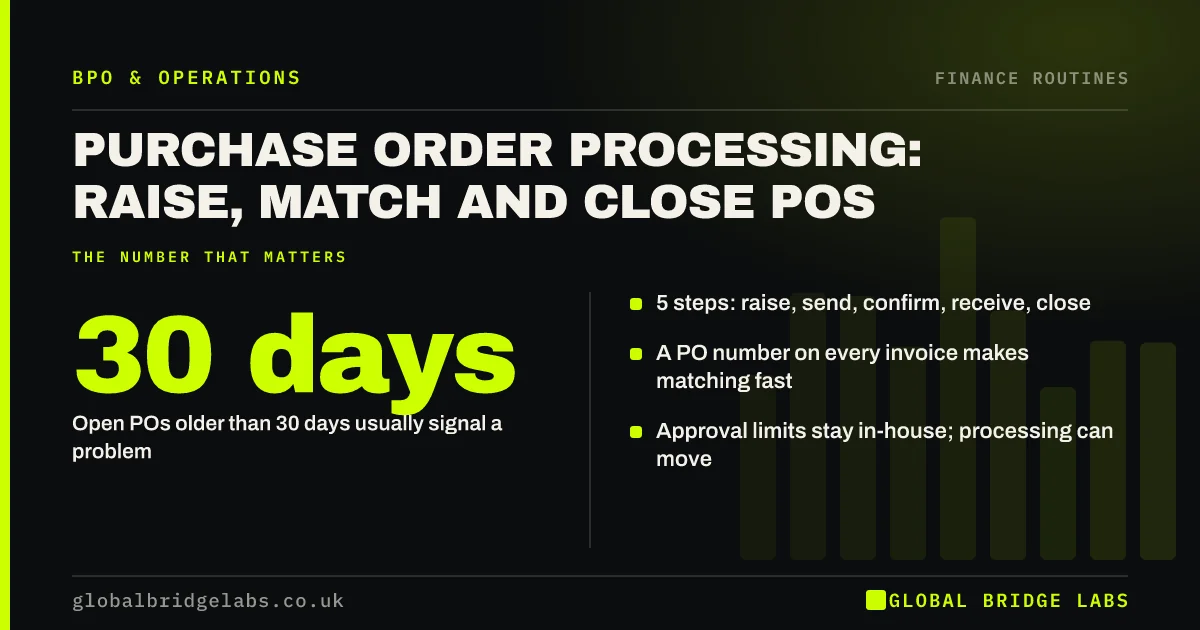
How small businesses run purchase order processing daily: raising POs, chasing confirmations, matching deliveries and closing them.
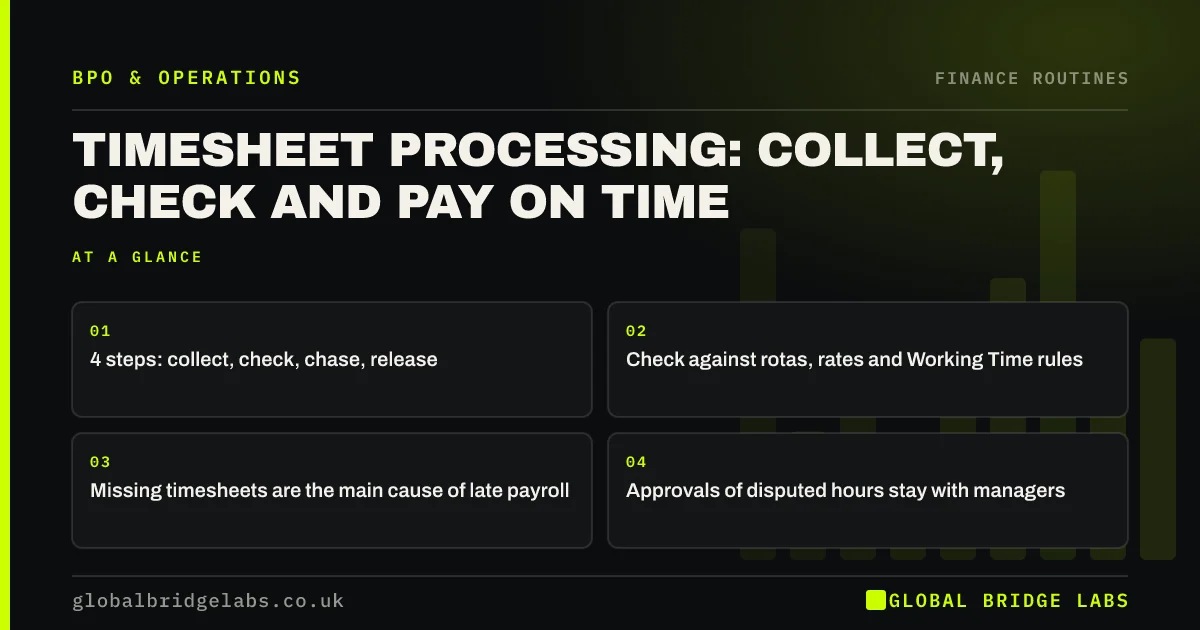
How to run timesheet processing weekly: collecting sheets, checking hours against rotas and rules, chasing gaps and passing data to payroll.
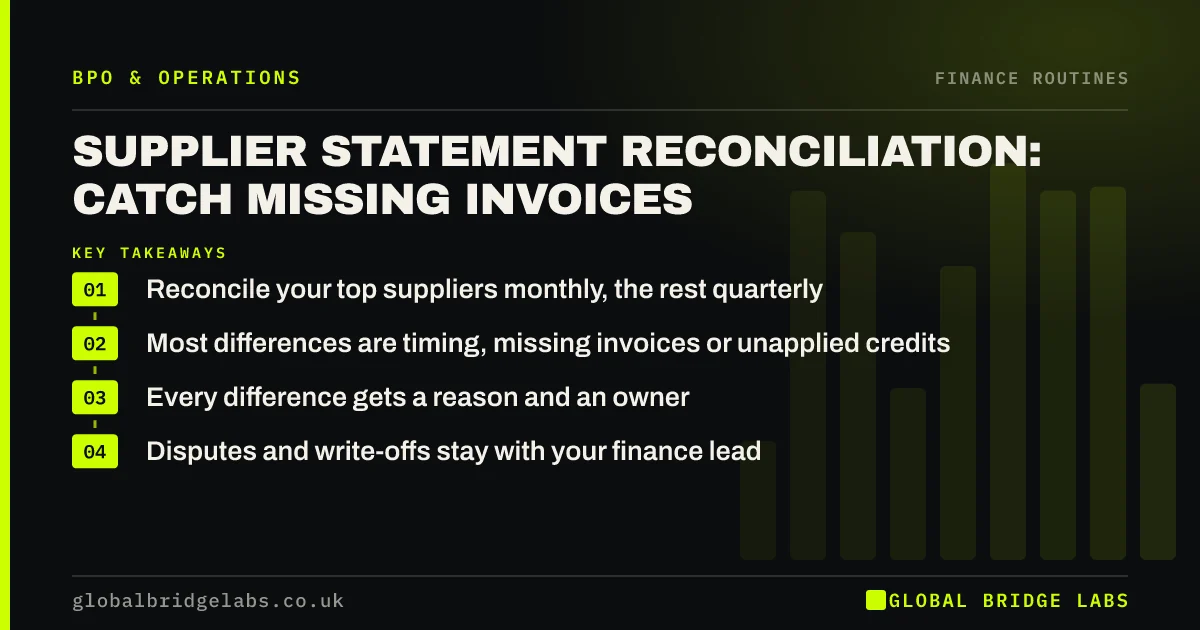
How to reconcile supplier statements monthly: matching them to your ledger, finding missing invoices and stopping late fees and duplicates.
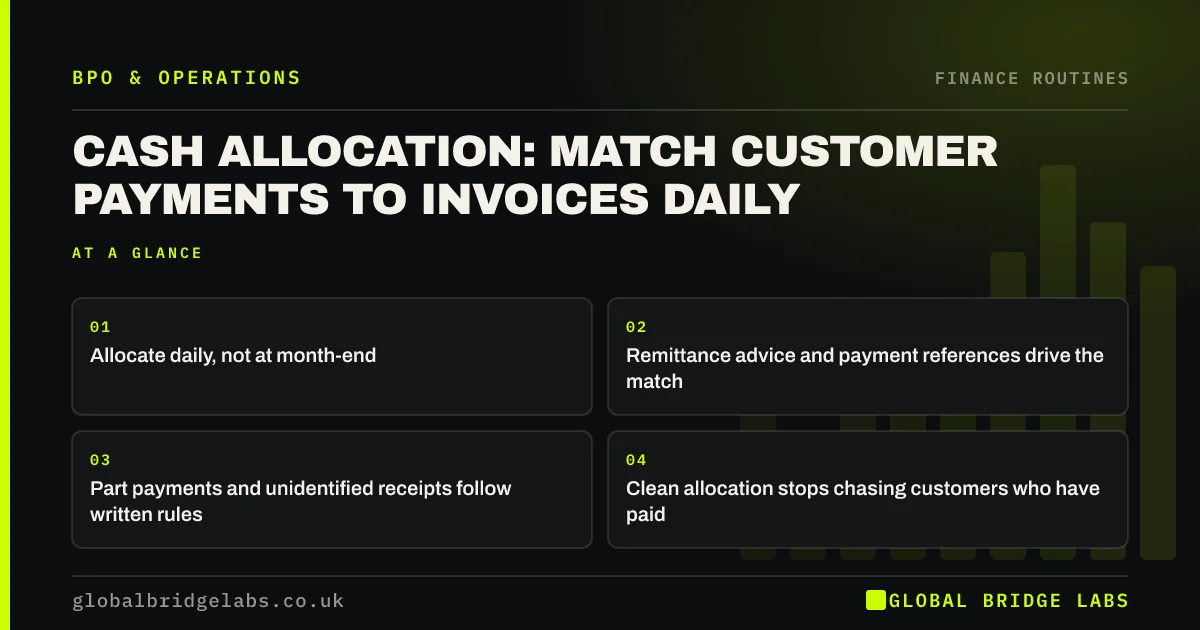
How daily cash allocation works: matching customer payments to invoices, handling part payments and missing references, and faster credit control.
30 minutes with our team and you'll know exactly which of the three problems to fix first.
