Short, practical writing on visibility, conversion and capacity, from the team doing the work for 120+ UK startups, SMEs and enterprises.
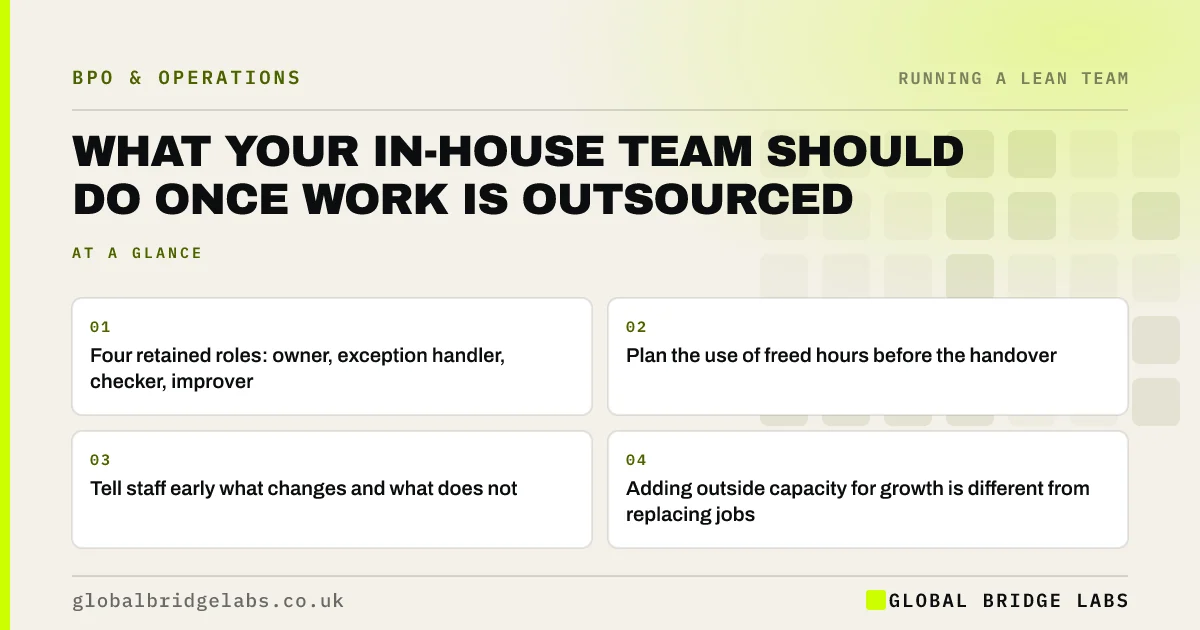
What an in-house team does after outsourcing: the four new roles, how to redeploy freed hours, how to talk to staff, and when TUPE may apply.
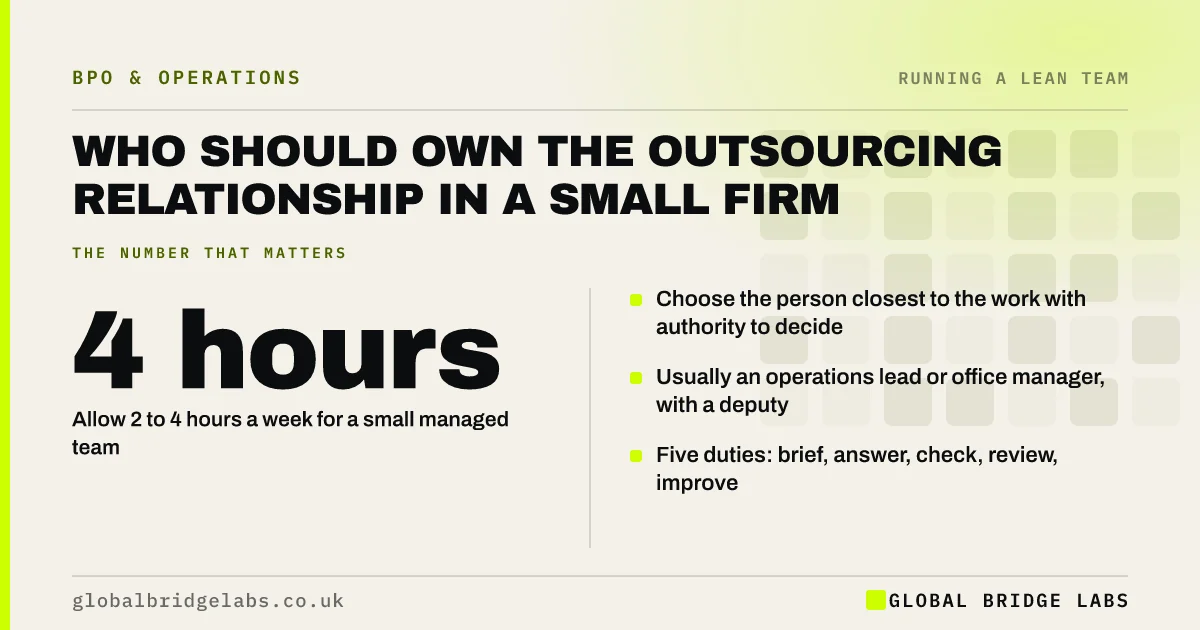
Who should manage an outsourcing provider in a small business: the owner, operations lead or office manager, what the role involves and the time needed.
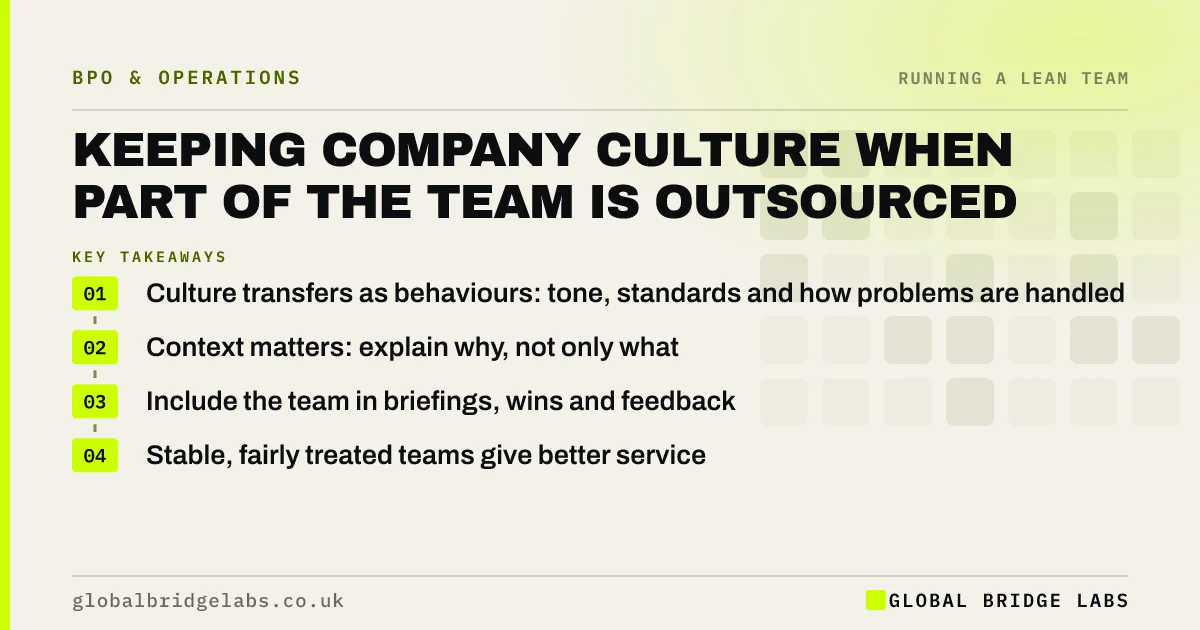
Company culture with an outsourced team: what transfers and what does not, practical ways to include people, and how fair treatment protects service.
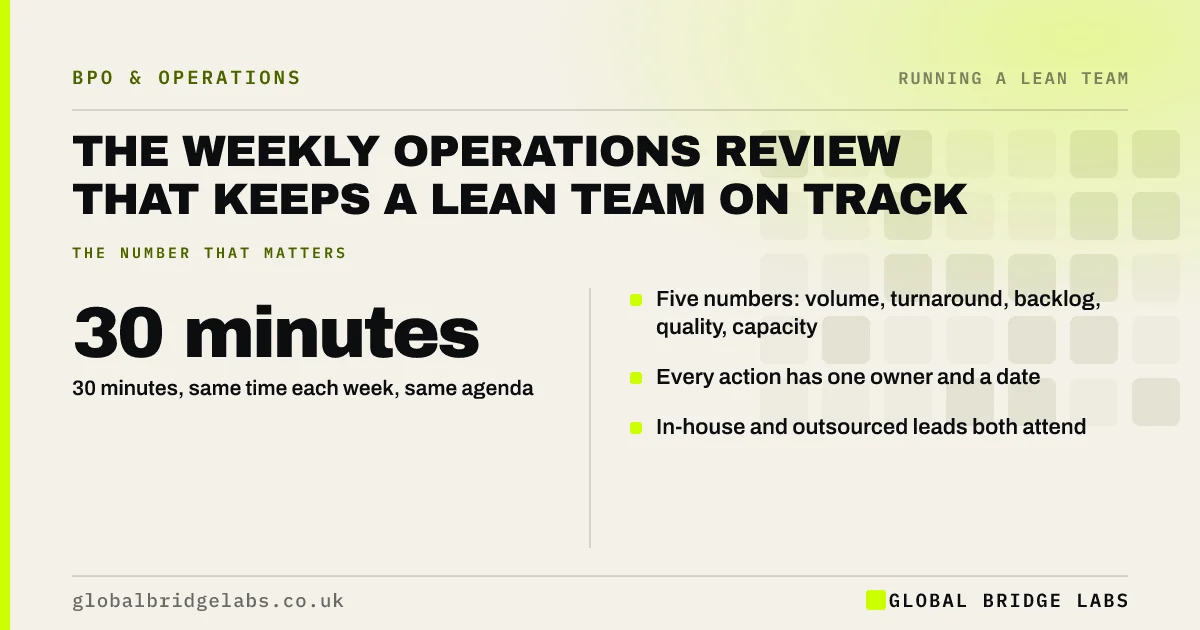
How to run a weekly operations review meeting in 30 minutes: the five numbers to cover, a fixed agenda, who attends, and what to do with the actions.
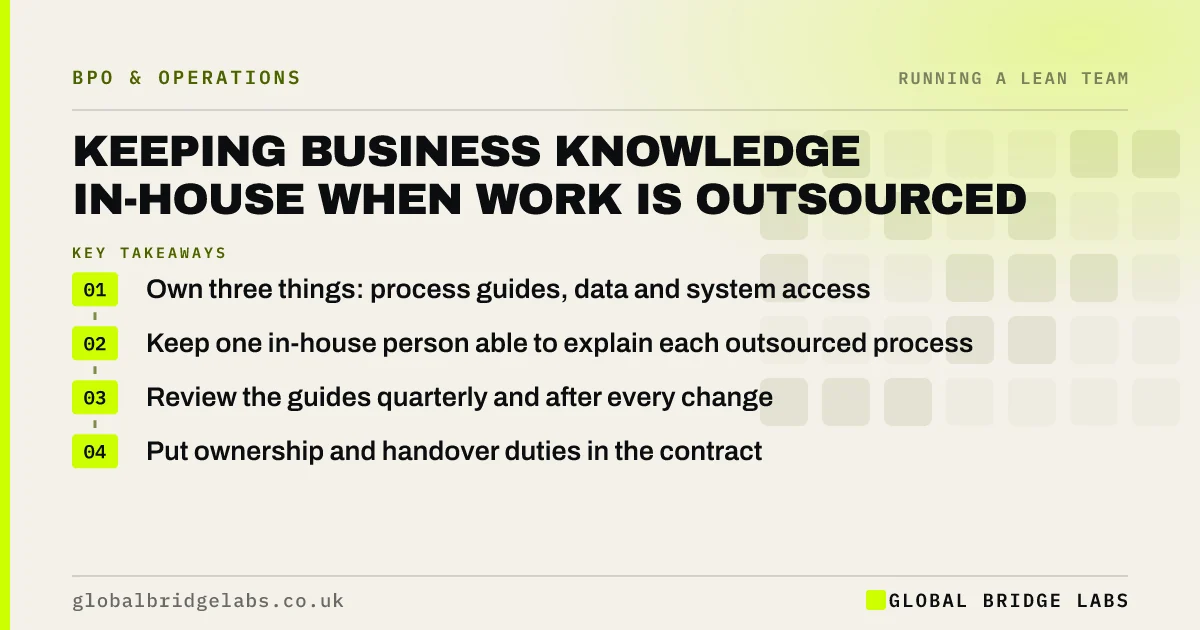
Knowledge retention in outsourcing: what knowledge is at risk, how to keep process guides, data and access in your own hands, and contract terms to add.
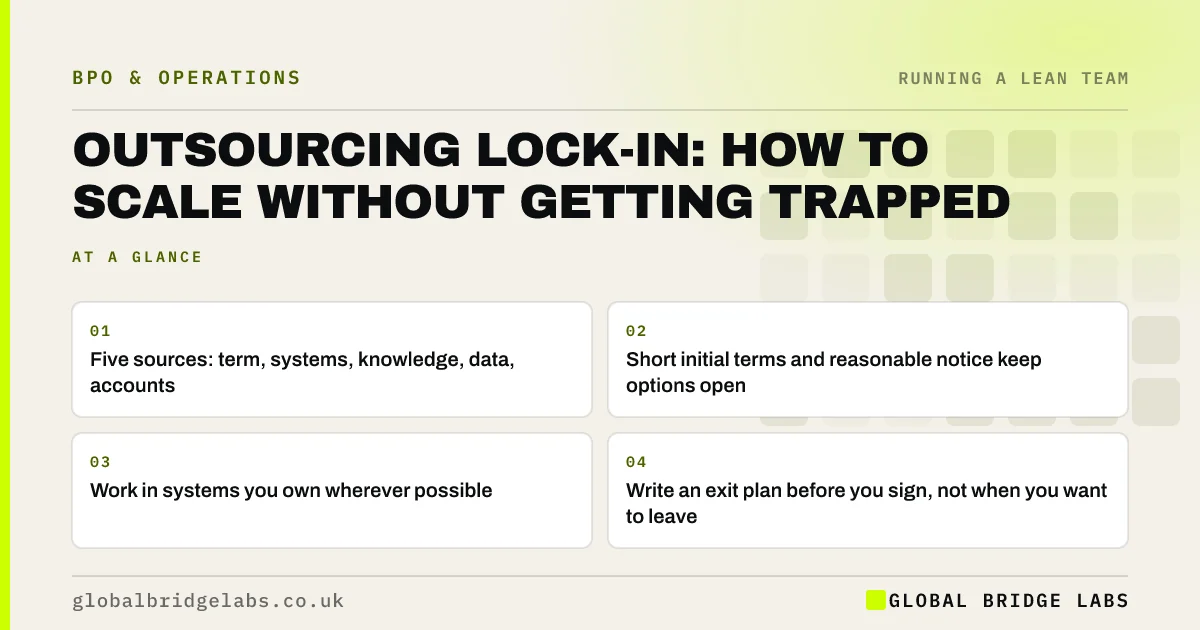
Vendor lock-in in outsourcing: the five ways small businesses get trapped, the contract and practical safeguards, and how to test your exit in advance.
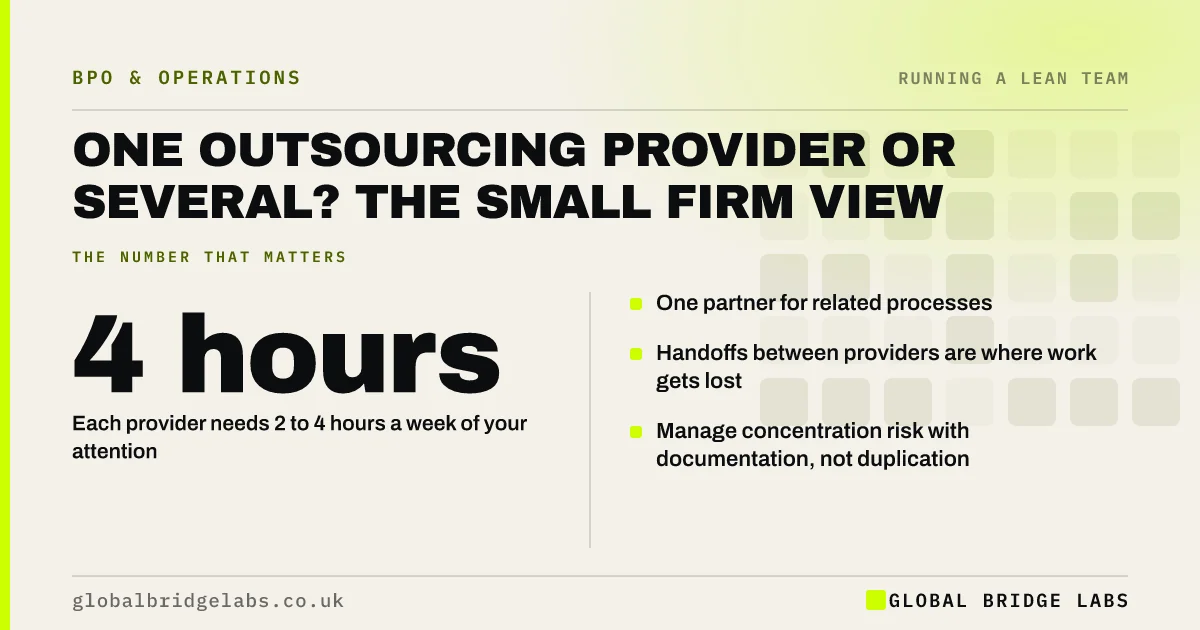
Single vs multiple outsourcing providers for a small business: management time, risk, cost and quality compared, with a rule for when to add a second.
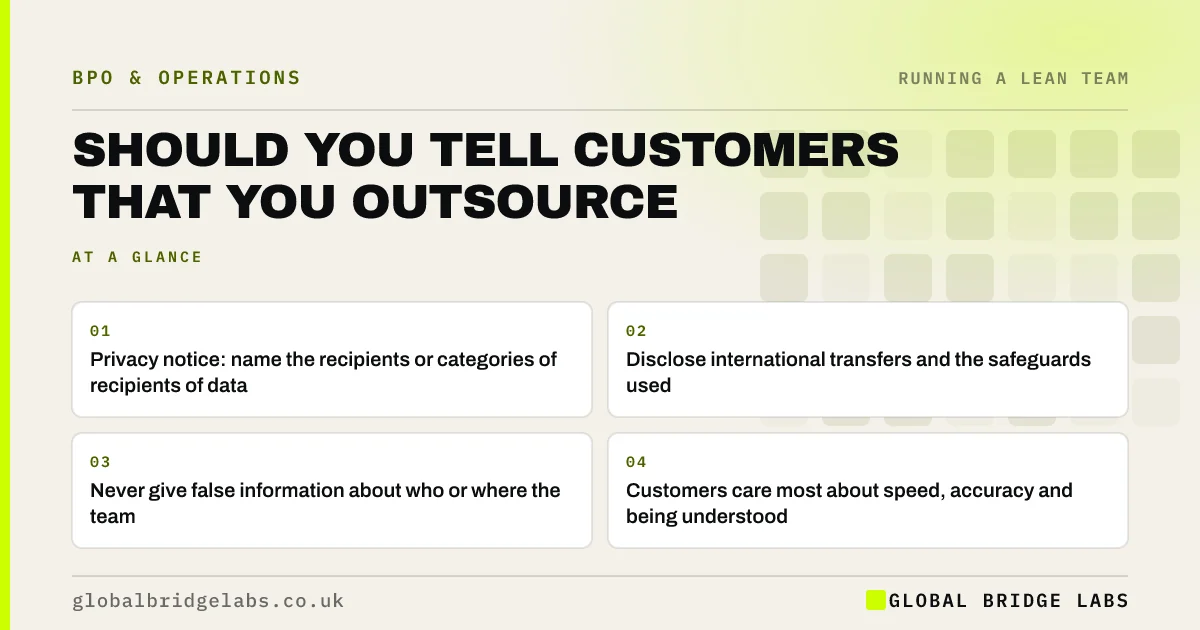
Should you tell customers you outsource? What UK data protection law requires you to disclose, what customers care about, and how to explain it well.
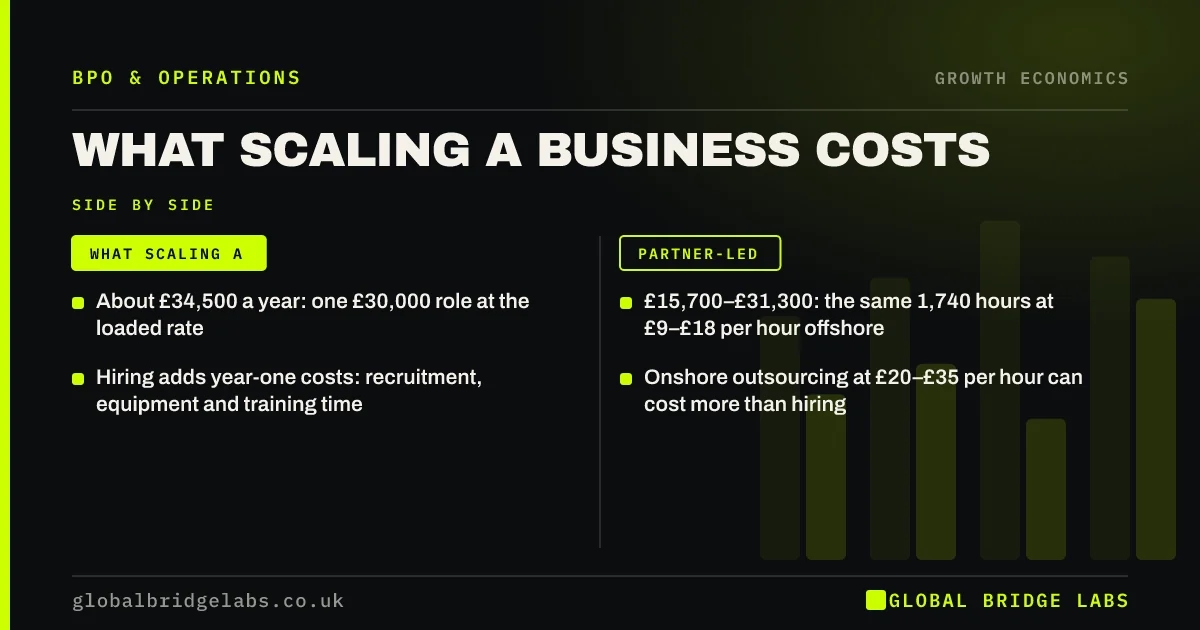
The cost of scaling a business in the UK: one full-time role against the same hours from a managed team, year-one extras, and when hiring costs less.
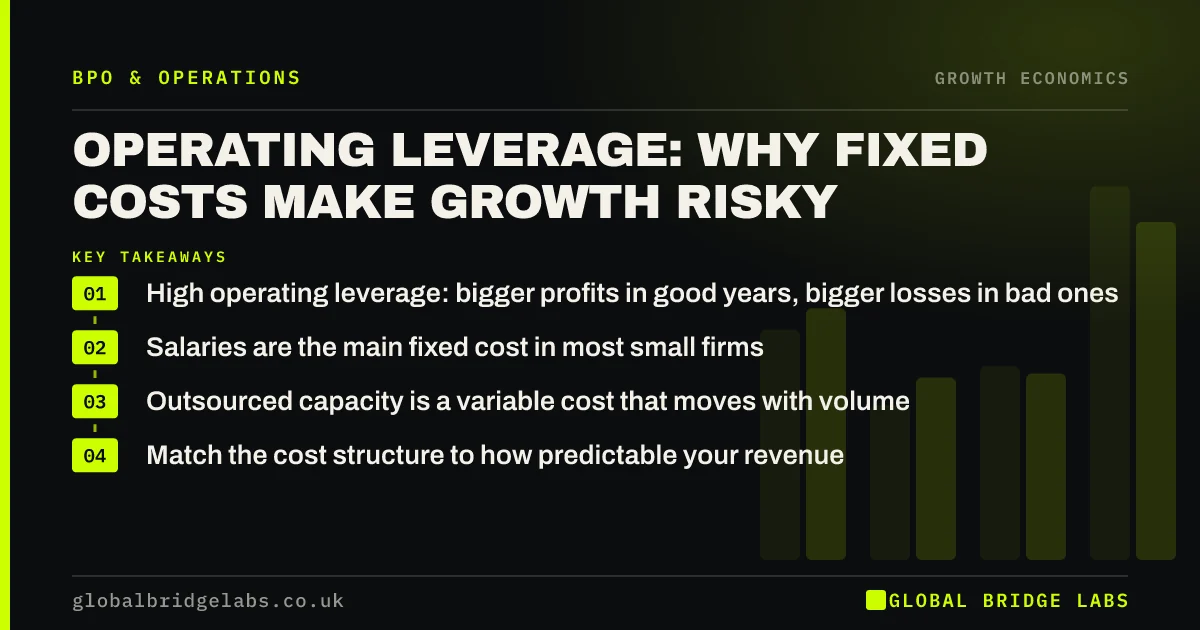
Operating leverage for a small business: what it is, a worked example with two cost structures, and how to choose the right mix of fixed and variable.
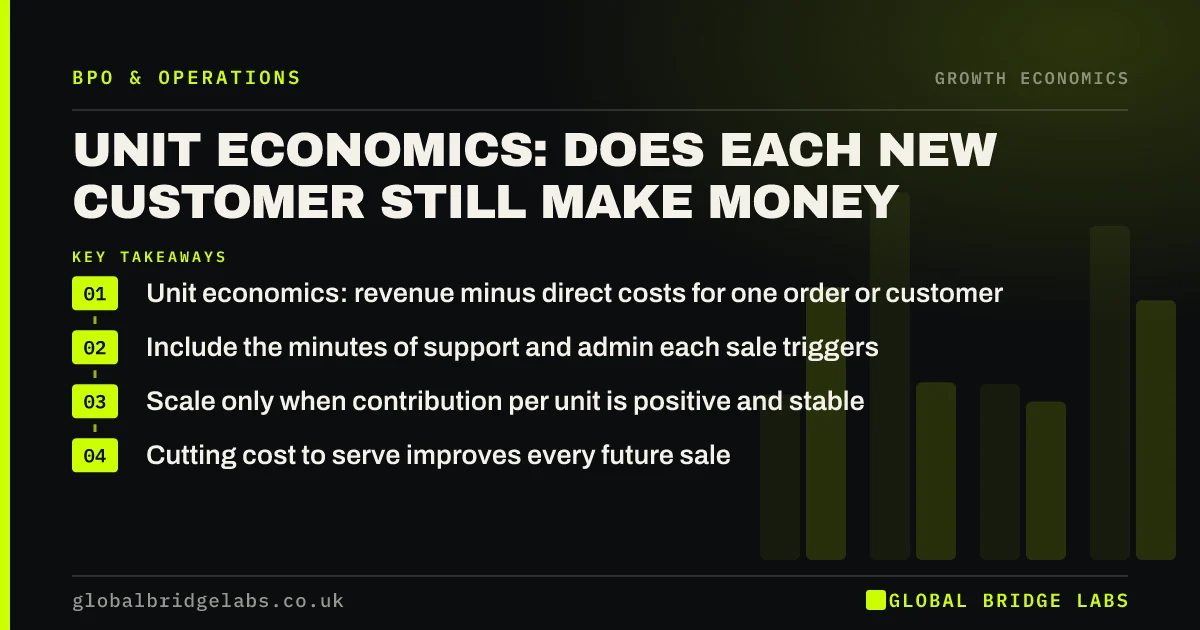
Unit economics for a small business: how to calculate contribution per order including admin and support time, and why it decides whether to scale.
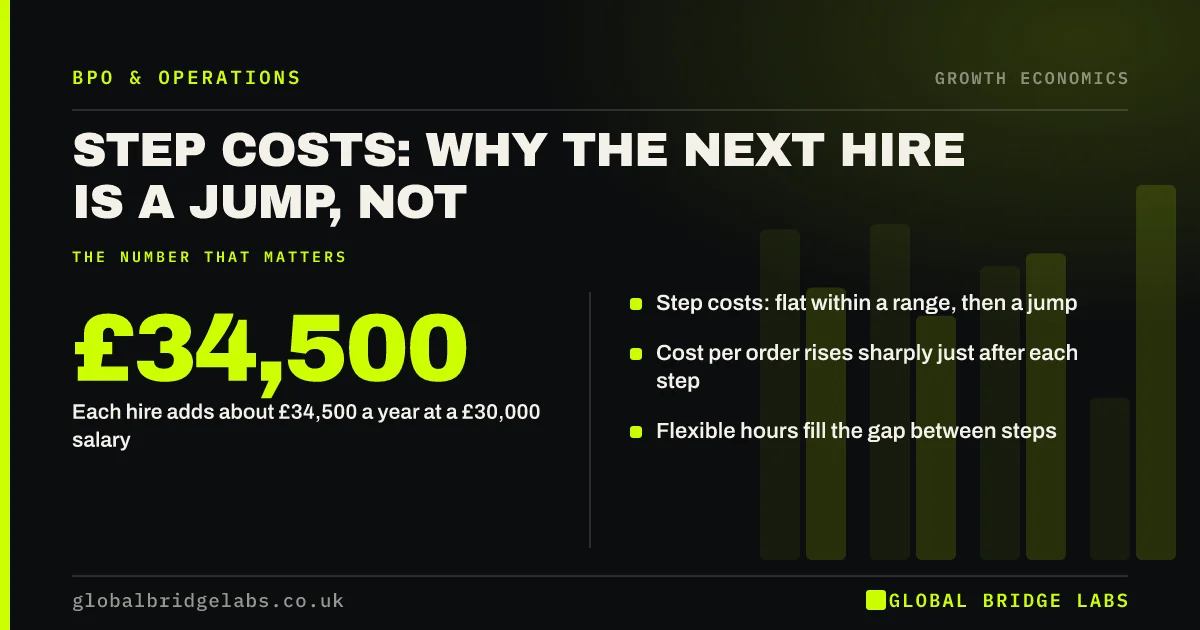
Step costs explained for growing UK businesses: why capacity arrives in whole people, what that does to cost per order, and how to smooth the steps.
30 minutes with our team and you'll know exactly which of the three problems to fix first.
