Short, practical writing on visibility, conversion and capacity, from the team doing the work for 120+ UK startups, SMEs and enterprises.
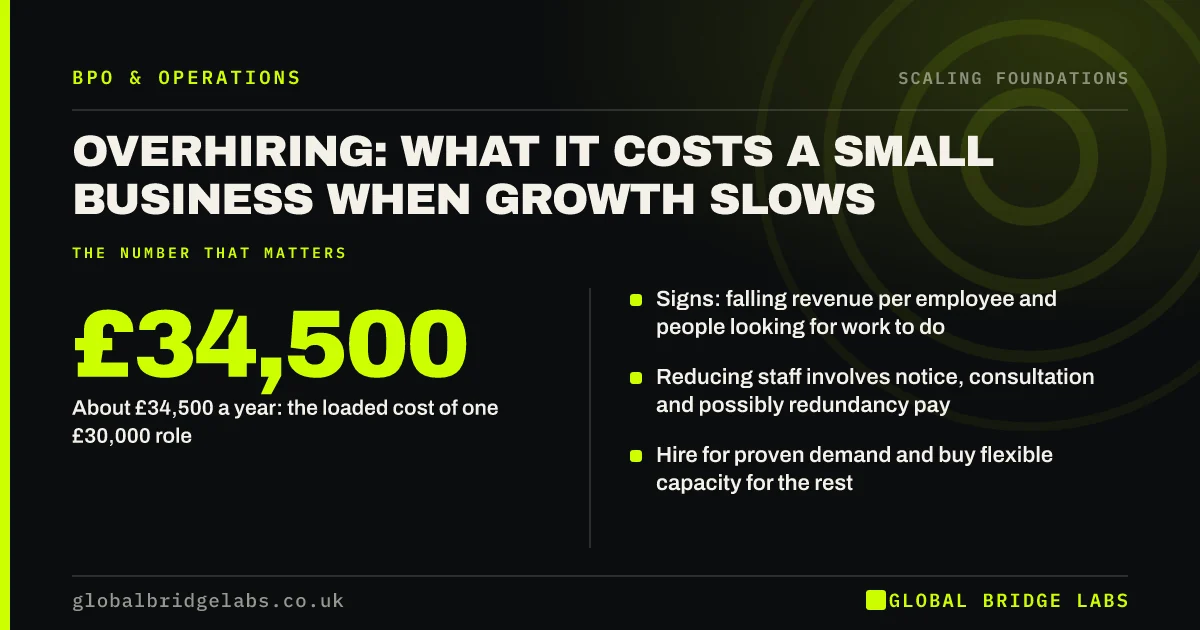
Overhiring in a small business: the warning signs, what an unneeded role costs in the UK, how to correct it fairly, and how to avoid it next time.
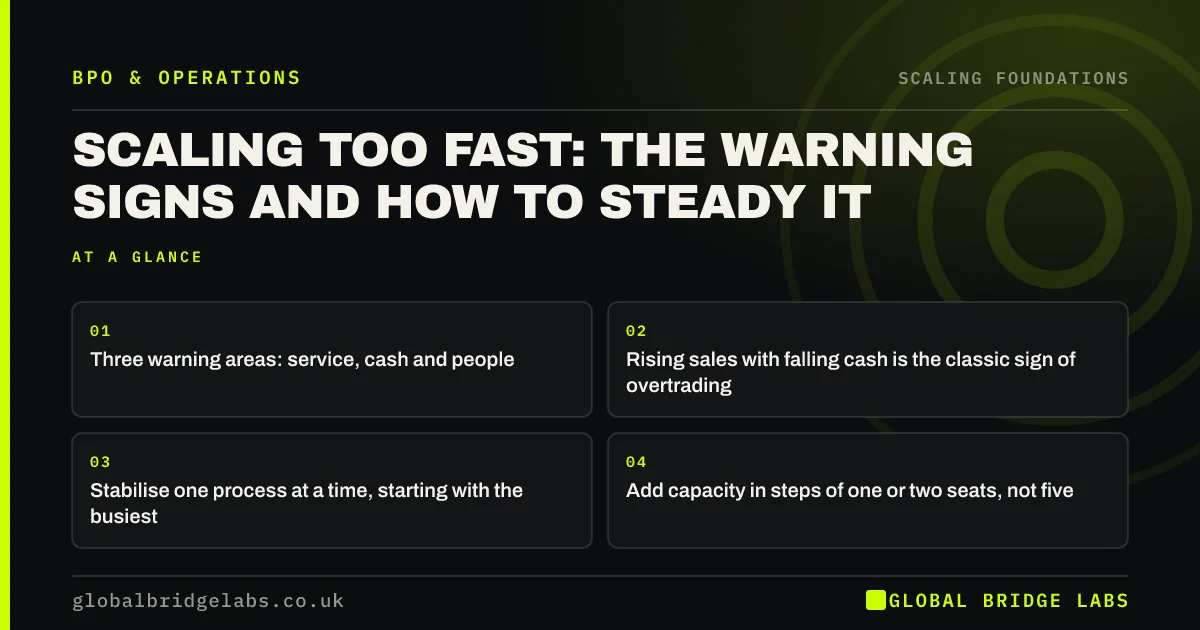
Scaling too fast? The warning signs in service, cash and people, why rapid growth breaks small UK firms, and how to steady operations in 30 days.
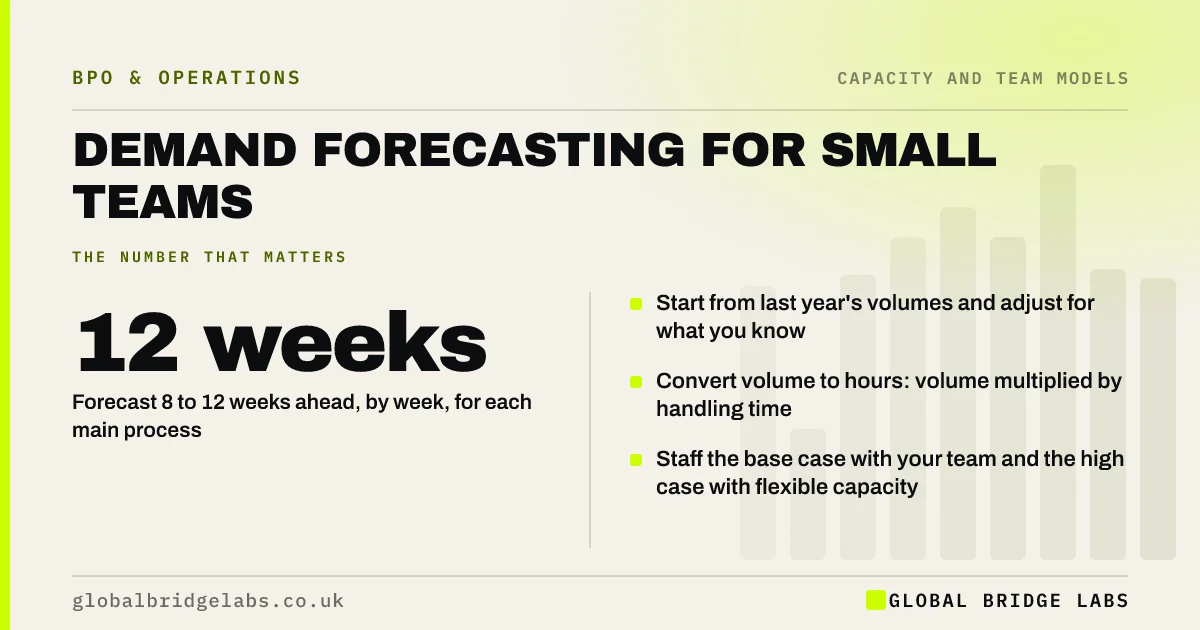
Demand forecasting for a small business without specialist software: a four-step method, how to turn volume into hours, and how to staff the gap.
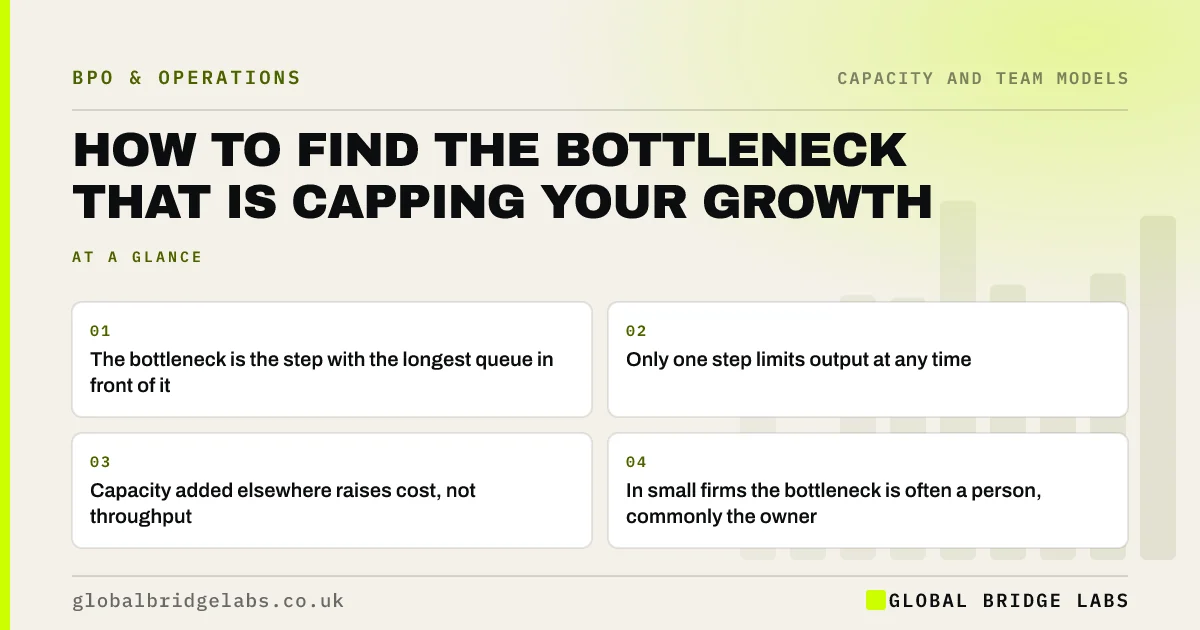
How to find bottlenecks in a business: follow the work, measure the queues, test the cause, and add capacity only where it lifts total output.
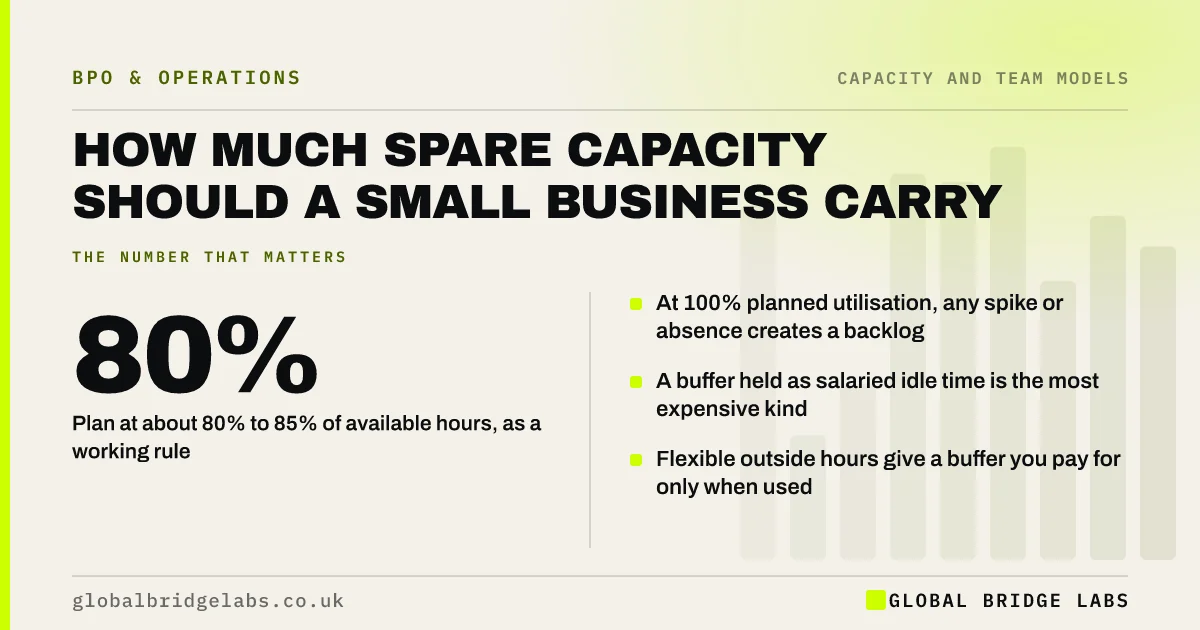
How much spare capacity a small business should carry: why 100% utilisation creates queues, a working 15% to 20% buffer, and ways to hold it cheaply.
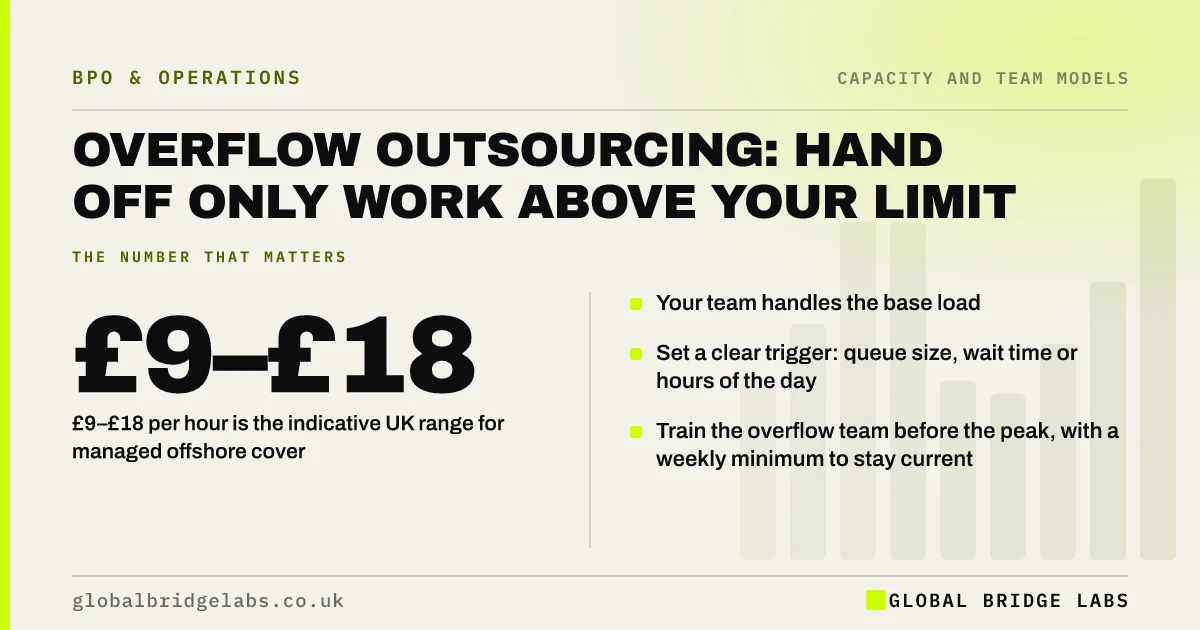
Overflow outsourcing explained: how it works, the trigger rules to set, what it costs UK small businesses, and when a full handover is the better fit.
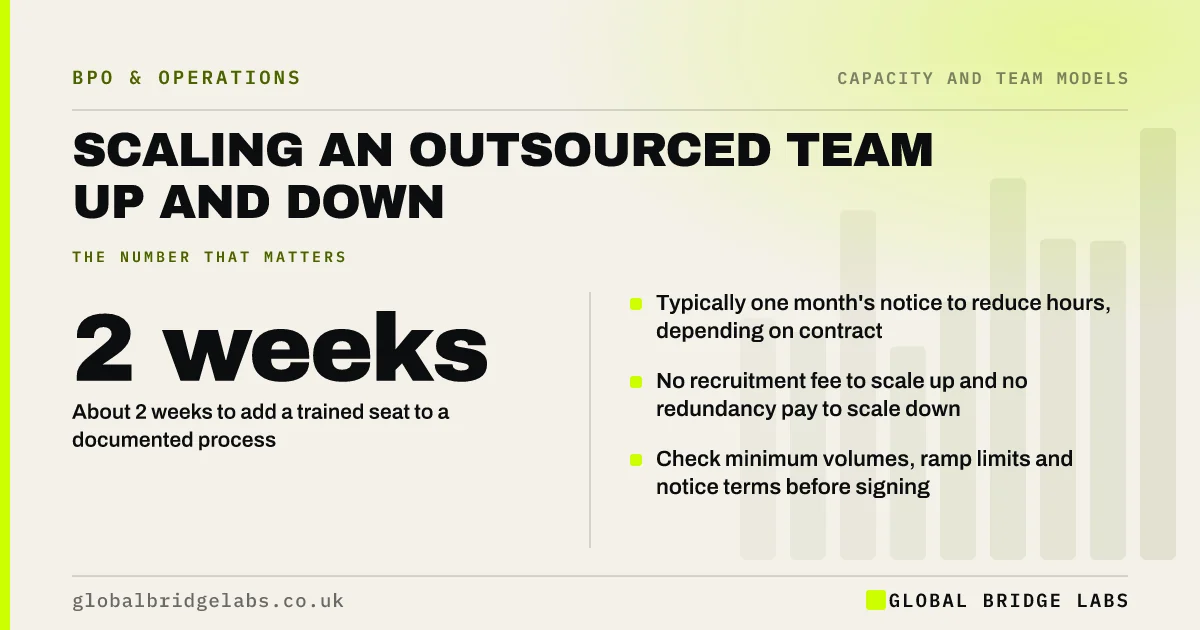
How to scale an outsourced team up and down: notice periods, minimums, ramp time, what flexibility costs, and the contract terms that protect it.
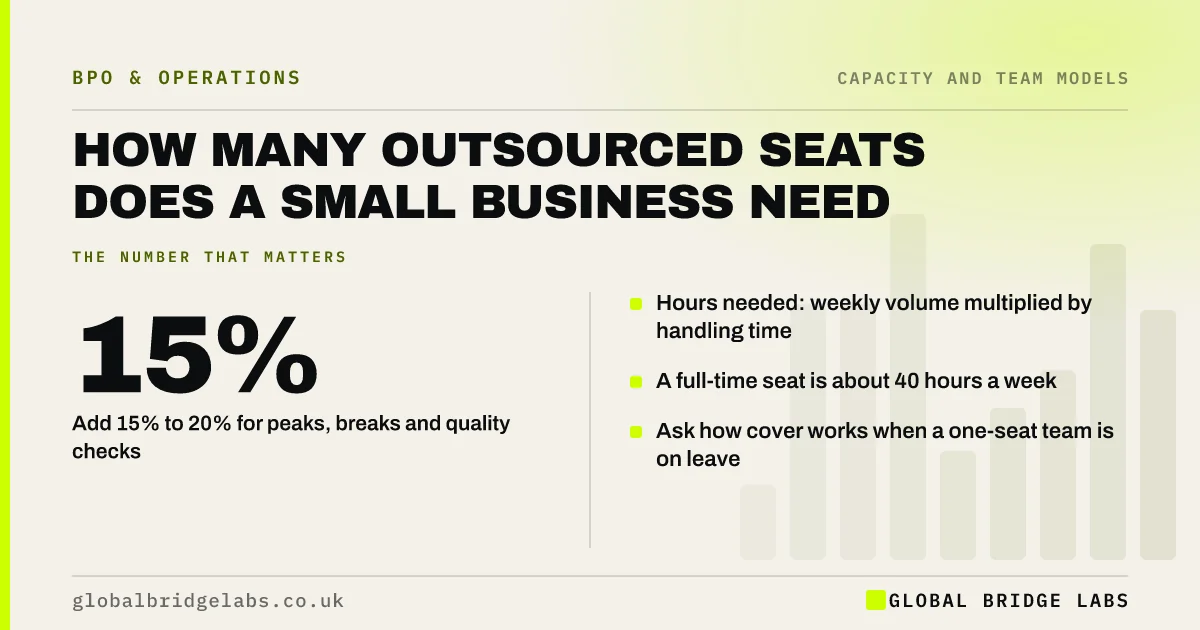
How big should an outsourced team be? A simple calculation from volume and handling time, worked examples, and why one seat is rarely enough.
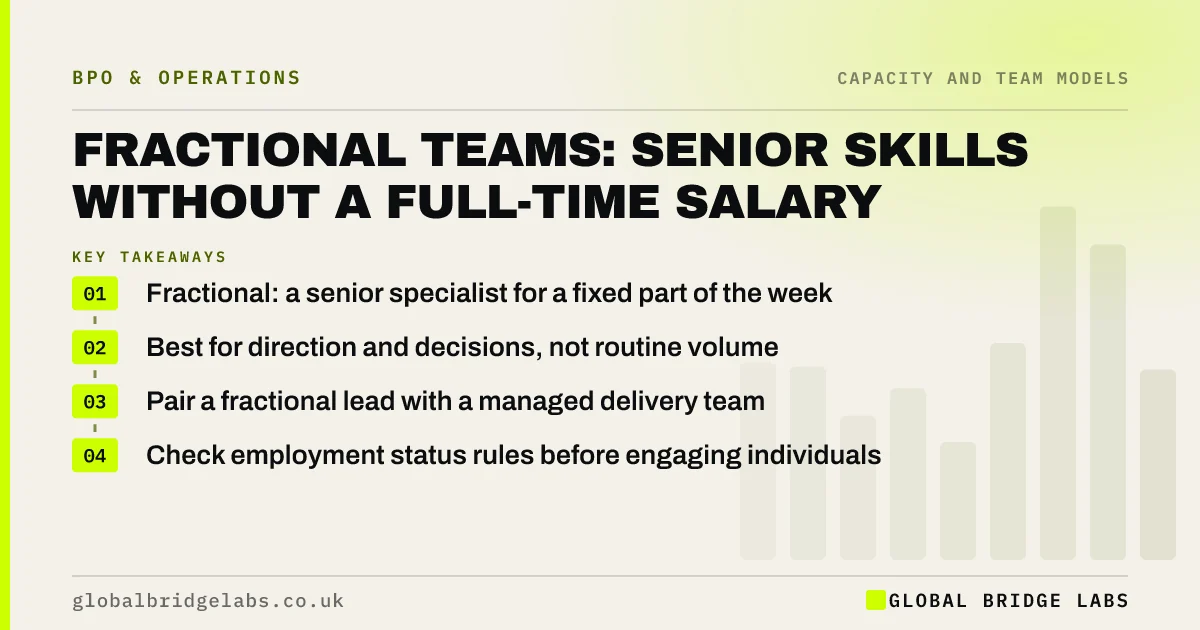
What a fractional team is, which senior roles suit it, what to check on cost and IR35, and how fractional leaders work with a managed delivery team.
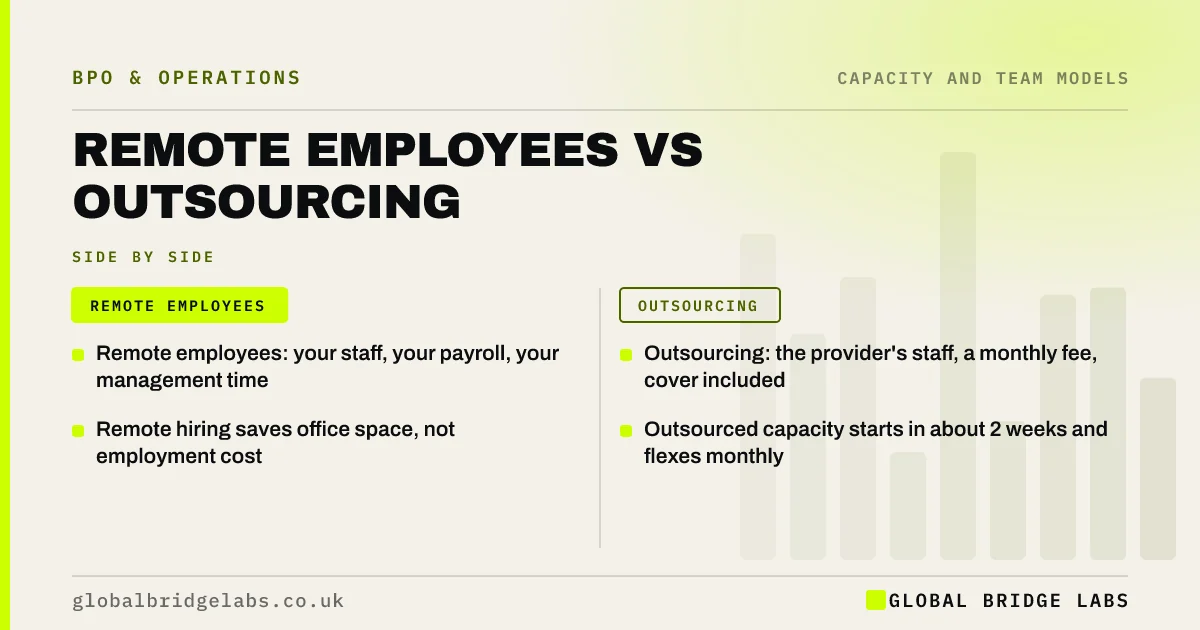
Remote employees vs outsourcing for a growing UK business: cost, speed, control, employer duties and cover compared, with guidance on choosing.
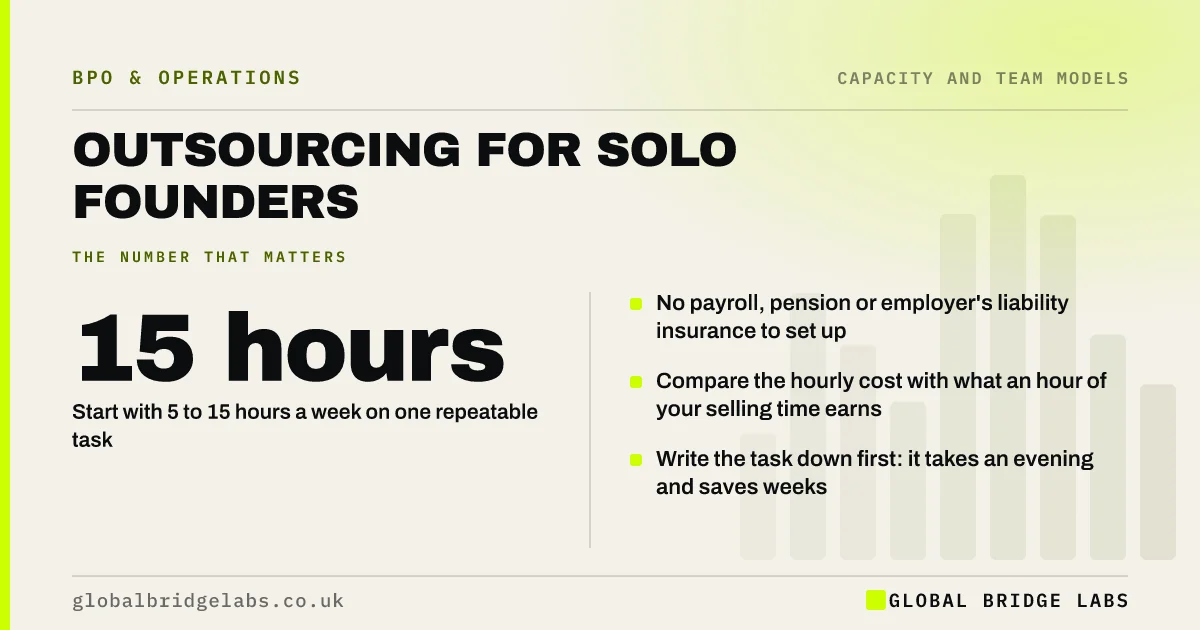
Outsourcing for solopreneurs in the UK: what to hand over first, what it costs against your own hourly value, and how to avoid becoming an employer.
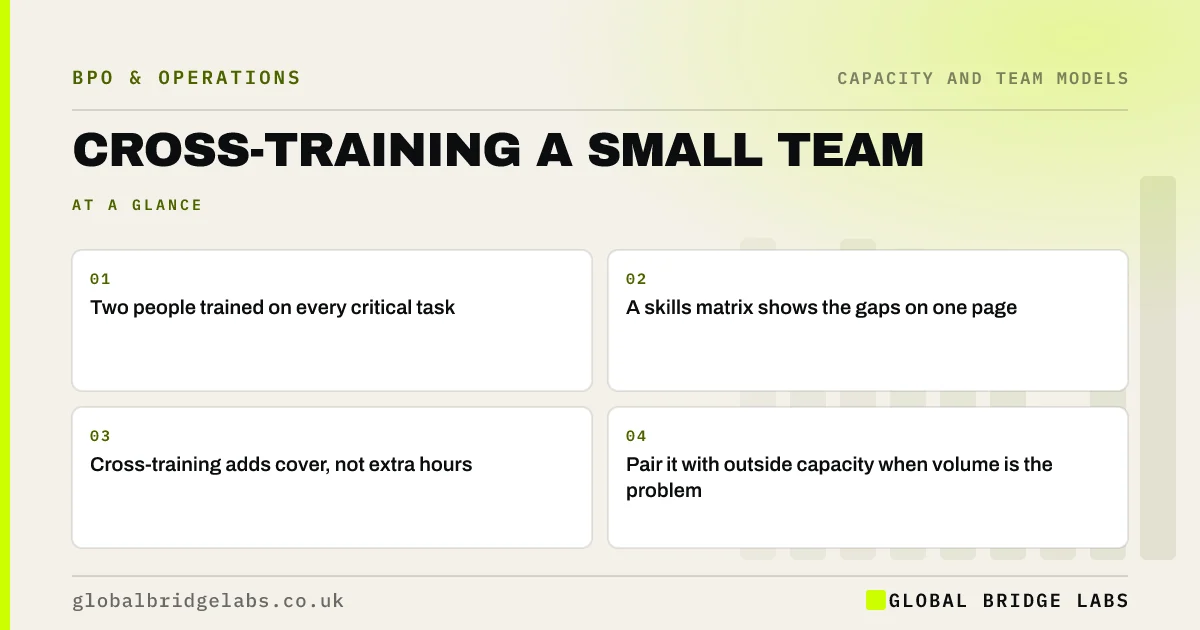
Cross-training employees in a small business: how a skills matrix works, how to train without losing output, its limits, and where outside cover fits.
30 minutes with our team and you'll know exactly which of the three problems to fix first.
