Short, practical writing on visibility, conversion and capacity, from the team doing the work for 120+ UK startups, SMEs and enterprises.
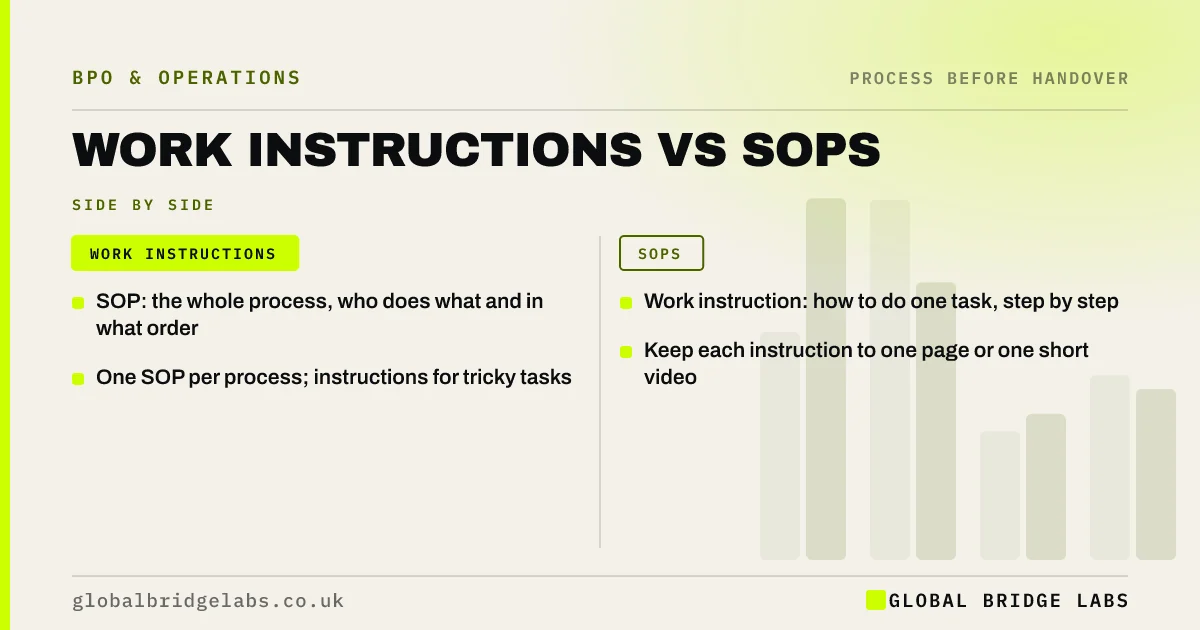
Work instructions vs SOPs: what each document is for, how much detail to include, and which one an outsourced team needs to work fast and accurately.
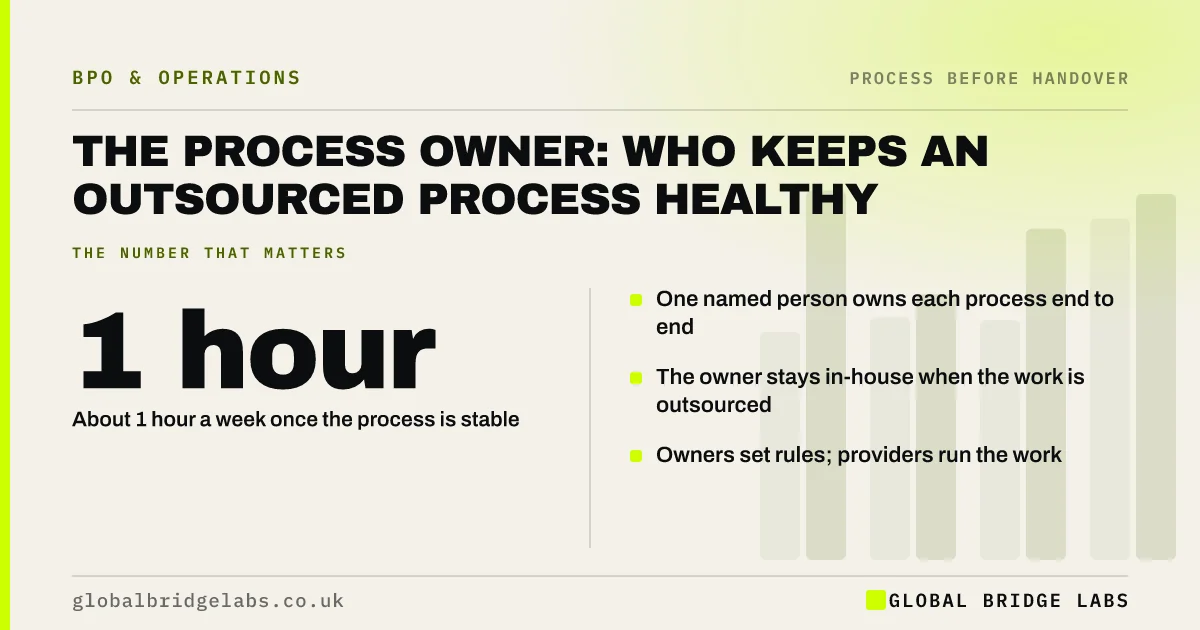
Process owner responsibilities explained: who should own an outsourced process, what they do each week, and why one named owner keeps work moving.
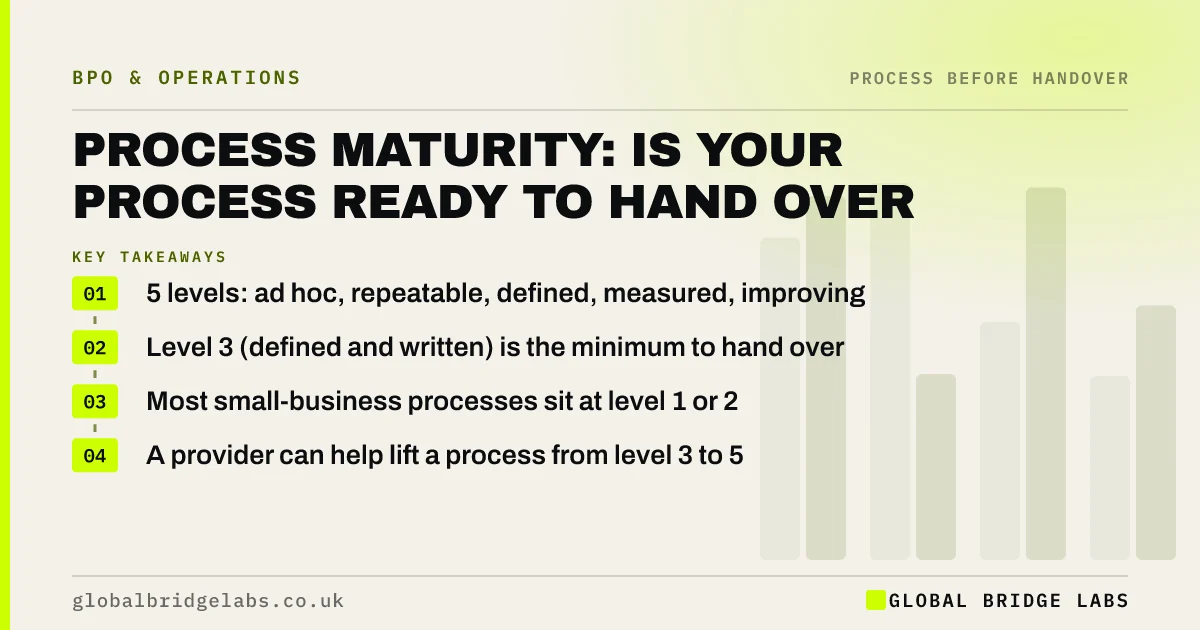
A simple process maturity model for small businesses: five levels from ad hoc to improving, how to rate yours and the level needed to outsource.
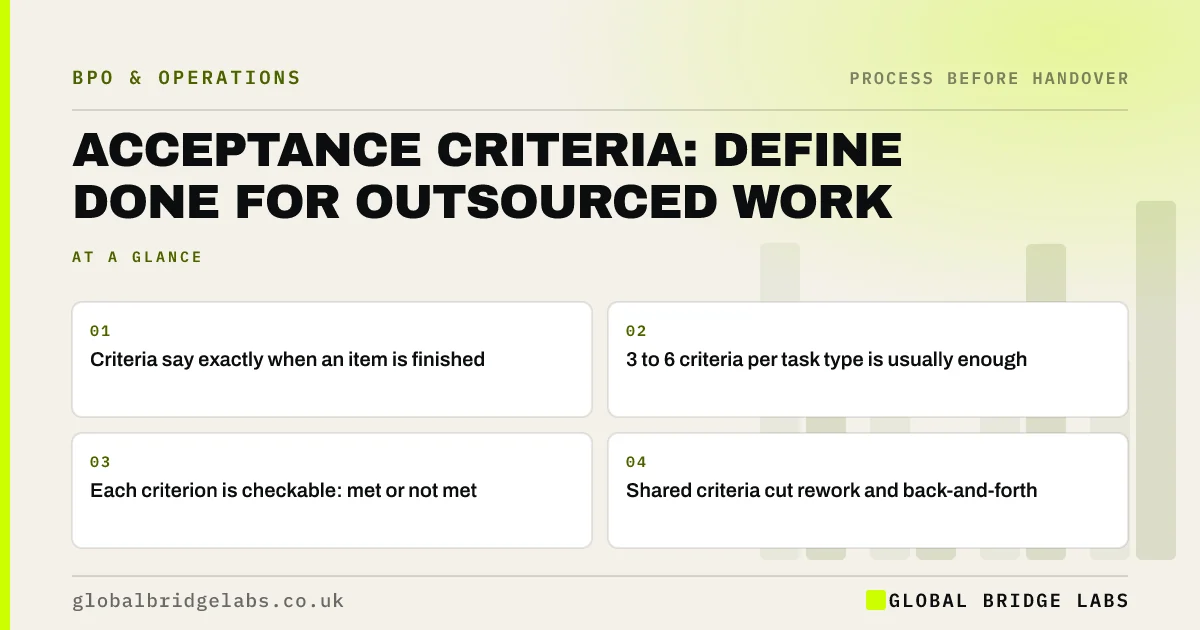
Acceptance criteria for outsourced work: how to define done for each task, examples for admin and customer service, and how criteria cut rework.
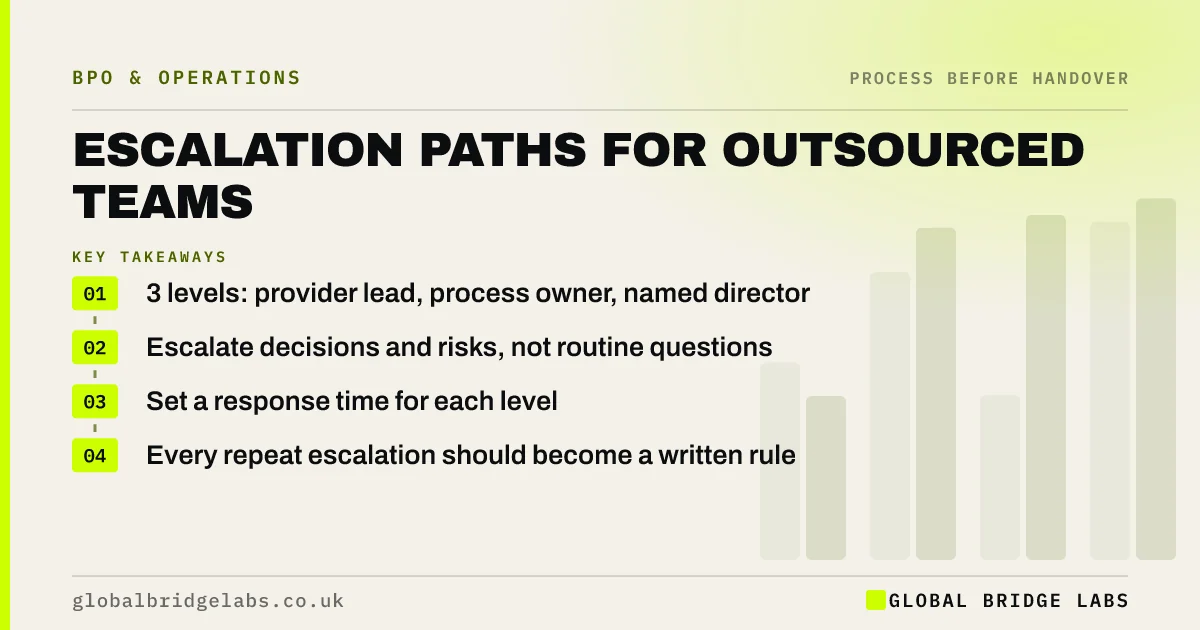
Escalation process for outsourcing: what should be escalated, to whom and how fast, plus a simple three-level path that keeps work moving.
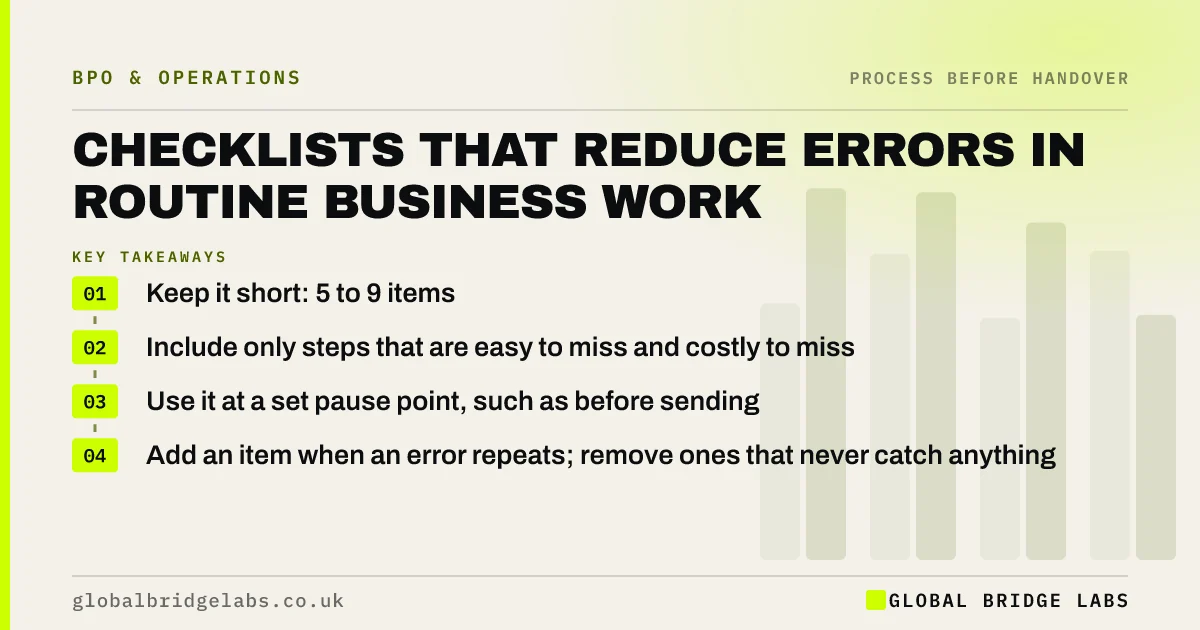
How to use checklists to reduce errors in routine admin and customer work: what to include, how long they should be and how to make sure people use them.
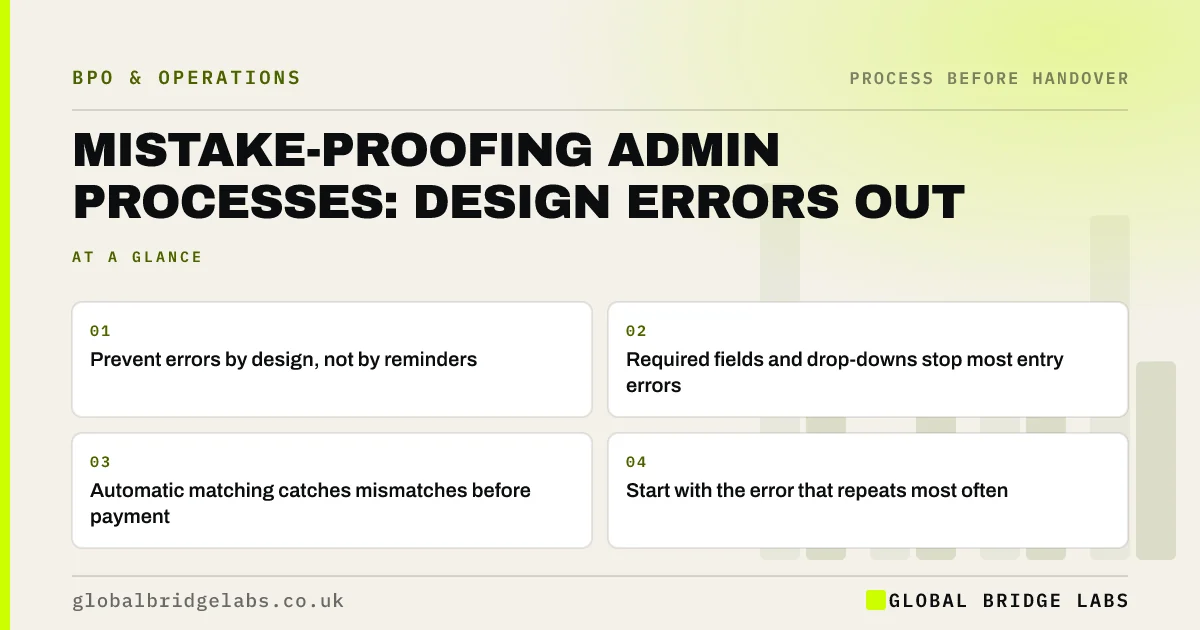
Mistake proofing (poka-yoke) for admin processes: how to design forms, systems and steps so common errors cannot happen, with practical office examples.
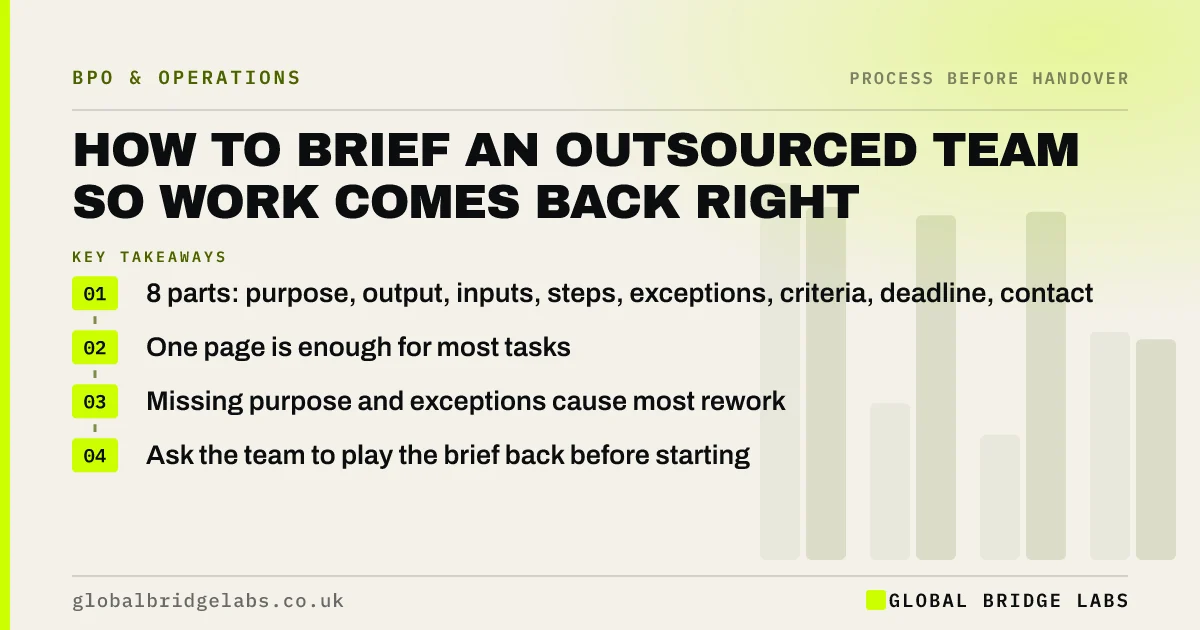
How to brief an outsourced team: the eight things every brief needs, a one-page template, and the common gaps that cause questions and rework.
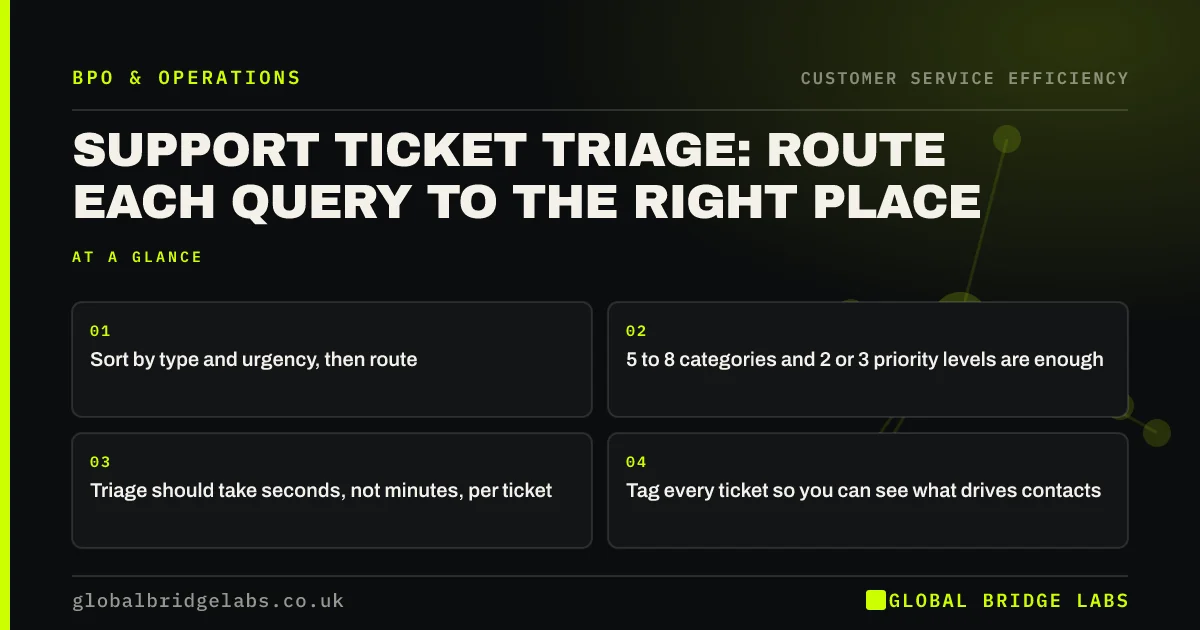
Support ticket triage for small teams: how to sort queries by type and urgency, who should triage, and simple rules that stop tickets waiting.
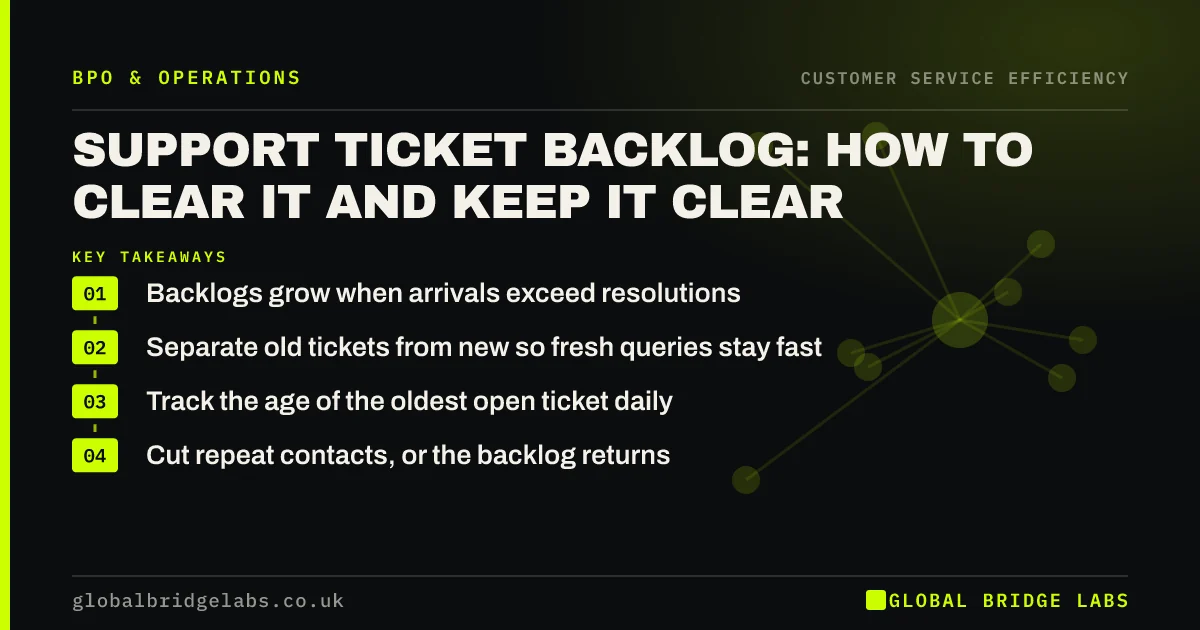
Support ticket backlog: how to measure it, clear it without burning out the team, and set staffing and rules so it does not build up again.
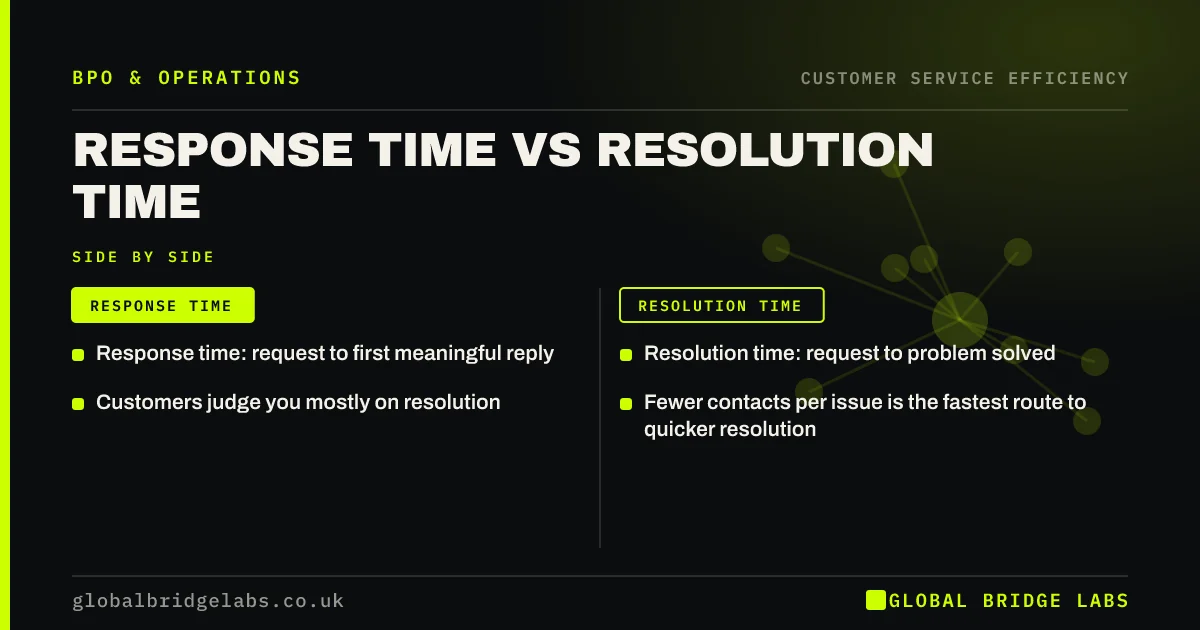
Response time vs resolution time in customer service: what each measures, why customers care more about resolution, and how to improve both.
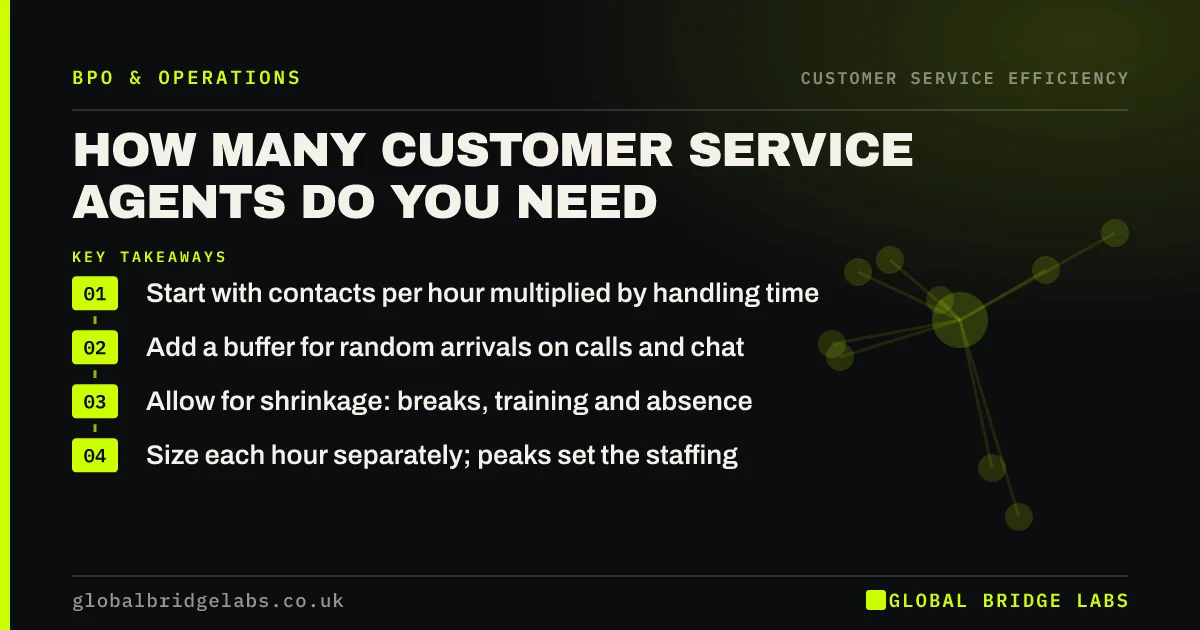
How many customer service agents do you need? A simple staffing method for UK small businesses, from volumes and handling time to cover and shrinkage.
30 minutes with our team and you'll know exactly which of the three problems to fix first.
