On this page
- 01Key takeaways
- 02What should a supplier information page include?
- 03Why have a separate supplier route?
- 04What payment terms should you state?
- 05How does it help prevent invoice fraud?
- 06What should new suppliers know?
- 07When is a supplier page unnecessary?
- 08What does this look like in practice?
- 09Supplier information checklist
- 10Next step
- 11Sources and further reading
- 12Frequently asked questions
Key takeaways
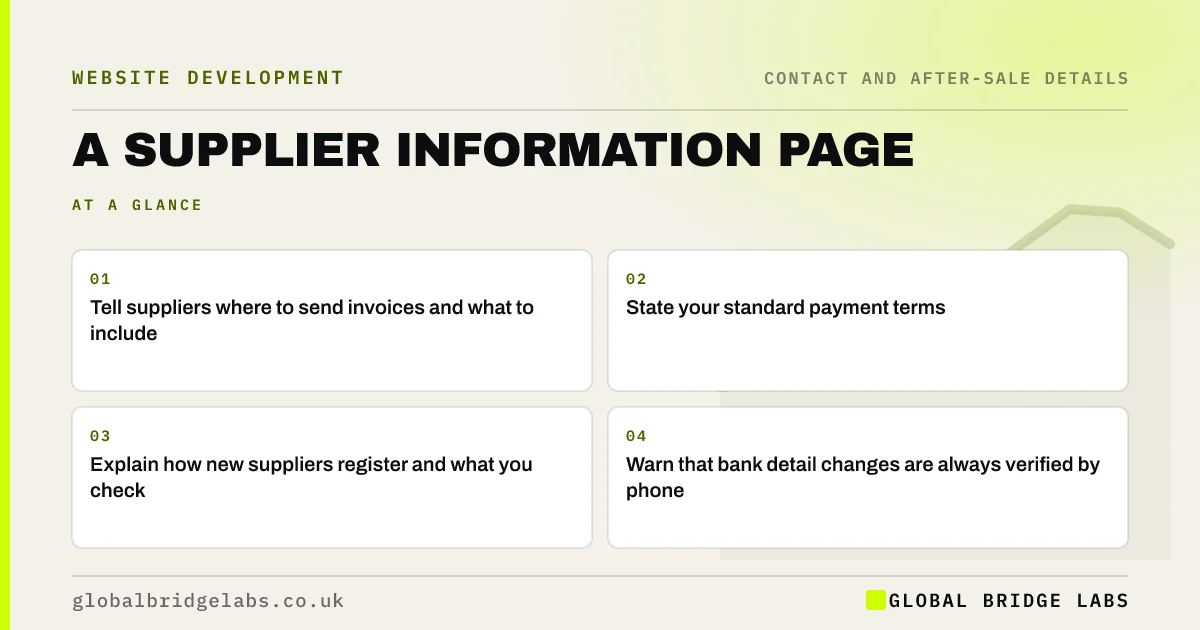
A supplier information page tells current and prospective suppliers how to invoice you, your payment terms, what details invoices need, how to register as a new supplier and who to contact. It keeps suppliers out of your sales inbox, speeds up payments and supports your obligations on prompt payment and fraud checks.
- Tell suppliers where to send invoices and what to include.
- State your standard payment terms.
- Explain how new suppliers register and what you check.
- Warn that bank detail changes are always verified by phone.
Want a supplier page outline? Message us on WhatsApp.
Chat on WhatsApp →What should a supplier information page include?
A supplier page should include where to send invoices, what each invoice must show, such as a purchase order number, your standard payment terms, how new suppliers register, what checks you carry out and a contact for supplier queries. Global Bridge Labs (GBL) sees it help most once a business has a regular supplier base.
Why have a separate supplier route?
Suppliers chasing invoices or offering services often use the sales form or main number, because it is the only visible route. That clutters sales channels and delays payments. A clear supplier page sends these messages to accounts or procurement directly.
What payment terms should you state?
State your standard terms, such as payment within 30 days of a valid invoice, and what makes an invoice valid. Under the Late Payment of Commercial Debts (Interest) Act 1998, suppliers can claim statutory interest on late payments, so clear terms and prompt payment protect your relationships and reputation.
How does it help prevent invoice fraud?
State that you will never accept a change of bank details by email alone and always verify by phone using a number you already hold. Fraudsters commonly impersonate suppliers to divert payments. Publishing your process warns genuine suppliers what to expect and deters impostors.
What should new suppliers know?
Explain how to register interest, what you need from them, such as insurance, policies or accreditations, and how you choose suppliers. Larger organisations may also publish supplier codes of conduct or modern slavery expectations. Keep it honest about how often you take on new suppliers.
When is a supplier page unnecessary?
It is unnecessary for very small firms with a handful of suppliers who already know whom to contact. It becomes useful once accounts is a separate role, supplier messages reach sales, or you want to attract new suppliers in a structured way.
What does this look like in practice?
A pattern we see: supplier invoices arrive at sales@ and sit there for a week, followed by chasers on the main phone line. A one-page supplier information page with an invoices@ address and clear terms usually ends both within a month.
Supplier information checklist
- Give an invoices address.
- List what invoices must show.
- State payment terms.
- Explain bank detail verification.
- Describe new supplier registration.
- Link it from the footer.
Next step
Check where supplier invoices arrived last month. If any went to sales routes, publish a supplier page with its own address.
Message us on WhatsApp for help with non-buyer pages, with no pitch.
Chat on WhatsApp →Sources and further reading
- Late commercial payments: charging interest and debt recovery · GOV.UK
- Small Business Guide: cyber security · National Cyber Security Centre
- Slavery and human trafficking in supply chains: guidance for businesses · Home Office
Frequently asked questions
What should be on a supplier information page?
Where to send invoices, what they must include, payment terms, how bank details are verified, how to become a supplier and who to contact. Keep it short, date it and link it from the footer so suppliers and accounts staff can always find the current version.
Should I publish my payment terms for suppliers?
Yes. Clear published terms reduce chasers and disputes. State the standard period, such as 30 days, and what makes an invoice valid, such as a purchase order number. Then pay on time, because suppliers notice.
How can I protect my business from invoice fraud?
Never change supplier bank details on email instructions alone; verify by phone using a number you already hold. Publishing that rule on a supplier page also tells genuine suppliers what to expect.
Written by

Global Bridge Labs (GBL) is a UK–Sri Lanka partner for social media, websites and BPO. Everything here comes from client delivery, not theory.