On this page
- 01Key takeaways
- 02What is a data security statement?
- 03Why do buyers care?
- 04What should the statement include?
- 05What should you keep private?
- 06Does offshore processing need mentioning?
- 07When is a statement overkill?
- 08What does this look like in practice?
- 09Data security statement checklist
- 10Next step
- 11Sources and further reading
- 12Frequently asked questions
Key takeaways
A data security statement tells clients, in plain words, how you protect the information they give you: where it is stored, who can access it, how it is protected and what certifications you hold. It reassures B2B buyers who must check suppliers. Describe your controls in general terms, and never reveal details that would help an attacker.
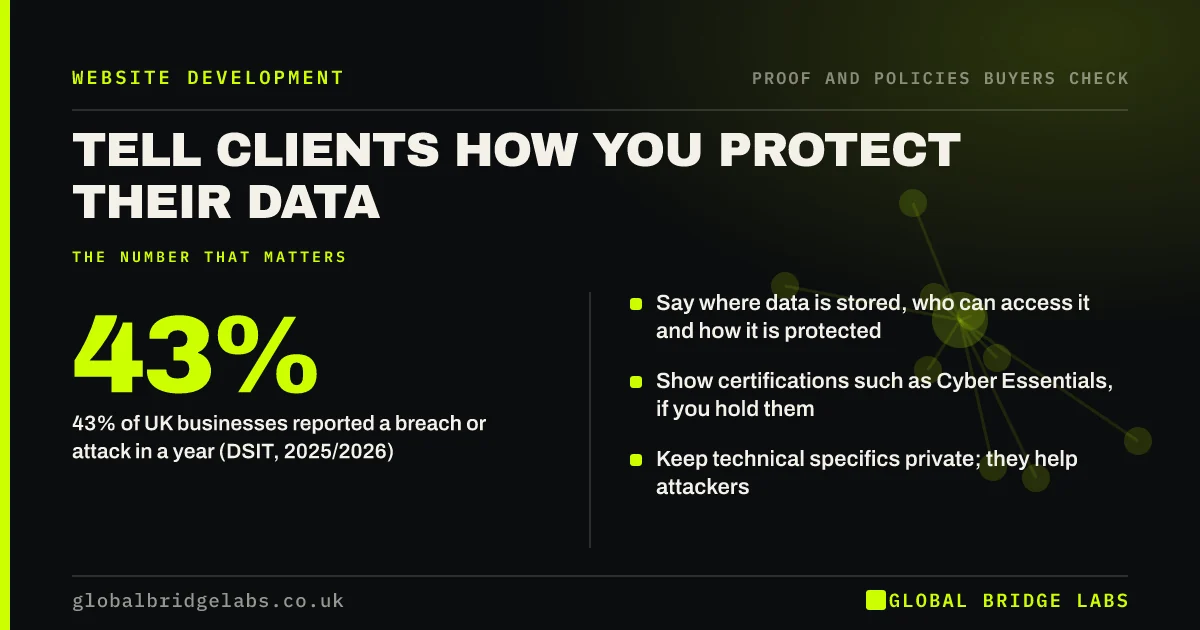
- 43% of UK businesses reported a breach or attack in a year (DSIT, 2025/2026).
- Say where data is stored, who can access it and how it is protected.
- Show certifications such as Cyber Essentials, if you hold them.
- Keep technical specifics private; they help attackers.
Want a security statement outline? Message us on WhatsApp.
Chat on WhatsApp →What is a data security statement?
A data security statement is a short, public explanation of how you protect client information. It differs from a privacy notice, which explains what personal data you collect and why. Global Bridge Labs (GBL) sees B2B buyers increasingly ask for both, because they must check suppliers who handle their data.
Why do buyers care?
Buyers care because their own obligations extend to suppliers. The DSIT Cyber Security Breaches Survey 2025/2026 found 43% of UK businesses reported a breach or attack in the previous year. A client sharing customer records, finance data or designs wants to know the supplier is not the weak link.
What should the statement include?
Cover where data is stored, including the country, who can access it and how access is controlled, how data is protected in transit and at rest, how long you keep it, how you handle incidents, and any certifications you hold, such as Cyber Essentials. Name a contact for security questions.
What should you keep private?
Keep specific product versions, network details, internal procedures and named administrators private. The statement should describe controls in general terms: 'multi-factor authentication on all systems' rather than which tool and how it is configured. Share more detail under contract if a client needs it.
Does offshore processing need mentioning?
Yes. If client data is processed outside the UK, say so and explain the safeguards, because UK GDPR has rules on international transfers and clients will need to know. Being open about it early prevents a difficult conversation during due diligence.
When is a statement overkill?
A separate statement is overkill for businesses that hold little beyond names and email addresses from enquiries. In that case, the privacy notice covers it. It earns its place when you handle client data as part of the service, such as accounts, records or IT systems.
What does this look like in practice?
A pattern we see in outsourcing and professional services: every new client sends a security questionnaire with the same opening questions. A public statement that answers the first ten, plus a 'request our security pack' link, speeds up onboarding and signals maturity.
Data security statement checklist
- Say where data is stored.
- Explain access controls in general terms.
- State retention periods.
- Describe incident handling.
- List certifications you hold.
- Name a security contact.
Next step
Take the first ten questions from your last client security questionnaire. Answer them in plain words and publish the answers.
Message us on WhatsApp for help with a security statement, with no pitch.
Chat on WhatsApp →Sources and further reading
- Cyber security breaches survey 2025/2026 · DSIT and Home Office
- Cyber Essentials overview · National Cyber Security Centre
- Small Business Guide: cyber security · National Cyber Security Centre
- International transfers of personal data · Information Commissioner's Office
Frequently asked questions
What is the difference between a privacy policy and a security statement?
A privacy policy explains what personal data you collect, why and what rights people have. A security statement explains how you protect data from loss or misuse. Many B2B suppliers publish both.
Should I show Cyber Essentials on my website?
If you hold current Cyber Essentials certification, mention it in your security statement and trust signals. It is widely recognised by UK buyers. Only show it while the certification is valid.
What should I not say in a security statement?
Do not reveal specific software versions, network details, internal procedures or anything that would help an attacker. Describe controls in general terms and share more detail privately with clients under contract.
Written by

Global Bridge Labs (GBL) is a UK–Sri Lanka partner for social media, websites and BPO. Everything here comes from client delivery, not theory.