On this page
Key takeaways
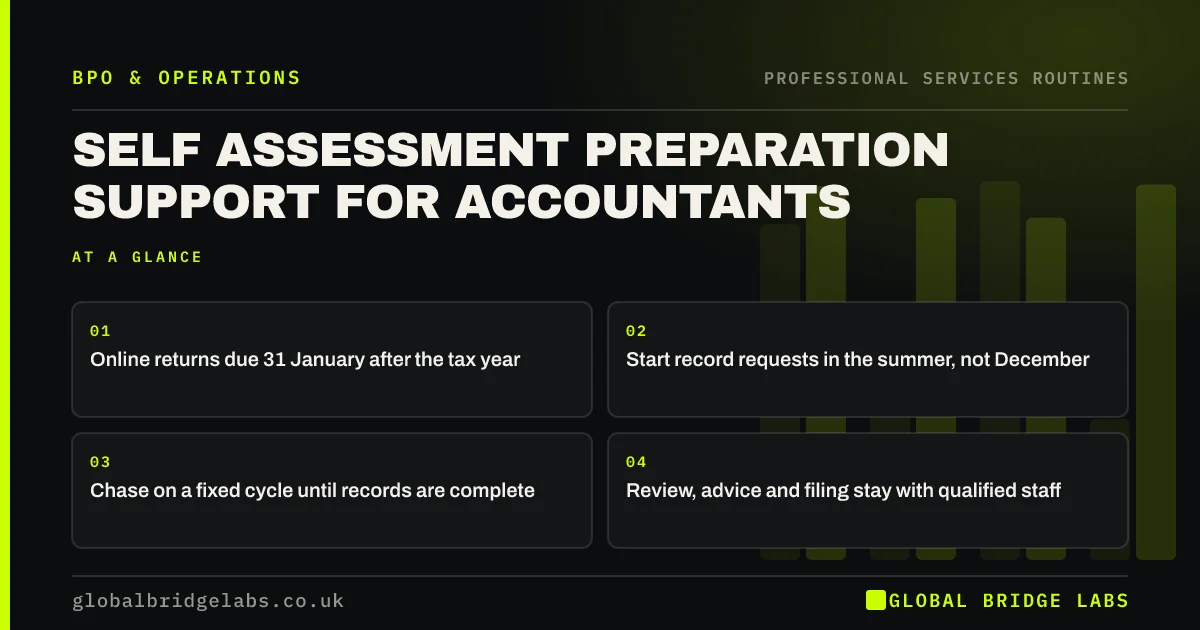
Self Assessment season is mostly repetitive admin: requesting records, chasing missing items, organising bank data and receipts, and preparing draft workings for review. The online filing deadline is 31 January, and late returns bring penalties. Spreading the admin from the summer, with a support team chasing and preparing, turns January from a crisis into review work.
- Online returns due 31 January after the tax year.
- Start record requests in the summer, not December.
- Chase on a fixed cycle until records are complete.
- Review, advice and filing stay with qualified staff.
January workload breaking your practice? Message us on WhatsApp with your Self Assessment client count.
Chat on WhatsApp →Which Self Assessment tasks are admin?
The tasks before review are largely admin and follow the same steps for every client. They are where most of the season's hours go, and most of the delay.
- Sending record requests and engagement reminders.
- Chasing missing statements, P60s and receipts.
- Organising bank data and categorising transactions.
- Preparing draft workings for review.
- Tracking each client's status.
What does a season routine look like?
Send requests soon after the tax year ends on 5 April, chase every two weeks, and prepare drafts as records arrive rather than in a batch in January. Track every client on one status list: requested, partial, complete, draft, reviewed, filed. The 31 January deadline then falls on a short tail rather than the whole client list.
What does the admin take?
In an illustrative example, a practice with 400 Self Assessment clients spends about 1.5 hours of admin on each before review, around 600 hours. Compressed into eight weeks, that is the January crunch. These are example figures. Moving half the admin earlier and to a team flattens the peak.
Send us your client count on WhatsApp and we will estimate the routine with you.
Chat on WhatsApp →What must stay with the accountant?
Tax judgements, advice, final review, client approval and filing must stay with the practice and its qualified staff. Client tax data is confidential personal data, so a support team needs a processor contract, secure access to your practice software and clear rules on what they can see.
What does this look like in practice?
A pattern we see: most clients send records only after the third reminder, which in many practices is sent in December. Starting reminders in the summer, on a fixed cycle, brings records in months earlier.
Self Assessment admin checklist
Run the season with these points.
- Record requests soon after 5 April.
- Fortnightly chase cycle.
- One status list for every client.
- Drafts prepared as records arrive.
- Review and filing by qualified staff.
Next step
Send us your client count and when you start requesting records. We will suggest a season routine and say plainly what a support team could take on.
Message us on WhatsApp about Self Assessment support, or book a 30-minute consultation.
Chat on WhatsApp →Sources and further reading
- Self Assessment tax returns: penalties · GOV.UK
- Check if you're eligible for Making Tax Digital for Income Tax · HM Revenue & Customs
- Contracts and liabilities between controllers and processors · Information Commissioner's Office
Frequently asked questions
When is the Self Assessment deadline?
The deadline for online Self Assessment returns is 31 January following the end of the tax year on 5 April, and any tax owed is usually due the same day. Paper returns have an earlier deadline of 31 October. Penalties apply to late returns and late payment.
How can accountants reduce the January rush?
Request records soon after the tax year ends, chase on a fixed fortnightly cycle, prepare drafts as records arrive and track every client on one status list. Moving routine chasing and preparation to a support team frees qualified staff for review.
Can tax return preparation be outsourced?
Preparation admin can: chasing records, organising data and drafting workings for review. Tax judgements, advice, final review and filing must stay with the practice. Client data must be protected with a processor contract and secure, limited access to practice software.
Written by

Global Bridge Labs (GBL) is a UK–Sri Lanka partner for social media, websites and BPO. Everything here comes from client delivery, not theory.