On this page
Key takeaways
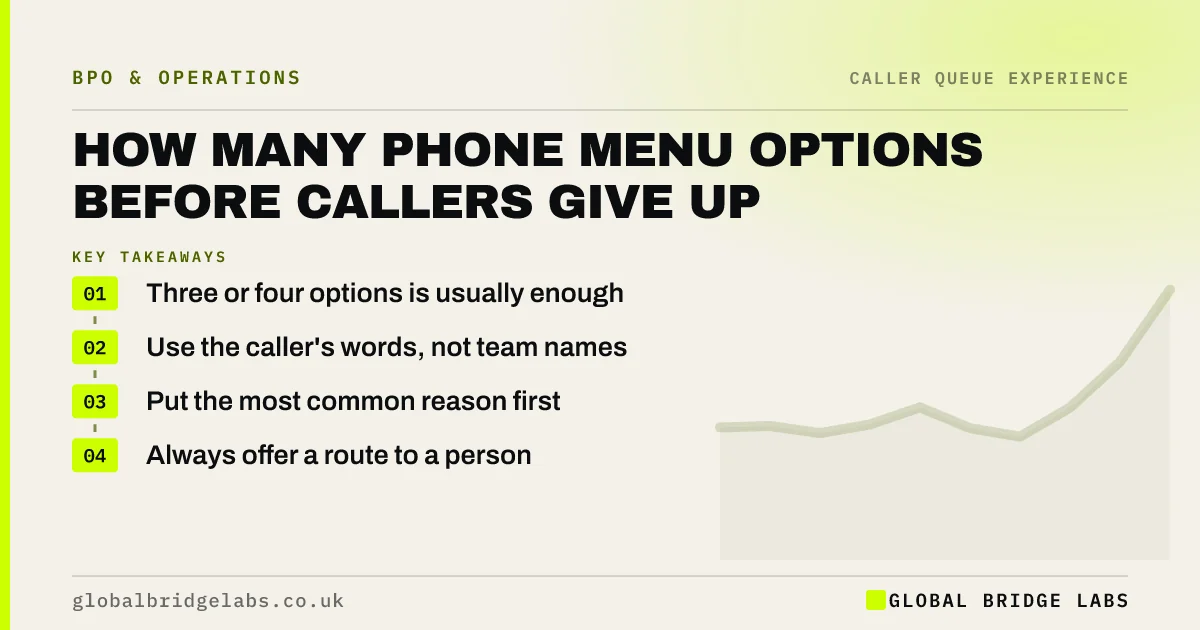
A phone menu, or IVR, should route callers quickly, not test their memory. Most small businesses need no more than three or four options, in the caller's words, with the most common first and a way to reach a person. Long menus add waiting time that a service level measured from the queue does not even show.
- Three or four options is usually enough.
- Use the caller's words, not team names.
- Put the most common reason first.
- Always offer a route to a person.
Want your phone menu simplified? Message us on WhatsApp.
Chat on WhatsApp →Why do long menus hurt?
Every option adds seconds and effort. Callers forget earlier options while listening to later ones, choose wrongly and get transferred. Menu time is often not counted in service level, so a long menu can make the figure look better while callers wait longer in total.
How many options should you have?
For most small businesses, three or four. Use your call reason data to choose them: the top reasons become options, and everything else goes to a general option. If one reason dominates, consider answering it in the menu or by text instead.
How should options be worded?
Describe what the caller wants, not your internal structure. "To change a booking, press 1" works better than "for operations, press 1". Say the reason before the number, keep each option short and avoid sub-menus where possible.
- Reason first, then the number.
- Caller's words, not team names.
- No more than one level of sub-menu.
Want your menu tested on real callers? Send us your current script on WhatsApp.
Chat on WhatsApp →How do you keep menus accessible?
Some callers cannot use keypad menus easily, including people using text relay services such as Relay UK, people with some disabilities and those calling from cars. Make sure doing nothing or pressing zero reaches a person, and avoid time limits that are too short to respond.
What does this look like in practice?
A pattern we see: a business has a six-option menu with a sub-menu, and many callers press the wrong option. Cutting it to three options based on the top call reasons reduces transfers and shortens total wait times.
The new options are reviewed after a month against reason codes, and one option that callers rarely choose is replaced with the next most common reason.
Phone menu checklist
- Time your current menu.
- Cut to three or four options.
- Word options as caller reasons.
- Put the most common first.
- Keep a route to a person.
Next step
Listen to your current menu, compare its options with your top call reasons and rewrite it with no more than four options.
Message us on WhatsApp to redesign your phone menu, or book a 30-minute consultation.
Chat on WhatsApp →Sources and further reading
Frequently asked questions
How many options should a phone menu have?
Most small businesses do well with three or four. Fewer options mean less listening and fewer wrong choices. Base them on your most common call reasons, and send everything else to a general option or a person rather than adding more choices.
Should I let callers press zero for a person?
Yes. A clear route to a person helps callers whose reason does not fit, those who find menus hard and callers using relay services. If callers press zero a lot, review whether your options match why people really call. It is a simple safety net.
Do menus affect service level figures?
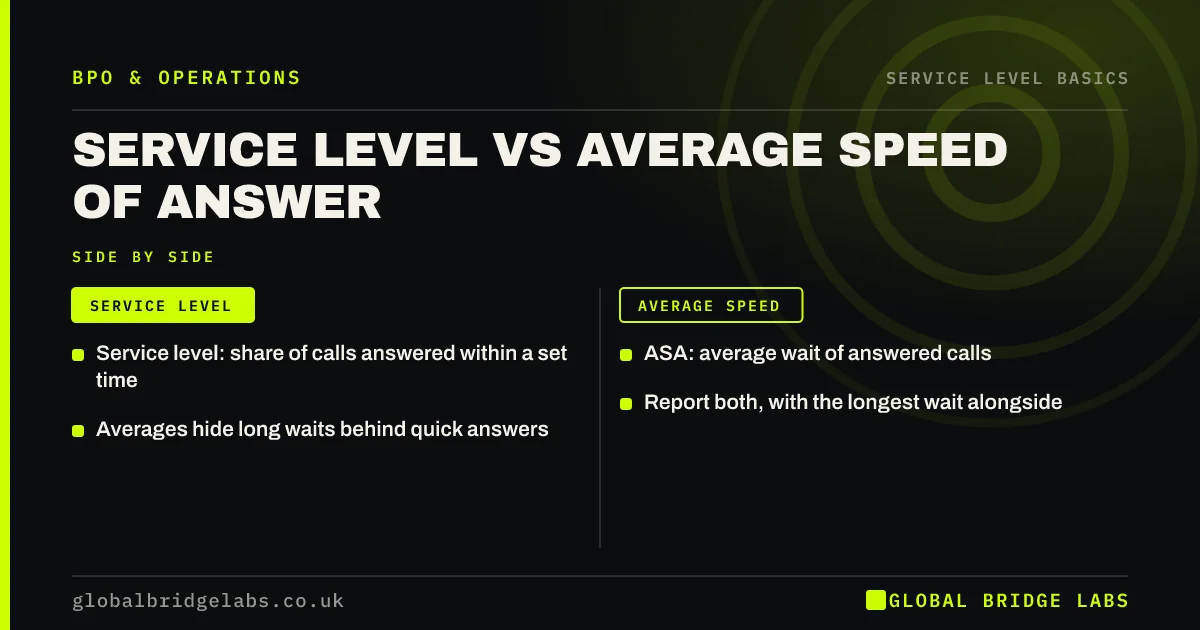
They can. Many systems start the service level clock only when the call reaches the queue, after the menu. A long menu adds waiting the figure does not show. Measure total time to answer, including the menu, at least occasionally.
Written by

Global Bridge Labs (GBL) is a UK–Sri Lanka partner for social media, websites and BPO. Everything here comes from client delivery, not theory.