On this page
Key takeaways
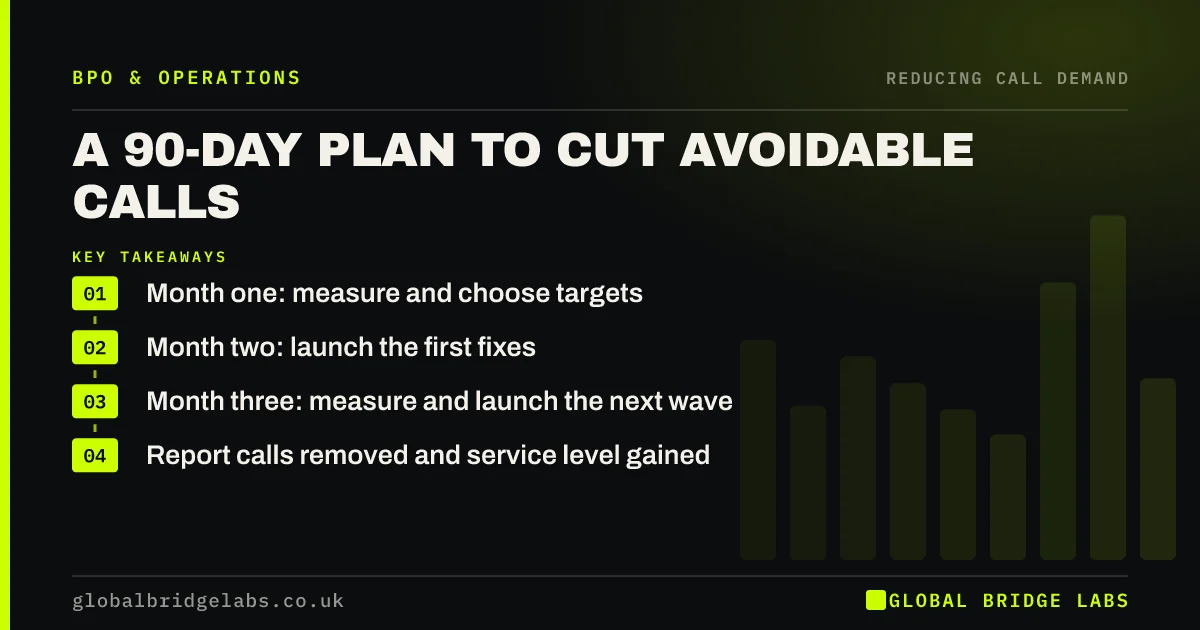
A 90-day call reduction plan turns Pareto analysis into action. Month one measures and chooses targets, month two launches the first fixes, and month three measures results and launches the next wave. Done well, it removes a meaningful share of avoidable calls and improves service level without new staff.
- Month one: measure and choose targets.
- Month two: launch the first fixes.
- Month three: measure and launch the next wave.
- Report calls removed and service level gained.
Want a 90-day call reduction plan? Message us on WhatsApp.
Chat on WhatsApp →Month one: measure and choose
Code every call for four weeks, build a Pareto chart and cost the top reasons. Choose two or three that are avoidable and fixable within a month, with a named owner for each. Agree how you will measure success before you start.
Month two: launch the first fixes
Launch the fixes, such as proactive texts, a clearer letter or a web answer. Brief the team so they can tell customers about the change. Keep coding calls, so you can see the effect as it happens.
- Proactive updates.
- Clearer messages.
- Web answers to top questions.
Month three: measure and repeat
Compare calls for each targeted reason with month one, adjusting for overall volume. Report calls removed, staff hours freed and the change in service level. Keep what worked, fix what did not and choose the next wave of targets.
Want help measuring the first 90 days? Send us your call data on WhatsApp.
Chat on WhatsApp →How do you keep it going?
Make the monthly review permanent. Each month, check results, choose the next target and agree an owner. Over a year, steady small fixes usually do more than one big project.
What does this look like in practice?
A pattern we see: a team targets three reasons in its first 90 days, delivery questions, payment confirmations and rescheduling. Proactive texts and a reschedule link cut those reasons noticeably, and the freed time lifts morning service level above target.
The team then picks billing questions for the next 90 days, using the same steps and the same measures.
Sharing the hours freed with the whole team, and how they were used, keeps everyone supportive of the next wave of changes.
90-day plan checklist
- Code calls for four weeks.
- Choose two or three targets.
- Name an owner for each fix.
- Launch fixes in month two.
- Measure and repeat in month three.
Next step
Start coding every call this week, so that in four weeks you can choose your first two or three targets with real data.
Message us on WhatsApp to plan a call reduction project, or book a 30-minute consultation.
Chat on WhatsApp →Sources and further reading
- Value Stream Mapping Overview · Lean Enterprise Institute
- Measuring success · GOV.UK Service Manual
Frequently asked questions
How many calls can be avoided?
It varies widely by business. Many find that a noticeable share of calls are avoidable, such as requests for updates or questions caused by unclear messages. Measure your own reasons for four weeks before setting a target, and focus on the biggest avoidable reasons first.
Do I need special software to reduce calls?
Not to start. Call reason codes, a spreadsheet and your existing email or text tools are often enough. Software can help with automated updates or self-service later. The most important parts are measuring reasons and making changes to the processes behind them.
Will reducing calls mean fewer staff?
Not necessarily. Many businesses use freed time to answer remaining calls faster, resolve more issues first time or handle growth without hiring. Decide in advance how freed capacity will be used and explain it to the team, so they support the project rather than fear it.
Written by

Global Bridge Labs (GBL) is a UK–Sri Lanka partner for social media, websites and BPO. Everything here comes from client delivery, not theory.