
On this page
Key takeaways
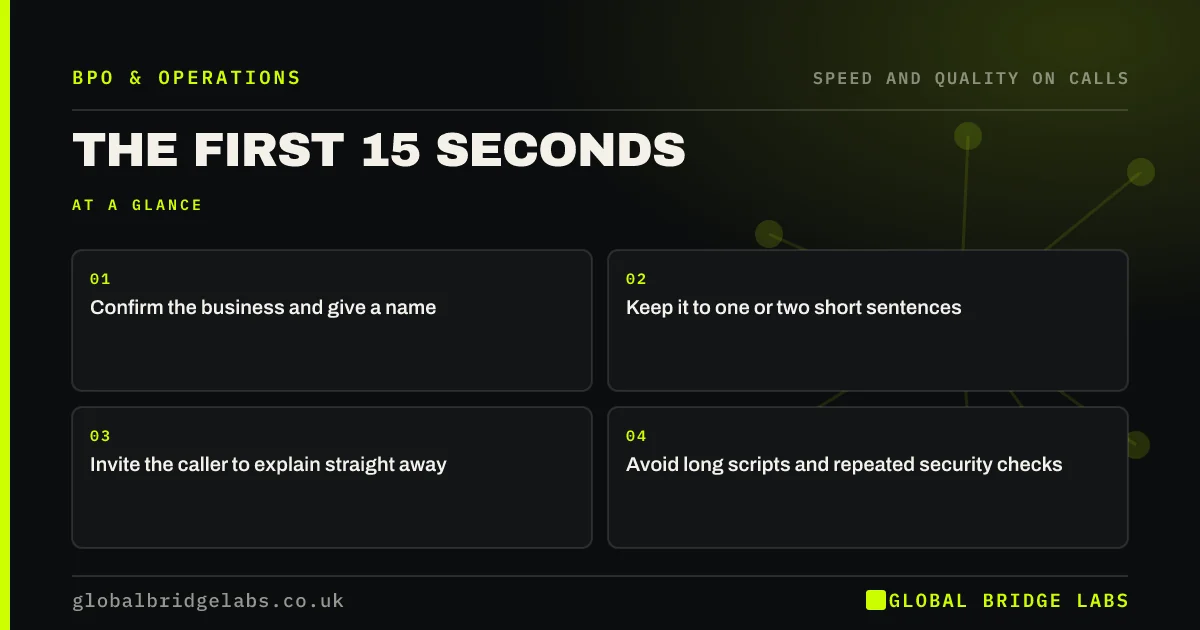
The first 15 seconds of a call set the tone. A good opening confirms the business, gives a name and invites the caller to explain, all in one or two short sentences. Long scripted greetings waste time and sound insincere. Agree a short standard opening, let people say it naturally and focus on listening.
- Confirm the business and give a name.
- Keep it to one or two short sentences.
- Invite the caller to explain straight away.
- Avoid long scripts and repeated security checks.
Want a better call opening for your team? Message us on WhatsApp.
Chat on WhatsApp →What should an opening include?
Three things: the business name, so callers know they have the right place; the person's first name, so the call feels personal; and an open question, such as "How can I help?" For example: "Good morning, Smith Plumbing, this is Sam. How can I help?"
What should it avoid?
Long greetings that list services, promotions or call recording notices before the caller can speak. If you must give a recording notice, it can usually go in the recorded message before the call connects. Avoid asking for account details before you know why they are calling, unless security requires it.
Why does a short opening matter?
Each extra second on every call adds up across a day and reduces how many people are free for the queue. More importantly, a quick, warm opening tells the caller you are ready to help, which matters even more after a long wait.
- Saves seconds on every call.
- Sounds warmer and more natural.
- Gets to the problem faster.
- Answering after a long wait: what to say first
- Average handling time: what it is and when to lower it
Want your opening timed and tested? Send us a recording on WhatsApp.
Chat on WhatsApp →How do you keep it natural?
Agree the elements, not every word. Let people use their own phrasing within the standard. Listen to a few calls each month and share good examples. Smile while speaking; callers can hear it.
What does this look like in practice?
A pattern we see: a team uses a 12-second greeting listing three services. Callers often talk over it. Cutting it to business name, first name and "How can I help?" saves time on every call and sounds friendlier.
Across a few hundred calls a week, those seconds add up to useful capacity in the busiest half hours.
Call opening checklist
- Business name.
- First name.
- Open question.
- Recording notice before connection if possible.
- Review a few openings monthly.
Next step
Time your team's current opening, cut it to the three essentials and listen to a few calls next week to check it sounds natural.
Message us on WhatsApp to improve your call openings, or book a 30-minute consultation.
Chat on WhatsApp →Sources and further reading
- Stop trying to delight your customers (Dixon, Freeman and Toman, 2010) · Harvard Business Review
- Writing to GOV.UK standards: writing guidelines · GOV.UK
Frequently asked questions
What is the best way to answer a business phone call?
Give the business name, your first name and an open question, for example "Good morning, Green Dental, this is Alex. How can I help?" It is short, confirms the caller has the right place and invites them to explain. Say it clearly and at a steady pace.
Should I say good morning or just hello?
Either works if it suits your business. "Good morning" or "good afternoon" sounds slightly more formal and helps in professional settings. What matters more is a clear business name, a friendly tone and getting quickly to the caller's reason for calling.
Where should the call recording notice go?
Many businesses put it in the recorded message before the call connects, so staff do not need to say it. Check your privacy information explains why calls are recorded. If a caller asks about recording during the call, staff should be able to explain simply.
Written by

Global Bridge Labs (GBL) is a UK–Sri Lanka partner for social media, websites and BPO. Everything here comes from client delivery, not theory.


