On this page
Key takeaways
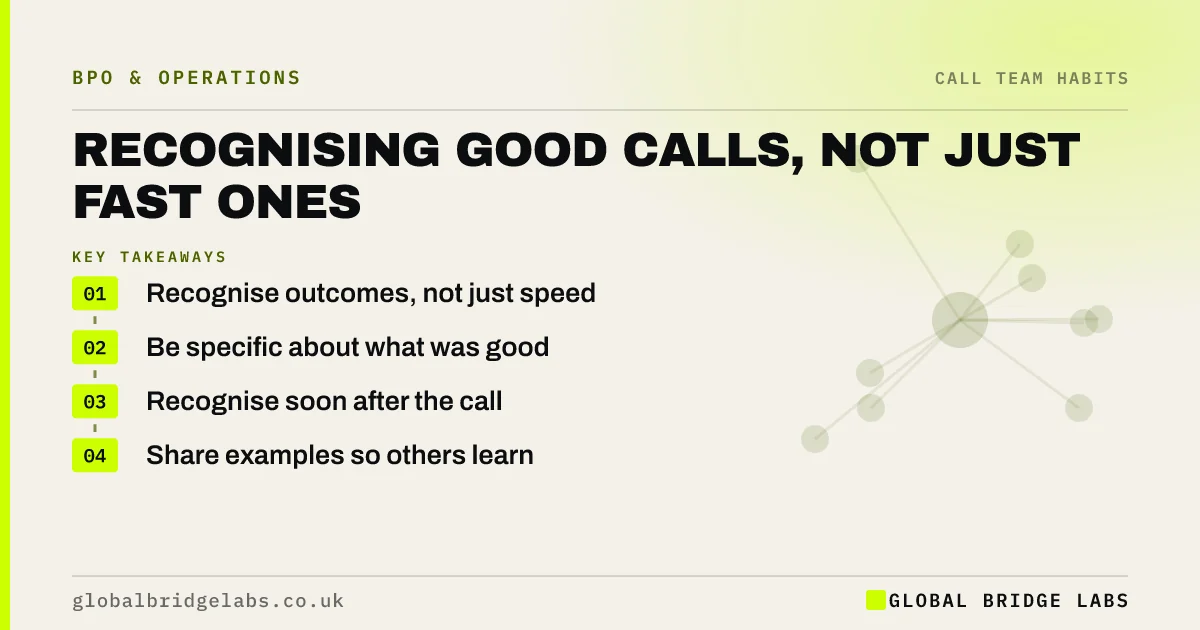
If you only recognise speed, people learn that speed is what matters. Recognising good calls, ones where the caller was helped, felt heard and did not need to call back, reinforces the behaviours that improve customer service in the long run. Simple, specific and timely recognition works better than rare, generic awards.
- Recognise outcomes, not just speed.
- Be specific about what was good.
- Recognise soon after the call.
- Share examples so others learn.
Want ideas for recognising good calls? Message us on WhatsApp.
Chat on WhatsApp →What makes a good call?
The caller's problem was solved or a clear next step was agreed, they felt listened to, the notes were clear and they did not need to call back. A good call may be longer than average; what matters is the outcome for the caller.
Where do you find good calls?
From call sampling, positive survey comments, thank-you messages and colleagues' observations. Ask the team to nominate calls they are proud of. Look especially for calls that turned an unhappy customer around.
- Random call samples.
- Survey comments.
- Customer thank-yous.
- Peer nominations.
How should recognition be given?
Specifically and soon: "On your call with the customer about the late order, the way you summarised the next steps meant they did not need to call back." Share examples in huddles if the person is comfortable, and mention them in one-to-ones.
Want help building recognition into your routines? Ask us on WhatsApp.
Chat on WhatsApp →Does recognition affect service level?
Indirectly but meaningfully. Recognised behaviours spread, people stay longer and morale rises, which reduces sickness and turnover. Better first-time resolution also means fewer repeat calls, which shortens queues.
What does this look like in practice?
A pattern we see: the only recognition is a monthly prize for most calls handled. Adding a weekly "call of the week" chosen from sampled calls shifts conversations towards quality, and repeat calls begin to fall.
The most-calls prize is dropped after a few months, because the team agrees the weekly example is more motivating and fairer to people who take the hardest calls.
Customer survey comments that mention a member of staff by name also become more frequent, which gives the team even more good examples to share each week.
Recognising good calls checklist
- Define what a good call looks like.
- Gather examples from several sources.
- Recognise specifically and soon.
- Share examples with consent.
- Avoid rewarding speed alone.
Next step
Pick one good call from this week's sample, tell the person specifically what was good about it and share it at the next huddle if they agree.
Message us on WhatsApp to build better call recognition, or book a 30-minute consultation.
Chat on WhatsApp →Sources and further reading
- What are the Management Standards for work-related stress? · Health and Safety Executive
- UK Customer Satisfaction Index · Institute of Customer Service
Frequently asked questions
Should I reward staff for handling the most calls?
Be careful. Rewarding volume alone can push people to rush, transfer or end calls early. If you recognise volume, balance it with quality and resolution. Many teams find that recognising specific good calls has a more positive effect on service.
How often should good calls be recognised?
Little and often works best, such as a weekly example in the huddle and specific comments in coaching. Rare, large awards are easily forgotten. Frequent, specific recognition shows people which behaviours matter and encourages others to copy them. Keep it genuine and varied.
What if staff do not like public recognition?
Ask them. Some people prefer private feedback or a written note. Recognition should feel good for the person receiving it. Share examples anonymously with the team if the person agrees, so others can learn from the call without singling anyone out.
Written by

Global Bridge Labs (GBL) is a UK–Sri Lanka partner for social media, websites and BPO. Everything here comes from client delivery, not theory.