On this page
Key takeaways
A phone answer library is a short, searchable set of approved answers to the questions callers ask most. It helps new and part-time staff answer confidently, cuts holds and transfers, and keeps answers consistent across your team and any overflow provider. Start with your top 20 call reasons, write each answer in plain words and keep it up to date.
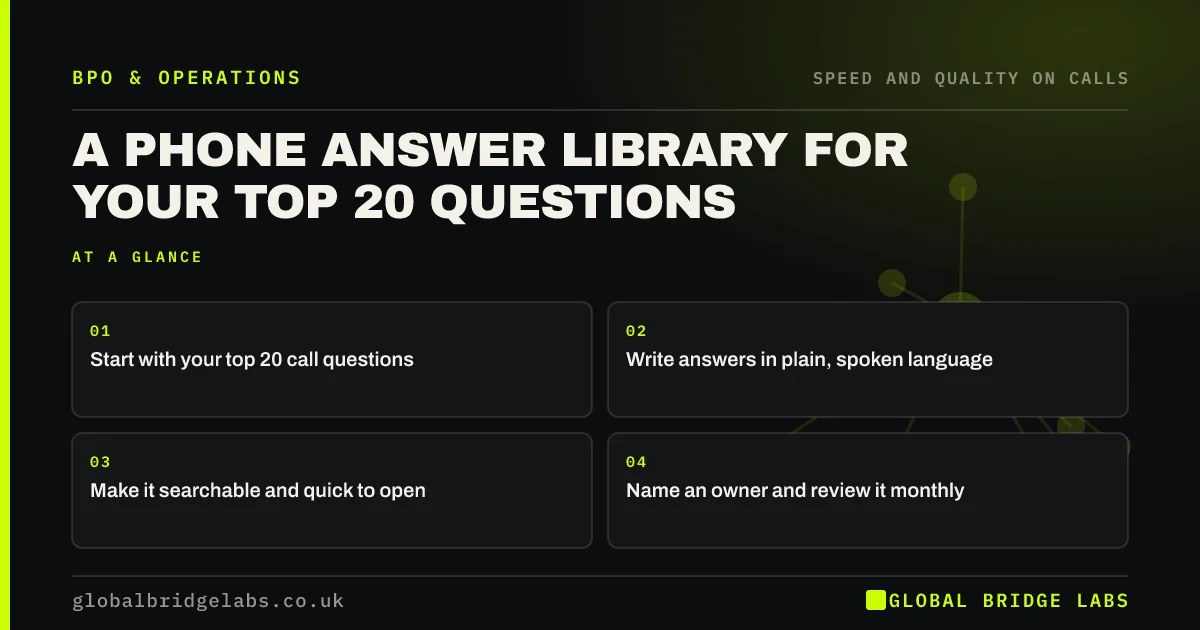
- Start with your top 20 call questions.
- Write answers in plain, spoken language.
- Make it searchable and quick to open.
- Name an owner and review it monthly.
Want help building your answer library? Message us on WhatsApp.
Chat on WhatsApp →What goes in the library?
The questions behind your top call reasons, each with a short answer, any checks needed, what the caller should do next and when to escalate. Include the exact words customers use, so staff can search for them. Keep each answer short enough to read during a call.
How should answers be written?
In plain English that sounds natural when spoken. Use short sentences, put the answer first and avoid internal jargon. Add one line on how to confirm the caller's details where needed, and a clear note on what staff must not promise.
Where should it live?
Somewhere staff can open in one click during a call: a shared document, a helpdesk knowledge base or a page in your customer system. Search matters more than design. Make sure overflow or outsourced teams see the same version.
- One click from the call screen.
- Good search.
- One shared version for every team.
- Internal knowledge base: answers your team can find fast
- Overflow routing: when calls should go elsewhere
Want your top call answers drafted? Send us your call reasons on WhatsApp.
Chat on WhatsApp →How do you keep it accurate?
Give the library an owner. Update answers when prices, policies or processes change, and add new answers when a question keeps coming up. Ask staff to flag answers that are wrong or unclear, and review those flags monthly.
What does this look like in practice?
A pattern we see: new starters put many callers on hold to ask colleagues the same questions. A library of 25 short answers, built from the top call reasons, cuts holds noticeably and helps new staff reach full speed sooner.
Experienced staff use it too, because it stops small differences creeping into answers on prices and policies.
Answer library checklist
- List your top 20 call questions.
- Write short, plain answers.
- Add escalation notes.
- Make it one click from calls.
- Name an owner and review monthly.
Next step
Take your top ten call reasons, write a short approved answer for each and share it with the team for a week of testing.
Message us on WhatsApp to build a phone answer library, or book a 30-minute consultation.
Chat on WhatsApp →Sources and further reading
- Writing to GOV.UK standards: writing guidelines · GOV.UK
- Stop trying to delight your customers (Dixon, Freeman and Toman, 2010) · Harvard Business Review
Frequently asked questions
How is an answer library different from a script?
A script tells staff what to say in order. An answer library gives them accurate information to use in their own words. Most teams need a short script for openings and closings and a library for the questions in between, so calls sound natural but stay accurate.
How many answers should the library have?
Start with 20 to 30, covering your most common questions. That usually covers most calls. Add more as new questions appear, but keep it focused. A huge library is hard to search and keep up to date, so remove answers nobody uses.
Who should write the answers?
Someone who knows the subject, checked by someone who answers calls. The expert ensures accuracy; the call handler ensures it works in a real conversation. Give one person overall ownership, so updates are made quickly when something changes. Review ownership once a year.
Written by

Global Bridge Labs (GBL) is a UK–Sri Lanka partner for social media, websites and BPO. Everything here comes from client delivery, not theory.