On this page
- 01Key takeaways
- 02Why does the budget itself stay in-house?
- 03Which budgeting tasks can be outsourced?
- 04What is a simple budgeting timetable?
- 05When is outsourcing budget admin not worth it?
- 06What does this look like in practice?
- 07Budgeting checklist
- 08Next step
- 09Sources and further reading
- 10Frequently asked questions
Key takeaways
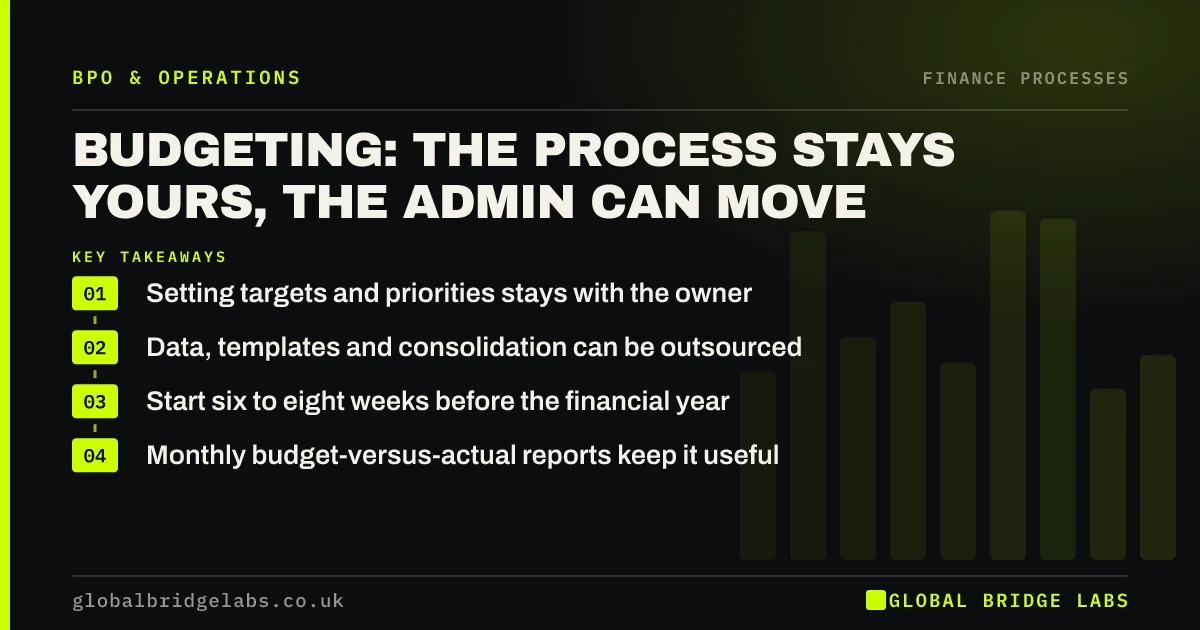
The budgeting process in a small business is a set of choices about where money and effort go next year, and those choices stay with the owner. The admin around it moves well: pulling last year's actuals, building the template, consolidating inputs and producing monthly budget-versus-actual reports. Start six to eight weeks before the year begins.
- Setting targets and priorities stays with the owner.
- Data, templates and consolidation can be outsourced.
- Start six to eight weeks before the financial year.
- Monthly budget-versus-actual reports keep it useful.
Want a simple budget template and timetable? Message us on WhatsApp.
Chat on WhatsApp →Why does the budget itself stay in-house?
A budget is a set of decisions: how much to grow, where to invest, what to cut, what margin to aim for. Those decisions carry the business's risk and need knowledge of its plans and people. A provider can model options, but if someone else sets your budget, you have outsourced your strategy.
Which budgeting tasks can be outsourced?
The preparation and the follow-through. Pulling actuals by month and category, building a template, collecting and consolidating managers' inputs, checking they add up, and producing monthly reports comparing actual with budget. These take hours each year and are rule-based once the structure is set.
- Pull last year's actuals by month.
- Build and maintain the template.
- Consolidate managers' inputs.
- Report budget against actual monthly.
What is a simple budgeting timetable?
Eight weeks out, pull actuals and set the template. Six weeks out, the owner sets targets and priorities. Four weeks out, managers submit their numbers. Two weeks out, consolidate, challenge and agree. In the first month of the year, load the budget into reporting so monthly comparisons start straight away.
- Zero-based budgeting for small businesses: a practical guide
- Cash flow forecasting: outsource the model, keep the calls
Want this timetable set to your year end? Message us on WhatsApp.
Chat on WhatsApp →When is outsourcing budget admin not worth it?
When the business is small enough that the owner can build the budget in a day from the accounts, adding a provider adds handoffs for little gain. It becomes worth it when several managers contribute, or when monthly reporting against budget keeps slipping.
What does this look like in practice?
A pattern we see: budgets get built carefully in December and never looked at again. The monthly comparison report is what makes a budget useful, and it is the easiest part to hand over.
Budgeting checklist
Use these steps each year.
- Pull actuals eight weeks before year start.
- Owner sets targets and priorities.
- Managers submit numbers on a fixed date.
- Consolidate and challenge.
- Load the budget into monthly reporting.
- Review budget against actual each month.
Next step
Tell us when your financial year starts and how you budget today. We will suggest a timetable and tell you which admin we would take off your hands.
Message us on WhatsApp, or book a 30-minute consultation.
Chat on WhatsApp →Sources and further reading
Frequently asked questions
Should a small business outsource its budgeting?
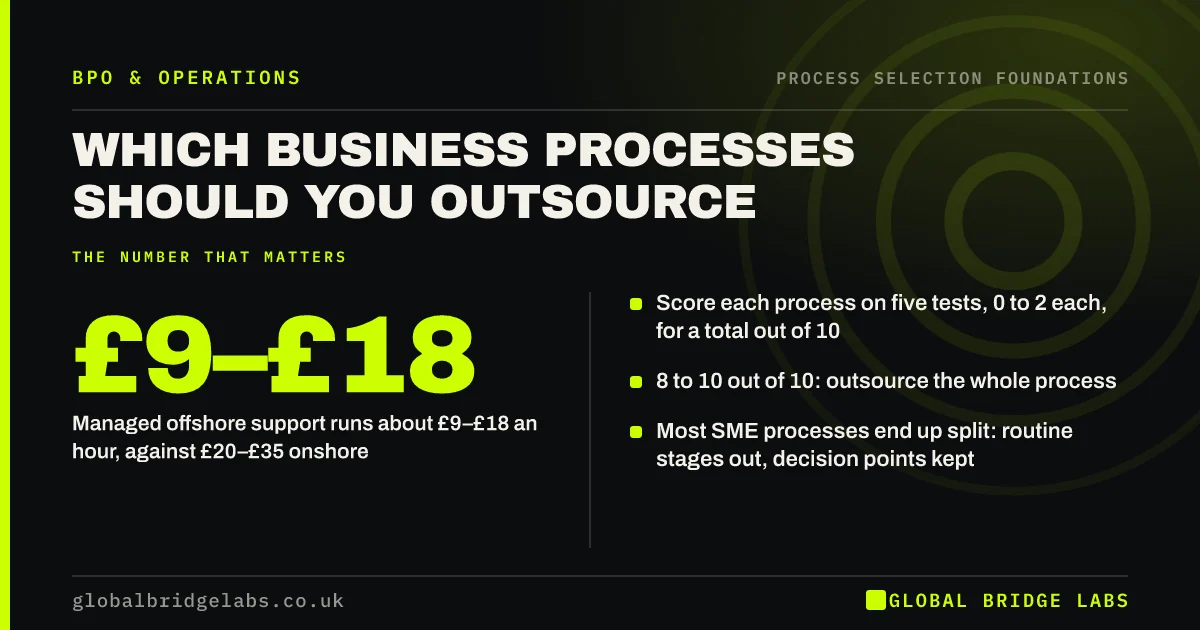
Outsource the admin, not the budget. Pulling actuals, building templates, consolidating inputs and producing monthly budget-versus-actual reports can move to a provider. Setting targets, priorities and spending limits should stay with the owner, because those are strategic decisions.
When should a small business start its annual budget?
Six to eight weeks before the financial year begins. That allows time to pull last year's actuals, set targets, gather managers' inputs, challenge and agree the numbers, and load the budget into reporting so monthly comparisons start from the first month.
What makes a small business budget useful?
Comparing it with actual results every month and acting on large differences. A budget that is built and then ignored adds nothing. A short monthly report showing budget against actual, with notes on the main variances, is what keeps it useful.
Written by

Global Bridge Labs (GBL) is a UK–Sri Lanka partner for social media, websites and BPO. Everything here comes from client delivery, not theory.