Short, practical writing on visibility, conversion and capacity, from the team doing the work for 120+ UK startups, SMEs and enterprises.
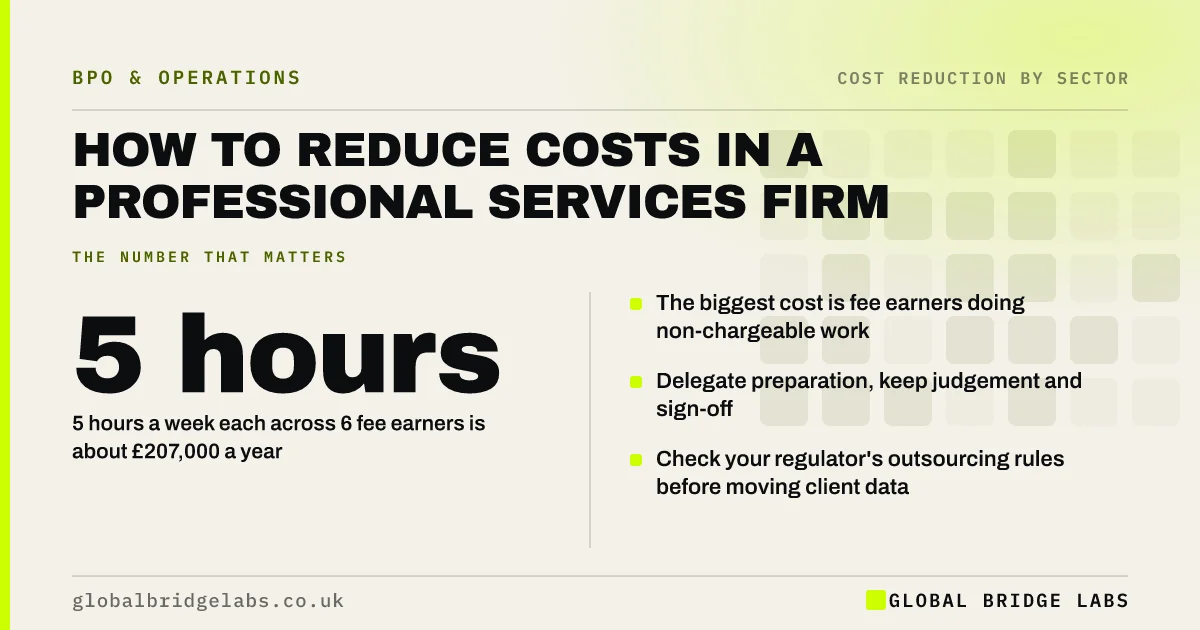
How to reduce costs in a professional services firm: why fee-earner admin is the largest hidden cost, a worked example, and what to delegate safely.
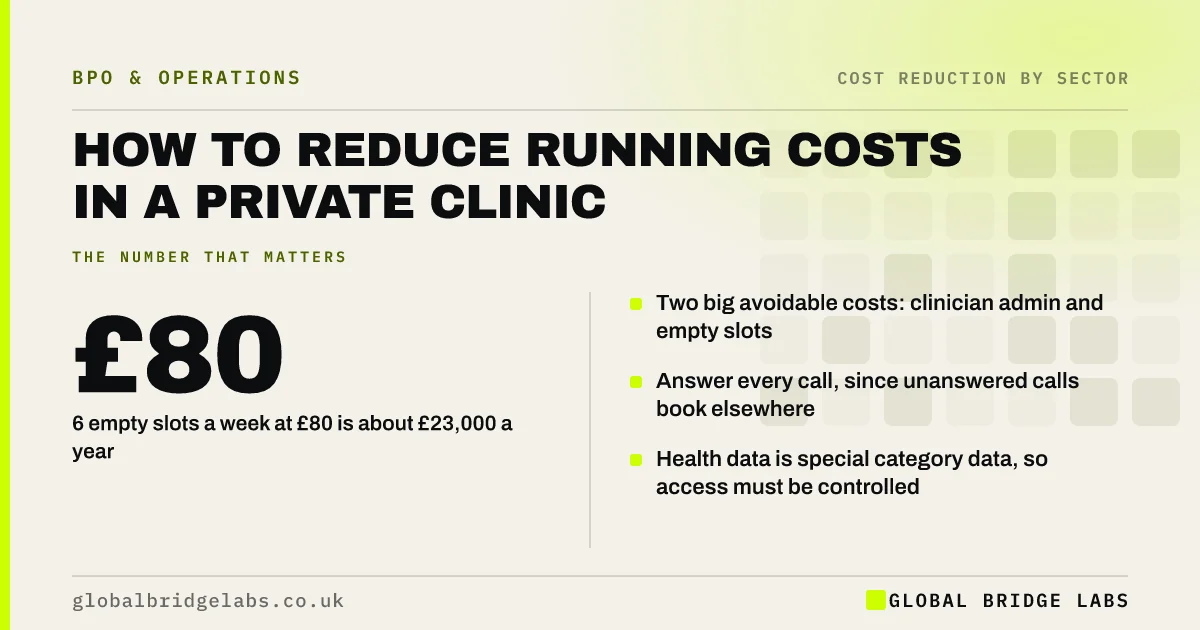
How to reduce running costs in a private clinic: where admin time goes, what unfilled appointment slots cost, and what can be handed over safely.
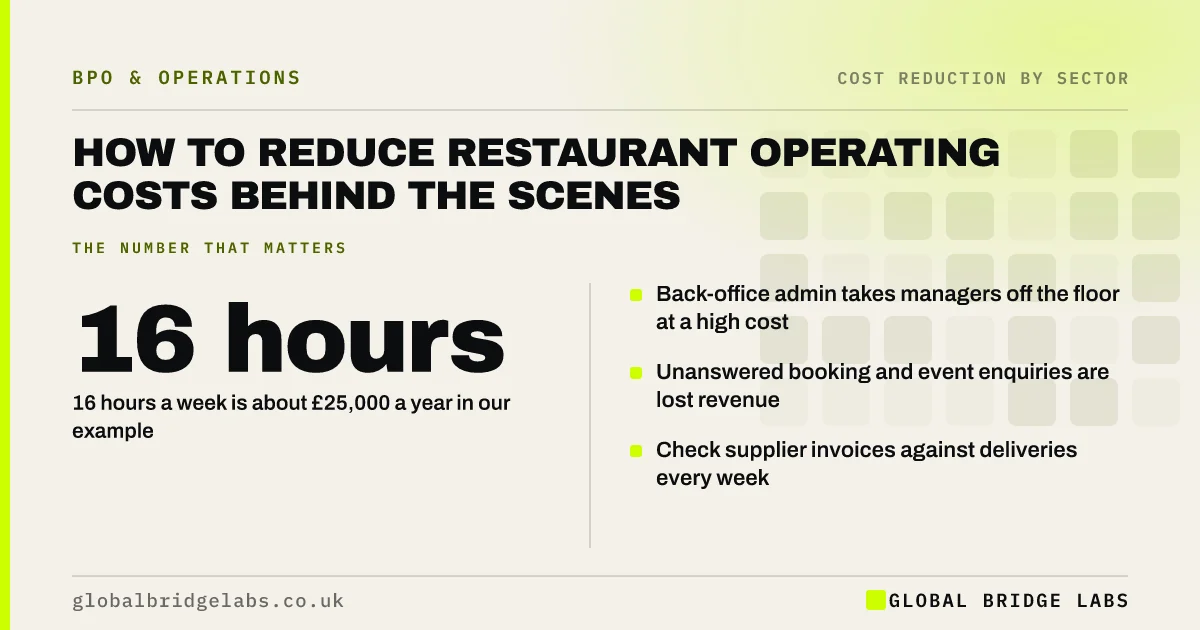
How to reduce restaurant operating costs away from the kitchen: bookings, enquiries, supplier invoices and rota admin, with a worked example for owners.
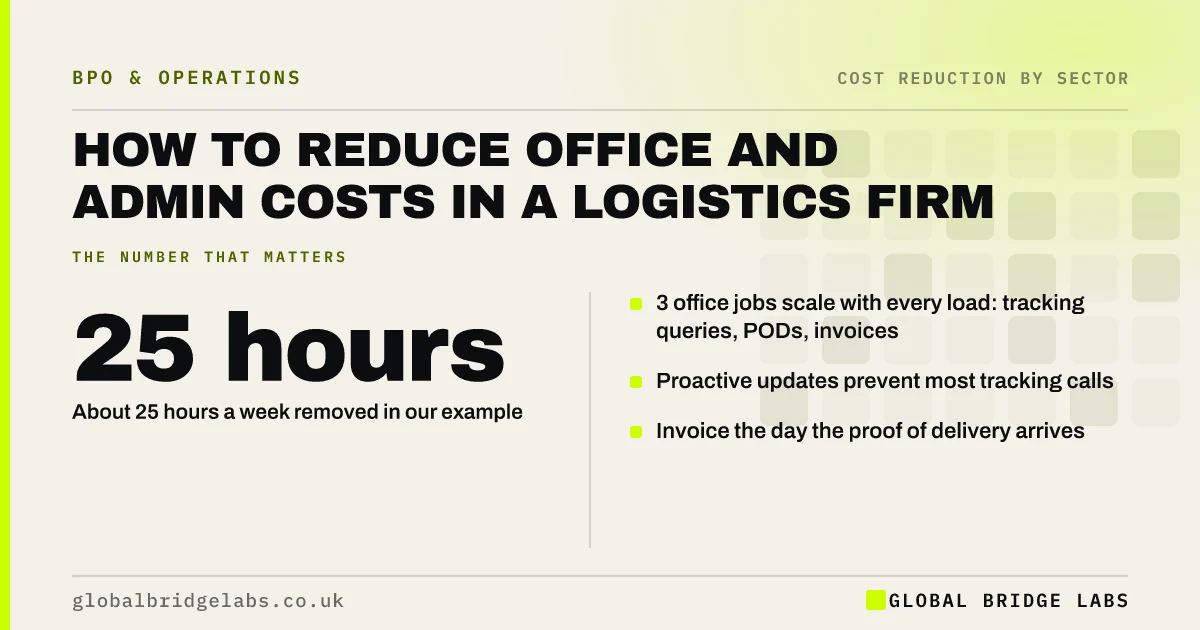
How to reduce logistics admin costs in a UK transport or freight firm: tracking queries, POD paperwork, invoicing delays and what to hand over.
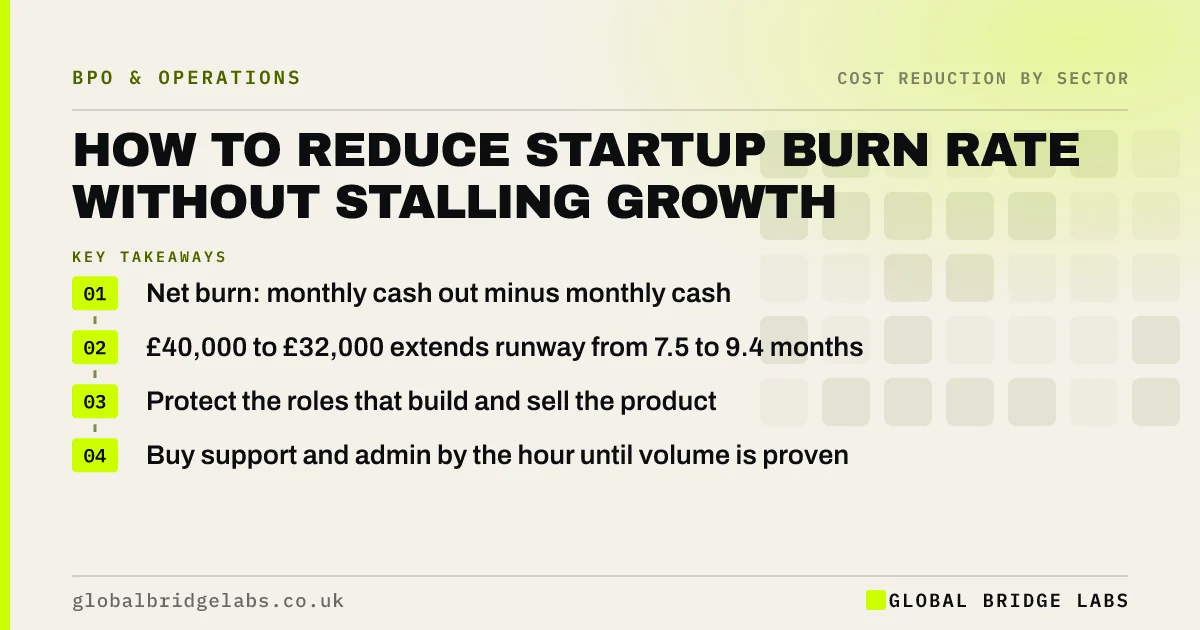
How to reduce startup burn rate without stalling growth: the formula, what to cut and what to protect, a worked runway example, and variable-cost options.
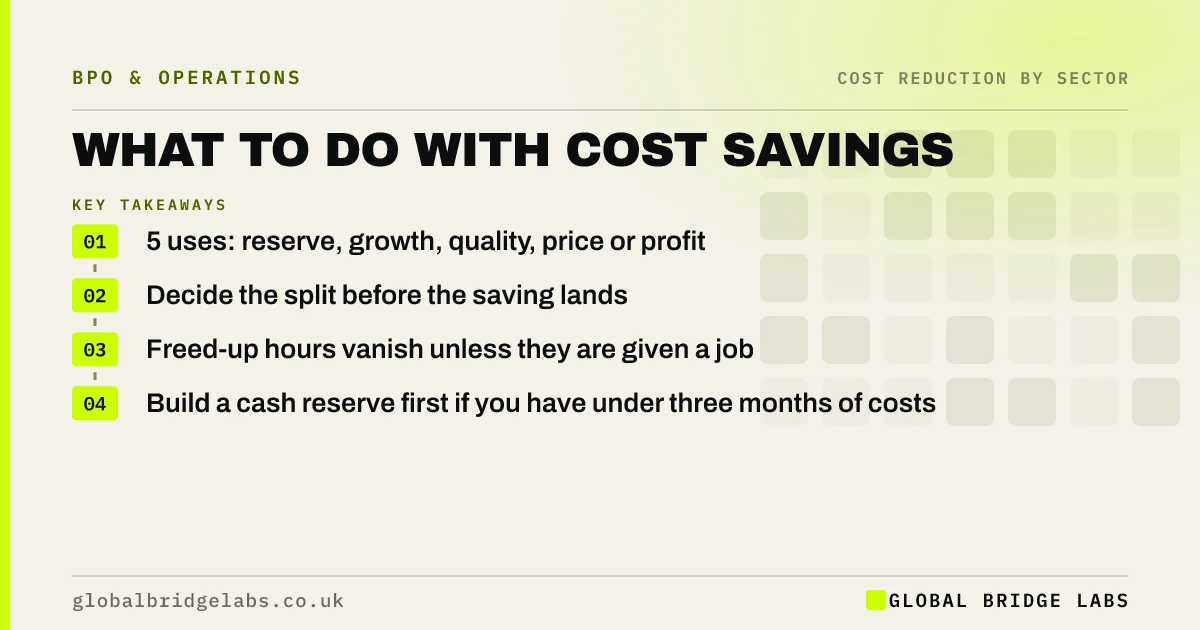
What to do with cost savings in a small business: five uses compared, how to decide, a worked split, and how to keep freed-up hours from disappearing.
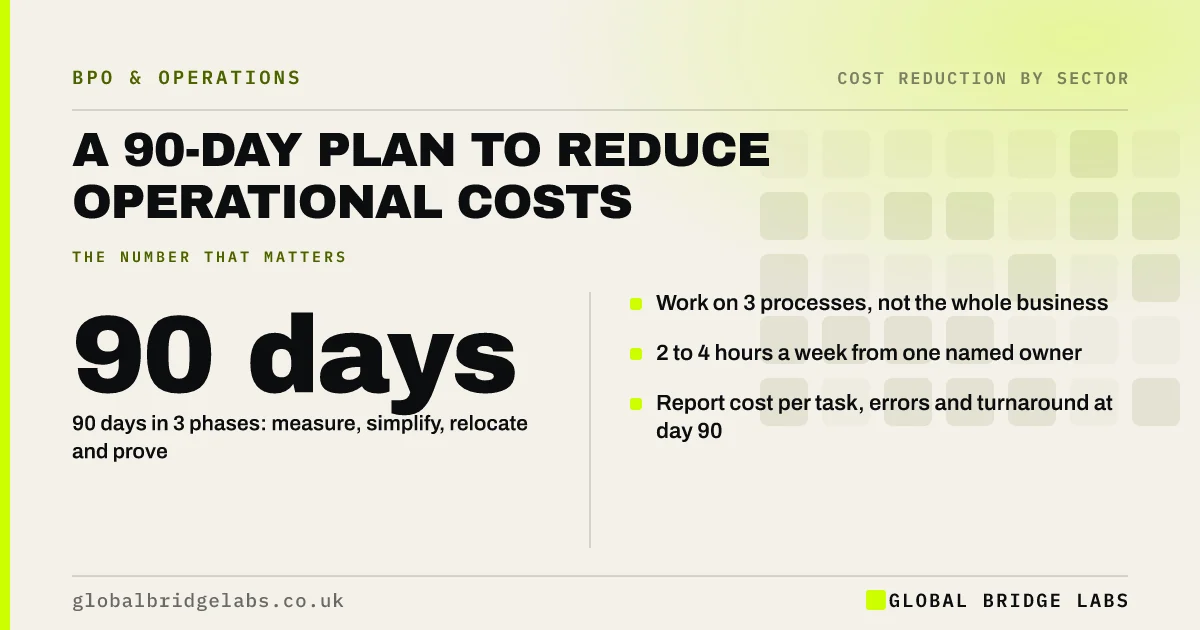
A 90-day operational cost reduction plan for UK small businesses: what to do in each 30 days, who owns it, what to measure and when to use a provider.
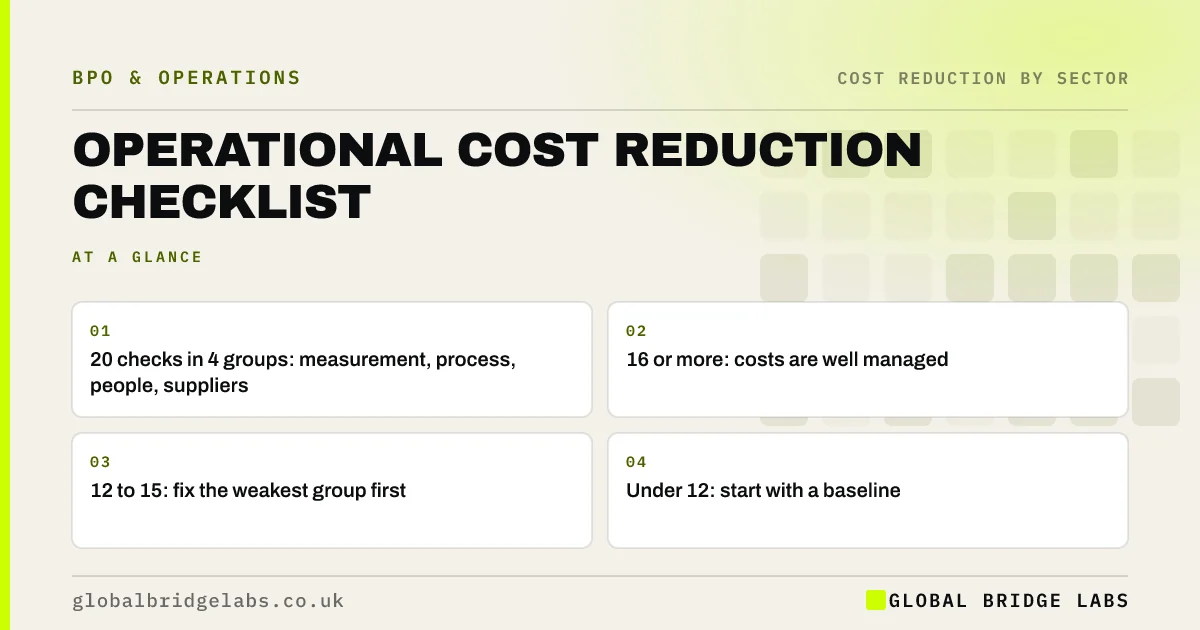
An operational cost reduction checklist for UK small businesses: 20 checks across measurement, process, people and suppliers, with a simple score.
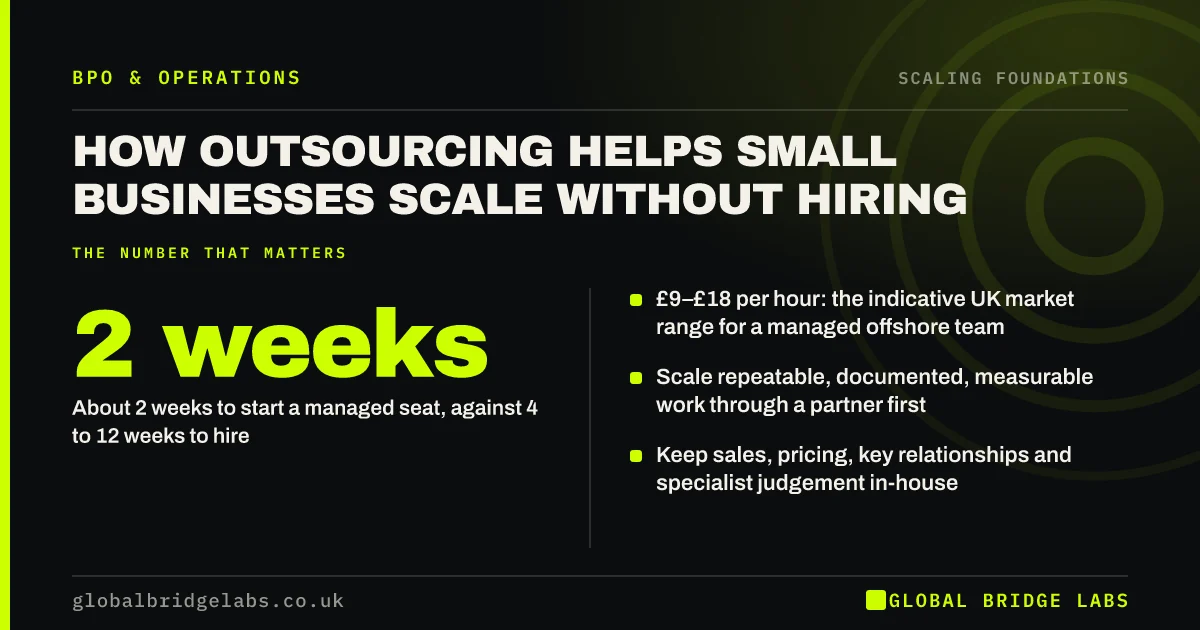
How to scale a business without hiring: five ways outsourcing adds capacity, what it costs against a hire, what stays in-house, and when to hire.
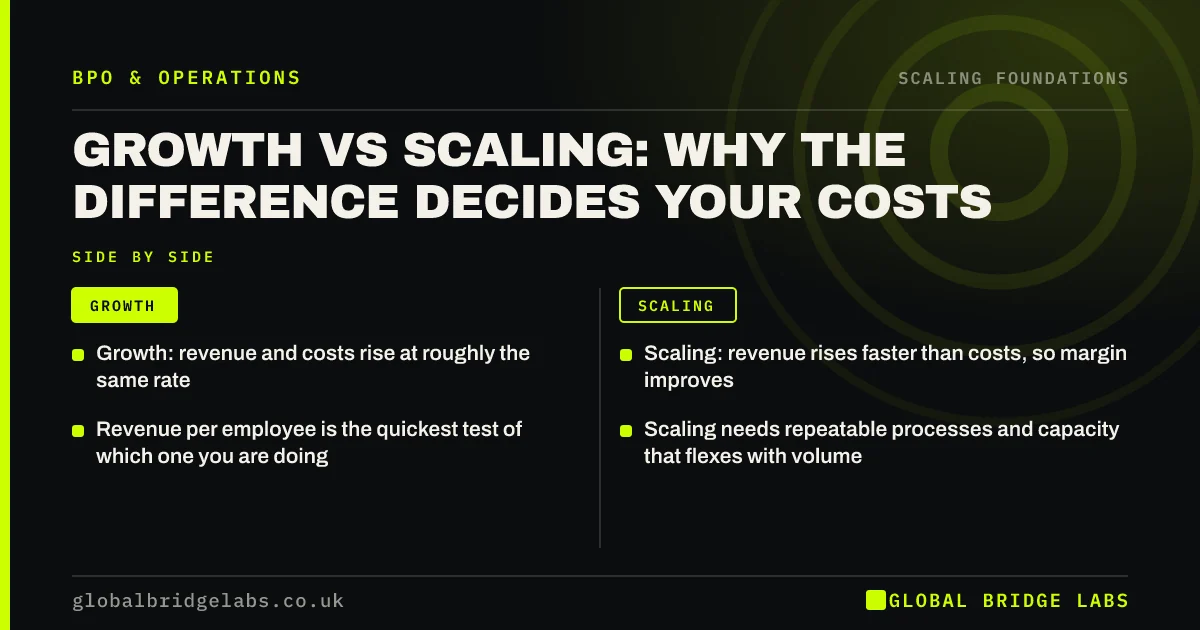
Growth vs scaling explained for UK small businesses: the definitions, a worked example, how to tell which one you are doing, and how to shift.
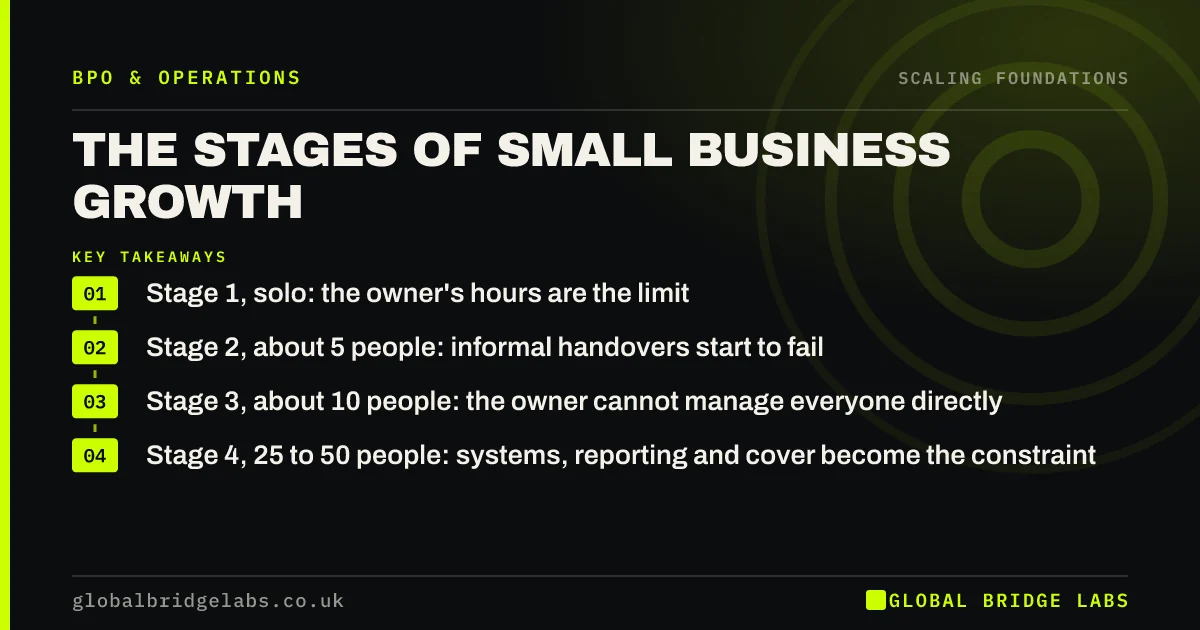
The stages of business growth for UK small firms: what changes at 1, 5, 10, 25 and 50 people, what breaks at each stage, and how to add capacity.
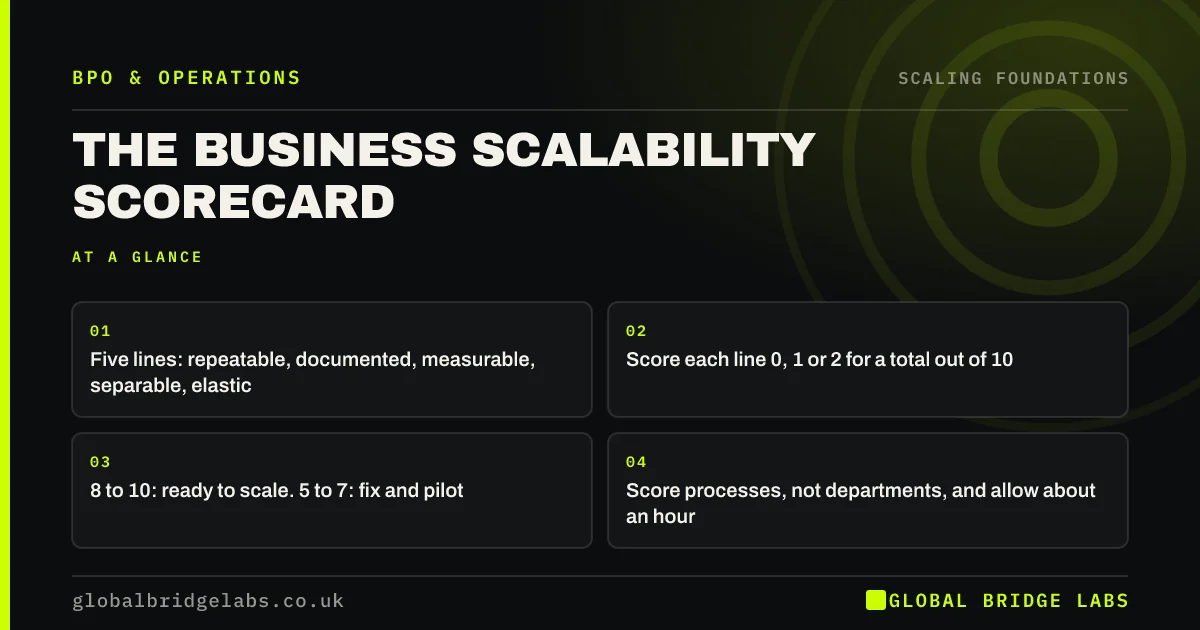
A business scalability assessment in five lines: score each process 0 to 2 to see what can scale through a partner and what must be fixed first.
30 minutes with our team and you'll know exactly which of the three problems to fix first.
