On this page
- 01Key takeaways
- 02How does load time affect bounce rate?
- 03Why does analytics undercount slow-page exits?
- 04How do you tell a speed bounce from a content bounce?
- 05Which pages should you fix first?
- 06When is a high bounce rate not a problem?
- 07What does this look like in practice?
- 08Speed and bounce checklist
- 09Next step
- 10Sources and further reading
- 11Frequently asked questions
Key takeaways
Website speed raises bounce rate by ending visits before they begin. A visitor who waits too long for the first screen leaves without reading, scrolling or clicking. The effect is strongest on mobile and on paid traffic. Analytics also understates it, because visitors who leave before the tracking script loads are never counted at all. A high bounce rate on fast pages has a different cause.
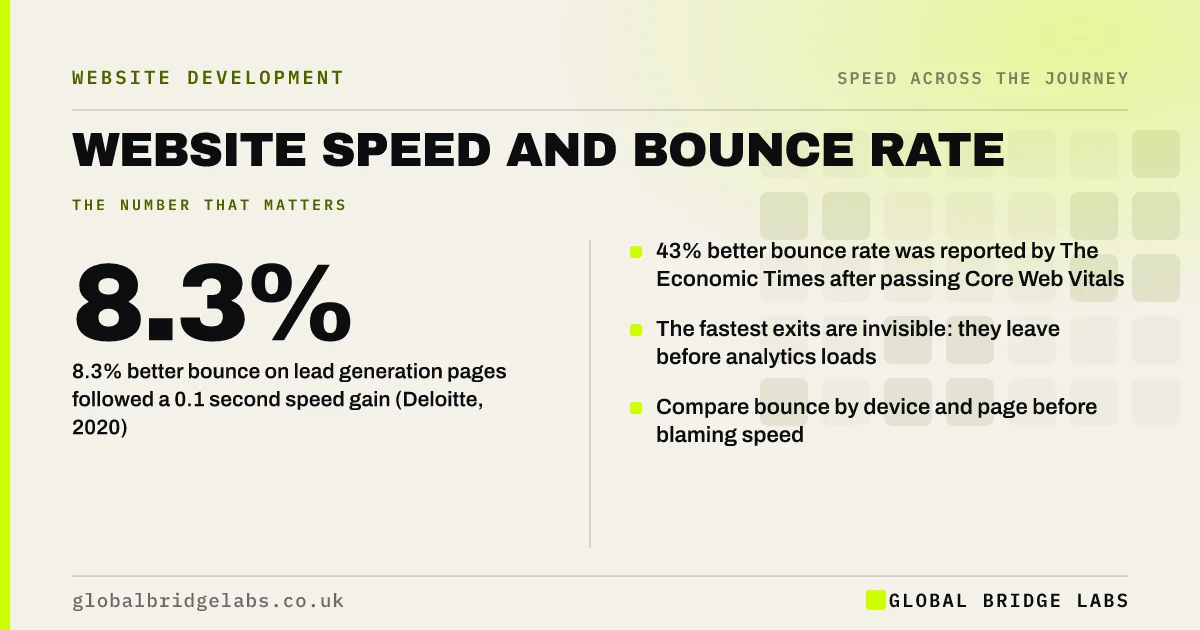
- 8.3% better bounce on lead generation pages followed a 0.1 second speed gain (Deloitte, 2020).
- 43% better bounce rate was reported by The Economic Times after passing Core Web Vitals.
- The fastest exits are invisible: they leave before analytics loads.
- Compare bounce by device and page before blaming speed.
High bounce rate and no idea why? Send us the page on WhatsApp.
Chat on WhatsApp →How does load time affect bounce rate?
Load time affects bounce rate because a visit only becomes engaged if the visitor stays. In Google Analytics 4 (GA4), a session counts as engaged when it lasts longer than 10 seconds, includes a key event or has two or more page views. Bounce rate is the share of sessions that were not engaged. A visitor who gives up on a slow page fails all three tests.
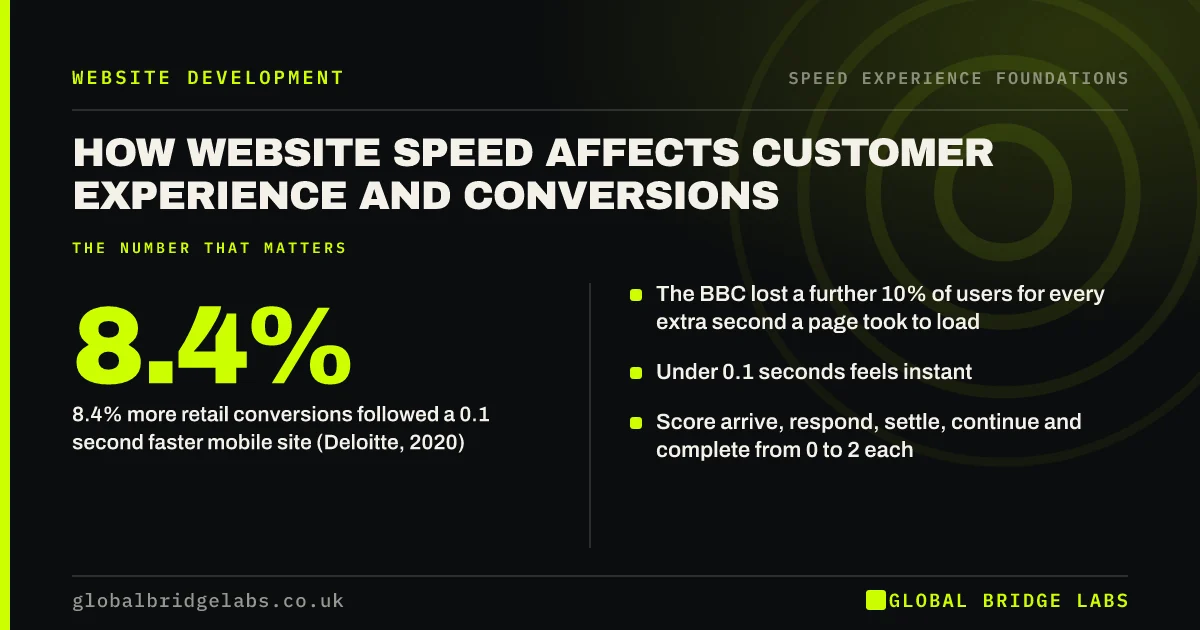
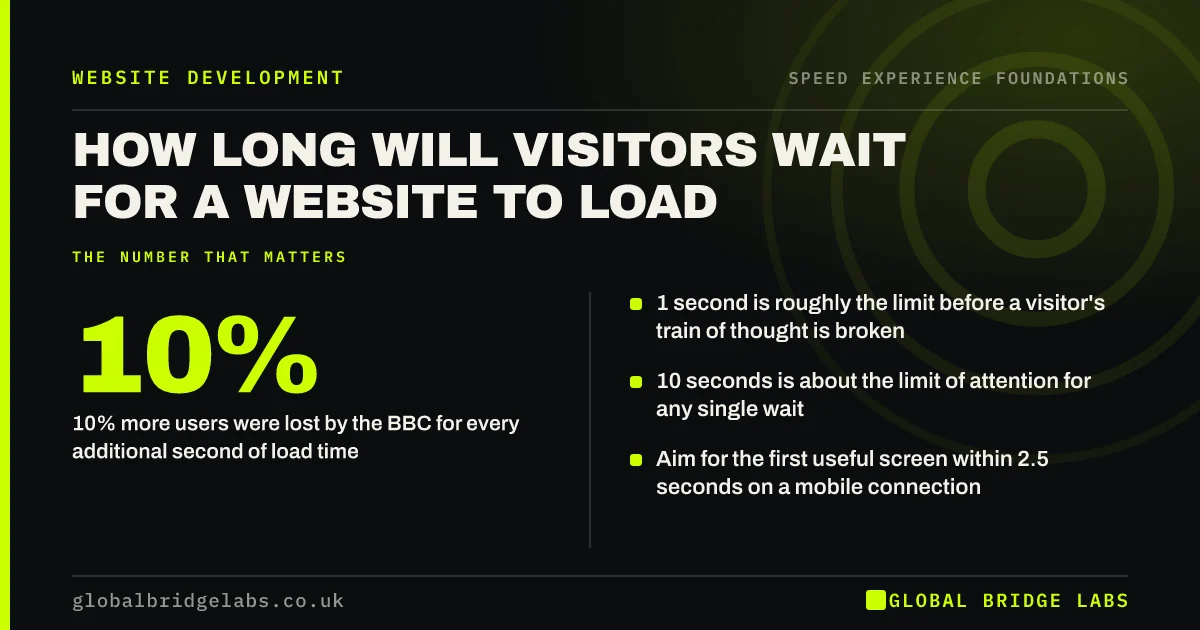
The BBC found it lost an additional 10% of users for every extra second of load time. Deloitte's 2020 study found an 8.3% improvement in bounce rate on lead generation information pages after a 0.1 second mobile speed gain.
Why does analytics undercount slow-page exits?
Analytics can only record a visit once its own script has loaded and, in the UK, once the visitor has accepted analytics cookies where consent is required. Someone who abandons a blank screen after two seconds may leave no record. The slowest pages therefore look better in reports than they are.
Two comparisons reveal the gap. Set ad platform clicks against analytics sessions for the same page. And compare Search Console clicks with organic sessions. A page losing a large share of clicks before they register has a speed problem that bounce rate alone will never show.
How do you tell a speed bounce from a content bounce?
A speed bounce and a content bounce look the same in the headline figure and differ underneath.
- Speed: bounce is much worse on mobile than desktop for the same page.
- Speed: very short sessions, with no scrolling recorded.
- Speed: field data shows a slow Largest Contentful Paint.
- Content: bounce is similar across devices.
- Content: visitors scroll and read, then leave without acting.
- Content: the search terms do not match what the page offers.
Want your bounce rate split by device and cause? Ask us on WhatsApp.
Chat on WhatsApp →Which pages should you fix first?
Fix the pages where slow loading and high traffic meet. Sort landing pages by sessions, add bounce rate by device, then check each of the top ten in PageSpeed Insights on the mobile tab. A page with heavy traffic, a large mobile bounce gap and a poor Largest Contentful Paint is the first job.
When is a high bounce rate not a problem?
A high bounce rate is not a problem when the page did its job in one view. Someone who looks up your phone number, reads your opening hours or checks an address may leave within seconds, satisfied. Blog articles and contact pages often bounce highly for this reason. Judge those pages by calls and direction requests, not by bounce.
What does this look like in practice?
A pattern we see in monthly reports: bounce rate is quoted as one site-wide figure, and nobody can act on it. Split by page and device, the picture changes. Two service pages with large image sliders account for most of the mobile bounces, while desktop behaviour is normal.
Fixing the first screen of those two pages addresses most of the problem. Across client work at Global Bridge Labs (GBL), we have seen a 2.4x enquiry rate from conversion changes like these.
Speed and bounce checklist
- Report bounce rate by landing page and device.
- Compare ad clicks and Search Console clicks with sessions.
- Check the top ten landing pages in PageSpeed Insights.
- Fix the first screen where mobile bounce is far above desktop.
- Exclude pages that answer in one view from the analysis.
- Re-check after 28 days.
Next step
A single bounce figure hides more than it shows. We will break yours down by page and device and tell you which exits are caused by waiting.
Message us on WhatsApp for a bounce and speed breakdown of your landing pages.
Chat on WhatsApp →Sources and further reading
- Engagement rate and bounce rate · Google Analytics Help
- Milliseconds make millions: mobile site speed and conversion · Deloitte
- The business impact of Core Web Vitals · web.dev (Google)
- Why does speed matter? · web.dev
Frequently asked questions
Does page speed affect bounce rate?
Yes. Visitors who wait too long for the first screen leave without engaging, which counts as a bounce. The BBC found it lost an additional 10% of users per extra second of load time, and Deloitte's 2020 study linked faster mobile pages to better bounce rates.
Why is my mobile bounce rate higher than desktop?
Some difference is normal, because phone visits are often quick look-ups. A large gap on the same page usually points to slow loading or poor usability on mobile. Check the page's field data in PageSpeed Insights and test it on a real phone over mobile data.
Can visitors leave before analytics records them?
Yes. Analytics only counts a visit once its script has loaded and consent has been given where required. Visitors who abandon a slow page in the first second or two may not be recorded, so slow pages often look healthier in reports than they are.
What is a good bounce rate for a fast page?
It depends on the page's purpose. A contact page or article can bounce highly and still succeed. For service and landing pages, compare your own devices and pages against each other, and investigate any page where mobile is far worse than desktop.
Written by

Global Bridge Labs (GBL) is a UK–Sri Lanka partner for social media, websites and BPO. Everything here comes from client delivery, not theory.