On this page
- 01Key takeaways
- 02Why do business websites go out of date?
- 03Which website updates can a managed team make?
- 04What needs a developer or your approval?
- 05When should website updates stay in-house?
- 06What does this look like in practice?
- 07Website updates checklist
- 08Next step
- 09Sources and further reading
- 10Frequently asked questions
Key takeaways
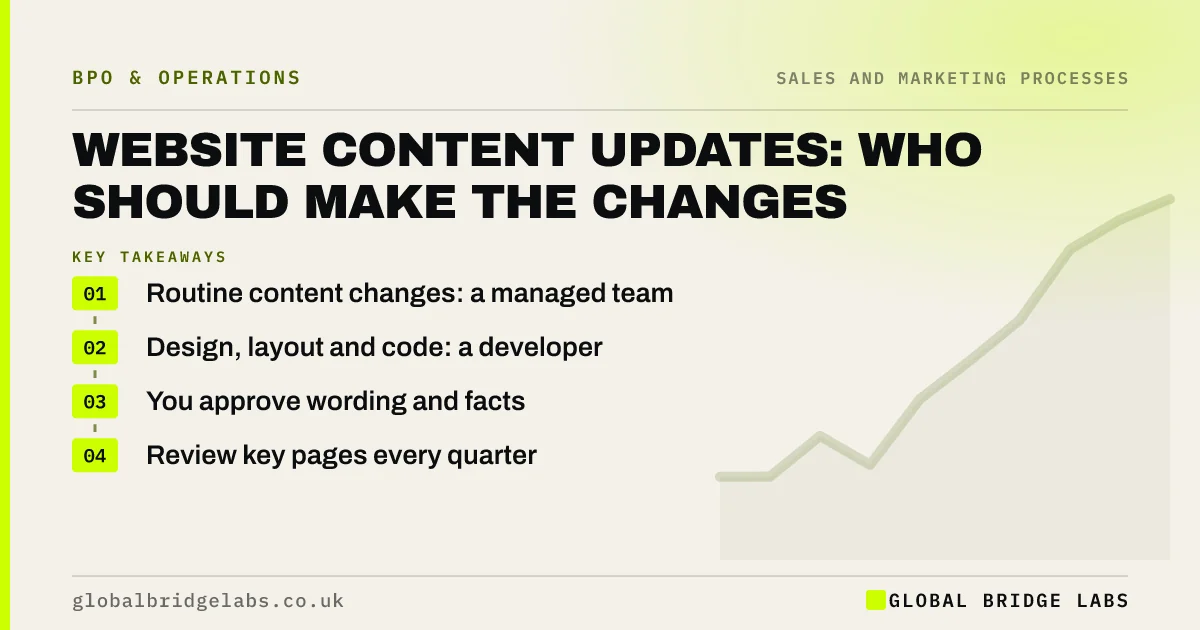
Website content updates outsourcing suits the steady flow of small changes: new team members, prices, opening hours, case studies, product details and blog posts. A managed content team can make these within days through your CMS. Design and code changes need a developer; you approve wording and facts before anything goes live.
- Routine content changes: a managed team.
- Design, layout and code: a developer.
- You approve wording and facts.
- Review key pages every quarter.
Want your website kept current without chasing anyone? Message us on WhatsApp.
Chat on WhatsApp →Why do business websites go out of date?
Because updates fall to whoever has time, which is nobody. Staff leave but stay on the team page, prices change but the website does not, and the last blog post is two years old. Visitors read stale content as a sign the business is careless or closed.
Which website updates can a managed team make?
Text and image changes through your content management system: team and contact details, prices and opening hours, product or service descriptions, case studies, news and blog posts, and alt text for images. Keep a simple request form and a turnaround target so changes do not queue for weeks.
- Team, contact and hours.
- Prices and product details.
- Case studies and blog posts.
- Image alt text and captions.
What needs a developer or your approval?
New page templates, layout and navigation changes, forms, integrations and anything touching code need a developer. Prices, claims about results, legal pages and anything regulated need your approval before publishing. Agree the approval route once so updates do not stall.
Want an approval route that keeps updates moving? Message us on WhatsApp.
Chat on WhatsApp →When should website updates stay in-house?
When changes are rare and one person can make them in minutes, or when the content is so specialist that only your experts can write it. Even then, a quarterly review of key pages by someone outside the team catches what insiders stop noticing.
What does this look like in practice?
A pattern we see: a list of website changes builds up for months, then gets lost in a redesign project. A small weekly update routine usually removes the need to redesign quite so soon.
Website updates checklist
Set these up once.
- One request form for changes.
- Turnaround target for routine updates.
- Approval route for prices and claims.
- CMS access limited to content roles.
- Quarterly review of key pages.
Next step
Send us the list of website changes you have been meaning to make. We will tell you which a content team could handle this month and which need a developer.
Message us on WhatsApp, or book a 30-minute consultation.
Chat on WhatsApp →Sources and further reading
- Creating helpful, reliable, people-first content · Google Search Central
- Web Content Accessibility Guidelines (WCAG) 2.2 · W3C
Frequently asked questions
Who should update a small business website?
Routine content changes, such as team details, prices, case studies and blog posts, can be made by a managed content team or a named staff member through the CMS. Design and code changes need a developer. The business should approve prices, claims and legal content before publishing.
Can website content updates be outsourced?
Yes. A managed team can make text and image updates through your content management system to an agreed turnaround, using a request form and an approval route. This keeps the site current without relying on whoever happens to have time.
How often should website content be reviewed?
Check key pages, such as home, services, pricing, team and contact, at least quarterly, and update them whenever the underlying facts change. Blog and news sections should either be updated regularly or removed from prominent places if they cannot be kept current.
Written by

Global Bridge Labs (GBL) is a UK–Sri Lanka partner for social media, websites and BPO. Everything here comes from client delivery, not theory.