
On this page
- 01Key takeaways
- 02Why does freed time disappear?
- 03What are the best uses of freed time?
- 04How do you plan the time before the handover?
- 05What does a plan look like in numbers?
- 06How do you check it worked?
- 07When is it fine to just work fewer hours?
- 08What does this look like in practice?
- 09Freed time checklist
- 10Next step
- 11Sources and further reading
- 12Frequently asked questions
Key takeaways
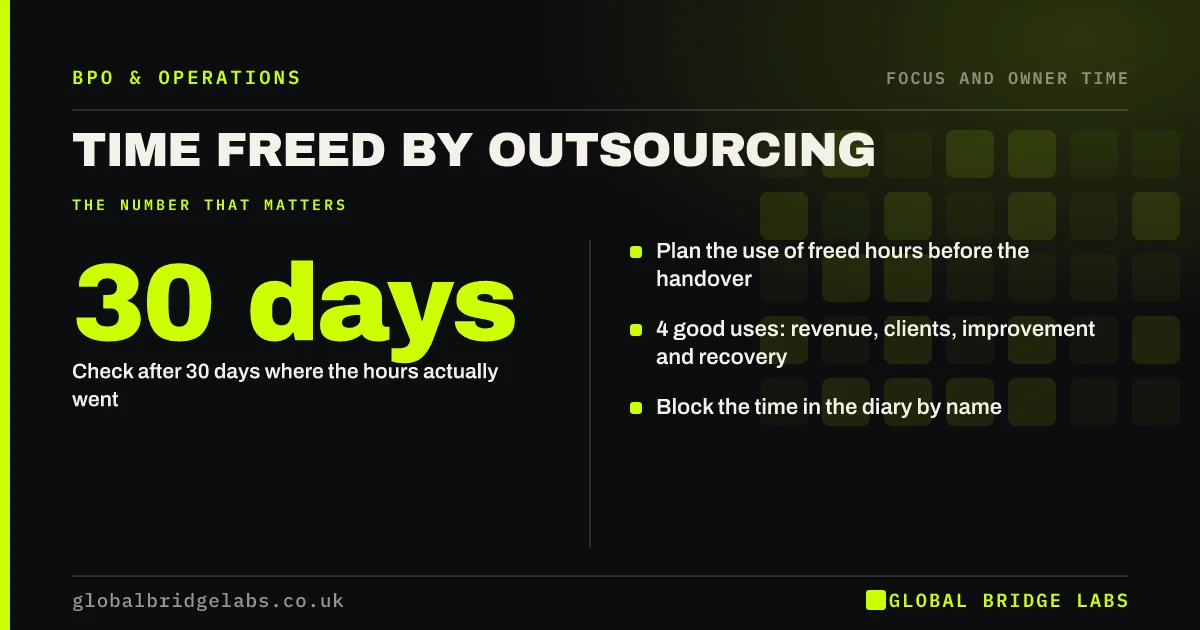
Time saved by outsourcing is only an efficiency gain if it goes somewhere useful. Plan the use before the handover: revenue work, client work, improvement work or rest. Block it in the diary by name. Without a plan, freed hours tend to fill with meetings, checking and new low-value tasks within a few weeks.
- Plan the use of freed hours before the handover.
- 4 good uses: revenue, clients, improvement and recovery.
- Block the time in the diary by name.
- Check after 30 days where the hours actually went.
Want help planning where your freed hours should go? Message us on WhatsApp.
Chat on WhatsApp →Why does freed time disappear?
Freed time disappears because work expands to fill available hours. An empty slot looks like room for another meeting or another small job. Owners also tend to spend early freed time checking the outsourced work. Neither is wrong for a week or two, but if it continues, the business has paid for capacity it is not using.
What are the best uses of freed time?
The best uses fall into four groups. Revenue work wins new business. Client work deepens existing relationships and delivery. Improvement work fixes the offer, prices and processes. Recovery covers holiday, training and reasonable hours, which protect judgement. Choose one or two, not all four.
- Revenue: follow-ups, proposals, partnerships and referrals.
- Clients: reviews, account planning and higher-value delivery.
- Improvement: pricing, offers, processes and hiring plans.
- Recovery: holiday, training and a normal working week.
How do you plan the time before the handover?
Estimate how many hours a week the handover will return after review time, then assign each hour to a named activity and a fixed slot. Write down the outcome you expect from each, such as ten extra sales calls a week. That gives you something to check against later.
What does a plan look like in numbers?
In an illustrative plan, a handover returns 8 hours a week after review. Four go on business development in two Tuesday and Thursday blocks, three on client reviews, and one on improving the quote template. After a month, the owner checks the diary and the outcome: calls made, reviews held, template finished. Example figures only.
- The 80/20 rule in business: find the work that matters
- What to do with cost savings: reinvest, keep or pass on?
Want a plan like this built around your week? Send us your goals on WhatsApp.
Chat on WhatsApp →How do you check it worked?
Check after 30 days by comparing your diary with the plan and the expected outcomes. If the hours went elsewhere, find out why: more meetings, more checking or new work that landed on you. Fix the cause, for example by moving another type of request to the team.
When is it fine to just work fewer hours?
It is fine, and often wise, when the owner has been working long weeks for months. UK working time rules set an average limit of 48 hours a week for workers unless they opt out, and the Health and Safety Executive links sustained high demands to work-related stress. A normal working week is a valid use of freed time.
What does this look like in practice?
A pattern we see: an owner who planned nothing for freed time says outsourcing did not save any. A diary review shows the hours were real but went on helping staff with tasks they could have done alone. Naming the use of each block turns the saving into visible results.
Freed time checklist
Use these steps before and after a handover.
- Estimate hours returned after review time.
- Pick one or two uses for them.
- Block named slots in the diary.
- Write the outcome you expect.
- Review the diary after 30 days.
Next step
Tell us how many hours you hope to get back and what you would like to do with them. We will help you plan the handover and the time together.
Message us on WhatsApp to plan your freed time, or book a 30-minute consultation.
Chat on WhatsApp →Sources and further reading
- Maximum weekly working hours · GOV.UK
- Work-related stress and how to manage it · Health and Safety Executive
Frequently asked questions
What should business owners do with time saved by outsourcing?
Use it for work only you can do: winning new business, deepening client relationships, improving the offer and planning. Decide the use before the handover and block it in your diary. A normal working week is also a valid use if you have been overstretched.
Why does outsourcing not seem to save me time?
Usually because the freed hours were absorbed by meetings, checking the outsourced work or new tasks. Compare your diary with the hours the handover should have returned. Then plan named uses for the time and move any remaining routine interruptions to the team.
How do you measure time saved by outsourcing?
Log the hours you and your team spent on the work for two weeks before the handover, then log your review time after it settles. The difference is the time saved. Check your diary to see where those hours actually went.
Written by

Global Bridge Labs (GBL) is a UK–Sri Lanka partner for social media, websites and BPO. Everything here comes from client delivery, not theory.


