On this page
- 01Key takeaways
- 02What causes burnout in small teams?
- 03What are the early signs of burnout?
- 04What does the law expect of employers?
- 05How do you reduce the load?
- 06Where does outsourcing help with burnout?
- 07How do you involve the team?
- 08When is burnout not a capacity problem?
- 09How do you know the fix is working?
- 10What does this look like in practice?
- 11Burnout checklist
- 12Next step
- 13Sources and further reading
- 14Frequently asked questions
Key takeaways
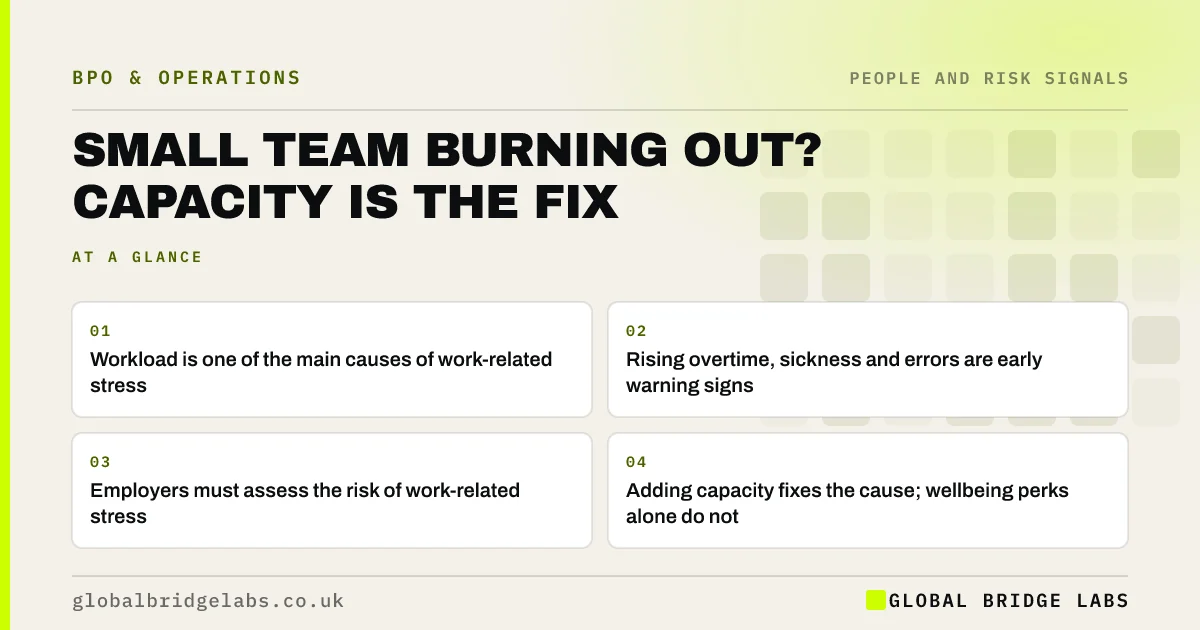
Team burnout in a small business is usually caused by sustained high workload, little control and no cover, not by weak people. Spot it early through rising overtime, sickness and mistakes. Reduce the load by removing unnecessary work, adding cover, and moving repeatable work to extra capacity. Employers have a legal duty to assess and manage work-related stress.
- Workload is one of the main causes of work-related stress.
- Rising overtime, sickness and errors are early warning signs.
- Employers must assess the risk of work-related stress.
- Adding capacity fixes the cause; wellbeing perks alone do not.
Worried your team is running on empty? Message us on WhatsApp and tell us where the load sits.
Chat on WhatsApp →What causes burnout in small teams?
Burnout in small teams usually comes from long periods of high demand with no relief: too much work, constant interruptions, no cover when someone is off, and little say over priorities. The Health and Safety Executive's Management Standards cover six areas behind work-related stress: demands, control, support, relationships, role and change.
What are the early signs of burnout?
The signs show up in behaviour and numbers before anyone says they are burnt out. Watch for them in the whole team, including yourself.
- Overtime that has become routine.
- Rising sickness absence, especially short absences.
- More mistakes in work that used to be reliable.
- Irritability, withdrawal and less contribution in meetings.
- People not taking their holiday.
What does the law expect of employers?
Employers have a legal duty to protect employees from stress at work by assessing the risks and acting on them. UK workers also cannot be required to work more than 48 hours a week on average unless they opt out voluntarily and in writing, and they are entitled to rest breaks and 5.6 weeks of paid holiday a year.
Want to talk through where your team's load could be reduced? Ask us on WhatsApp.
Chat on WhatsApp →How do you reduce the load?
Start by removing work nobody needs: duplicate reports, unnecessary approvals and manual copying. Then add cover so people can take breaks and holidays. Finally, move repeatable work to extra capacity, through hiring or outsourcing, so the team's hours match the work. Perks and wellbeing sessions help only once the workload is realistic.
Where does outsourcing help with burnout?
Outsourcing takes the repeatable, interrupt-heavy work that drains small teams most, such as phones, inbox and data entry, and it brings its own cover for holidays and sickness. Your team gets fewer interruptions and time for the work that needs their skill. It can start in weeks, which matters when people are already stretched.
How do you involve the team?
Ask them where the load sits and what would help most; they know. Be clear that extra capacity is there to support them, not replace them, and involve them in deciding what to hand over. Teams that shape the change adopt it faster and trust it more.
When is burnout not a capacity problem?
When the cause is how work is managed, such as unclear priorities, constant changes of direction or poor relationships, rather than how much work there is. Extra capacity will not fix those. Look at the HSE Management Standards areas honestly with the team to find the real cause.
How do you know the fix is working?
The same signs that warned you should improve. Within two to three months of reducing the load, overtime should fall, holidays should be taken, short-term sickness should ease and errors should drop. Ask the team directly too; how they describe their week is the best measure of all.
- Overtime hours per person each month.
- Holiday taken against entitlement.
- Short-term sickness absences.
- Error rates in key processes.
What does this look like in practice?
A pattern we see in UK e-commerce and hospitality businesses after a strong year: a three-person team working evenings, two people off sick in the same month, and the owner covering the phones. Moving customer email and phones to a managed team ends the evening work and gives the team cover to take their holidays.
Burnout checklist
Use this if your team is stretched.
- Track overtime, sickness and errors monthly.
- Check everyone is taking their holiday.
- Carry out a stress risk assessment.
- Remove work nobody needs.
- Add cover and move repeatable work to extra capacity.
- Involve the team in what changes.
Next step
Tell us where your team's load sits. We will suggest which work could be moved off their desks and how quickly.
Message us on WhatsApp about your team's workload, or book a 30-minute consultation.
Chat on WhatsApp →Sources and further reading
- Work-related stress and how to manage it · Health and Safety Executive
- Maximum weekly working hours · GOV.UK
- Holiday entitlement · GOV.UK
Frequently asked questions
How do I prevent burnout in a small team?
Keep workload realistic, make sure people take breaks and holidays, reduce interruptions, and give them a say over priorities. When the work consistently exceeds the team's hours, add capacity, through hiring or outsourcing repeatable work, rather than relying on overtime.
What are the signs of staff burnout?
Routine overtime, rising short-term sickness, more mistakes in reliable work, irritability or withdrawal, and people not taking holiday. These usually appear before anyone says they are burnt out, so track them monthly.
Do employers have to manage work-related stress?
Yes. UK employers have a legal duty to protect employees from stress at work by assessing the risks and taking action. The Health and Safety Executive's Management Standards cover demands, control, support, relationships, role and change.
Written by

Global Bridge Labs (GBL) is a UK–Sri Lanka partner for social media, websites and BPO. Everything here comes from client delivery, not theory.