On this page
- 01Key takeaways
- 02What is a time audit?
- 03How do you run a time audit?
- 04How do you sort the results?
- 05What do most time audits reveal?
- 06How do you turn a time audit into an outsourcing decision?
- 07What are the common time audit mistakes?
- 08What should a time audit template include?
- 09What does this look like in practice?
- 10Time audit checklist
- 11Next step
- 12Sources and further reading
- 13Frequently asked questions
Key takeaways
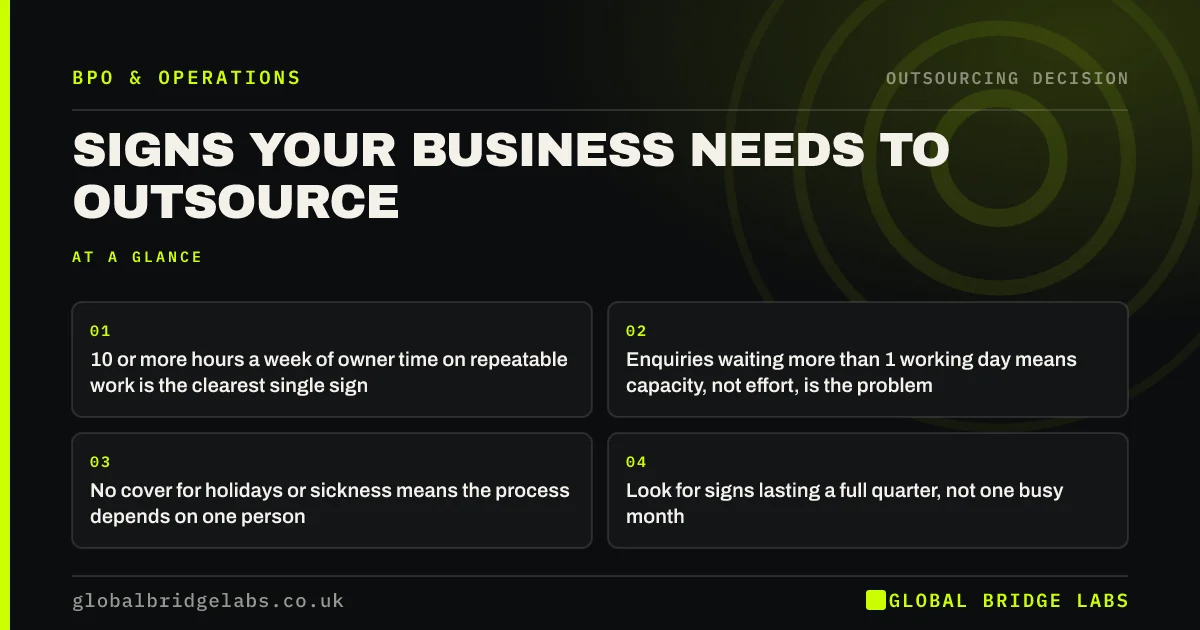
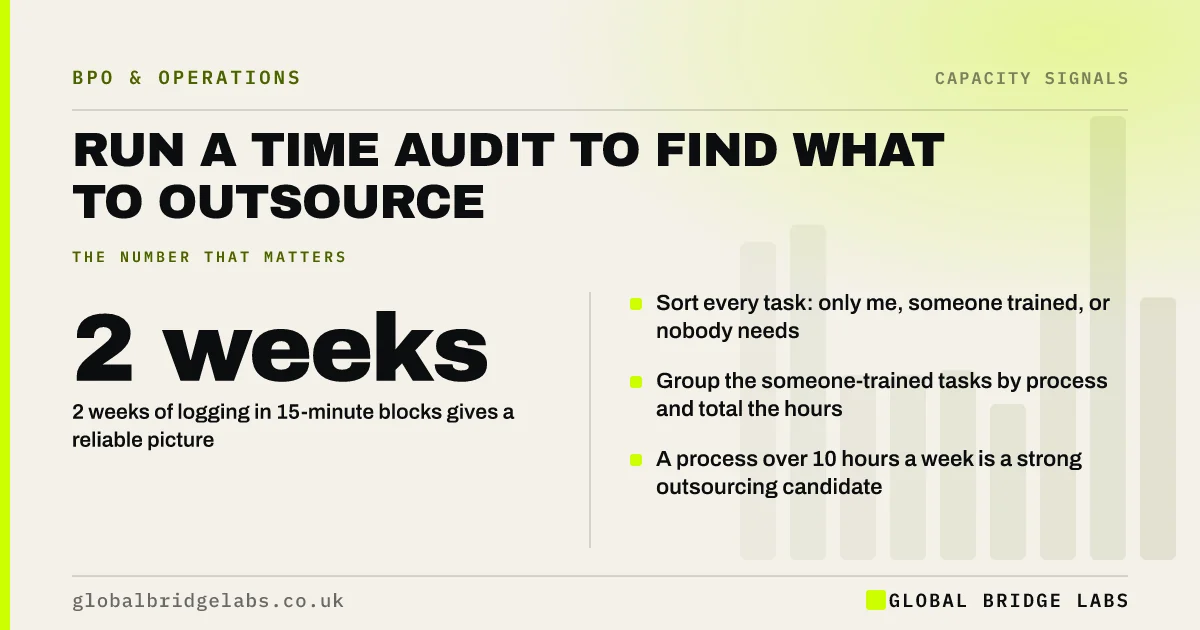
A time audit for small business owners and teams means logging every task for two weeks in 15-minute blocks, then sorting each task into owner-only, someone-trained or unnecessary. The someone-trained pile, grouped by process, is your outsourcing shortlist. Most owners find 10 or more hours a week they could hand off.
- 2 weeks of logging in 15-minute blocks gives a reliable picture.
- Sort every task: only me, someone trained, or nobody needs to.
- Group the someone-trained tasks by process and total the hours.
- A process over 10 hours a week is a strong outsourcing candidate.
Want our time audit sheet? Message us on WhatsApp and ask for the time audit template.
Chat on WhatsApp →What is a time audit?
A time audit is a short, structured record of how people actually spend their working hours, used to find work that could be removed, automated or handed to someone else. For a small business it replaces guesswork with numbers, and it is the first step in deciding whether and what to outsource.
How do you run a time audit?
Keep it simple enough to finish. Use a spreadsheet or a notes app and record tasks in 15-minute blocks as you go, not at the end of the day. Two weeks captures most weekly patterns; add a month end if invoicing or reporting is monthly.
- Pick two normal weeks, not a holiday or a crisis.
- Record each 15-minute block: task, process, interruption or planned.
- Note tasks that were started, interrupted and restarted.
- Include evenings and weekends.
- Total hours by process at the end.
How do you sort the results?
Sort every task into three groups. Only me covers work needing your judgement, relationships or authority. Someone trained covers work that follows steps. Nobody covers work that exists out of habit. Then group the someone-trained tasks by process: inbox, calls, booking, invoicing, data entry. The totals show where the hours go.
Send us your totals on WhatsApp and we will tell you which process to look at first.
Chat on WhatsApp →What do most time audits reveal?
Most time audits reveal three things. Admin takes more time than people thought, often by several hours a week. Interruptions break the day into pieces too small for focused work. And a few processes, usually email, phone and invoicing, account for most of the repeatable hours.
The interruptions matter as much as the hours. A task that takes 5 minutes but arrives 20 times a day fragments the whole day, which is why phone and inbox handling are common first outsourcing choices.
How do you turn a time audit into an outsourcing decision?
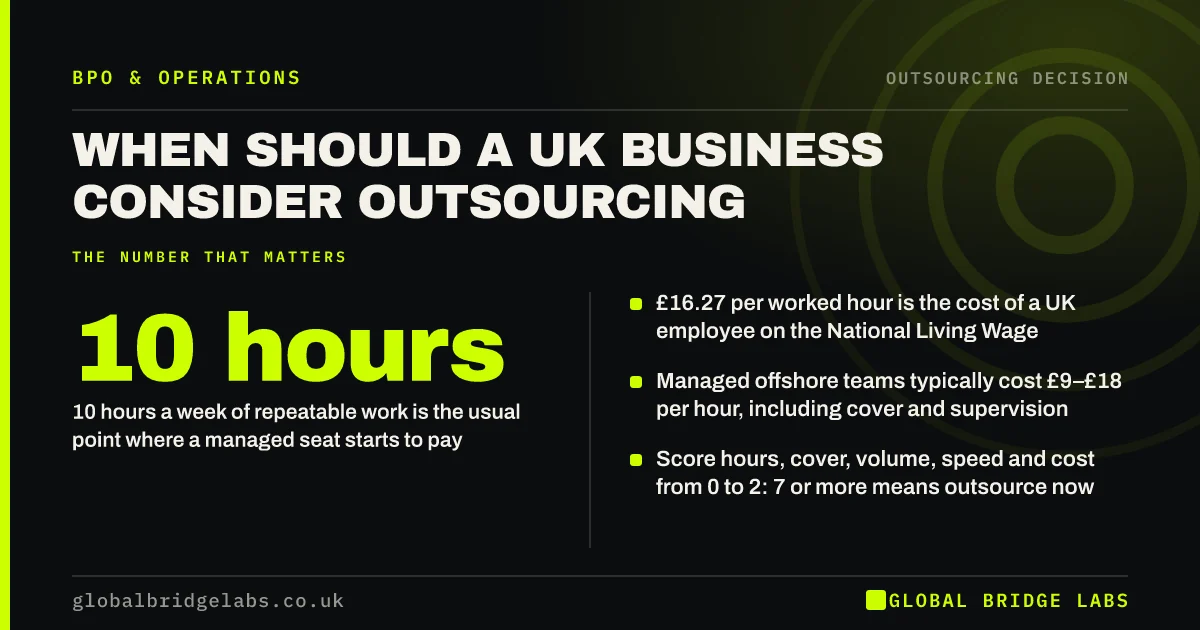
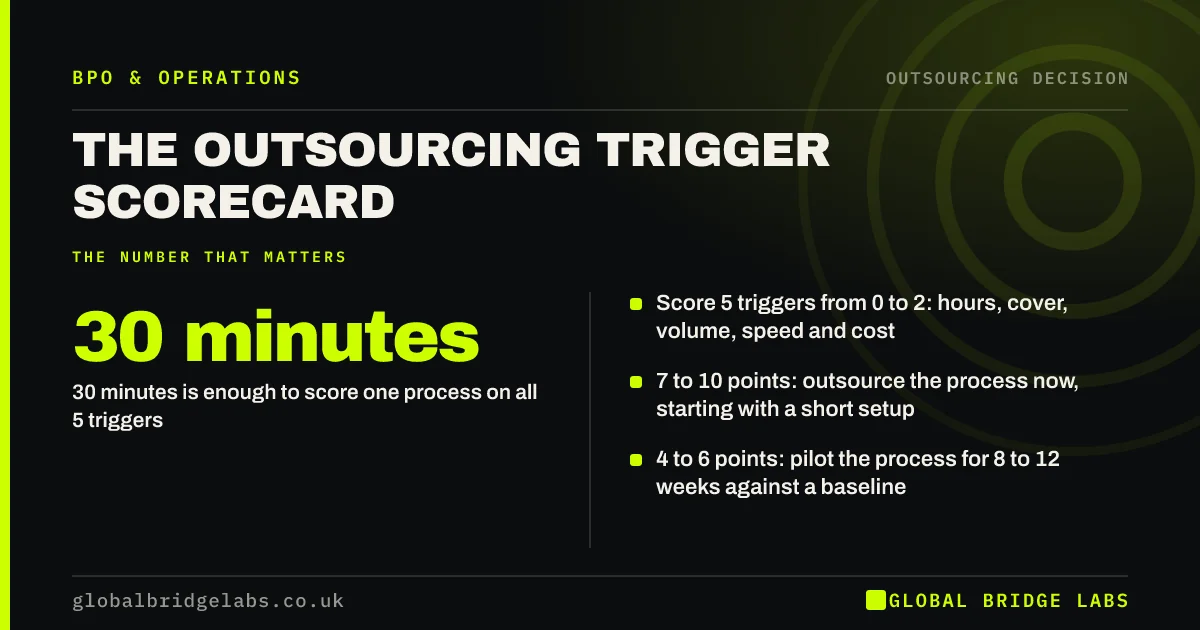
Score the top processes on the GBL Outsourcing Trigger Scorecard: hours, cover, volume, speed and cost. The time audit gives you the hours directly and usually reveals the cover and speed problems too. A process over 10 hours a week that scores 7 or more is ready to outsource; 4 to 6 is ready for a pilot.
What are the common time audit mistakes?
The common mistakes are logging from memory at the end of the week, choosing an unusual fortnight, and ignoring evenings. Another is auditing only the owner. The same repeatable work often sits with skilled staff too, where it costs more than you think.
What should a time audit template include?
A useful template captures the task, the process it belongs to, how long it took and whether it was planned or an interruption. Add one column for your sorting decision so the analysis is done as you go. Keep it to a single sheet; a template that takes longer than a minute to fill in will be abandoned by day three.
- Date and 15-minute time block.
- Task description in a few words.
- Process: inbox, calls, booking, invoicing, data entry, delivery, sales.
- Planned or interruption.
- Only me, someone trained, or nobody.
What does this look like in practice?
A pattern we see in UK clinics and practices: the practice manager believes admin takes about 10 hours a week. The two-week audit shows 22, mostly phone calls, rebooking and reminder messages, scattered across the day. Moving calls and rebooking to a managed team gives the manager back half a working week.
Time audit checklist
Follow these steps for a useful audit.
- Choose two normal weeks, plus a month end if relevant.
- Log in 15-minute blocks as you go.
- Include evenings, weekends and interruptions.
- Sort each task: only me, someone trained, nobody.
- Total the someone-trained hours by process.
- Score the top processes and pick the first to move.
Next step
Ask us for the time audit template, run it for two weeks, and send us the totals. We will tell you which process to hand off first and what it should return.
Message us on WhatsApp for the template, or book a 30-minute consultation.
Chat on WhatsApp →Sources and further reading
- Holiday entitlement · GOV.UK
- Maximum weekly working hours · GOV.UK
- Work-related stress and how to manage it · Health and Safety Executive
Frequently asked questions
How long should a time audit take?
Two normal working weeks is enough for most small businesses, plus a month end if invoicing or reporting happens monthly. Logging takes a few minutes a day if you record as you go. Sorting and totalling the results takes about an hour.
What should I do after a time audit?
Stop the tasks nobody needs, group the repeatable tasks by process, and total their hours. Score the largest processes on hours, cover, volume, speed and cost. Outsource or delegate the highest-scoring process that is easy to write down.
Should I audit my team as well as myself?
Yes. Repeatable work often sits with skilled staff as well as the owner, and it costs their full hourly rate. Auditing the whole team for the same two weeks shows the true size of each process and makes the case for moving it.
Written by

Global Bridge Labs (GBL) is a UK–Sri Lanka partner for social media, websites and BPO. Everything here comes from client delivery, not theory.