On this page
- 01Key takeaways
- 02What is outsourced call answering?
- 03Why do missed calls cost so much?
- 04Message-taking service or managed team?
- 05What does outsourced call answering cost in the UK?
- 06What should the call script include?
- 07What service levels should you set?
- 08Are there rules on recording calls?
- 09When is call answering the wrong fix?
- 10What does this look like in practice?
- 11Checklist: set up call answering
- 12Next step
- 13Sources and further reading
- 14Frequently asked questions
Key takeaways
Outsourced call answering in the UK comes in two forms: message-taking services that answer in your name and pass on details, and managed teams that answer, qualify, book the job and update your systems. The first suits overflow; the second suits businesses where a missed call means a lost sale.
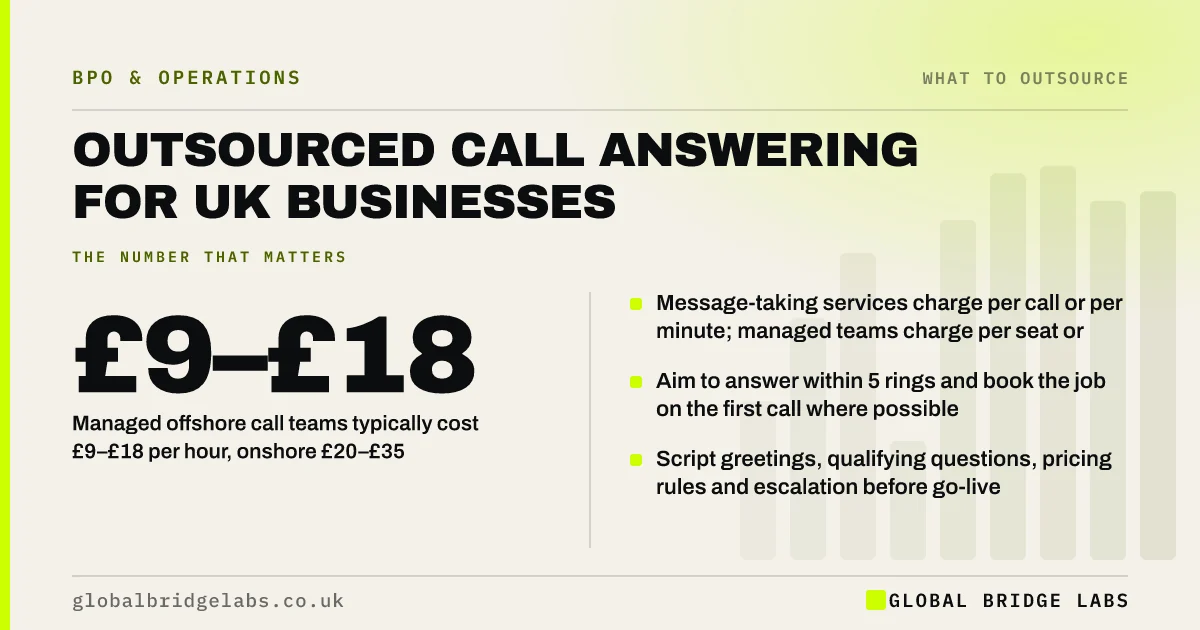
- Message-taking services charge per call or per minute; managed teams charge per seat or hour.
- Managed offshore call teams typically cost £9–£18 per hour, onshore £20–£35.
- Aim to answer within 5 rings and book the job on the first call where possible.
- Script greetings, qualifying questions, pricing rules and escalation before go-live.
- Record calls, with a clear notice to callers, for quality review.
Missing calls while you work? Message us on WhatsApp with roughly how many calls you get and when.
Chat on WhatsApp →What is outsourced call answering?
Outsourced call answering is a service in which a third-party team answers your business phone line in your name, either taking messages or handling the call fully, depending on the service level you buy. It is one of the most common forms of front-office business process outsourcing (BPO).
The difference between the two forms matters. A message-taking service tells the caller someone will call back. A managed team with access to your diary and pricing rules can quote, book and confirm there and then, which is usually what the caller wanted.
Why do missed calls cost so much?
Missed calls cost so much because callers rarely leave voicemail and rarely wait. Someone searching for a plumber, a garage or a clinic will ring the next result on Google within minutes. For service businesses, the phone is often where the highest-intent enquiries arrive.
Small teams miss calls for predictable reasons: everyone is with customers, on site, at lunch or on another call. Those are exactly the hours when demand peaks.
Message-taking service or managed team?
Choose a message-taking service for low volumes and overflow, when you are happy to call back. Choose a managed team when calls should end in a booking, a quote or a resolved query, and when the team also needs to update your CRM or job system.
- Message-taking: pay per call or minute; takes details; you call back; limited system access.
- Managed team: pay per seat or hour; qualifies, books and resolves; works in your systems.
- Hybrid: managed team in core hours, message-taking for nights and weekends.
What does outsourced call answering cost in the UK?
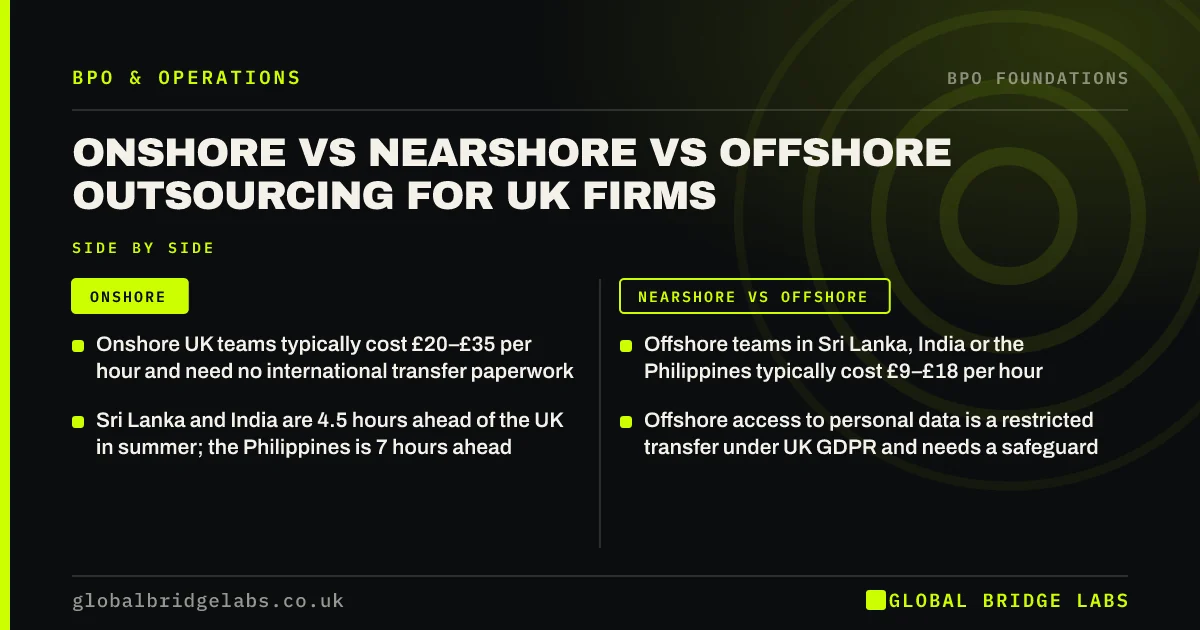
Message-taking services are usually priced per call or per minute, with monthly bundles for small volumes. Managed teams are priced per seat or per hour: as indicative market ranges, around £9–£18 per hour offshore and £20–£35 onshore, including training, supervision and cover.
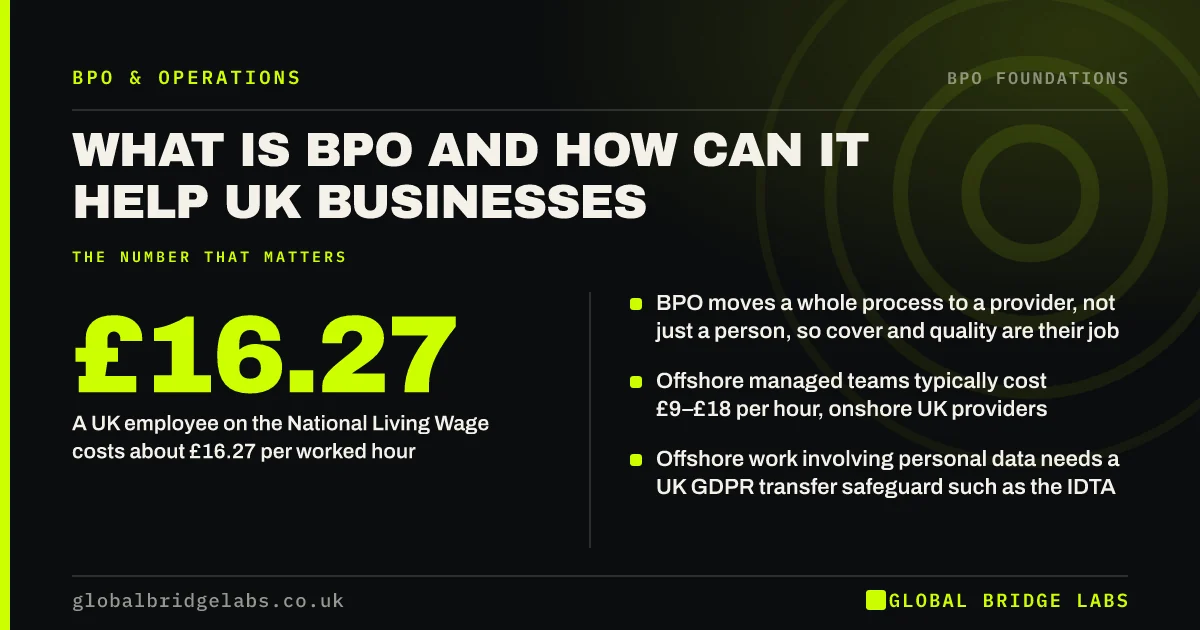
Compare with hiring a receptionist. At the April 2026 National Living Wage of £12.71, a full-time receptionist costs about £28,309 a year once 15% employer National Insurance above £5,000 and the 3% pension contribution are added, or about £16.27 per worked hour after holiday. A single receptionist also cannot answer two calls at once or cover their own lunch.
Want your call volumes costed both ways? Send us your weekly call count and busiest hours on WhatsApp and we will discuss your requirements.
Chat on WhatsApp →What should the call script include?
A good script is a decision guide, not a word-for-word speech. It tells the team how to greet callers, which questions to ask, what they can quote or book, and when to transfer or escalate.
- Greeting in your business name and a friendly opening line.
- Qualifying questions: what, where, when, how urgent.
- Pricing rules: what can be quoted, what needs a site visit.
- Booking rules: which diary slots, how long each job type takes.
- Escalation: emergencies, complaints and existing-client issues.
- Wrap-up: confirmation by text or email and CRM note.
What service levels should you set?
Set a target for speed, completeness and outcome. A common starting point is 90% of calls answered within 20 seconds, fewer than 5% abandoned, every call logged within five minutes, and a booking rate you track monthly.
Are there rules on recording calls?
Yes. Call recordings contain personal data, so UK GDPR applies. Tell callers they may be recorded and why, keep recordings only as long as needed, and restrict access. If card payments are taken by phone, recordings must not capture card details, in line with the PCI Data Security Standard.
If the team is outside the UK, a processor contract and a transfer safeguard such as the ICO's International Data Transfer Agreement are needed.
When is call answering the wrong fix?
It is the wrong fix if callers mainly need a qualified professional, such as a solicitor or clinician, on the first call, or if the real problem is that your diary is full. Answering more calls into a full diary only frustrates customers. Fix capacity first, or use the team to manage a waiting list.
What does this look like in practice?
The vehicle service centre on our projects page is a public example. Its founder says missed calls were costing bays, and describes a contact centre that answers in the brand, cuts wait times and turns price checks into diary slots, with upsells now part of the conversation.
Checklist: set up call answering
Prepare these before go-live.
- Pull two weeks of call data: volume by hour and missed-call rate.
- Decide between message-taking, managed team or hybrid.
- Write the script as a decision guide.
- Give the team diary and CRM access with individual logins.
- Set up call forwarding or a cloud phone system with overflow rules.
- Add a recording notice and a retention period.
- Agree service levels and a monthly report.
Next step
Send us your call volumes and we will tell you which model fits, how many seats you need at peak, and what it would cost against hiring. 30 minutes, no pitch.
Message us on WhatsApp for a call answering plan, or book a 30-minute consultation.
Chat on WhatsApp →Sources and further reading
- National Minimum Wage and National Living Wage rates · GOV.UK
- Rates and thresholds for employers 2026 to 2027 · HM Revenue & Customs
- International transfers of personal data · Information Commissioner's Office
- Payment Card Industry Data Security Standard · PCI Security Standards Council
Frequently asked questions
How much does a call answering service cost in the UK?
Message-taking services are usually priced per call or per minute with monthly bundles. Managed teams that book and resolve calls are priced per seat or hour, typically around £9–£18 offshore and £20–£35 onshore as indicative ranges. Compare with a receptionist's fully loaded cost of about £16.27 per worked hour.
Can an outsourced receptionist book appointments?
Yes, if they have access to your diary and clear booking rules: job types, durations, locations and buffer times. Managed teams book directly and send confirmations. Message-taking services usually cannot, which is why they suit overflow rather than primary call handling.
Will callers know the call is outsourced?
Usually not, if the team answers in your business name, follows your script and can actually help. What callers notice is being told someone will call back. A team that can quote, book or resolve on the first call feels like part of your business.
Can I use call answering only when I am busy?
Yes. Overflow set-ups forward calls to the team after a number of rings, when all your lines are busy, or at set times such as lunch and after hours. Cloud phone systems make this easy to configure and change.
Written by

Global Bridge Labs (GBL) is a UK–Sri Lanka partner for social media, websites and BPO. Everything here comes from client delivery, not theory.