On this page
- 01Key takeaways
- 02What are the steps in the record to report process?
- 03Which stages of record to report can you outsource?
- 04How do you split record to report cleanly?
- 05When should record to report stay in-house?
- 06What does this look like in practice?
- 07Record to report checklist
- 08Next step
- 09Sources and further reading
- 10Frequently asked questions
Key takeaways
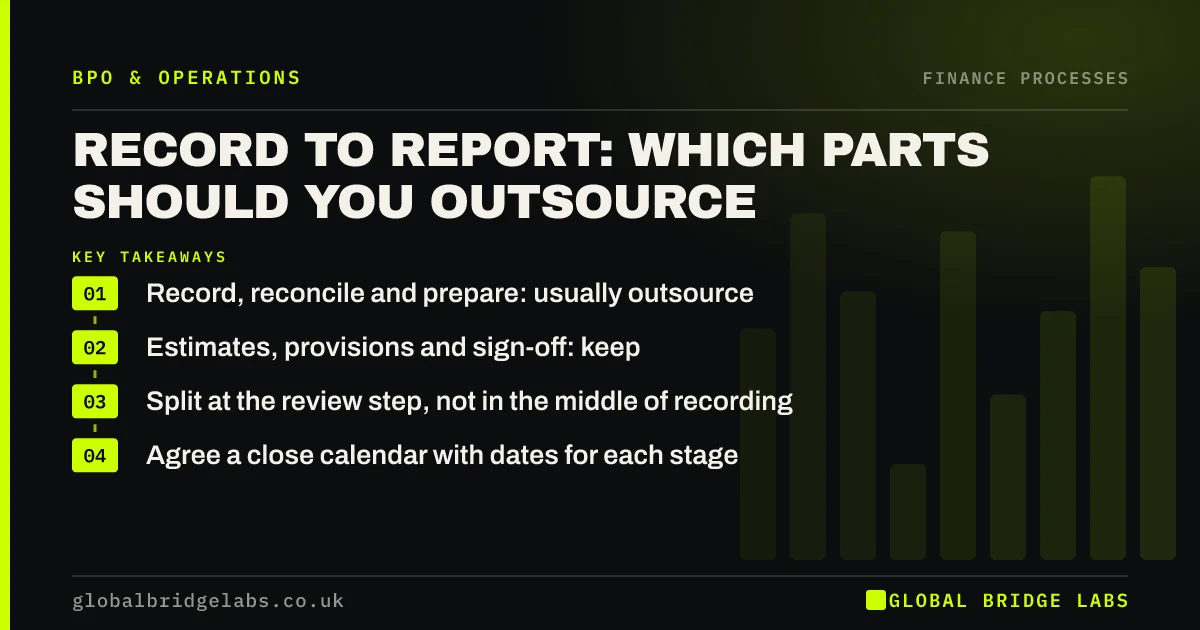
The record to report process (R2R) runs from recording transactions to producing management and statutory reports. Most of its hours sit in recording, reconciling and preparing, which outsource well. The judgements, such as accrual estimates, provisions and sign-off, stay with the business and its accountant. Split it at the review step.
- Record, reconcile and prepare: usually outsource.
- Estimates, provisions and sign-off: keep.
- Split at the review step, not in the middle of recording.
- Agree a close calendar with dates for each stage.
Want to see where your record to report process could split? Message us on WhatsApp.
Chat on WhatsApp →What are the steps in the record to report process?
Record to report has five broad stages. Each has a clear input and output, which is why the early stages outsource well.
- Record: post sales, purchases, bank and payroll transactions.
- Reconcile: bank, control accounts and supplier statements.
- Adjust: accruals, prepayments, depreciation and provisions.
- Report: produce management accounts and commentary.
- Review and sign off: check, question and approve.
Which stages of record to report can you outsource?
Recording and reconciling are rule-based and high volume, so they move first. Routine adjustments, such as monthly depreciation and recurring prepayments, can move once the rules are written. Judgemental adjustments, the commentary on what the numbers mean, and sign-off stay with you or your accountant, because they need knowledge of the business and carry accountability.
How do you split record to report cleanly?
Put the split at the review step. The provider records, reconciles, posts routine adjustments and prepares a draft pack with a list of open questions. Your finance lead or accountant answers the questions, makes the judgement adjustments and signs off. A close calendar with a date for each stage keeps both sides on time.
- Management accounts: outsource the pack, keep the review
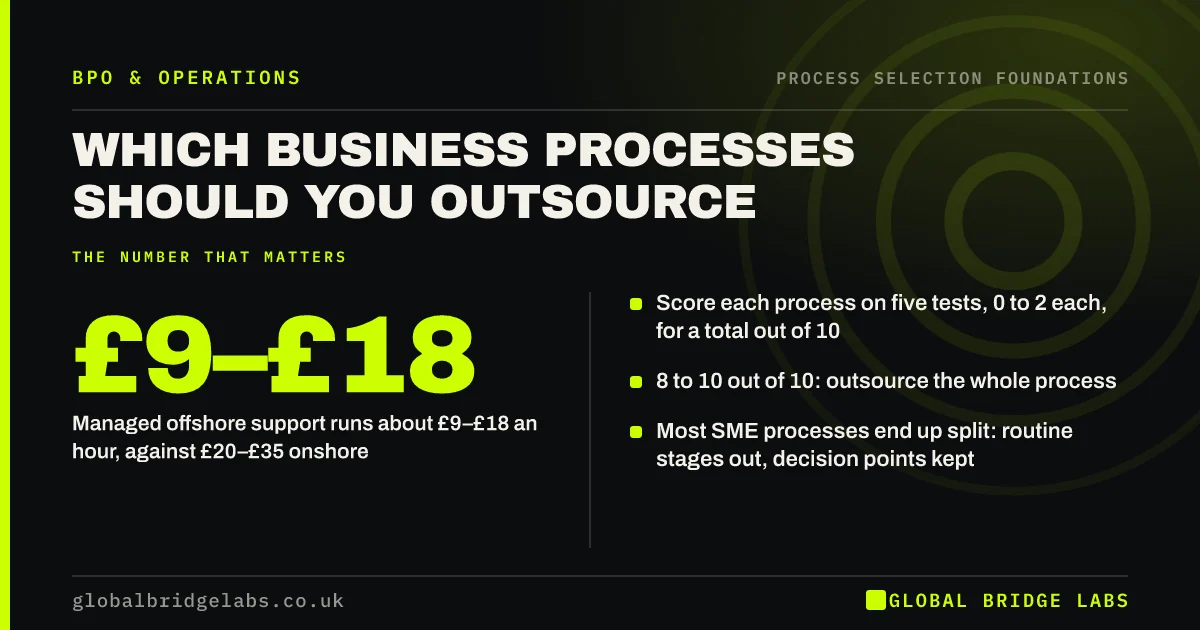
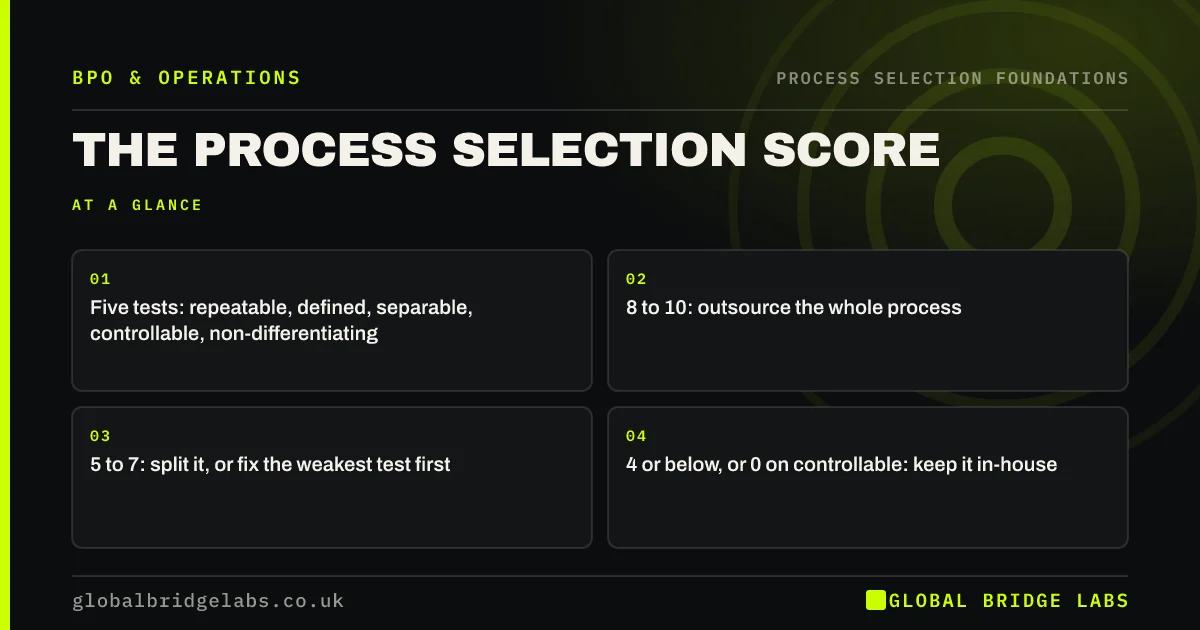
- Outsource, split, fix or keep: four process verdicts
Want a close calendar template for a split process? Message us on WhatsApp.
Chat on WhatsApp →When should record to report stay in-house?
When transaction volume is tiny, when your accounting system is unreliable, or when the books need a clean-up first. Outsourcing a messy ledger moves the mess. Fix the chart of accounts and the opening balances before handing over, or the provider will spend its hours untangling history.
What does this look like in practice?
A pattern we see: once recording and reconciliations run daily rather than in a month-end rush, the close shortens without anyone working faster. The work was always there; it was just arriving all at once.
Record to report checklist
Check these before splitting the process.
- Chart of accounts is clean and agreed.
- Opening balances are reconciled.
- Rules for routine adjustments are written.
- A close calendar sets dates for each stage.
- Open questions go in one log.
- Sign-off stays with a named person.
Next step
Tell us how your month-end runs today and who does each stage. We will show you where we would split it and what you would need to prepare.
Message us on WhatsApp, or book a 30-minute consultation.
Chat on WhatsApp →Sources and further reading
Frequently asked questions
What is the record to report process?
Record to report is the finance process that runs from recording transactions in the accounts, through reconciliations and adjustments, to producing management and statutory reports and signing them off. It is often shortened to R2R and sits alongside purchase to pay and order to cash.
Can a small business outsource record to report?
Usually in part. Recording, reconciliations and routine adjustments outsource well because they are rule-based. Judgemental adjustments, commentary and sign-off should stay with the business or its accountant, because they need business knowledge and carry accountability for the figures.
How long should record to report take each month?
For most SMEs, management accounts within 5 to 10 working days of month end is a sensible target. Recording and reconciling during the month, rather than all at month end, is the most reliable way to shorten the close without adding pressure.
Written by

Global Bridge Labs (GBL) is a UK–Sri Lanka partner for social media, websites and BPO. Everything here comes from client delivery, not theory.