On this page
- 01Key takeaways
- 02Which procurement processes can be outsourced?
- 03What should stay with the owner?
- 04How should quotes be compared?
- 05When is outsourcing procurement not worth it?
- 06What does this look like in practice?
- 07Procurement checklist
- 08Next step
- 09Sources and further reading
- 10Frequently asked questions
Key takeaways
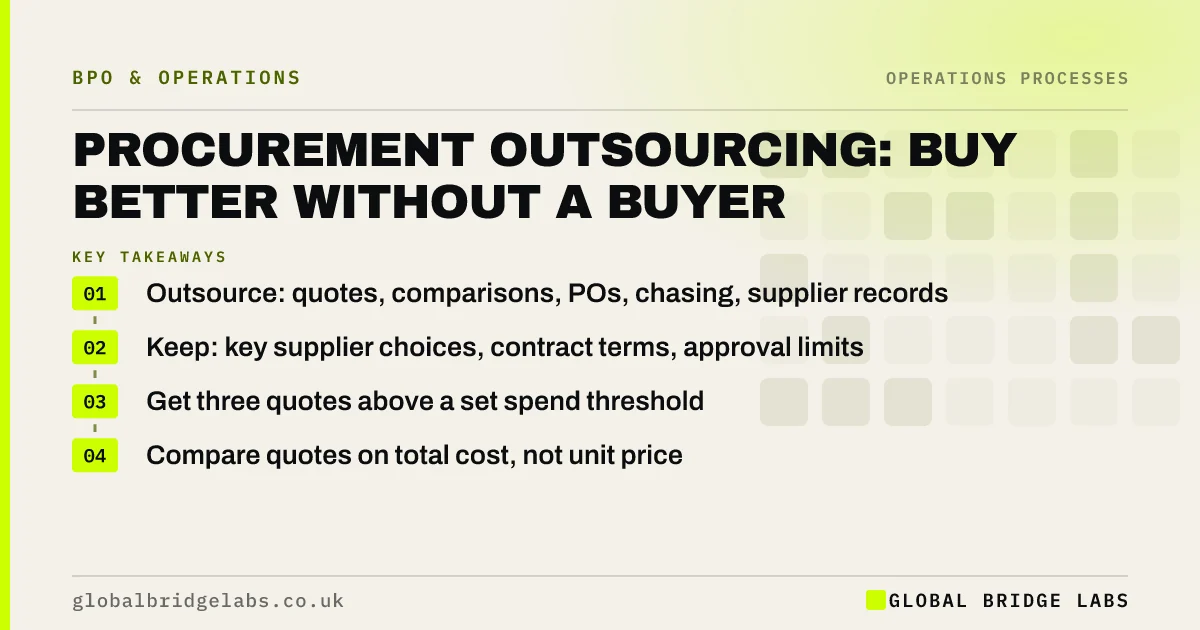
Procurement outsourcing for an SME usually means handing over tactical buying: gathering quotes, comparing like for like, raising purchase orders, chasing deliveries and keeping supplier records current. Strategic choices, such as which key suppliers to rely on and contract terms with them, stay with the owner. Most SMEs have no buyer, so this work falls on whoever needs the item.
- Outsource: quotes, comparisons, POs, chasing, supplier records.
- Keep: key supplier choices, contract terms, approval limits.
- Get three quotes above a set spend threshold.
- Compare quotes on total cost, not unit price.
Want a buying routine for your business? Message us on WhatsApp.
Chat on WhatsApp →Which procurement processes can be outsourced?
The routine, rule-based parts: requesting and comparing quotes, checking supplier details, raising purchase orders, chasing deliveries, checking invoices against orders and keeping a supplier list with contacts, terms and renewal dates. These steps are where small firms overpay, because nobody has time to compare properly.
What should stay with the owner?
Choosing and keeping key suppliers, negotiating major contracts, setting approval limits and deciding when to switch. These depend on relationships and on knowing what the business values beyond price, such as reliability or flexibility in a crisis.
- Key supplier choices.
- Major contract negotiation.
- Approval limits.
- Switching decisions.
How should quotes be compared?
On total cost and fit, not unit price. Include delivery, minimum orders, payment terms, warranty, lead time and the cost of switching. A short comparison template keeps every quote on the same basis. The government's Sourcing Playbook calls this thinking about whole-life cost, and it applies just as well to small purchases.
- Supplier onboarding: set up new suppliers right first time
- Purchase-to-pay process: faster, cleaner supplier payments
Want a quote comparison template? Message us on WhatsApp.
Chat on WhatsApp →When is outsourcing procurement not worth it?
When you buy from a handful of suppliers on stable terms, there is little to gain. It pays off when purchases are frequent and varied, spend is spread across many suppliers, or staff spend hours finding quotes for routine items.
What does this look like in practice?
A pattern we see: small firms buy the same items from whoever was used last time, at whatever price. A simple quote routine above a spend threshold usually finds savings on regular purchases within a few months.
Procurement checklist
Set these rules once.
- Spend threshold for three quotes.
- Quote comparison template.
- Approval limits by role.
- Supplier list with terms and renewals.
- PO required above a set value.
- Delivery chasing routine.
Next step
Tell us what you buy most often and how you choose suppliers today. We will suggest a buying routine and what we could run.
Message us on WhatsApp, or book a 30-minute consultation.
Chat on WhatsApp →Sources and further reading
- The Sourcing and Consultancy Playbooks · Cabinet Office
- Slavery and human trafficking in supply chains: guidance for businesses · Home Office
Frequently asked questions
Can a small business outsource procurement?
Yes, the tactical parts: requesting and comparing quotes, raising purchase orders, chasing deliveries, checking invoices against orders and keeping supplier records. Choosing key suppliers, negotiating major contracts and setting approval limits should stay with the owner.
How many quotes should a small business get?
Set a spend threshold above which three quotes are required, and compare them on total cost, including delivery, minimums, payment terms, warranty and lead time. Below the threshold, a preferred supplier list with agreed prices saves time.
What is the difference between tactical and strategic procurement?
Tactical procurement is the routine buying process: quotes, orders, deliveries and invoices. Strategic procurement is deciding which suppliers to depend on, negotiating long-term terms and managing supply risk. Tactical work outsources well; strategic decisions stay with the business.
Written by

Global Bridge Labs (GBL) is a UK–Sri Lanka partner for social media, websites and BPO. Everything here comes from client delivery, not theory.