On this page
- 01Key takeaways
- 02What must an osteopath or chiropractor's website show?
- 03Why does registration matter?
- 04Which health claims need care?
- 05What should patients know before booking?
- 06Should practitioner profiles be detailed?
- 07When is less better?
- 08What does this look like in practice?
- 09Osteopath and chiropractor website checklist
- 10Next step
- 11Sources and further reading
- 12Frequently asked questions
Key takeaways
Osteopaths and chiropractors must be registered with the General Osteopathic Council or the General Chiropractic Council to use their titles, so the website should show registration and link to the register. It should also show fees, what the first appointment involves, conditions commonly treated within evidence-based limits, and how to book.
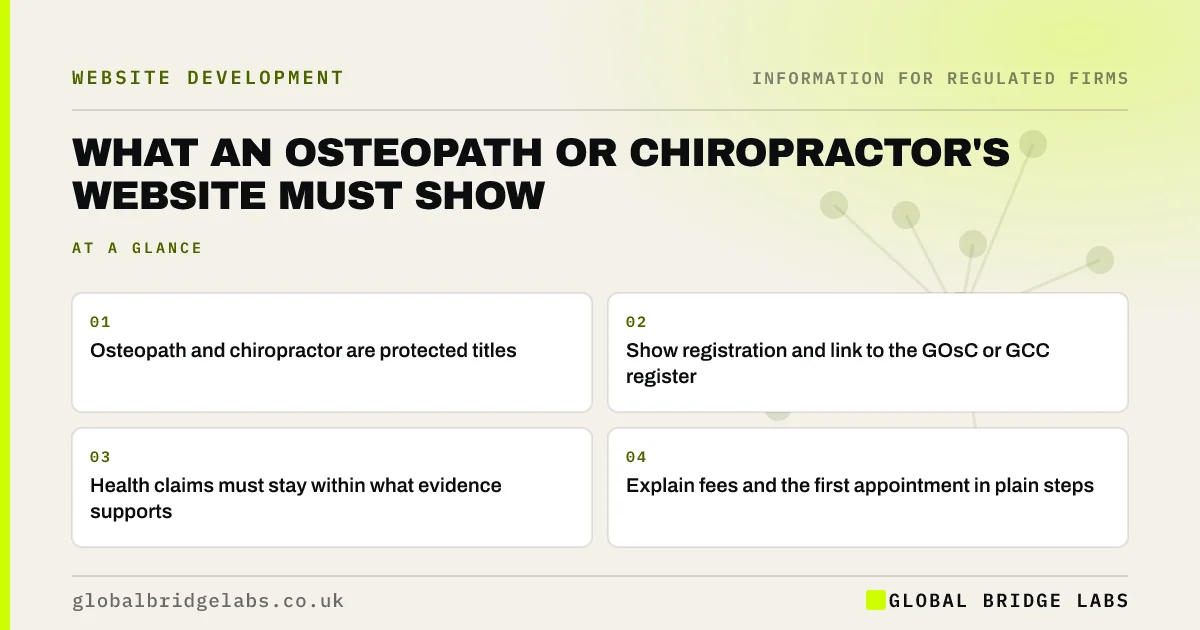
- Osteopath and chiropractor are protected titles.
- Show registration and link to the GOsC or GCC register.
- Health claims must stay within what evidence supports.
- Explain fees and the first appointment in plain steps.
Running a clinic website? Message us on WhatsApp.
Chat on WhatsApp →What must an osteopath or chiropractor's website show?
It should show that each practitioner is registered with the General Osteopathic Council or General Chiropractic Council, their names and registration numbers, fees, what the first appointment involves, what you treat, and how to book. Global Bridge Labs (GBL) treats registration as the regulated item on top of the 30-item inventory.
Why does registration matter?
Osteopath and chiropractor are protected titles: only people on the statutory register can use them. Showing registration and linking to the GOsC or GCC register reassures patients and shows you meet professional standards. Keep the details current for every practitioner listed.
Which health claims need care?
Claims about what you treat must be supported by evidence, and the ASA has ruled against many health claims in this sector. Describe conditions and benefits within what the evidence supports, avoid cure language, and check claims against CAP Code guidance before publishing.
What should patients know before booking?
Patients want to know the fee for first and follow-up appointments, how long they last, what happens, what to wear, whether insurers are accepted and how many sessions are typical. A 'your first appointment' section answers most of it.
Should practitioner profiles be detailed?
Profiles should give each practitioner's name, photo, registration, qualifications and special interests in a few lines. Patients often choose a person, not a clinic, so real profiles with natural photos help them decide. Keep every profile current when staff join or leave the practice.
When is less better?
Less is better on condition pages. A long list of conditions with strong claims attracts regulatory risk and adds little. A shorter list, described carefully, with an invitation to ask whether you can help, is safer and often more persuasive.
What does this look like in practice?
A pattern we see: a clinic website lists dozens of conditions it 'treats', copied from an old template, including claims the evidence does not support. Cutting the list, rewording claims and adding registration details reduces risk and makes the site more credible.
Osteopath and chiropractor website checklist
- Show registration for each practitioner.
- Link to the GOsC or GCC register.
- Review health claims against CAP guidance.
- Publish fees and appointment lengths.
- Describe the first appointment.
- Keep practitioner profiles current.
Next step
Review every condition named on your website against what you can evidence. Remove or reword anything you could not defend to the ASA.
Message us on WhatsApp for a clinic website review, with no pitch.
Chat on WhatsApp →Sources and further reading
Frequently asked questions
Do osteopaths have to be registered?
Yes. Osteopath is a protected title, and only people registered with the General Osteopathic Council may use it. The same applies to chiropractors with the General Chiropractic Council. Show registration on your website.
What claims can chiropractors make on their website?
Claims must be supported by evidence. The ASA has ruled against many chiropractic and osteopathic health claims. Check the CAP Code guidance and keep descriptions within what the evidence supports.
Should an osteopath show prices online?
Yes. Showing fees for first and follow-up appointments, with appointment lengths, helps patients decide and book. Mention whether you accept health insurance, any concessions you offer and how payment is taken on the day.
Written by

Global Bridge Labs (GBL) is a UK–Sri Lanka partner for social media, websites and BPO. Everything here comes from client delivery, not theory.