On this page
- 01Key takeaways
- 02Which qualifications should a website list?
- 03How should qualifications be worded?
- 04Should qualifications be checkable?
- 05Which titles are protected?
- 06Where should qualifications appear?
- 07When do qualifications not help?
- 08What does this look like in practice?
- 09Qualifications checklist
- 10Next step
- 11Sources and further reading
- 12Frequently asked questions
Key takeaways
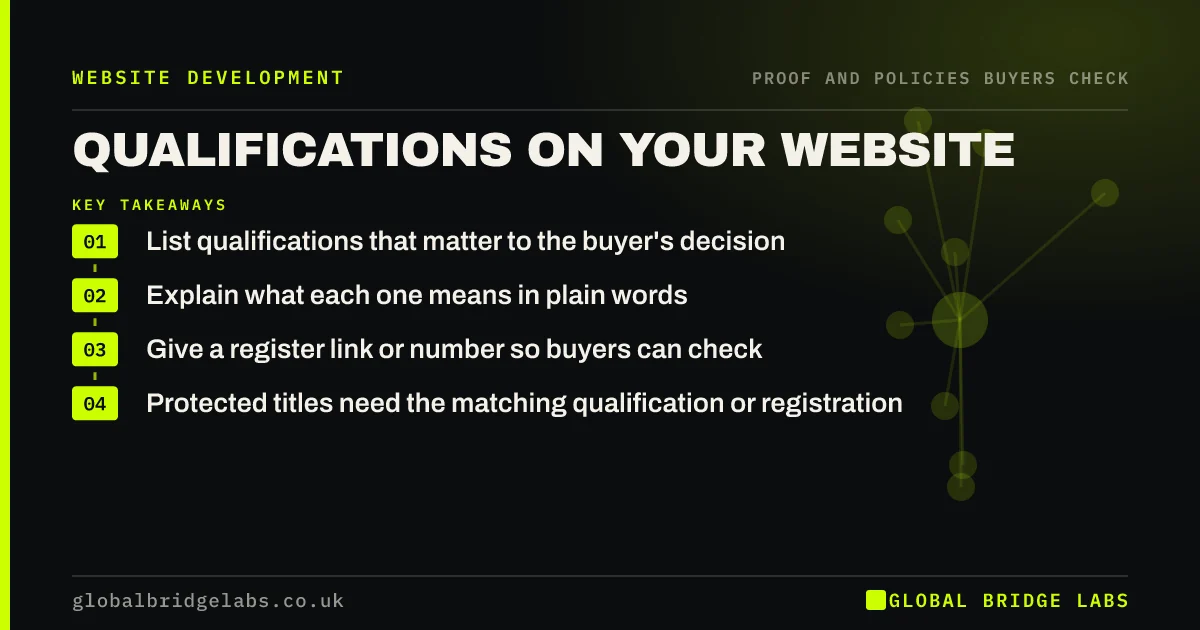
List the qualifications that matter to the buyer's decision, such as professional memberships, licences and recognised certificates, and say what each means in plain words. Make them checkable with a membership number or register link. Leave out minor courses, and never use a protected title, such as 'chartered', unless you hold it.
- List qualifications that matter to the buyer's decision.
- Explain what each one means in plain words.
- Give a register link or number so buyers can check.
- Protected titles need the matching qualification or registration.
Want your credentials section reviewed? Message us on WhatsApp.
Chat on WhatsApp →Which qualifications should a website list?
List qualifications that tell buyers you are competent and safe for their job: professional memberships, regulatory registrations, licences and recognised trade certificates. Global Bridge Labs (GBL) treats them as item 15 of the inventory. If a buyer would not care about a qualification, it does not need to be on the page.
How should qualifications be worded?
Give the full name, the awarding or registering body and what it means for the buyer: 'NICEIC approved contractor: our work is assessed every year against wiring regulations.' Acronyms alone mean little to most buyers. Nielsen Norman Group's research on plain language shows even experts prefer plain wording.
Should qualifications be checkable?
Yes. Add a registration or membership number and a link to the public register where one exists. Buyers worried about rogue traders often check, and an easy link shows confidence. It also keeps you honest: if a membership lapses, the link exposes it.
Which titles are protected?
Some titles are protected by law or by the awarding body, such as solicitor, architect, physiotherapist, osteopath and chartered status. Using them without the right registration can be an offence or misleading. Check before describing yourself or staff with any professional title.
Where should qualifications appear?
Show key qualifications near the decision: in a credentials strip on the homepage, on relevant service pages and with each person on the about or team page. Full details, with numbers and links, can sit on the about page. Keep them consistent with your LinkedIn profiles.
When do qualifications not help?
Qualifications do not help when they are irrelevant to the job, out of date or so numerous they bury the important one. A long list of short courses can look like padding. For services buyers judge on results, proof of work may matter more than certificates.
What does this look like in practice?
A pattern we see: an about page lists twelve acronyms after the owner's name with no explanation. Cutting to the three that matter to buyers, each with a plain-English line and a register link, takes less space and does more to reassure.
Qualifications checklist
- Keep only qualifications buyers care about.
- Give full names and awarding bodies.
- Explain what each means for the buyer.
- Add register numbers and links.
- Check protected titles.
- Update when memberships renew or lapse.
Next step
Pick the three qualifications your buyers care about most and write one plain line on what each means for them.
Message us on WhatsApp for a credentials review, with no pitch.
Chat on WhatsApp →Sources and further reading
- Plain language is for everyone, even experts · Nielsen Norman Group
- Unfair commercial practices guidance (CMA207) · Competition and Markets Authority
- Check the register · Health and Care Professions Council
Frequently asked questions
Should I list my qualifications on my business website?
Yes, if they are relevant to what buyers need. Give the full name, the awarding body and what it means for the customer, with a register link where one exists. Leave out minor or unrelated courses.
Can I call myself chartered on my website?
Only if you hold chartered status from the relevant professional body. Chartered and many professional titles are protected. Using one without the qualification can be misleading and, for some titles, unlawful.
How do I show staff qualifications on a website?
Add qualifications to each person's profile on the team or about page, in plain words. Summarise the most important ones on service pages. Keep profiles current when people join, leave or gain new qualifications.
Written by

Global Bridge Labs (GBL) is a UK–Sri Lanka partner for social media, websites and BPO. Everything here comes from client delivery, not theory.