On this page
- 01Key takeaways
- 02Why do logistics firms outsource customer service?
- 03What can an outsourced logistics team handle?
- 04How does the team work with operations?
- 05What hours does logistics support need?
- 06What does logistics customer service outsourcing cost?
- 07When should logistics support stay in-house?
- 08What should exception updates say?
- 09How do you measure the service?
- 10What does this look like in practice?
- 11Checklist: outsource logistics customer service
- 12Next step
- 13Sources and further reading
- 14Frequently asked questions
Key takeaways
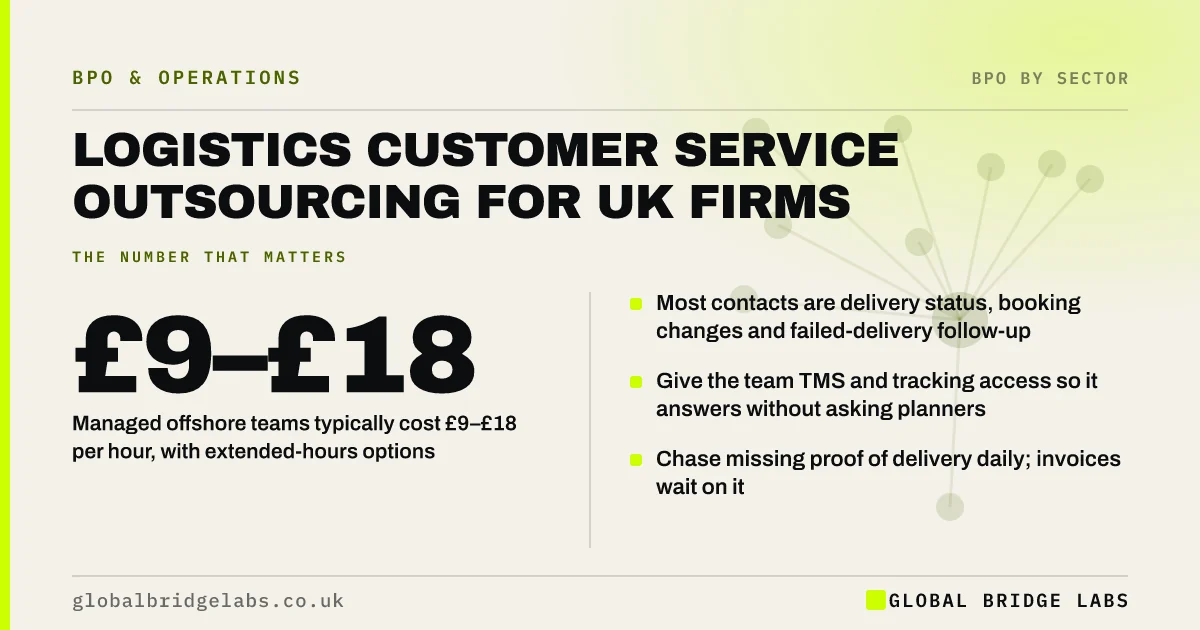
Logistics customer service outsourcing moves delivery queries, booking admin, proof of delivery chasing and exception updates to a managed team working inside your transport management system. It suits hauliers, couriers, 3PLs and fleet operators whose planners and drivers are interrupted all day by "where is it?" calls.
- Most contacts are delivery status, booking changes and failed-delivery follow-up.
- Give the team TMS and tracking access so it answers without asking planners.
- Chase missing proof of delivery daily; invoices wait on it.
- Update customers proactively when exceptions happen.
- Managed offshore teams typically cost £9–£18 per hour, with extended-hours options.
Planners buried in status calls? Message us on WhatsApp with your daily query volume.
Chat on WhatsApp →Why do logistics firms outsource customer service?
Logistics firms outsource customer service because status queries interrupt the people running the operation. Every "where is my delivery?" call pulls a planner away from routing, and every missed call becomes an escalation. Proof of delivery and paperwork chasing then delays invoicing.
Business process outsourcing (BPO) puts a dedicated team between customers and operations, answering from the same systems your planners use.
What can an outsourced logistics team handle?
A logistics support team covers the customer-facing and administrative work around each job.
- Delivery status queries by phone, email and portal.
- Booking new collections and amending existing ones.
- Failed-delivery follow-up and rebooking.
- Proactive exception updates to customers.
- Chasing and filing proof of delivery and paperwork.
- Raising invoices once jobs are complete and documented.
How does the team work with operations?
The team needs read access to your transport management system and tracking, plus clear rules on what it can change. Routine updates, rebookings within set windows and customer notifications sit with the team. Route changes, pricing and claims sit with operations. A shared channel handles anything in between, with an agreed response time from planners.
What hours does logistics support need?
Logistics often runs beyond office hours: early collections, late deliveries and weekend work. Offshore teams in Sri Lanka and India cover UK hours on an afternoon-to-evening shift and can stagger shifts for early or late cover. Start with the hours your customers actually call, which your phone data will show.
What does logistics customer service outsourcing cost?
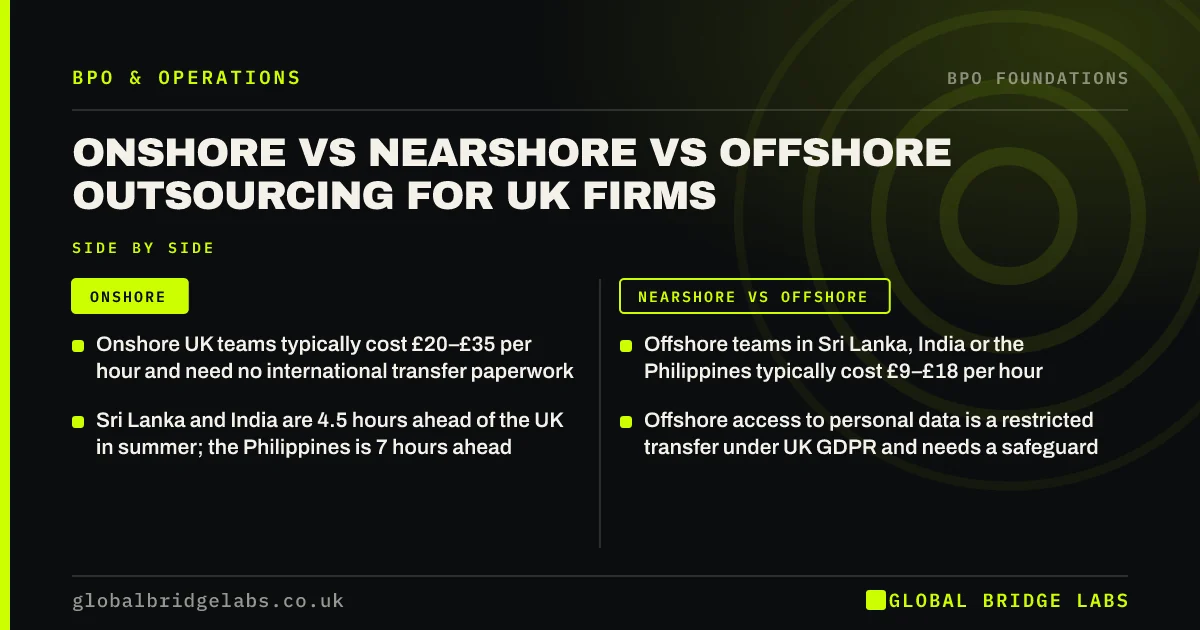
As indicative market ranges, managed offshore logistics support costs around £9–£18 per hour and onshore UK providers around £20–£35. Extended and weekend hours usually carry a premium.
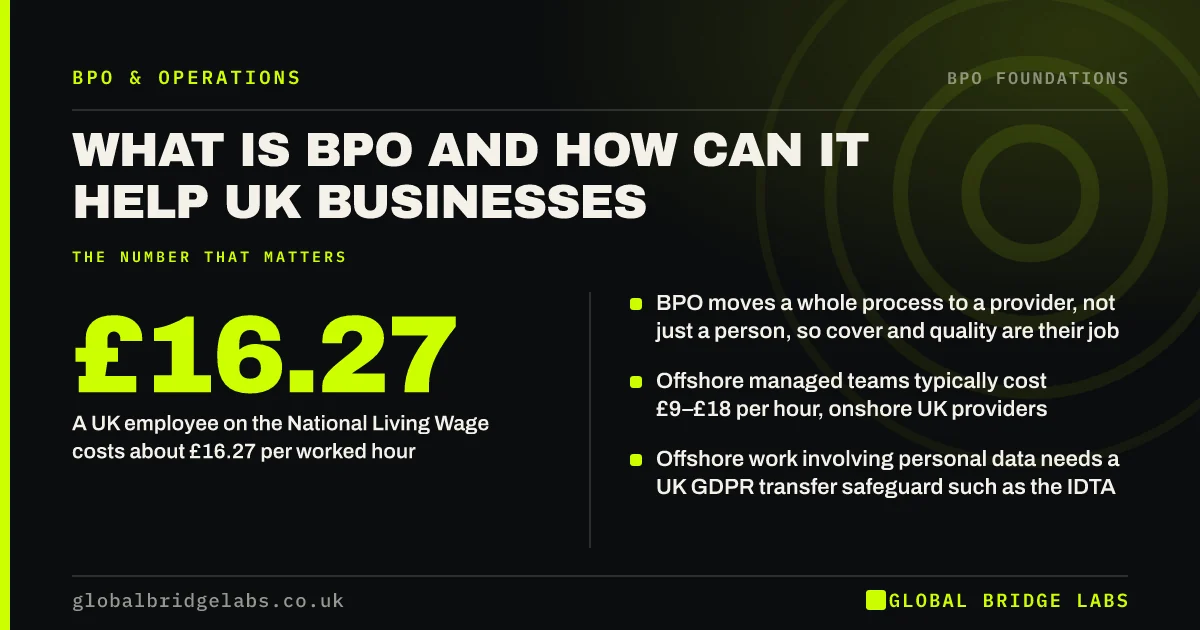
Compare it with planner time and invoicing delays. A UK employee on the April 2026 National Living Wage costs about £16.27 per worked hour after employer costs, and experienced planners cost far more. Faster proof of delivery also means faster invoicing and better cash flow.
Want a costed plan for logistics customer service? Send us your daily query and job volumes on WhatsApp and we will discuss your requirements.
Chat on WhatsApp →When should logistics support stay in-house?
Keep it in-house when most queries need live operational decisions, such as re-routing or pricing, or when a few large accounts expect direct contact with their planner. You can still outsource proof of delivery chasing, bookings and routine status updates.
What should exception updates say?
Exceptions are where logistics customer service wins or loses trust. A delay, a failed delivery or damaged goods is far easier for a customer to accept when they hear about it from you first, with a clear next step, than when they discover it themselves.
Write short templates for each common exception: what happened, what you are doing about it, the new expected time and who to contact. The team sends them as soon as the exception appears in your system, and logs the contact against the job.
- Delayed collection or delivery, with a revised time.
- Failed delivery, with rebooking options.
- Damage or shortage reported, with the claims process.
- Missing paperwork holding up delivery or invoicing.
How do you measure the service?
Measure what customers and your finance team feel: calls answered within target, first reply times on email and portal messages, the share of exceptions notified proactively, proof of delivery completion within 24 hours and the lag between completion and invoice. Review them weekly with the team lead and monthly against targets.
What does this look like in practice?
The fleet management client on our projects page describes a booking journey where enquiries turn into confirmed work and the operations team trusts the hand-off. A support team running status queries and proof of delivery chasing is the same principle applied after the booking: planners plan, and customers still get quick answers.
Checklist: outsource logistics customer service
Prepare these before go-live.
- Count daily queries by type and hour.
- Give read access to TMS and tracking systems.
- Define what the team can change and what goes to planners.
- Write exception update templates.
- Set a daily proof of delivery chasing routine.
- Agree extended or weekend hours if needed.
- Track answer times, POD completion and invoicing lag.
Next step
Tell us your query volumes and hours, and we will design a support team that keeps planners planning. 30 minutes, no pitch.
Message us on WhatsApp for a logistics support plan, or book a 30-minute consultation.
Chat on WhatsApp →Sources and further reading
- National Minimum Wage and National Living Wage rates · GOV.UK
- Rates and thresholds for employers 2026 to 2027 · HM Revenue & Customs
- Contracts and liabilities between controllers and processors · Information Commissioner's Office
Frequently asked questions
Can a haulier outsource customer service?
Yes. Hauliers commonly outsource delivery status queries, booking changes, failed-delivery follow-up and proof of delivery chasing. The team works from your transport management and tracking systems and passes route, pricing and claims decisions to your planners.
What is proof of delivery chasing?
Proof of delivery chasing is the daily routine of collecting signed delivery confirmations, photos or electronic records for completed jobs, following up drivers or subcontractors when they are missing, and filing them so invoices can be raised and disputes resolved.
Can an outsourced team work early and late shifts?
Yes. Offshore teams can be scheduled to any UK hours, including early and late shifts and weekends, using staggered rotas planned by the provider. Extended hours usually cost more, so match cover to the hours customers actually call.
Does the team need access to our TMS?
Ideally yes, at least read access, so it can answer status queries without interrupting planners. Limit edit rights to agreed actions such as rebooking within set windows, and give each team member an individual login with multi-factor authentication.
Written by

Global Bridge Labs (GBL) is a UK–Sri Lanka partner for social media, websites and BPO. Everything here comes from client delivery, not theory.