On this page
Key takeaways
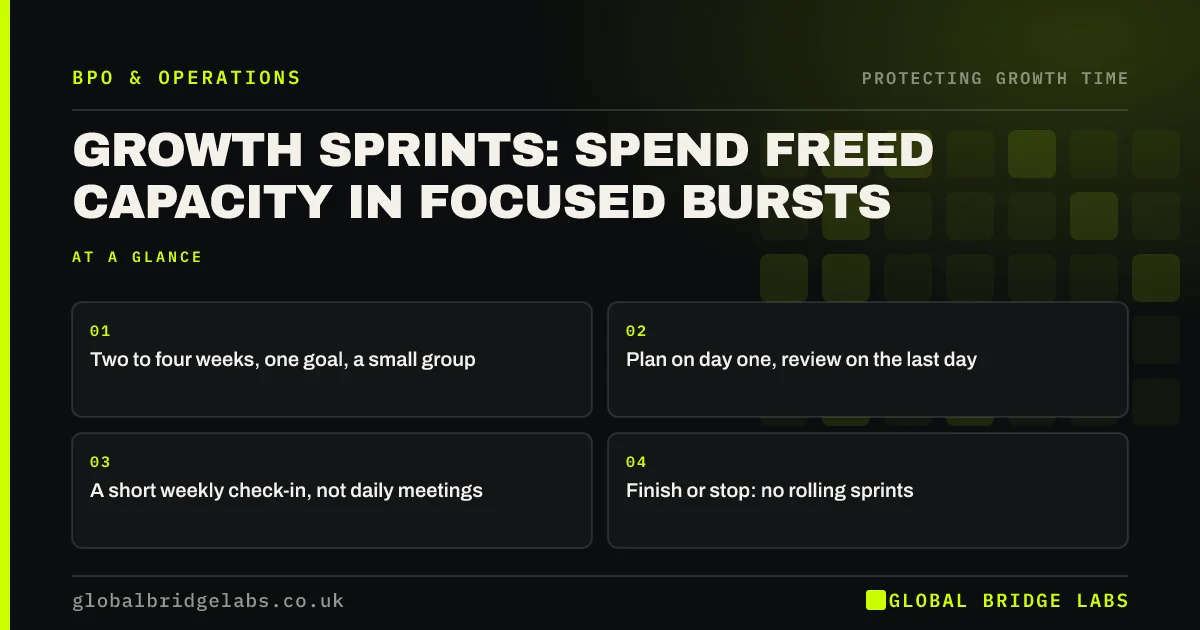
A growth sprint is a fixed period, usually two to four weeks, in which a small group puts most of its freed hours into one growth goal. Sprints help small teams finish growth projects that would otherwise drift for months. Plan the goal at the start, meet briefly each week and review the result at the end before choosing the next sprint.
- Two to four weeks, one goal, a small group.
- Plan on day one, review on the last day.
- A short weekly check-in, not daily meetings.
- Finish or stop: no rolling sprints.
Want help planning your first growth sprint? Message us on WhatsApp.
Chat on WhatsApp →What is a growth sprint?
A growth sprint is a short, time-boxed burst of focused work on a single growth goal, such as launching a referral scheme or completing top account reviews. It borrows the idea of sprints from software teams but keeps it simple. The time box creates urgency that growth work normally lacks, which helps it compete with routine demands.
How do you run one?
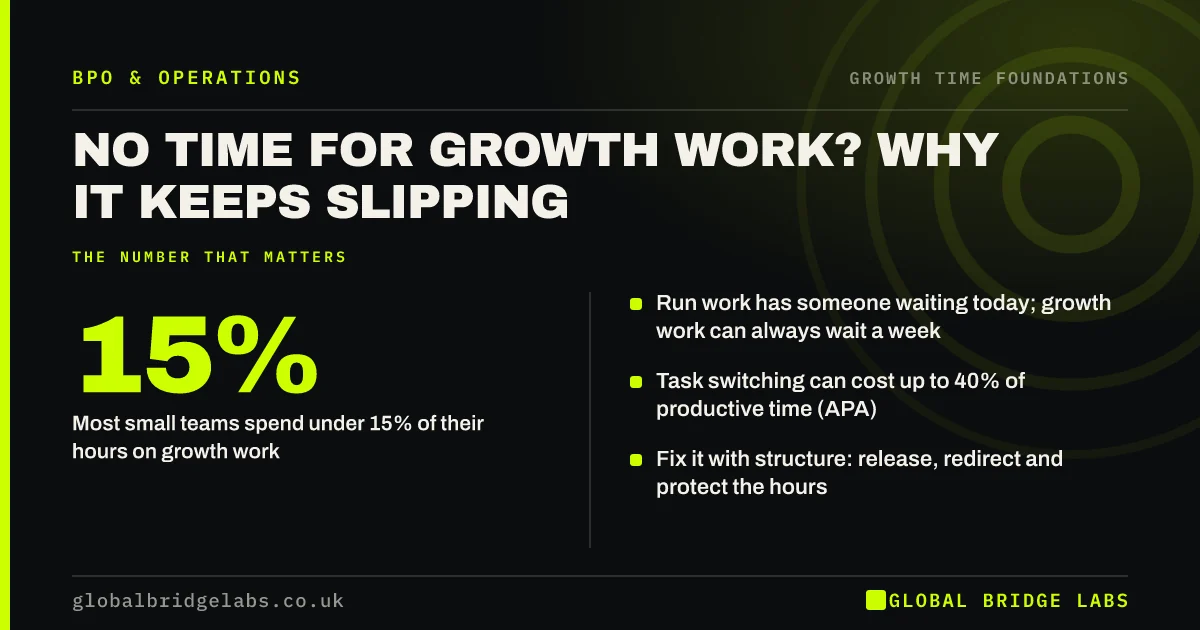
Concentrating effort matters: switching between tasks can cost as much as 40% of productive time according to the American Psychological Association.
- Day one: agree the goal, the finish line and who is involved.
- Each week: a 20-minute check-in on progress and blockers.
- During: protect growth blocks for the sprint group.
- Last day: review results and decide the next step.
Which goals suit sprints?
Goals with a clear finish line that can be reached in a few weeks: a pricing review, a partner pack, a customer conversation round, a new proposal template or a service pilot launch. Large goals can be broken into a series of sprints.
When do sprints not work?
When the team cannot protect the time, because urgent work keeps breaking in. Fix the routine load first. Sprints also fail when the goal is vague; if you cannot describe the finish line, it is not ready.
What does this look like in practice?
A pattern we see: after moving order admin out, a three-person sales team runs a three-week sprint to call every customer who has not ordered in six months. The sprint ends with a list of reasons, a handful of reactivated accounts and a clear next sprint on the main reason.
Growth sprint checklist
- Pick one goal with a clear finish line.
- Choose a small group and a two to four week box.
- Protect growth blocks during the sprint.
- Check in weekly for 20 minutes.
- Review and choose the next sprint.
Next step
Take the top item on your growth backlog and plan a three-week sprint to finish it.
Message us on WhatsApp for a growth sprint plan, or book a 30-minute consultation.
Chat on WhatsApp →Sources and further reading
- Multitasking: switching costs · American Psychological Association
- Value Stream Mapping Overview · Lean Enterprise Institute
Frequently asked questions
What is a growth sprint?
A growth sprint is a fixed period, usually two to four weeks, in which a small group focuses its available hours on one growth goal with a clear finish line. It creates urgency for growth work, which normally loses out to routine tasks, and helps small teams finish projects.
How long should a growth sprint be?
Two to four weeks suits most small teams. Shorter sprints rarely leave enough time to finish meaningful work; longer ones lose urgency. If a goal needs more time, split it into stages and run consecutive sprints with a review in between.
Do growth sprints need daily meetings?
No. Small teams usually do well with a planning session at the start, a 20-minute weekly check-in and a review at the end. Daily meetings add overhead and can take back the very time the sprint is meant to use.
Written by

Global Bridge Labs (GBL) is a UK–Sri Lanka partner for social media, websites and BPO. Everything here comes from client delivery, not theory.