On this page
Key takeaways
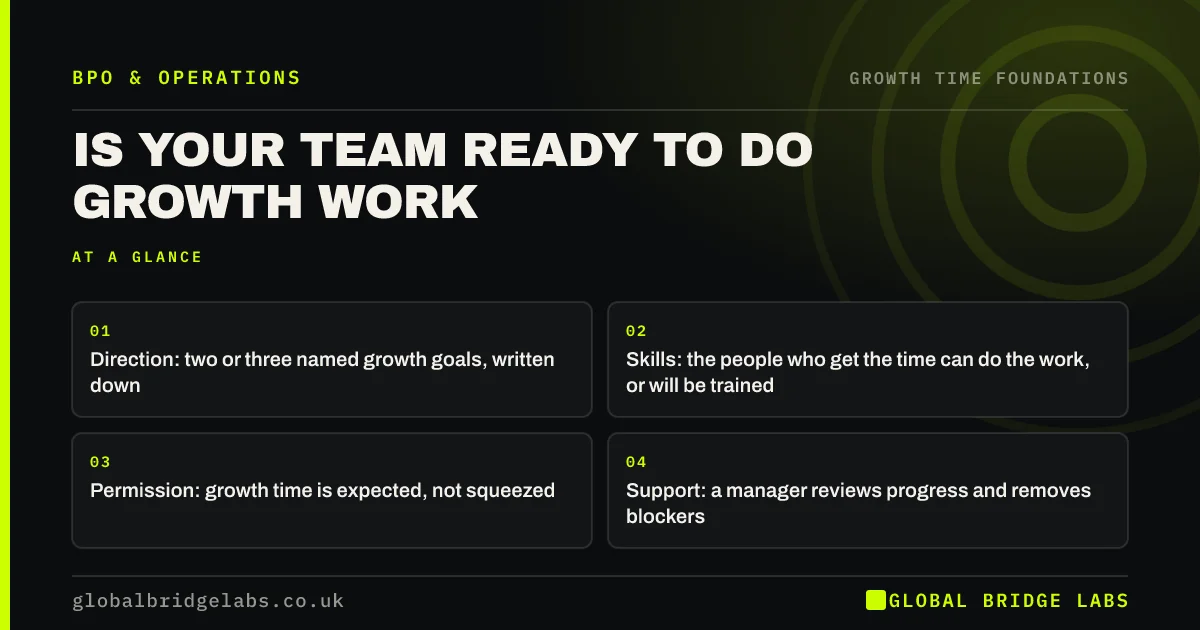
Your team is ready to do growth work when four things are in place: a clear direction for what growth means, the skills to do the work, permission to spend time on it, and support when it is unfamiliar. Missing any of them, freed hours drift back into routine work. Check readiness before you outsource, not after.
- Direction: two or three named growth goals, written down.
- Skills: the people who get the time can do the work, or will be trained.
- Permission: growth time is expected, not squeezed in.
- Support: a manager reviews progress and removes blockers.
Want to check your team's growth readiness with us? Message us on WhatsApp.
Chat on WhatsApp →What does ready for growth work mean?
A team is ready for growth work when the people who will receive freed hours know what growth they are working towards, have the skills to do it, feel allowed to spend time on it and have someone checking progress. Readiness matters because growth work is less structured than run work; without these four supports, people default to the familiar.
How do you check readiness?
Ask four questions of each person who will gain time.
A no on skills is common and fixable. A no on direction or permission is a leadership problem that outsourcing cannot solve.
- Direction: can they name the growth goal their hours are for?
- Skills: have they done this kind of work before?
- Permission: does their manager expect them to spend time on it?
- Support: who will review progress, and how often?
What if the team is not ready yet?
Fix direction first: write down two or three growth goals with owners. Then plan training for skills gaps; in organisations with 250 or more staff, eligible employees have a statutory right to request time off for training, and smaller firms benefit from a similar approach. Start the outsourcing handover once goals and owners are in place.
When should you outsource anyway?
Outsource anyway when the routine load is causing errors, missed deadlines or burnout. In that case the first benefit is stability, and growth readiness can follow. The Health and Safety Executive's Management Standards list demands and control among the main causes of work-related stress, so relieving overload has value on its own.
What does this look like in practice?
A pattern we see: a firm frees 10 hours a week for its office manager to develop supplier partnerships. She has never negotiated before. A short course and a monthly review with the MD are agreed before the handover, so the first partnership is in place within a quarter.
Growth readiness checklist
- Write down two or three growth goals.
- Name the person whose hours go to each goal.
- Check each person's skills against the work.
- Agree training before the handover.
- Set a monthly progress review.
Next step
Run the four-question check with each person who will gain time. Where the answer is no, fix that first.
Message us on WhatsApp for the growth readiness questions, or book a 30-minute consultation.
Chat on WhatsApp →Sources and further reading
- Training and study at work: your rights · GOV.UK
- What are the Management Standards for work-related stress? · Health and Safety Executive
Frequently asked questions
How do I prepare my team for growth work?
Write down two or three growth goals and name an owner for each. Check that each owner has the skills or plan training. Tell them clearly that growth time is expected, not optional. Then set a regular review with a manager who removes blockers. Start moving routine work out once those are in place.
What if my staff do not have growth skills?
Most growth skills can be learnt: account reviews, proposal writing, customer research and basic negotiation. Pair people with someone experienced, use short courses and start with low-risk growth work. If a role needs skills nobody has, consider hiring for that role and outsourcing the routine work around it.
Should I wait until the team is ready before outsourcing?
Only partly. Settle the growth goals and owners first, because that takes a week or two. Do not wait for every skill gap to close; training can run alongside the handover. If routine overload is already causing errors or burnout, outsource now for stability and plan growth work in parallel.
Written by

Global Bridge Labs (GBL) is a UK–Sri Lanka partner for social media, websites and BPO. Everything here comes from client delivery, not theory.