On this page
- 01Key takeaways
- 02What obligations should be monitored?
- 03How does compliance monitoring work?
- 04Which compliance work can be outsourced?
- 05When is a full compliance register overkill?
- 06What does this look like in practice?
- 07Compliance monitoring checklist
- 08Next step
- 09Sources and further reading
- 10Frequently asked questions
Key takeaways
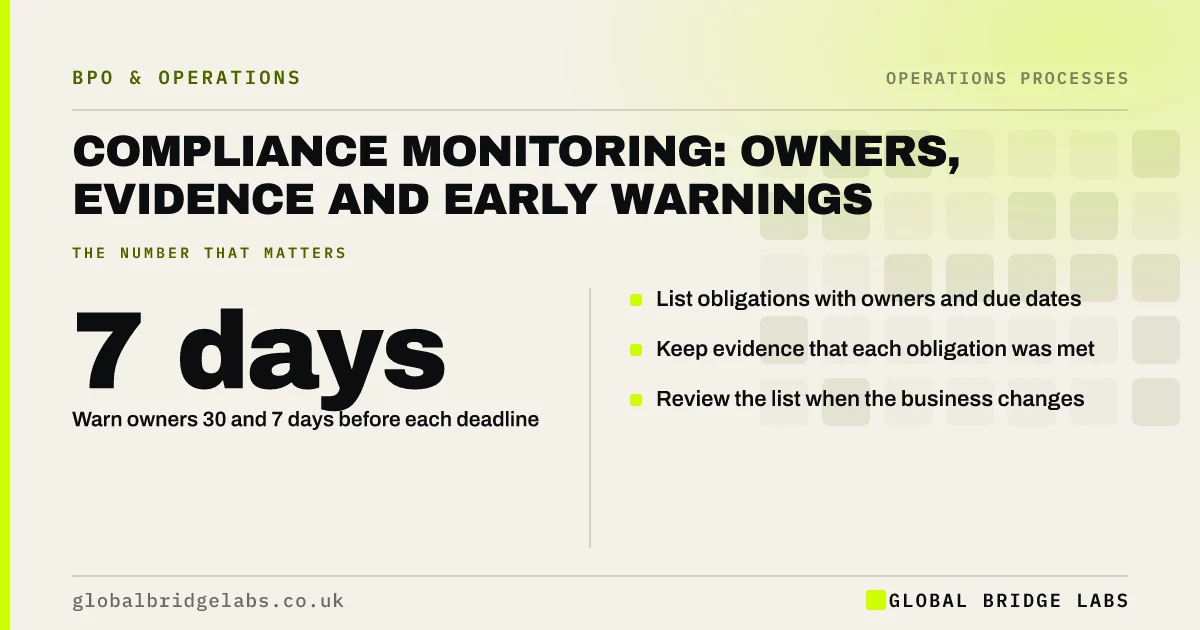
A compliance monitoring process lists every legal and contractual obligation the business has, names an owner for each, tracks deadlines with early warnings, and keeps the evidence that each was met. The monitoring outsources well. Owning each obligation and deciding how to meet it stays with the business.
- List obligations with owners and due dates.
- Warn owners 30 and 7 days before each deadline.
- Keep evidence that each obligation was met.
- Review the list when the business changes.
Want a compliance register template? Message us on WhatsApp.
Chat on WhatsApp →What obligations should be monitored?
Filing deadlines such as accounts, confirmation statements and tax returns. Registrations such as the ICO data protection fee. Health and safety checks, insurance renewals, licences and sector registrations. Contract obligations to customers, such as reporting or certification. Each one needs an owner and a date.
How does compliance monitoring work?
Keep a register with obligation, source, owner, frequency, next due date and where the evidence is filed. Send owners reminders at 30 and 7 days. After each deadline, record the evidence. Report monthly on anything overdue or at risk. Review the register when you add a service, a site or a regulated activity.
- Register with owner and due date.
- Reminders at 30 and 7 days.
- Evidence filed after each deadline.
- Monthly overdue report.
Which compliance work can be outsourced?
Keeping the register, sending reminders, collecting and filing evidence, chasing owners and producing the monthly report. The business decides which obligations apply, who owns them and how to meet them, and remains legally responsible.
- Regulated processes: outsource the work, keep the duty
- Company secretarial admin: confirmation statements on time
Want your compliance deadlines monitored? Message us on WhatsApp.
Chat on WhatsApp →When is a full compliance register overkill?
A sole trader with a few filing dates may manage with a calendar. A register earns its keep once you employ staff, hold personal data, run premises or work in a regulated sector, because obligations multiply quickly and missed ones carry penalties.
What does this look like in practice?
A pattern we see: obligations are known to individuals but never written down, so they are missed when that person is away or leaves. A register with named owners and reminders removes that dependency.
Compliance monitoring checklist
Review these each quarter.
- Every obligation listed with its source.
- Owner named for each.
- Reminders set at 30 and 7 days.
- Evidence filed for each completed item.
- Overdue items reported monthly.
- Register updated after business changes.
Next step
Tell us your sector and size. We will suggest the obligations your register should start with and say what monitoring it would involve.
Message us on WhatsApp, or book a 30-minute consultation.
Chat on WhatsApp →Sources and further reading
- Data protection fee · Information Commissioner's Office
- Confirmation statement guidance · Companies House
- Health and safety basics for your business · Health and Safety Executive
Frequently asked questions
What is compliance monitoring?
Compliance monitoring is the routine of tracking every legal, regulatory and contractual obligation a business has, making sure each has an owner and is met on time, and keeping evidence that it was done. A register with reminders and a monthly report is the usual format.
Can compliance monitoring be outsourced?
The monitoring can: keeping the register, sending reminders, collecting evidence, chasing owners and reporting. The business remains legally responsible and should decide which obligations apply, who owns them and how they are met.
What compliance obligations does a UK small business have?
Common ones include Companies House filings, tax returns, payroll and pension duties, the ICO data protection fee, health and safety duties, insurance such as employers' liability, and any sector licences or registrations. Contracts with customers can add more.
Written by

Global Bridge Labs (GBL) is a UK–Sri Lanka partner for social media, websites and BPO. Everything here comes from client delivery, not theory.