On this page
- 01Key takeaways
- 02What makes healthcare advertising different?
- 03What do the advertising rules require?
- 04What about patient data and testimonials?
- 05Which channels bring patients?
- 06How should a clinic use social media?
- 07Do traditional channels suit clinics?
- 08What does it cost?
- 09What should a clinic never do?
- 10What does this look like in practice?
- 11Next step
- 12Sources and further reading
- 13Frequently asked questions
Key takeaways
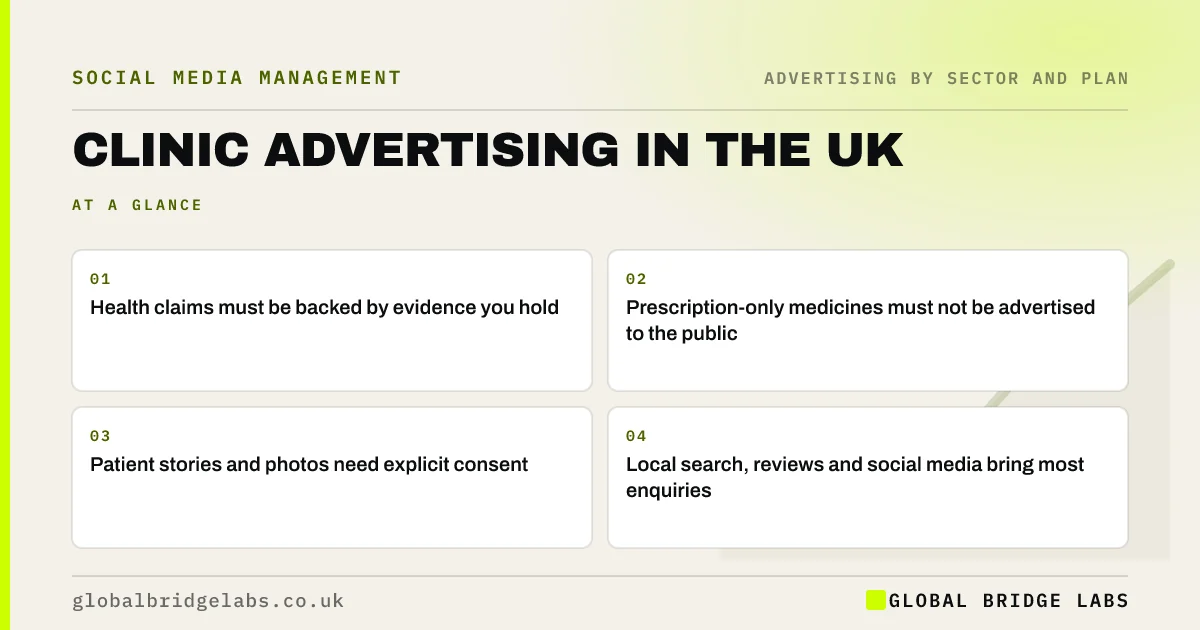
Clinic advertising in the UK is more restricted than most sectors, and for good reason. Claims need evidence, prescription-only medicines cannot be advertised to the public and patient privacy comes first. Within those limits, clear information, reviews and steady local presence work well.
- Health claims must be backed by evidence you hold.
- Prescription-only medicines must not be advertised to the public.
- Patient stories and photos need explicit consent.
- Local search, reviews and social media bring most enquiries.
Want a clinic advert or post checked before it goes out? Message us on WhatsApp.
Chat on WhatsApp →What makes healthcare advertising different?
Healthcare advertising speaks to people who may be anxious or unwell, about decisions with real consequences. Regulators therefore expect accuracy and restraint. This guide is general information for private clinics, dental and aesthetic practices, and each should check current guidance from the ASA and its professional regulator.
What do the advertising rules require?
The CAP and BCAP Codes have specific sections on medicines, medical devices, health and beauty.
- Hold robust evidence for any claim about results.
- Do not discourage people from seeking essential treatment.
- Do not advertise prescription-only medicines to the public.
- Do not exploit insecurities or trivialise procedures.
- Make clear who will carry out a treatment.
What about patient data and testimonials?
Health information is special category data under UK GDPR. A patient's story, photo or review reply can reveal it. Use patient content only with explicit, recorded consent that can be withdrawn. Never confirm that someone is a patient when replying to a public review.
Which channels bring patients?
Most patients search locally, check reviews and then look for reassurance.
- Google Business Profile and local search.
- A website with clinicians, prices and the booking route.
- Social media showing the team, the premises and clear advice.
- Referrals from GPs, other clinicians and patients.
- Local print or leaflets for older patients.
How should a clinic use social media?
Use social media to inform and reassure: who the clinicians are, what a first appointment involves, how to prepare and what things cost. Avoid before and after images unless you are confident they meet the rules and have consent. Plain explanation builds more trust than promotion.
Do traditional channels suit clinics?
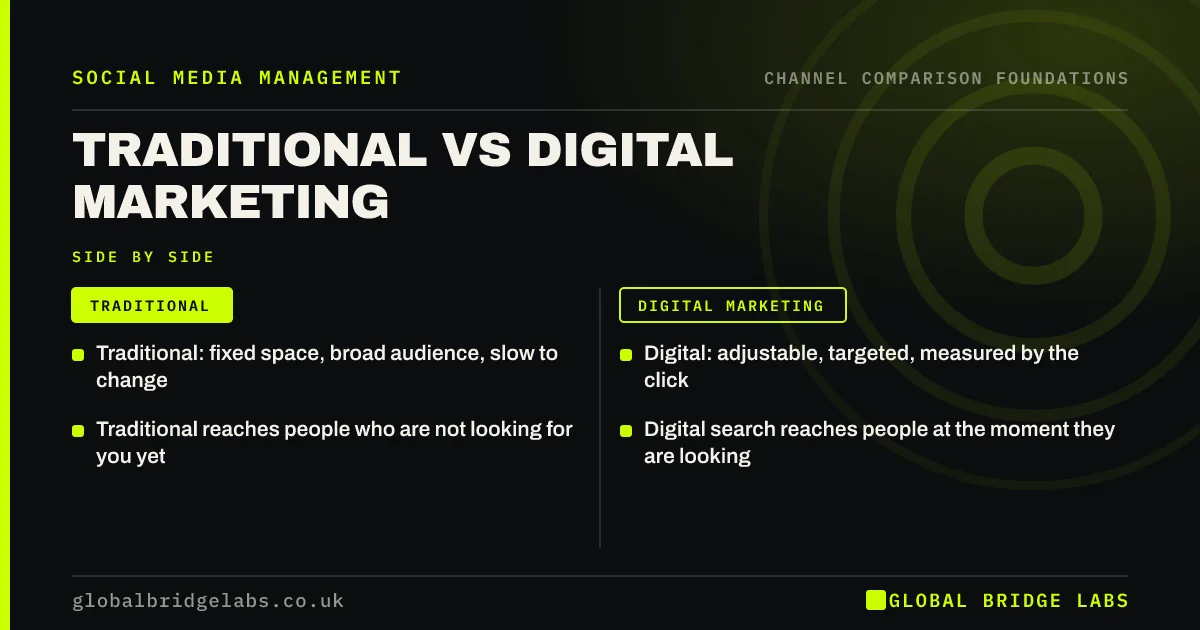
They can. Leaflets and community magazines reach older residents near the practice. Local radio suits a clinic serving a whole town, with scripts on health claims cleared centrally before broadcast. Any printed claim must meet the same standard as an online one.
What does it cost?
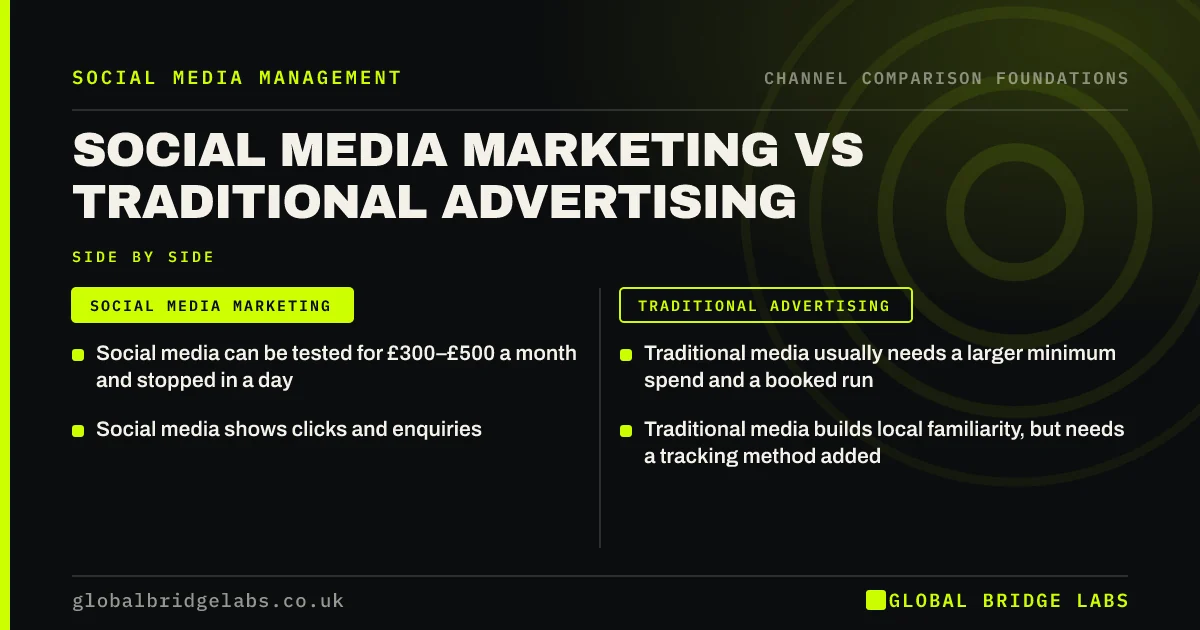
As indicative ranges, a leaflet drop costs 6p to 15p per household and a local print advert £150 to £1,000 an insertion. Paid social has a practical floor of £300–£500 a month, with some targeting limited for health topics. Most UK SMEs using an agency pay £950–£2,500 a month for managed social media.
Want a compliant plan costed for your practice? Message us on WhatsApp and we will discuss your requirements.
Chat on WhatsApp →What should a clinic never do?
Never promise outcomes, never use time-limited offers that pressure a medical decision, never name a prescription-only medicine in public promotion and never share anything about a patient without consent. If in doubt, leave it out and seek advice.
What does this look like in practice?
A pattern we see with private practices: marketing is either absent, from fear of the rules, or borrowed from retail, with offers and countdowns. The middle path is plain: clear information, visible clinicians, honest prices and a prompt reply to every enquiry.
Next step
Read your latest advert or post and underline every claim about results. Check that you hold evidence for each and consent for every patient image.
Message us on WhatsApp for a pre-publication checklist for clinics, or book a 30-minute consultation.
Chat on WhatsApp →Sources and further reading
- UK Code of Non-broadcast Advertising and Direct & Promotional Marketing (CAP Code) · ASA / CAP
- UK Code of Broadcast Advertising (BCAP Code) · ASA / BCAP
- Special category data · Information Commissioner's Office
- Radio advertising clearance · Radiocentre
- Display your CQC ratings · Care Quality Commission
Frequently asked questions
Can private clinics advertise in the UK?
Yes. Private clinics can advertise, provided adverts follow the CAP and BCAP Codes, claims are backed by evidence, prescription-only medicines are not promoted to the public and any professional regulator's standards are met. Broadcast adverts with health claims also need clearance before they air.
Can you advertise prescription-only medicines such as anti-wrinkle injections?
No. Prescription-only medicines must not be advertised to the public in the UK, including on social media. Clinics may promote a consultation for a concern, but should not name or promote the medicine itself. This applies to hashtags, images and price lists as well as to the main wording.
Can a clinic use patient testimonials?
Yes, with explicit, recorded consent, and provided the testimonial is genuine and does not make claims the clinic could not evidence. Health details are special category data, so handle them with particular care. Keep the consent on file and remove the content promptly if the patient asks.
What is the best way to market a private clinic?
Make the practice easy to find and check: a complete Google Business Profile, a clear website with clinicians and prices, genuine reviews and calm, informative social media. Add local print or leaflets where older patients are the audience.
Written by

Global Bridge Labs (GBL) is a UK–Sri Lanka partner for social media, websites and BPO. Everything here comes from client delivery, not theory.