On this page
- 01Key takeaways
- 02Is there a most trusted medium?
- 03Why can print feel more trustworthy?
- 04How does social media earn trust?
- 05What actually makes an advert believable?
- 06What do the rules require?
- 07Do reviews matter more than the advert?
- 08What does building trust cost?
- 09Where can trust be lost?
- 10What does this look like in practice?
- 11Next step
- 12Sources and further reading
- 13Frequently asked questions
Key takeaways
Which advertising people trust most depends less on the medium than on the evidence around it. Recommendations from people they know come first. After that, trust follows proof: reviews, real work, a visible address and an advert that does not overclaim.
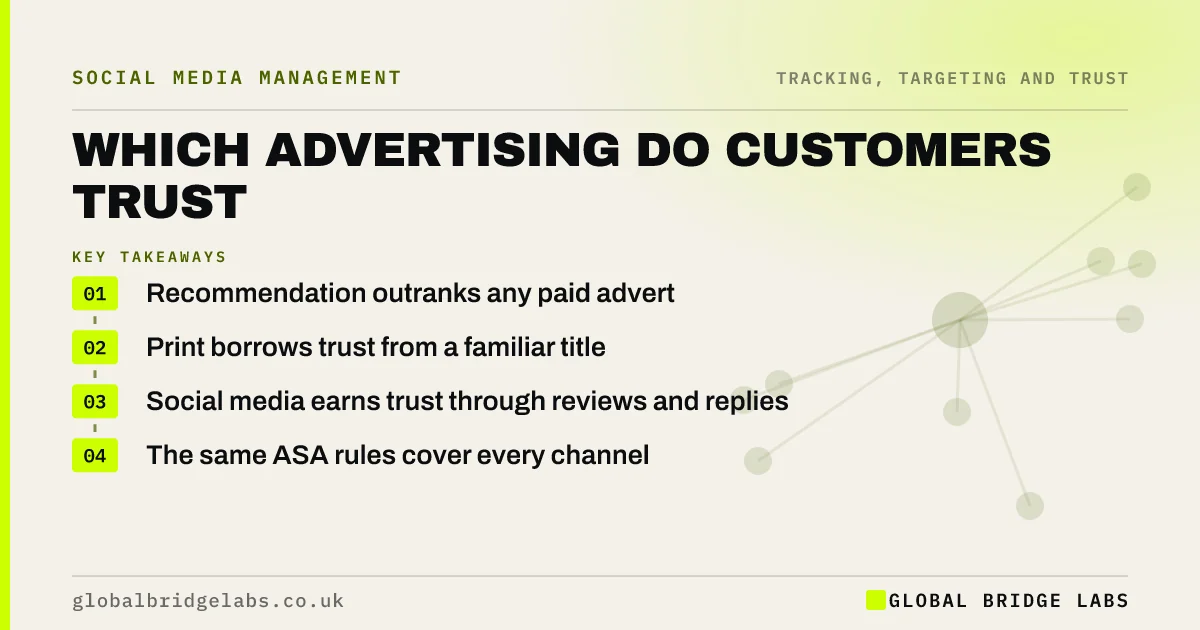
- Recommendation outranks any paid advert.
- Print borrows trust from a familiar title.
- Social media earns trust through reviews and replies.
- The same ASA rules cover every channel.
Want to know how trustworthy your adverts look to a stranger? Message us on WhatsApp.
Chat on WhatsApp →Is there a most trusted medium?
There is no medium that is trusted by everyone. Attitudes differ by age, by habit and by the title or platform itself. Ofcom's 2026 research found the share of users who say social media is good for their mental health fell to 36%, a sign of growing wariness. That wariness is about the platforms, not necessarily about a local firm's page.
Why can print feel more trustworthy?
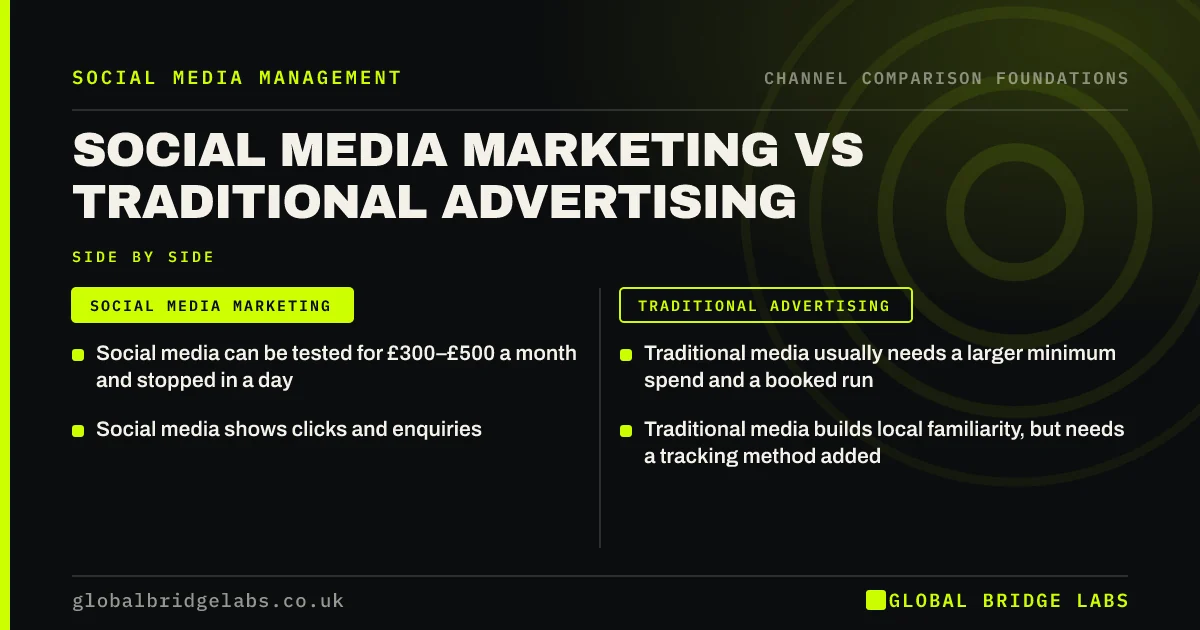
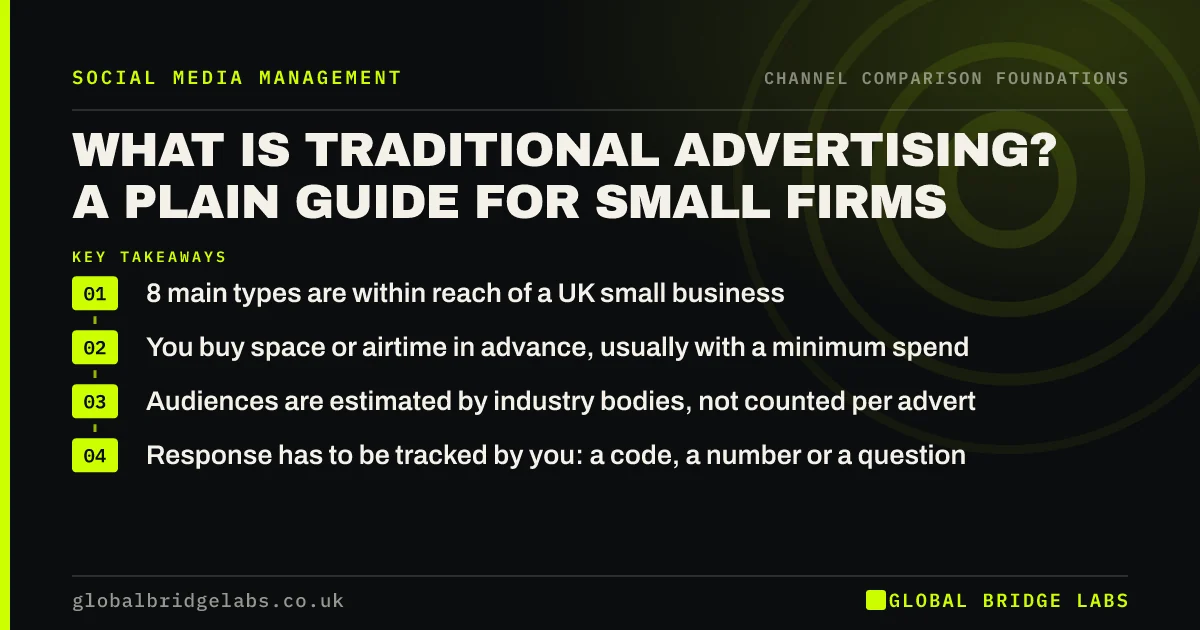
Print can feel more trustworthy because it costs money and commitment to appear, sits beside edited content and cannot be quietly changed. A firm that has advertised in the parish magazine for years seems established. That effect is real for readers of the title and absent for everyone else.
How does social media earn trust?
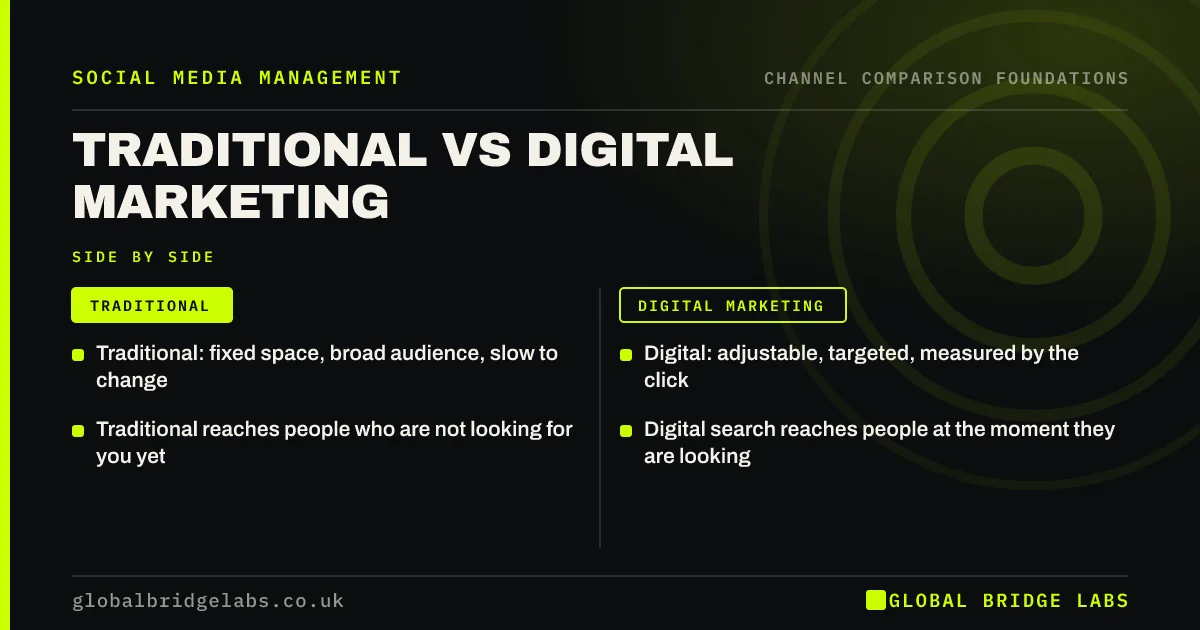
Social media earns trust through accumulation. A buyer can see months of finished work, how you reply to questions and what customers say. None of that fits in a printed advert. A profile that is empty, out of date or full of stock images has the opposite effect.
What actually makes an advert believable?
Five things make an advert believable in any medium.
- A specific claim, not a superlative.
- Evidence: a number, a photo or a named customer.
- A real address, phone number and company details.
- Consistency with your website and profiles.
- Reviews that can be checked elsewhere.
What do the rules require?
The rules are the same everywhere. The CAP Code covers print, posters, leaflets, mail and online advertising including social media. The BCAP Code covers radio and television. Both require adverts to be legal, decent, honest and truthful, and advertisers must hold evidence for claims. Fake reviews are banned under the Digital Markets, Competition and Consumers Act 2024.
Do reviews matter more than the advert?
Often, yes. Many buyers who notice an advert check reviews before they call, whatever medium the advert was in. That makes your review profile part of every campaign. Ask each satisfied customer, reply to every review and never offer hidden incentives.
What does building trust cost?
Trust costs effort more than money. Asking for reviews is free. Steady social media content showing real work is the main expense: most UK SMEs using an agency pay £950–£2,500 a month, or the equivalent in staff time. It supports every other advert you buy.
Want a plan to build proof before your next campaign? Message us on WhatsApp and we will discuss your requirements.
Chat on WhatsApp →Where can trust be lost?
Trust is lost when channels disagree. A leaflet with one price and a website with another, a social page last updated two years ago, or a claim such as 'the area's number one' with nothing behind it all make a careful buyer pause.
What does this look like in practice?
A pattern we see with firms whose adverts get noticed but not answered: the advert is fine, and the profile it leads to has six reviews from 2021 and no recent work. The buyer was interested enough to check, and found nothing to confirm the impression.
Next step
Search your business name as a stranger would. Note what the first page and your social profiles say about you, and fix the weakest one.
Message us on WhatsApp and we will give you an outsider's view, or book a 30-minute consultation.
Chat on WhatsApp →Sources and further reading
- Adults' media use and attitudes · Ofcom
- UK Code of Non-broadcast Advertising and Direct & Promotional Marketing (CAP Code) · ASA / CAP
- UK Code of Broadcast Advertising (BCAP Code) · ASA / BCAP
- Digital Markets, Competition and Consumers Act 2024 · legislation.gov.uk
- Publishing consumer reviews and complying with consumer protection law · Competition and Markets Authority
Frequently asked questions
What is the most trusted form of advertising?
Recommendations from people someone knows are generally trusted above any paid advertising. Among paid media, trust varies by audience and title. What raises trust everywhere is specific claims, visible proof and reviews that can be checked.
Do people trust social media adverts?
Trust in social media platforms is mixed, and many users are wary. People do trust a business they can check: one with recent posts, real photos, prompt replies and genuine reviews. The profile behind the advert matters more than the advert.
Is print advertising more credible than online advertising?
For regular readers of a respected title, a print advert can carry extra credibility. For people who never see that title it carries none. Credibility comes from the relationship between reader and publication, not from ink.
Are advertising rules different for social media and print?
No. The CAP Code applies to both, and requires advertising to be legal, decent, honest and truthful with evidence for claims. Social media adds the need to make clear when a post is an advert, particularly with influencers.
Written by

Global Bridge Labs (GBL) is a UK–Sri Lanka partner for social media, websites and BPO. Everything here comes from client delivery, not theory.