On this page
- 01Key takeaways
- 02What is the difference between the two?
- 03Which channels sit on each side?
- 04Where does social media fit?
- 05Which digital channel should come first?
- 06What does each side cost?
- 07Is digital always the better choice?
- 08How do you decide the balance?
- 09What does this look like in practice?
- 10Checklist: mapping your channels
- 11Next step
- 12Sources and further reading
- 13Frequently asked questions
Key takeaways
Traditional marketing reaches people through print, broadcast, post and physical sites. Digital marketing reaches them through screens connected to the internet. Social media is one of several digital channels, alongside search, email and your website, and it is usually the one that most resembles advertising.
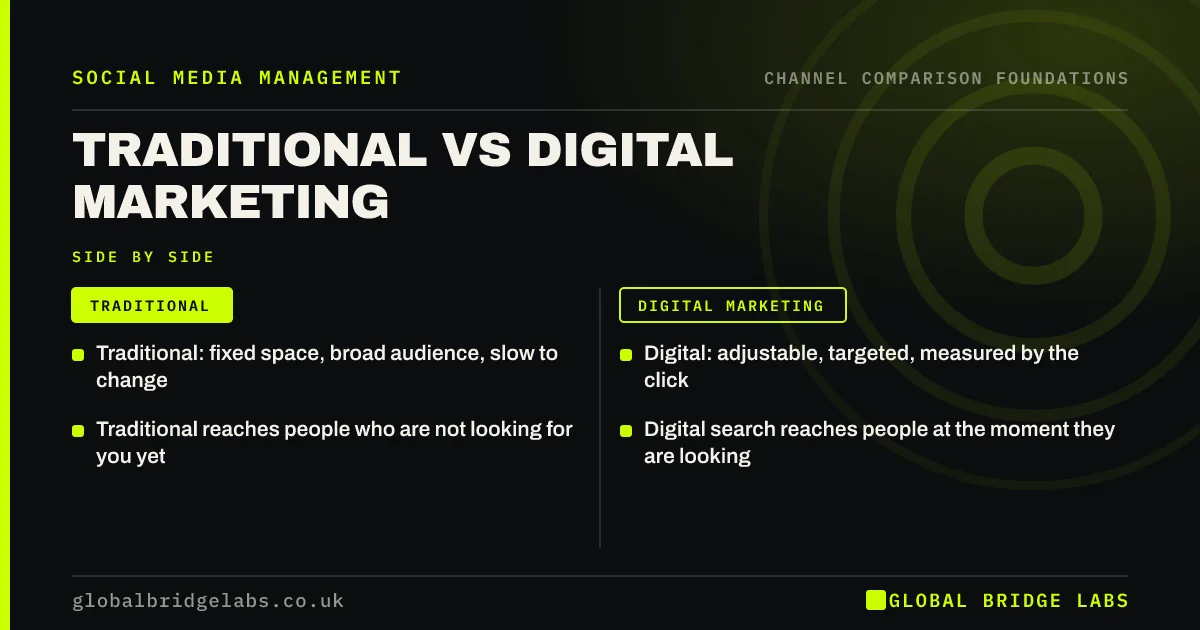
- Traditional: fixed space, broad audience, slow to change.
- Digital: adjustable, targeted, measured by the click.
- Traditional reaches people who are not looking for you yet.
- Digital search reaches people at the moment they are looking.
Want a simple map of which channels suit your business? Message us on WhatsApp.
Chat on WhatsApp →What is the difference between the two?
Traditional marketing is promotion through media that do not need the internet. Digital marketing is promotion through websites, search engines, email, apps and social platforms. The practical difference is feedback. Digital channels report what happened within hours. Traditional channels leave you to find out.
Which channels sit on each side?
It helps to see the channels side by side, grouped by the job they do. Some build awareness among people who have never heard of you. Others catch people who are already searching.
- Traditional awareness: radio, outdoor, print, sponsorship.
- Digital awareness: social media posts and adverts, video.
- Traditional response: leaflets, direct mail, directories.
- Digital response: search adverts, local listings, email.
Where does social media fit?
Social media sits on the digital side but behaves like a mixture. Regular posts work like a local magazine you publish yourself. Paid social adverts work like targeted leaflets. Replies and messages work like a shop counter. That range is why it is often the first digital channel a small business takes seriously.
Which digital channel should come first?
For a business people search for at the moment of need, a Google Business Profile and a clear website come first, then social media. For a business people choose on taste, trust or recommendation, social media can come first. Email comes into its own once you have a customer list worth writing to.
What does each side cost?
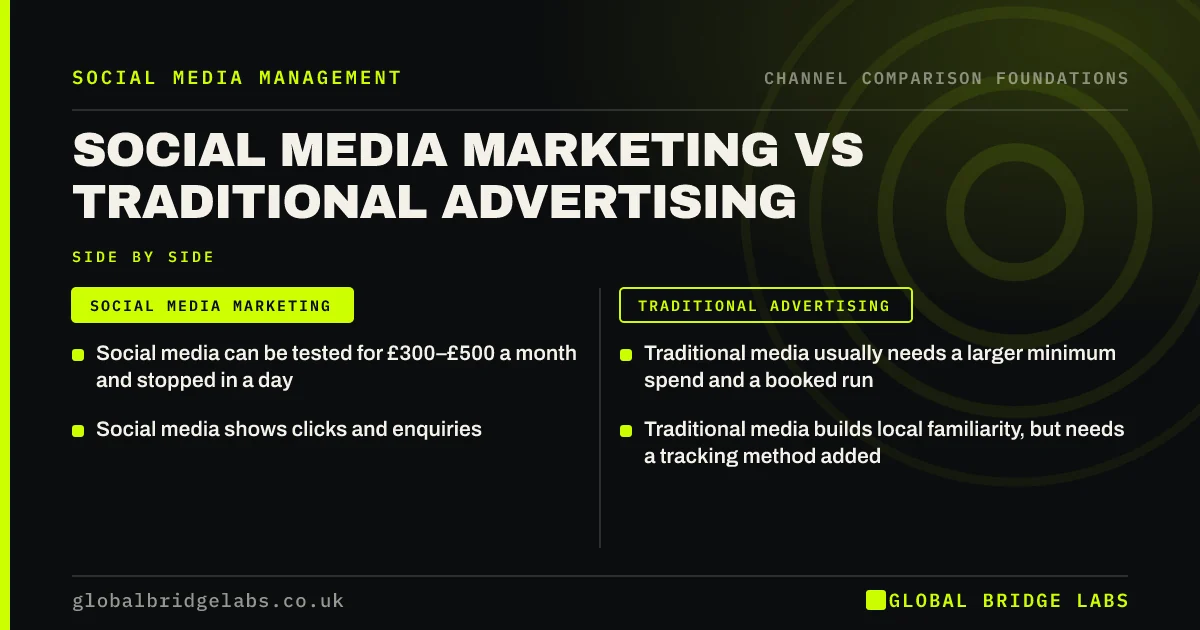
Digital channels usually have a lower entry cost. Paid social can be tested from about £300–£500 a month, and most UK SMEs using an agency pay £950–£2,500 a month for managed social media. Traditional media generally needs a larger booked spend plus production. Staff time applies to both and is often the largest cost of all.
- How much does advertising cost a UK small business?
- Is social media marketing free? The real cost of 'free'
Want a costed view of both sides for your budget? Message us on WhatsApp and we will discuss your requirements.
Chat on WhatsApp →Is digital always the better choice?
No. Digital is better for testing, targeting and tracking. It is not automatically better at being noticed or remembered. Ofcom's Media Nations 2026 report found that just under nine in ten UK adults still listen to live radio each week. If your buyers are local and habitual, a traditional channel can still be the efficient one.
How do you decide the balance?
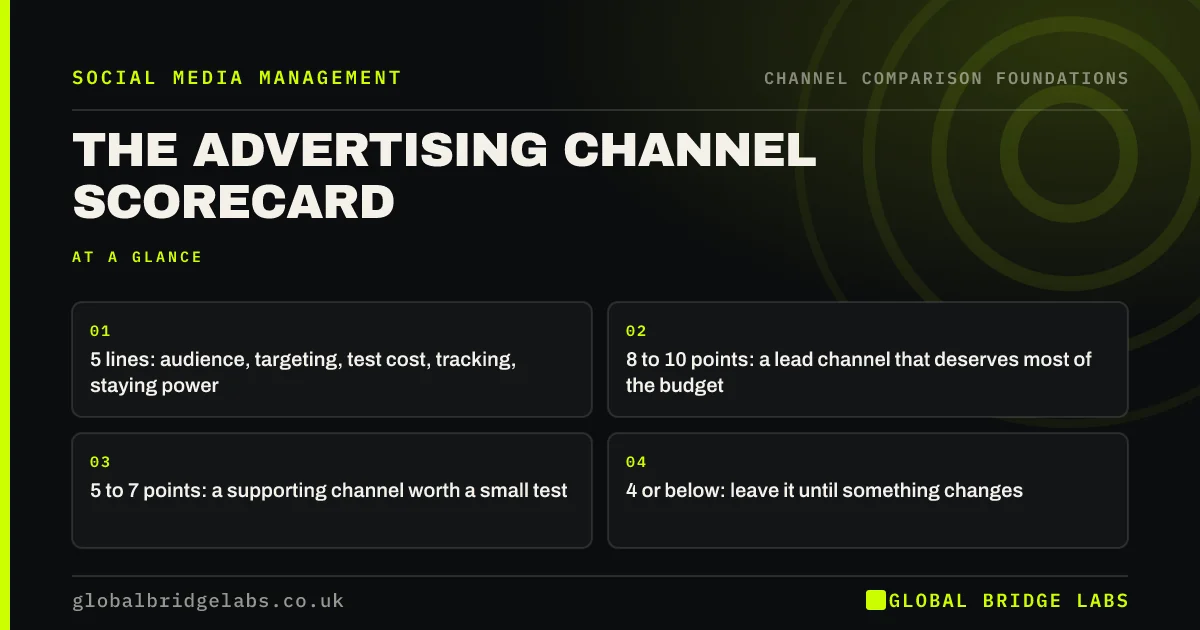
Decide the balance channel by channel, not side by side. Score each option on the GBL Channel Fit Scorecard: audience, targeting, test cost, tracking and staying power. Put most of the budget behind the top scorer and test one other. The labels traditional and digital matter far less than whether your buyers are there.
What does this look like in practice?
A pattern we see with UK professional services firms: the budget is split by habit, with a trade directory and an annual dinner on one side and a neglected LinkedIn page on the other. Once each is scored against where new clients said they first heard of the firm, the split usually changes without any argument about old versus new.
Checklist: mapping your channels
- List every channel you use under traditional or digital.
- Mark each as awareness or response.
- Note the yearly cost, including time.
- Note how you would know it worked.
- Score each one out of 10.
- Choose one lead and one supporting channel.
Next step
Draw two columns, traditional and digital, and place every marketing cost in one of them. Then circle the ones you can connect to a real enquiry.
Message us on WhatsApp with your two columns and we will suggest a first test, or book a 30-minute consultation.
Chat on WhatsApp →Sources and further reading
Frequently asked questions
Is social media traditional or digital marketing?
Social media is digital marketing. It relies on internet platforms, can be targeted by location and interest, and reports results in close to real time. It overlaps with traditional advertising in purpose, because both aim to make people aware of a business before they need it.
Which is more effective, traditional or digital marketing?
It depends on the audience and the goal. Digital is usually more efficient for small budgets because it can be targeted and measured. Traditional can be more effective for fast local awareness or older audiences. The most reliable approach is to test both on a small scale and compare cost per enquiry.
Is digital marketing cheaper than traditional marketing?
It is cheaper to begin. You can test paid social for a few hundred pounds a month, while print, radio and outdoor usually need a larger booked spend. Over a year the costs can be similar once content, tools and staff time are counted.
Can a small business rely on digital marketing alone?
Many do. A firm with a clear website, a Google Business Profile, steady social media and an email list can grow without any traditional advertising. Local and household services often still benefit from one physical channel, such as vehicle signs or leaflets.
Written by

Global Bridge Labs (GBL) is a UK–Sri Lanka partner for social media, websites and BPO. Everything here comes from client delivery, not theory.