On this page
- 01Key takeaways
- 02What is radio advertising?
- 03How do the audiences compare?
- 04How do the costs compare?
- 05What rules apply to radio adverts?
- 06Which is easier to measure?
- 07When is radio the better choice?
- 08When is social media the better choice?
- 09Can they work together?
- 10What does this look like in practice?
- 11Checklist before booking radio
- 12Next step
- 13Sources and further reading
- 14Frequently asked questions
Key takeaways
Comparing social media vs radio advertising, social media is the safer first choice for a small budget, and radio is a strong second for firms that serve a whole town or county. Radio builds familiarity through repetition. Social media finds specific buyers and shows who responded.
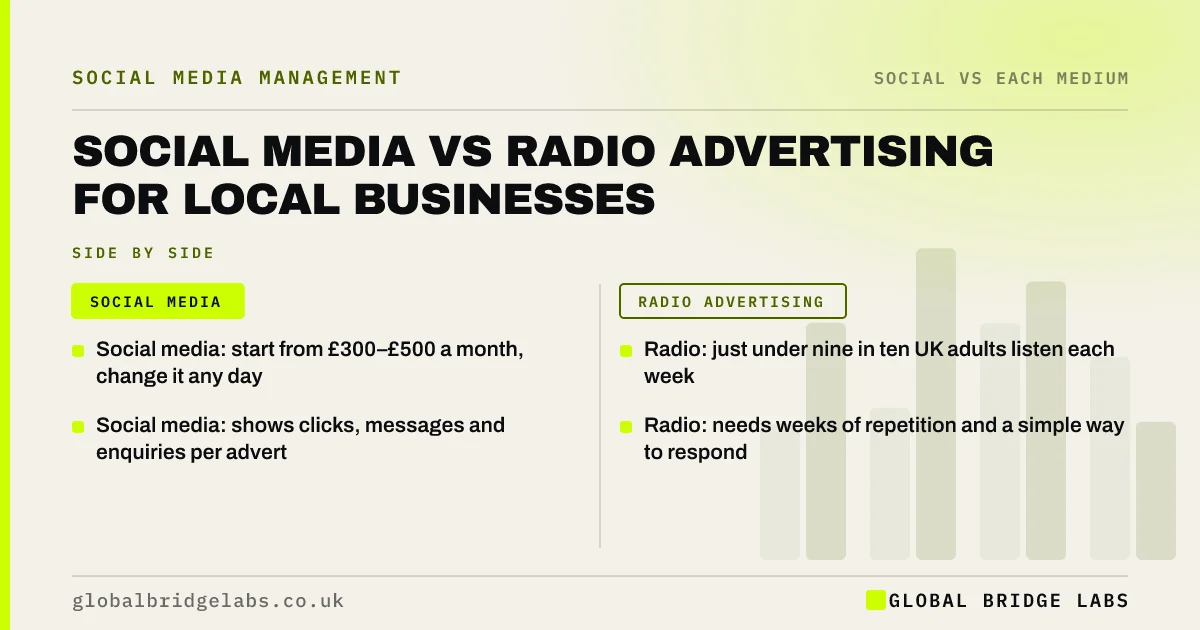
- Social media: start from £300–£500 a month, change it any day.
- Radio: just under nine in ten UK adults listen each week.
- Social media: shows clicks, messages and enquiries per advert.
- Radio: needs weeks of repetition and a simple way to respond.
Been quoted for a radio campaign? Message us on WhatsApp and we will sense-check it.
Chat on WhatsApp →What is radio advertising?
Radio advertising is paid airtime on a commercial station, usually sold as 20 or 30 second spots played many times over several weeks. A small business can also sponsor a feature such as the weather or travel news. Listening is measured by RAJAR, the industry body for radio audience research.
How do the audiences compare?
Radio reaches a broad, habitual audience in a region. Ofcom's Media Nations 2026 report found that just under nine in ten adults listen to live radio each week, the highest reach of any medium. Social media reaches a similar share of adults but lets you choose which of them see your advert, by location, age and interest.
How do the costs compare?
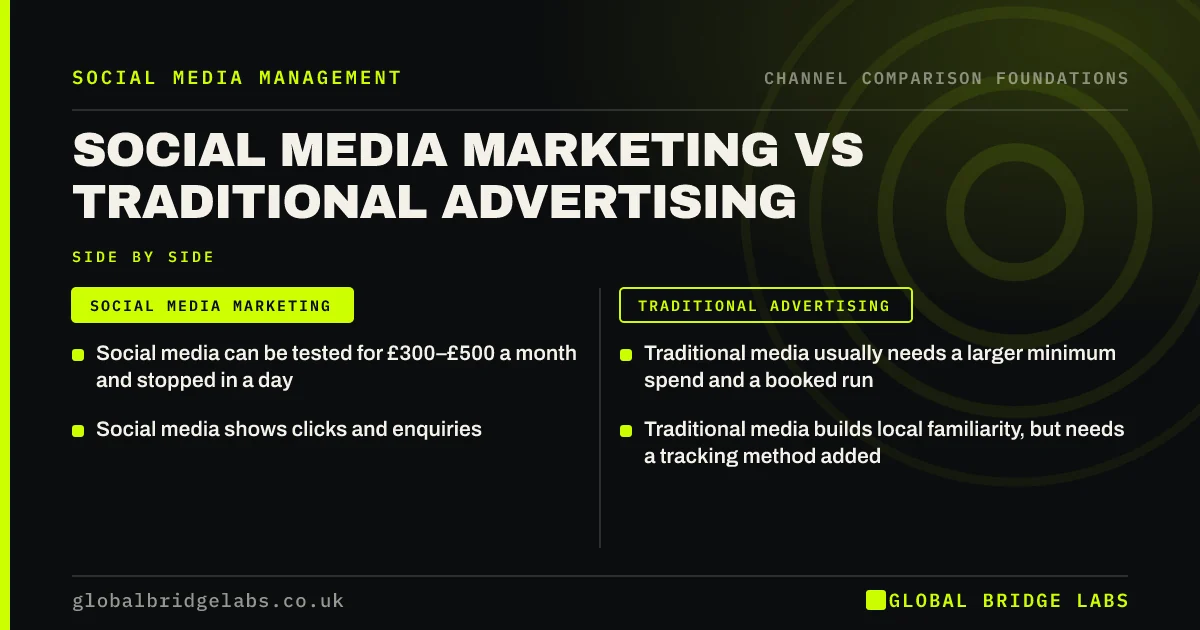
Radio costs more to start. As an indicative range, a week of airtime on a local station costs £500 to £2,500, with £300 to £1,000 to produce the advert, and a campaign usually needs three weeks or more. Paid social can be tested from £300–£500 a month. Radio therefore suits firms that can commit a few thousand pounds to one push.
- How much does advertising cost a UK small business?
- The minimum budget to test an advertising channel properly
Want a radio quote compared with a social media plan? Message us on WhatsApp and we will discuss your requirements.
Chat on WhatsApp →What rules apply to radio adverts?
Radio adverts must follow the BCAP Code, enforced by the Advertising Standards Authority. Scripts are checked before broadcast, by the station or, for certain categories such as health and finance claims, centrally through Radiocentre's clearance service. Allow time for this, and expect to provide evidence for any factual claim.
Which is easier to measure?
Social media is easier to measure. Radio listeners cannot click, so the advert must give them something easy to remember: a short web address, a phrase to search or a campaign name to mention. Watch for a rise in people searching your business name during the campaign, which is often the clearest sign.
When is radio the better choice?
Radio is the better choice when your market is everyone in a broadcast area and you want to be the name people think of first. It works for retailers, motor dealers, home improvement firms and events that can use reach across a county.
- You serve the station's whole area.
- You can fund at least three weeks.
- Your name and message are easy to say and recall.
- You have steady capacity to handle more calls.
When is social media the better choice?
Social media is the better choice when you serve part of the station's area, when the budget is under £1,000 a month, or when your work is visual. A one-van business gains little from being heard forty miles away. It gains a lot from being seen in six postcodes.
Can they work together?
Yes. Run the same line and offer on both during the campaign weeks. Radio creates the familiarity, and social adverts shown in the same area give people a place to act. Use the audio as a short video with captions on social media so the production cost is used twice.
What does this look like in practice?
A pattern we see with radio first-timers: one week is booked as a trial, the phone does not ring and radio is written off. A week is too short to judge a medium that works by repetition. The firms that judge it fairly book long enough to be heard many times and watch name searches as well as calls.
Checklist before booking radio
- Compare the station's area with the area you serve.
- Ask for RAJAR reach and the number of plays.
- Budget for production and three weeks or more.
- Give one simple response route.
- Record name searches before, during and after.
Next step
Draw the station's coverage on a map beside your customer addresses. If less than half the area is yours, test social media in your postcodes first.
Message us on WhatsApp for help comparing the two, or book a 30-minute consultation.
Chat on WhatsApp →Sources and further reading
Frequently asked questions
Is radio advertising worth it for a small business?
It can be if you serve most of the station's area, can afford several weeks of repetition and have a message that is easy to remember. For a firm serving a few postcodes, much of the audience is outside the market, and targeted social media is usually better value.
How much does local radio advertising cost in the UK?
Prices vary by station and time of day. As an indicative range, expect £500 to £2,500 a week for airtime on a local station plus £300 to £1,000 for production. Ask for the number of plays and the audience reached, and compare quotes from more than one station.
How long should a radio campaign run?
Plan for at least three weeks, because radio works through repeated hearing. A single week rarely gives listeners enough exposure to remember a new name. Longer, lighter campaigns often suit a small business better than one heavy week.
How do you measure a radio advert?
Give listeners one easy route, such as a short web address or a phrase to search, and ask every new enquirer how they heard of you. Compare searches for your business name and direct website visits before, during and after the campaign.
Written by

Global Bridge Labs (GBL) is a UK–Sri Lanka partner for social media, websites and BPO. Everything here comes from client delivery, not theory.