
On this page
Key takeaways
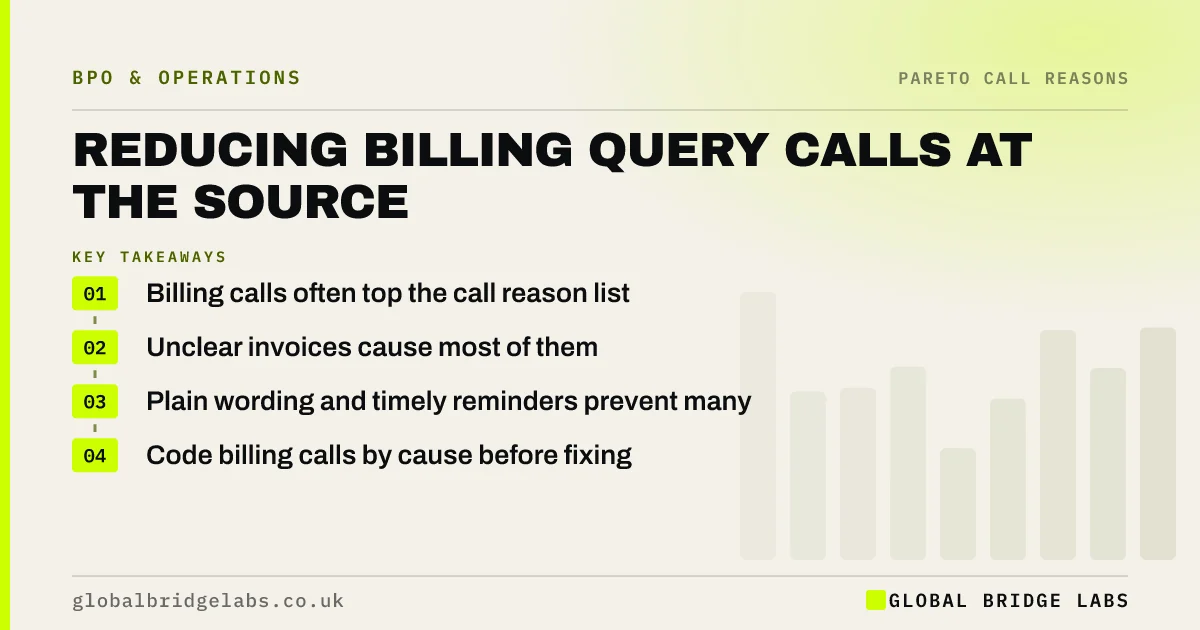
Billing queries are often among the top call reasons, and most of them come from invoices or statements customers cannot understand. Clearer invoices, plain explanations of charges, payment reminders before due dates and an online account view prevent many of these calls. Code them by cause, fix the biggest cause first and track the result.
- Billing calls often top the call reason list.
- Unclear invoices cause most of them.
- Plain wording and timely reminders prevent many.
- Code billing calls by cause before fixing.
Want to cut billing calls? Message us on WhatsApp.
Chat on WhatsApp →Why do billing calls happen?
The usual causes are a charge the customer does not recognise, a bill higher than expected, a payment that seems missing, or a question about how to pay. Each comes from something on or around the invoice that was unclear or unexpected.
How do you find the main causes?
Split your billing reason code into a few sub-reasons for a month: unrecognised charge, higher than expected, payment not showing, how to pay. The biggest sub-reason tells you what to fix. Read a sample of call notes to see the exact wording customers use.
What fixes work best?
The fixes below are mostly one-off changes that keep paying back every billing cycle.
- Explain each charge in plain words on the invoice.
- Show what changed since the last bill.
- Send a reminder before the due date.
- Confirm payments when they arrive.
- Offer an online view of invoices and payments.
Want your invoice wording reviewed? Send a sample to us on WhatsApp.
Chat on WhatsApp →When should a billing call reach a person?
Disputes, hardship and errors should reach a trained person quickly, especially where customers may be in financial difficulty. Self-service is for simple questions, not for removing access to help. Make sure the invoice says how to reach someone.
What does this look like in practice?
A pattern we see: billing calls spike the week after invoices go out, most about a line the customer does not recognise. Renaming that line in plain words and adding a one-sentence explanation cuts those calls noticeably the next month.
Billing call checklist
- Split billing calls into sub-reasons.
- Read notes for customers' exact words.
- Rewrite unclear invoice lines.
- Add reminders and payment confirmations.
- Route disputes and hardship to a person.
Next step
Code a month of billing calls by sub-reason, rewrite the invoice line behind the biggest one, and compare call counts after the next billing cycle.
Message us on WhatsApp to reduce billing calls, or book a 30-minute consultation.
Chat on WhatsApp →Sources and further reading
- Consumer Rights Act 2015 · legislation.gov.uk
- Writing to GOV.UK standards: writing guidelines · GOV.UK
Frequently asked questions
Why do billing calls spike after invoices go out?
Because customers read the invoice and call about anything unclear or unexpected. The spike is a useful signal: the larger it is, the more the invoice is causing calls. Track the spike each cycle after making changes, so you can see which wording changes made a difference.
Should billing questions go to a separate line?
A separate option can help if billing calls need different skills or system access. Keep the menu short, though, because extra options add effort for every caller. Often it is better to cut billing calls at source and route the rest to a trained person.
Can a payment reminder really reduce calls?
Yes. Reminders before the due date reduce late payments and the calls that follow them, and payment confirmations reduce calls from customers checking whether a payment arrived. Keep reminders short, with the amount, date and how to pay, and a way to reach someone if needed.
Written by

Global Bridge Labs (GBL) is a UK–Sri Lanka partner for social media, websites and BPO. Everything here comes from client delivery, not theory.


