On this page
Key takeaways
Author bios on a business blog show who wrote the advice and why they are qualified, which raises credibility with readers and supports Google's E-E-A-T guidance. Use a real name, photo, role and one or two lines of relevant experience. Avoid 'Admin' or the company name as the author; anonymous advice is harder to trust.
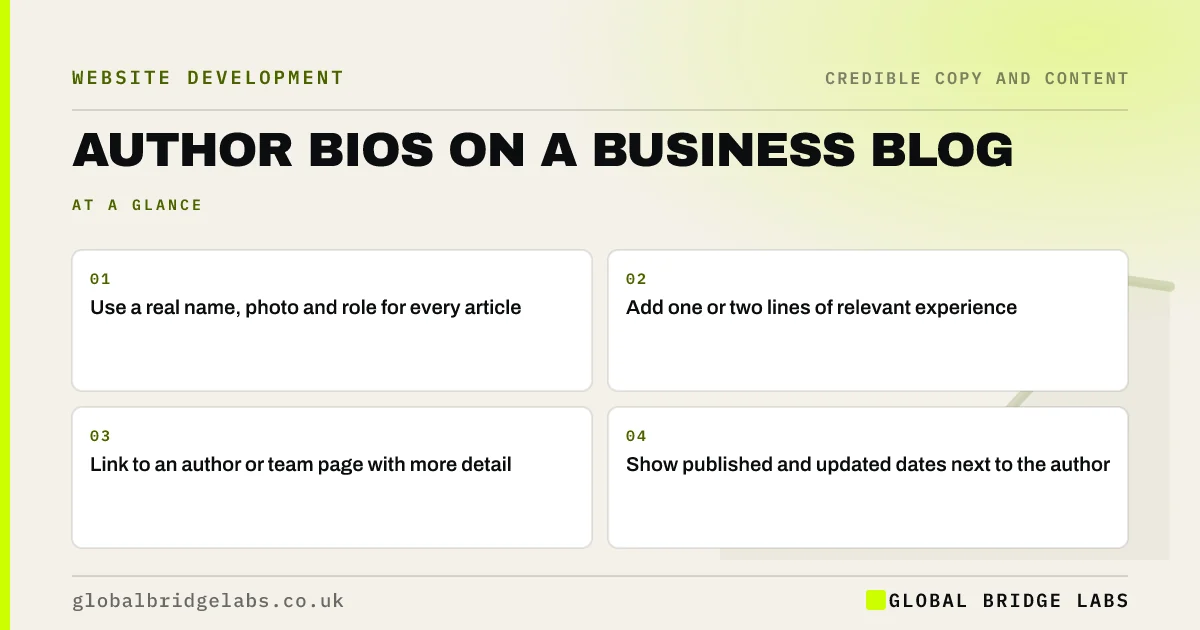
- Use a real name, photo and role for every article.
- Add one or two lines of relevant experience.
- Link to an author or team page with more detail.
- Show published and updated dates next to the author.
Want author details set up across your blog? Message us on WhatsApp.
Chat on WhatsApp →Why do author bios build credibility?
Author bios build credibility because they make advice accountable. A named person with relevant experience is more believable than 'Admin'. Google's guidance on creating helpful content asks site owners to consider 'Who created the content?' and to make authorship clear where readers would expect it. Bylines and dates are also used by search features.
What should an author bio include?
Keep the bio short on the article and fuller on an author or team page.
- Name and current role at the business.
- A real, professional photo.
- Relevant experience in one or two lines.
- Qualifications or memberships where relevant.
- A link to the team page or LinkedIn profile.
Who should be named as the author?
Name the person whose expertise the article reflects. If a writer or agency drafts content based on an expert's input, name the expert as author or reviewer, and make sure they have checked it. Do not invent authors or use stock photos for author profiles; that is misleading and easy to detect.
- AI-written website copy: does it cost you trust?
- Website claims and the CAP Code: what UK firms can say
Want a byline and review process for your articles? Message us on WhatsApp and we will discuss your requirements.
Chat on WhatsApp →When do author bios matter less?
They matter less on service pages, which speak for the business, and on short news updates. They matter most on advice: anything about money, health, law, safety or significant purchases, where readers need to judge expertise before acting.
What does this look like in practice?
A pattern we see: a firm's detailed guides are all published by 'admin', with no dates. The expertise is real but invisible. Assigning each guide to the director who wrote it, with a photo, role and updated date, makes the same content noticeably more credible.
Author bio checklist
- Replace 'Admin' with real authors.
- Add a photo, role and relevant experience.
- Show published and updated dates.
- Link to an author or team page.
- Have experts review content written by others.
Next step
Open your three most-read articles. If the author is 'Admin' or missing, assign a real person this week.
Message us on WhatsApp for a content credibility review, or book a 30-minute consultation.
Chat on WhatsApp →Sources and further reading
- Creating helpful, reliable, people-first content · Google Search Central
- Add a byline date to Google Search results · Google Search Central
- Our latest update to the quality rater guidelines: E-A-T gets an extra E for Experience · Google Search Central Blog
Frequently asked questions
Do author bios help SEO?
They are not a direct ranking factor, but Google's guidance asks content creators to make clear who wrote content and why they are qualified, and its quality raters look for this. Author information helps readers and supports the trust signals Google describes.
What should an author bio say?
Name, role, a real photo and one or two lines of relevant experience or qualifications, with a link to more detail. Keep it factual and specific to the topic the person writes about.
Can I publish articles under the company name?
You can, but named authors are more credible for advice content. If several people contribute, name the lead expert as author or reviewer. Company-name bylines suit news and announcements better than guidance.
Written by

Global Bridge Labs (GBL) is a UK–Sri Lanka partner for social media, websites and BPO. Everything here comes from client delivery, not theory.