Short, practical writing on visibility, conversion and capacity, from the team doing the work for 120+ UK startups, SMEs and enterprises.
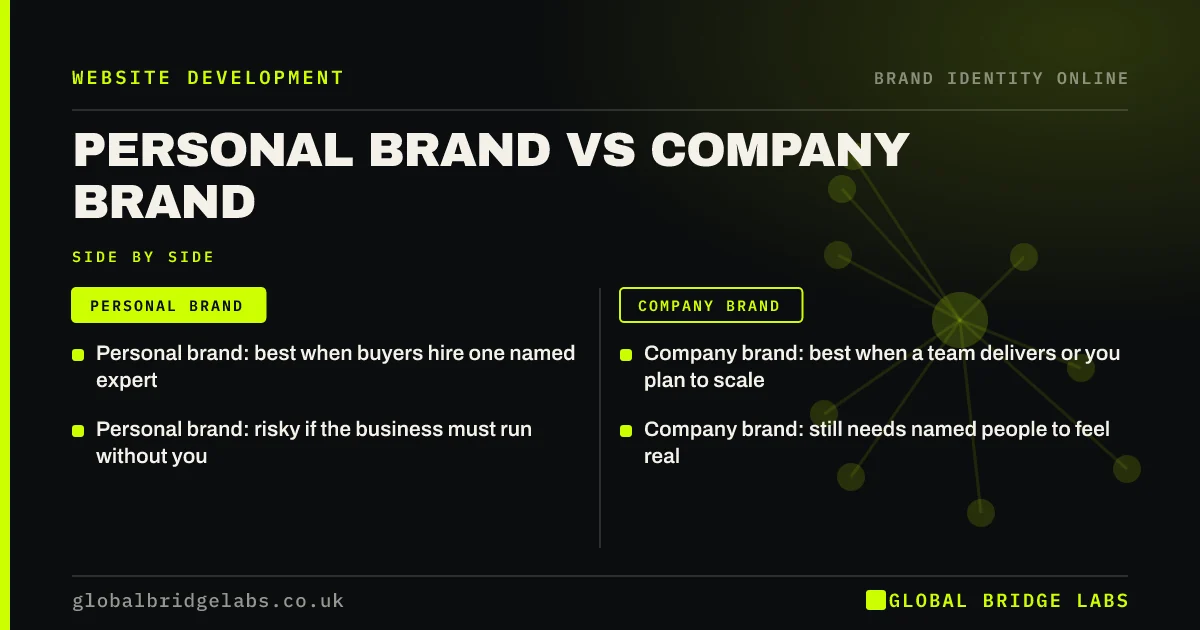
Personal brand vs company brand on your website: when to lead with the founder, when with the business, and how to do both without confusing buyers.
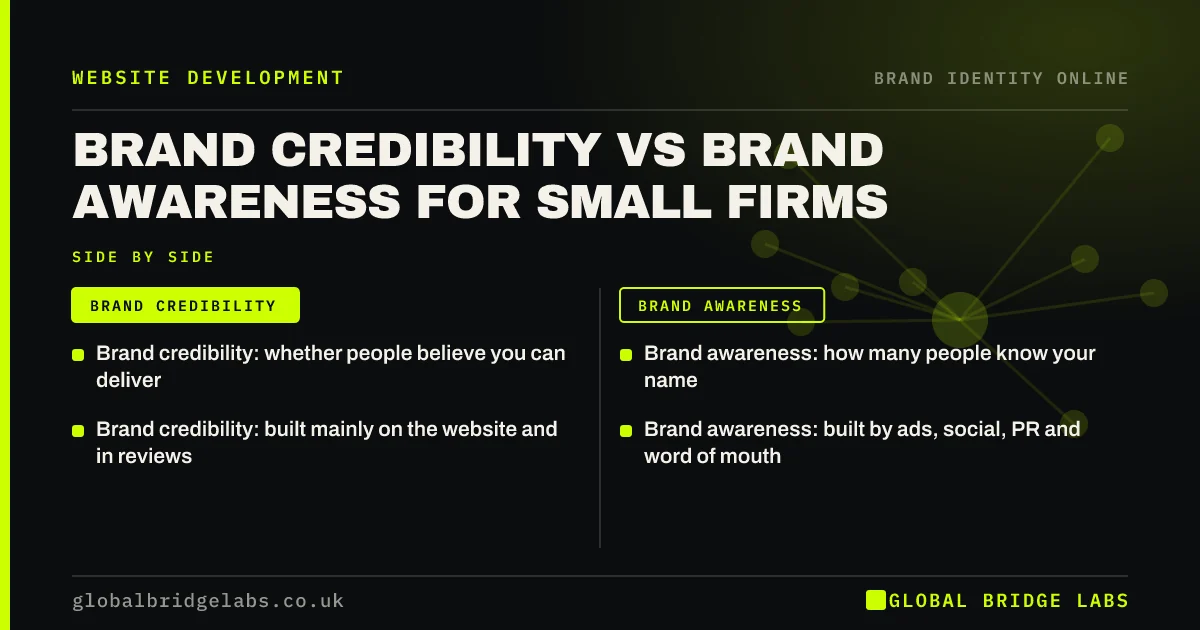
Brand credibility vs brand awareness: why small firms should usually build belief before reach, how the two interact and what your website does for each.
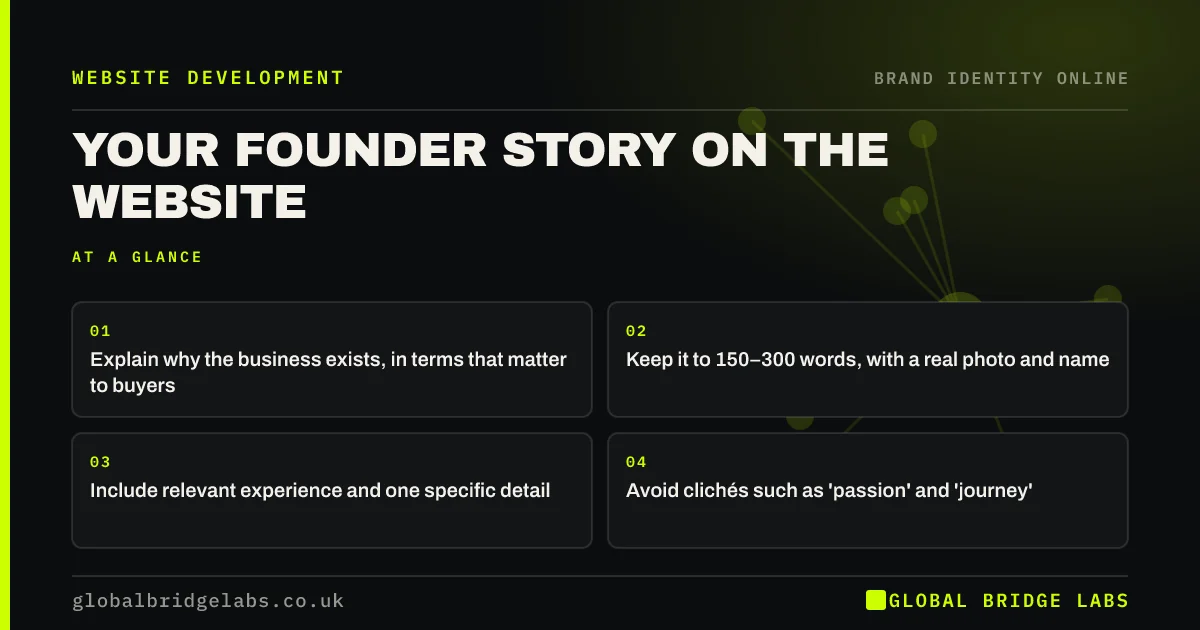
Your founder story on the website: when it builds trust, what to include, where to put it and how to keep it about the customer rather than about you.
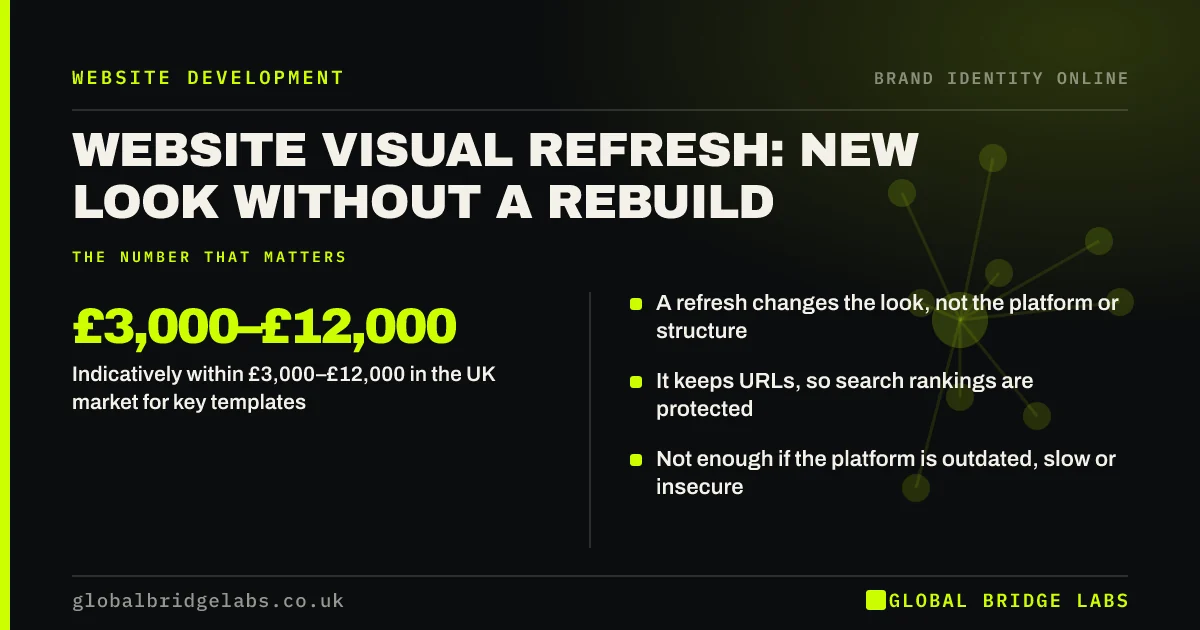
A website visual refresh updates type, colour, imagery and layout without a rebuild. What it fixes, what it costs and when it is not enough.
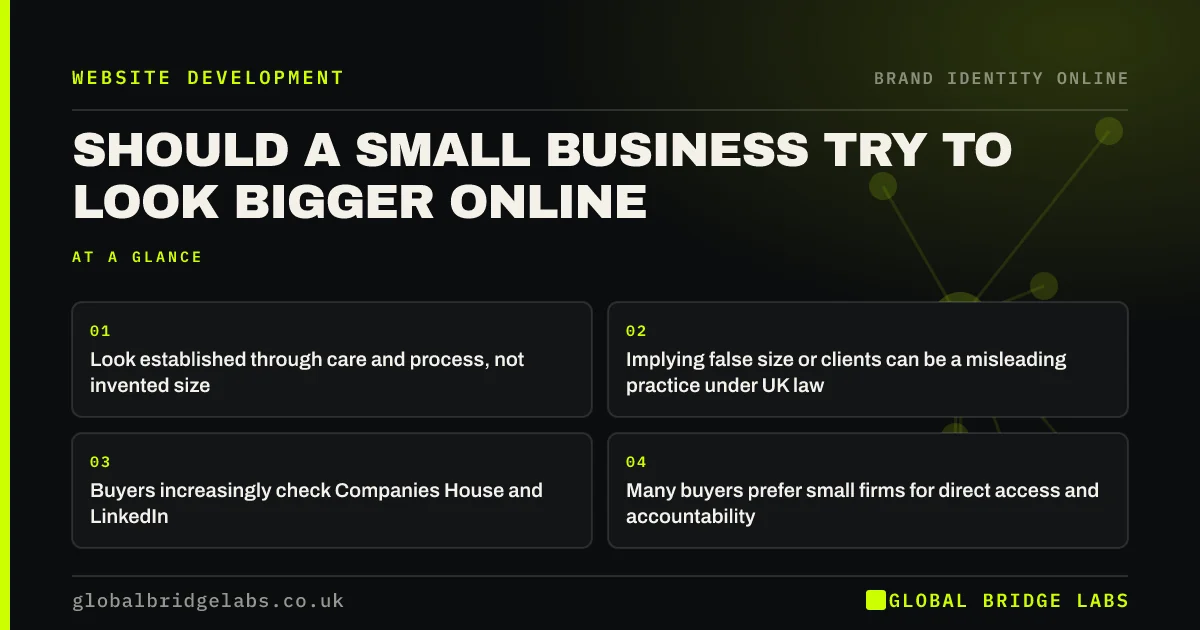
Should a small business try to look bigger online? Where looking established helps, where implied size becomes misleading, and the honest route.
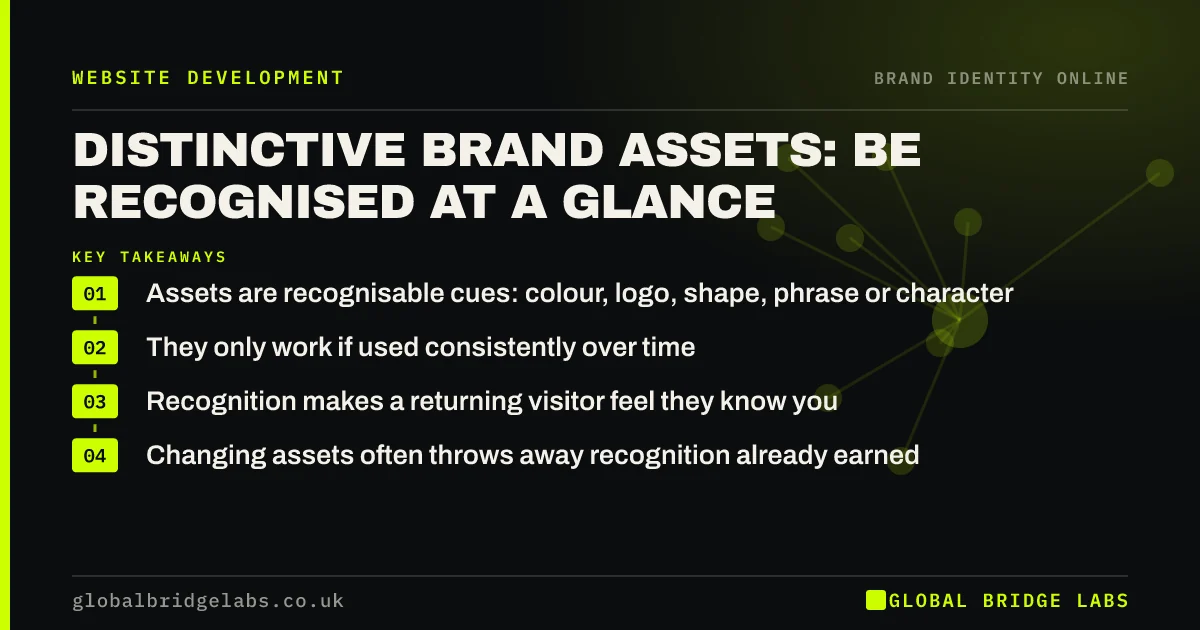
Distinctive brand assets are the colours, marks and phrases people link to you without reading your name. Why they matter and how to build them.
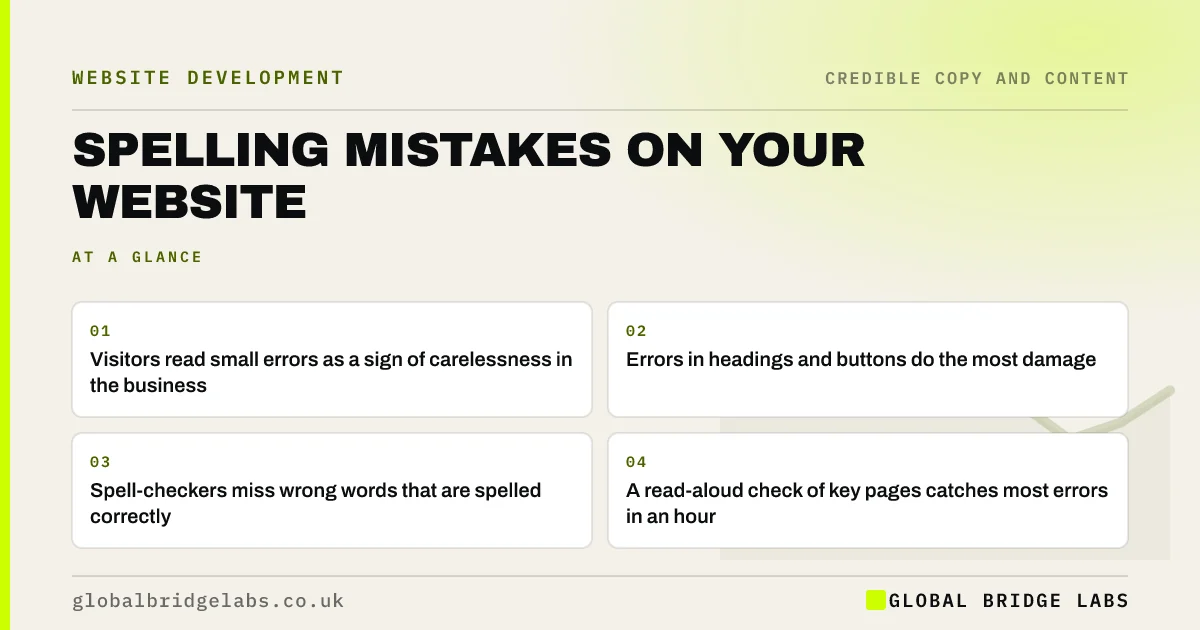
Spelling mistakes on a business website cost credibility out of all proportion to their size. Why visitors notice, where errors hide and how to catch them.
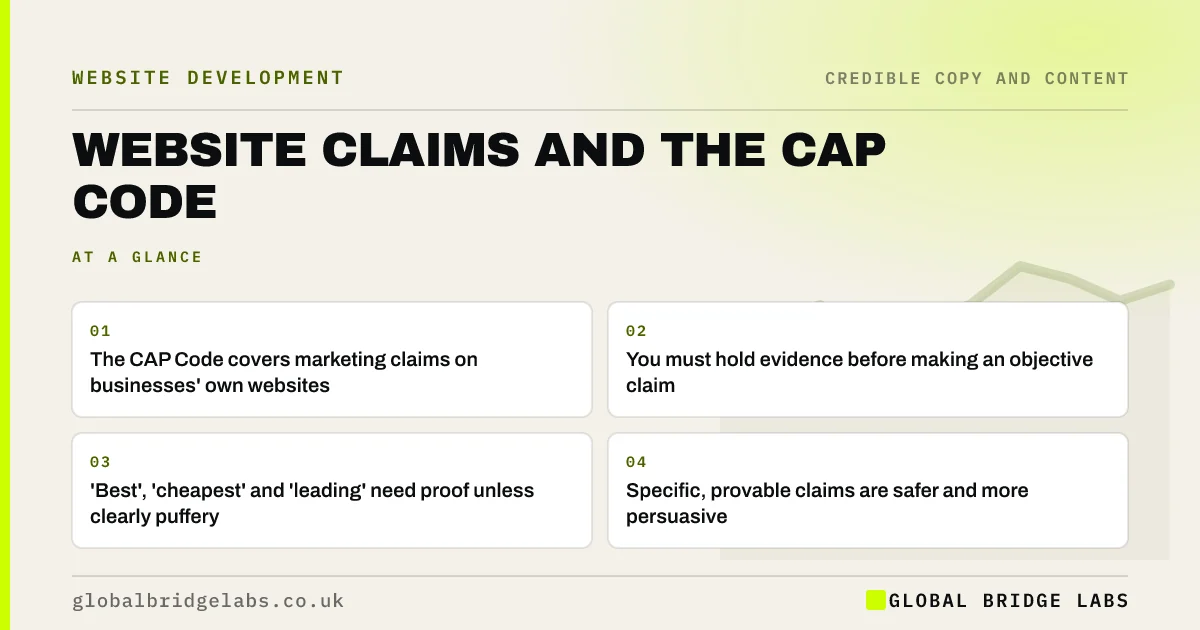
The CAP Code applies to marketing claims on your own website. What UK firms can say, the evidence the ASA expects and how to word claims credibly.
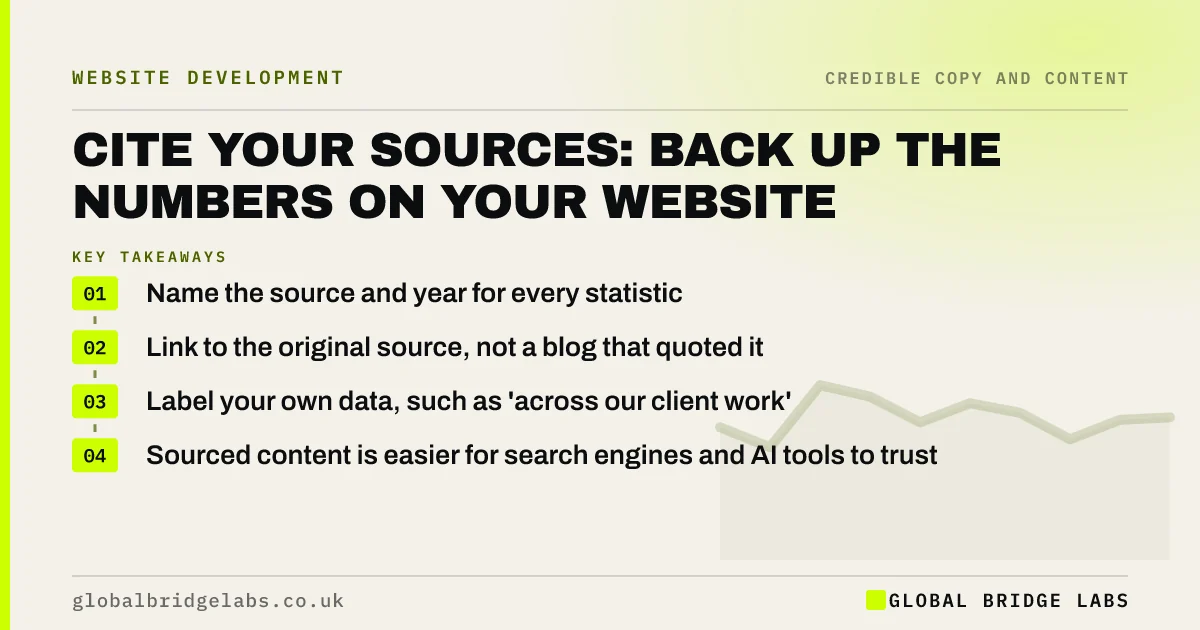
Citing sources on a business website makes your claims checkable and more credible to buyers, search engines and AI tools. What to cite and how.
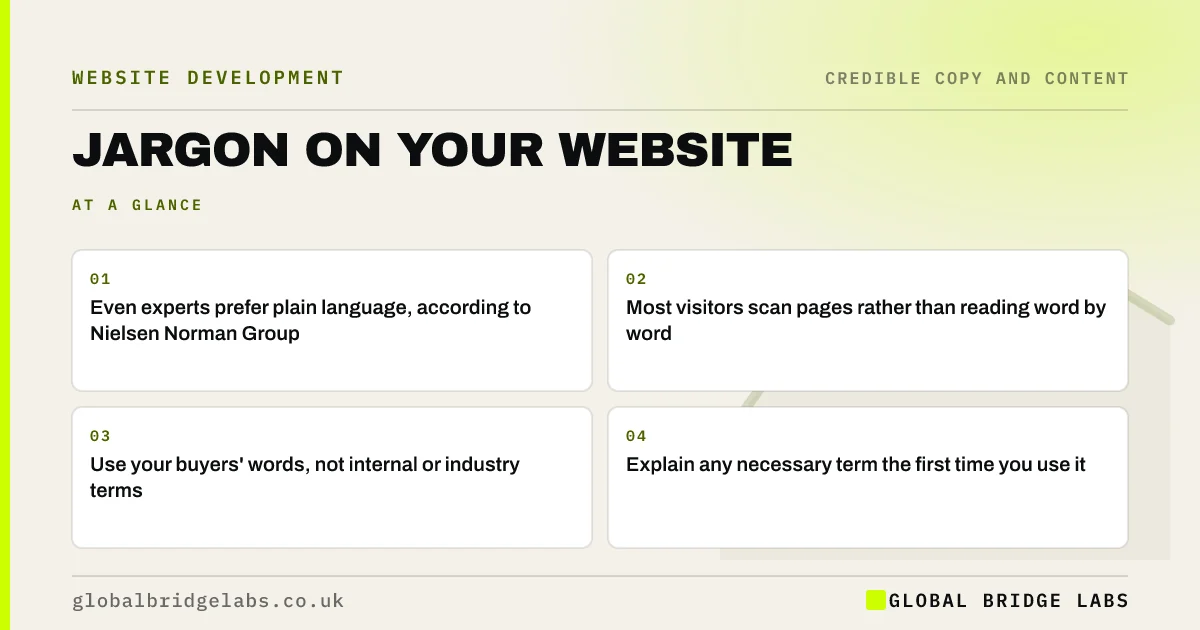
Jargon on a business website makes it harder to trust, even for expert buyers. What research says about plain language and how to rewrite jargon fast.
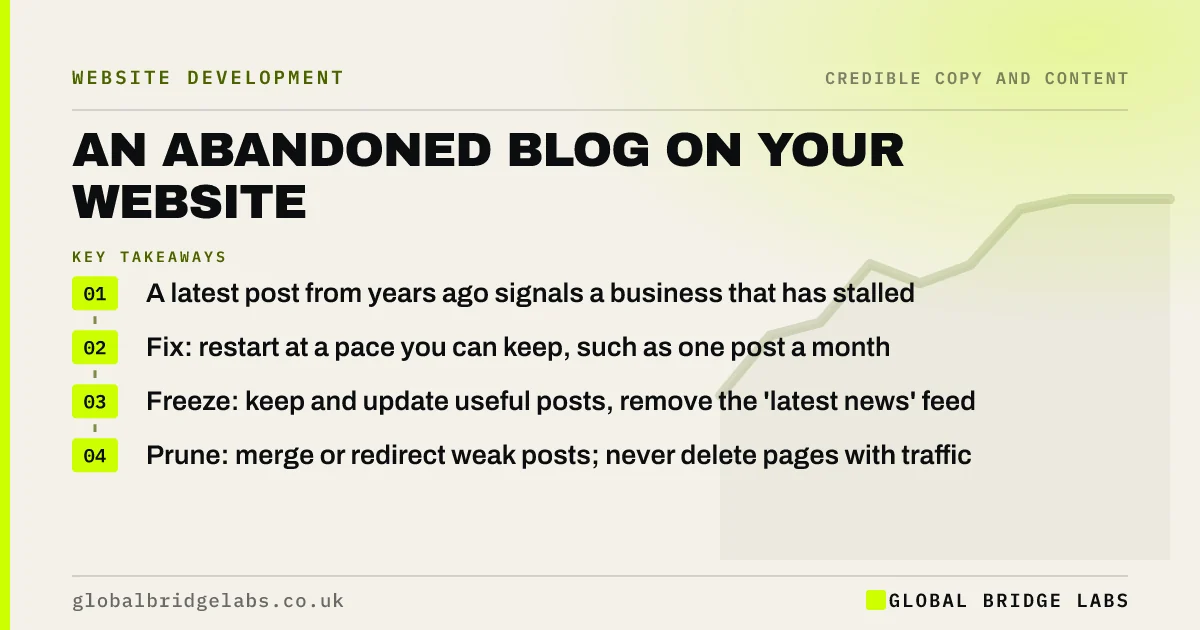
An abandoned blog makes a business look like it has stopped. How to decide whether to fix, freeze or delete it without losing search traffic.
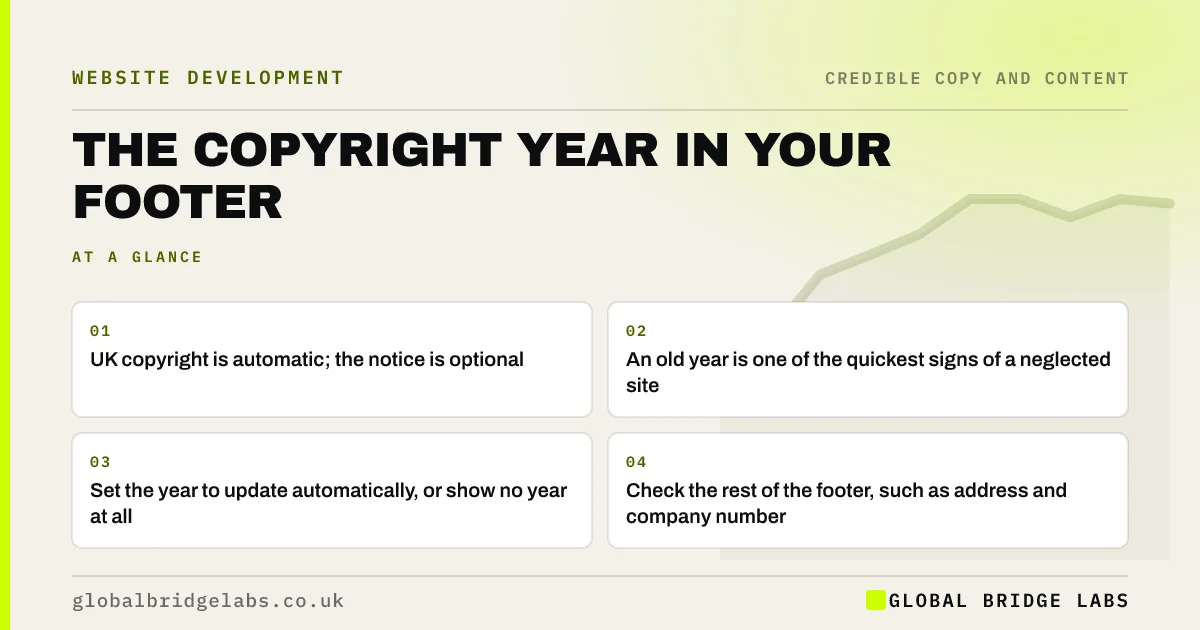
Does the copyright year in your website footer matter? Why an old year makes a site look abandoned, what the law says and how to keep it current.
30 minutes with our team and you'll know exactly which of the three problems to fix first.
