On this page
Key takeaways
Stock reconciliation compares what your system says you hold with what is physically there, investigates the differences and corrects the records. Cycle counting, counting a small set of products every day or week, keeps records accurate without a full stocktake. The counting is physical, but the matching, investigating and correcting are repetitive desk work.
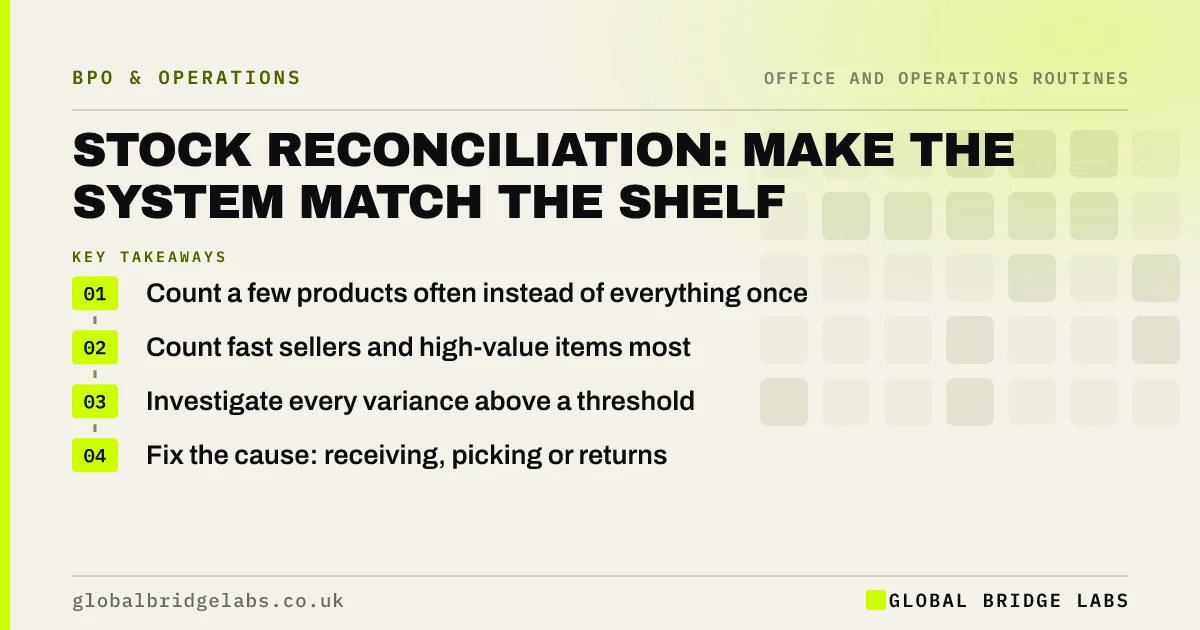
- Count a few products often instead of everything once.
- Count fast sellers and high-value items most.
- Investigate every variance above a threshold.
- Fix the cause: receiving, picking or returns.
System stock never matching the shelf? Message us on WhatsApp with your SKU count.
Chat on WhatsApp →What is stock reconciliation?
Stock reconciliation is the check that recorded stock levels agree with physical stock, followed by investigation and correction of any differences. Without it, online shops oversell, reorders are wrong and the accounts value stock incorrectly. Cycle counting spreads the work through the year.
How does a cycle counting routine work?
Split products into groups by value and sales speed. Count the fastest sellers and highest-value items most often, such as weekly, and slow, low-value items quarterly. Compare counts with the system, investigate differences above an agreed threshold, correct records and log the cause.
- Group A, fast or high value: count weekly.
- Group B, medium: count monthly.
- Group C, slow and low value: count quarterly.
- Variances over threshold investigated within 48 hours.
What do stock errors cost?
In an illustrative example, an online seller with 2% of orders affected by stock errors on 3,000 orders a month has 60 problem orders: oversells to refund, delays, and customer contacts. These are example figures. Cycle counting and variance investigation usually cost far less than the contacts and refunds they prevent.
- Refund processing: fast, fair and correctly recorded
- 'Where is my order?' queries: handle them at scale
Send us your order volumes and how often stock errors happen on WhatsApp and we will estimate the cost with you.
Chat on WhatsApp →Which parts can a remote team do?
The physical count must happen on site, but a remote team can schedule counts, compare results with the system, investigate variances by checking receipts, picks and returns, propose corrections and report causes. Approving write-offs should stay with a named manager.
What does this look like in practice?
A pattern we see: most variances trace to one step, often goods received but not booked in. Fixing that step reduces variances more than counting more often.
Stock reconciliation checklist
Run the routine with these points.
- Products grouped by value and speed.
- Count schedule per group.
- Variance threshold agreed.
- Causes logged for every correction.
- Write-offs approved by a manager.
Next step
Send us your SKU count and how stock is checked today. We will suggest a cycle count routine and say plainly what a remote team could handle.
Message us on WhatsApp about stock reconciliation, or book a 30-minute consultation.
Chat on WhatsApp →Sources and further reading
- Running a limited company: company and accounting records · GOV.UK
- Consumer Rights Act 2015 · legislation.gov.uk
Frequently asked questions
What is cycle counting?
Cycle counting is counting a small group of products regularly, such as daily or weekly, rather than counting everything in one stocktake. Fast-selling and high-value items are counted most often. It keeps stock records accurate through the year with less disruption.
How do you investigate a stock variance?
Recount to confirm, then check recent goods received, picks, returns, transfers and adjustments for the product. Most variances come from a receipt not booked in, a mis-pick or a return not recorded. Correct the record, log the cause and fix the step that caused it.
Can stock reconciliation be done remotely?
The count must be done on site, but scheduling, comparing counts with the system, investigating variances from transaction records and reporting causes can be done by a remote team. Write-offs and stock adjustments above a threshold should be approved by a manager.
Written by

Global Bridge Labs (GBL) is a UK–Sri Lanka partner for social media, websites and BPO. Everything here comes from client delivery, not theory.