On this page
Key takeaways
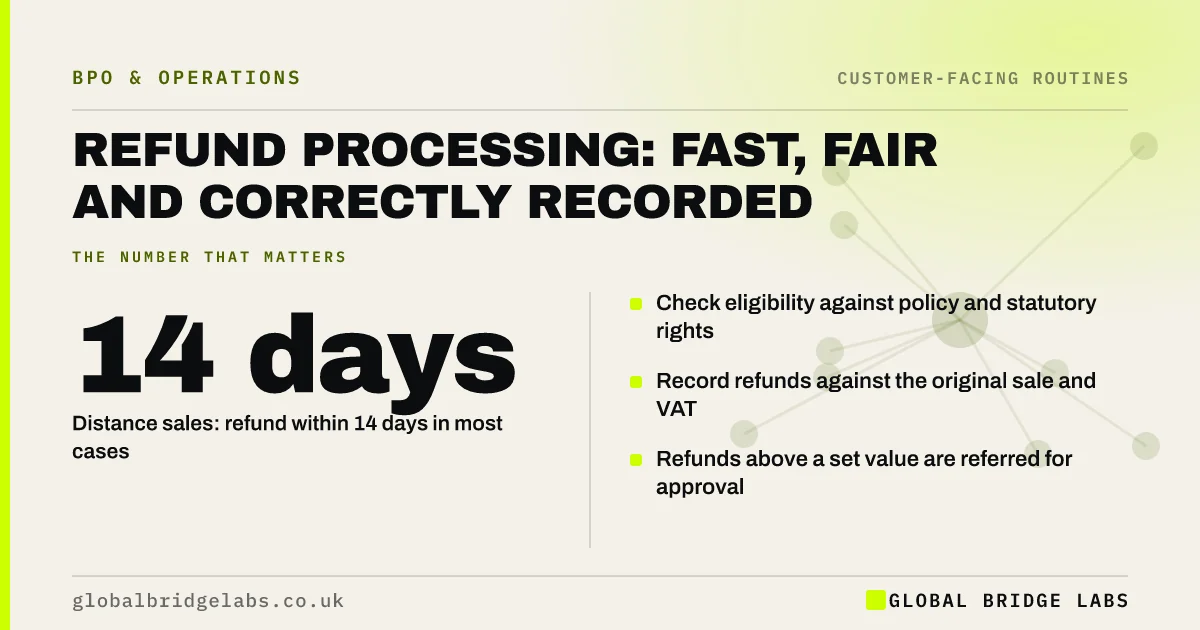
Refund processing is the routine of checking a refund request against your policy and the law, paying it within the required time, recording it correctly and telling the customer. For online sales, the Consumer Contracts Regulations generally require refunds within 14 days. Most requests fit clear rules, so a team can process them with only exceptions referred.
- Check eligibility against policy and statutory rights.
- Distance sales: refund within 14 days in most cases.
- Record refunds against the original sale and VAT.
- Refunds above a set value are referred for approval.
Refunds piling up or going out late? Message us on WhatsApp with your monthly volume.
Chat on WhatsApp →What does refund processing involve?
It involves receiving the request, checking the order and reason, confirming eligibility against your policy and the customer's statutory rights, checking returned goods where relevant, issuing the refund to the original payment method, recording it in the accounts and confirming to the customer. Each step is repeatable with a written method.
What timescales apply?
Under the Consumer Contracts Regulations 2013, customers buying at a distance can usually cancel within 14 days, and refunds are generally due within 14 days of receiving the goods back or evidence they were returned. Under the Consumer Rights Act 2015, faulty goods carry a short-term right to reject within 30 days. Check GOV.UK guidance for your case.
How do rules speed refunds up?
A decision table lets a team approve most refunds without waiting for a manager. In an illustrative example, refunds under £150 within policy are processed the same day, while higher values or repeat claims are referred. If 85% of 200 monthly refunds fall within the rule, only 30 need a manager. These are example figures.
- Decision tables: turn judgement calls into clear rules
- Marketplace payout reconciliation for online sellers
Want help drafting refund rules from your past cases? Send them on WhatsApp.
Chat on WhatsApp →When should refunds stay in-house?
Keep refund decisions in-house when they involve disputes, goodwill gestures, possible fraud or large values. Keep them in-house too if your refund policy is not written down; write it first. Payment details are sensitive, so give a provider only the access needed and never share card numbers outside your payment system.
What does this look like in practice?
A pattern we see: refunds wait days for the one person allowed to approve them, so customers chase and some raise chargebacks. Clear limits and a daily routine clear the queue and the chargebacks fall.
Refund routine checklist
Use these points to set up the routine.
- Written refund policy and approval limits.
- Requests logged with a reference.
- Eligibility checked against policy and law.
- Refunds paid to the original method.
- Each refund recorded against the sale.
- Referrals decided within one working day.
Next step
Send us your refund policy and monthly volume. We will suggest a rule-based routine and say plainly what a managed team could process.
Message us on WhatsApp about refund processing, or book a 30-minute consultation.
Chat on WhatsApp →Sources and further reading
- Consumer Contracts (Information, Cancellation and Additional Charges) Regulations 2013 · legislation.gov.uk
- Consumer Rights Act 2015 · legislation.gov.uk
- Accepting returns and giving refunds · GOV.UK
Frequently asked questions
How long do you have to refund a customer in the UK?
For most distance sales under the Consumer Contracts Regulations, a refund is due within 14 days of receiving the goods back or evidence they were returned, or within 14 days of cancellation if goods were not sent. Check GOV.UK guidance for your specific situation.
Can refund processing be outsourced?
Yes, within clear rules. A managed team can check eligibility, process refunds under an agreed value through your payment system, record them and update customers. Disputes, high values and suspected fraud should be referred to a named person in your business.
How should refunds be recorded in the accounts?
Record each refund against the original sale so revenue and VAT are adjusted correctly, and keep the supporting request and approval. Your accountant can confirm the right treatment for partial refunds, marketplace refunds and refunds in a different VAT period.
Written by

Global Bridge Labs (GBL) is a UK–Sri Lanka partner for social media, websites and BPO. Everything here comes from client delivery, not theory.