On this page
- 01Key takeaways
- 02What does backorder management involve?
- 03What should the weekly routine cover?
- 04What do unmanaged backorders cost?
- 05When should you stop taking backorders?
- 06What does this look like in practice?
- 07Backorder checklist
- 08Next step
- 09Sources and further reading
- 10Frequently asked questions
Key takeaways
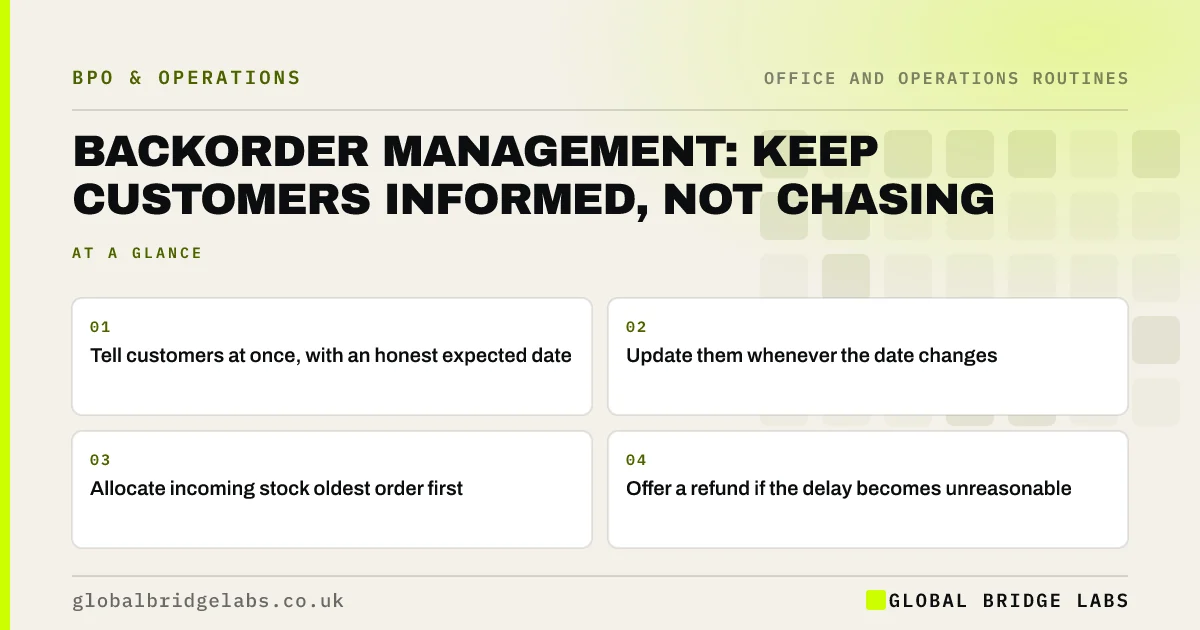
Backorder management tracks orders taken for items not in stock, keeps customers updated with honest dates, allocates stock fairly when it arrives and offers alternatives or refunds when dates slip. It is a repetitive routine of checking, updating and allocating. Done well, it keeps sales that would otherwise turn into cancellations and complaints.
- Tell customers at once, with an honest expected date.
- Update them whenever the date changes.
- Allocate incoming stock oldest order first.
- Offer a refund if the delay becomes unreasonable.
Backorders turning into complaints? Message us on WhatsApp with how many you carry.
Chat on WhatsApp →What does backorder management involve?
It involves keeping a live list of backordered lines, chasing suppliers for dates, updating customers, allocating stock on arrival and dispatching, and handling cancellations. Under the Consumer Rights Act 2015, goods should be delivered within 30 days unless another period is agreed, so long delays need the customer's agreement or a refund option.
What should the weekly routine cover?
Run the routine at least weekly, and daily when backorders are high. Each step is rule-based once the communication templates are written.
- Review backordered lines and supplier dates.
- Chase suppliers for confirmed dates.
- Update customers whose date has changed.
- Allocate arriving stock by order date.
- Offer refunds where dates exceed the limit.
What do unmanaged backorders cost?
In an illustrative example, a seller with 120 backorders a month and no updates sees a quarter cancel and many others contact customer service twice. With proactive updates, cancellations halve and contacts fall sharply. These are example figures. The routine costs a few hours a week.
Send us your backorder count on WhatsApp and we will estimate the routine with you.
Chat on WhatsApp →When should you stop taking backorders?
Stop taking backorders for an item when the supplier cannot give a reliable date, or when delays already exceed what you told customers. Show it as out of stock with a notify-me option instead. Selling what you cannot deliver costs more in refunds and reviews than it earns.
What does this look like in practice?
A pattern we see: stock arrives and is sold to new orders while older backorders wait. Allocating by order date before releasing stock to the shop keeps early customers loyal.
Backorder checklist
Run the routine with these points.
- Live list of backordered lines.
- Supplier dates chased weekly.
- Customers updated on every change.
- Stock allocated oldest first.
- Refund offered past the limit.
Next step
Send us how backorders are tracked today. We will suggest a routine, templates and rules, and say plainly what a team could run.
Message us on WhatsApp about backorders, or book a 30-minute consultation.
Chat on WhatsApp →Sources and further reading
- Consumer Rights Act 2015 · legislation.gov.uk
- Accepting returns and giving refunds · GOV.UK
Frequently asked questions
How do you manage backorders?
Keep a live list of backordered items, chase suppliers for confirmed dates, tell customers immediately with an honest expected date, update them when it changes, allocate incoming stock in order date sequence and offer a refund if the delay becomes unreasonable.
How long can a customer wait for a backorder?
Under the Consumer Rights Act 2015, goods should be delivered within 30 days unless a different period is agreed. If you cannot meet the agreed time, the customer may be entitled to cancel and get a refund. Check GOV.UK guidance and your terms.
Can backorder management be outsourced?
Yes. A managed team can track backorders, chase supplier dates, update customers using your templates, allocate stock by rule and process refunds within limits. Decisions about stopping sales of an item or switching suppliers should stay with you.
Written by

Global Bridge Labs (GBL) is a UK–Sri Lanka partner for social media, websites and BPO. Everything here comes from client delivery, not theory.