On this page
- 01Key takeaways
- 02How do you pick the primary platform?
- 03What does the secondary platform need?
- 04What does a split look like in pounds?
- 05When should you add another platform?
- 06What does this look like in practice?
- 07Platform split checklist
- 08Next step
- 09Sources and further reading
- 10Frequently asked questions
Key takeaways
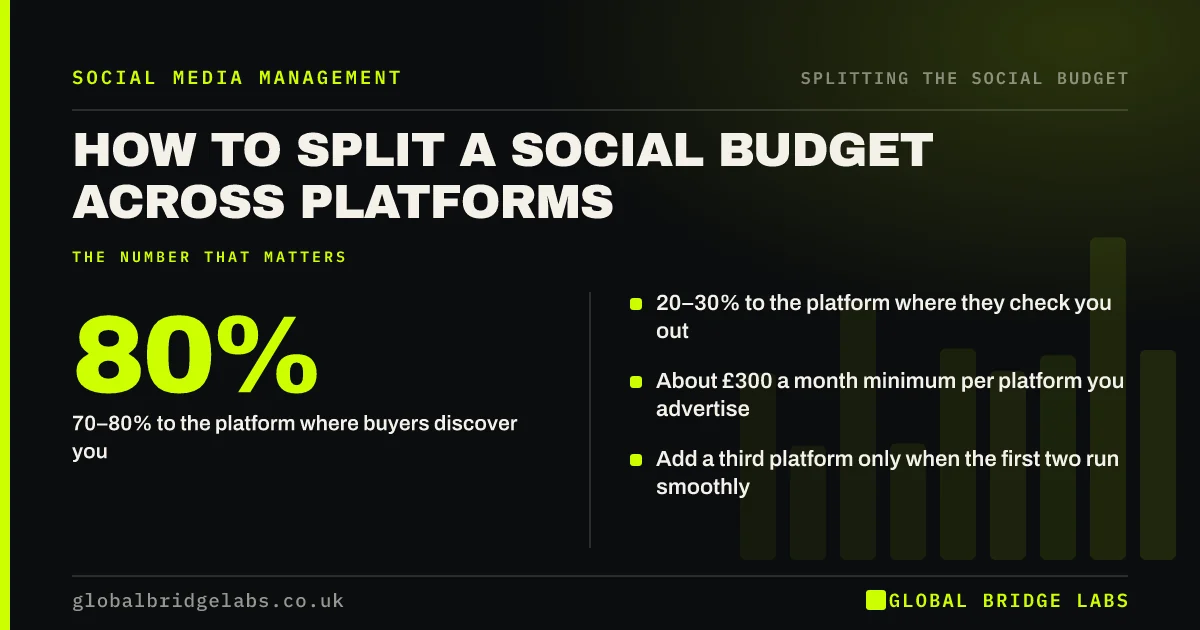
To split a social media budget across platforms, fund one primary platform properly before adding a second. As a GBL rule of thumb, give the primary platform 70–80% and the secondary 20–30%. Never split ad spend so thinly that any platform falls below the level needed to learn, about £300 a month.
- 70–80% to the platform where buyers discover you.
- 20–30% to the platform where they check you out.
- About £300 a month minimum per platform you advertise on.
- Add a third platform only when the first two run smoothly.
Want your platform split checked? Message us on WhatsApp.
Chat on WhatsApp →How do you pick the primary platform?
Choose the platform where your buyers first find suppliers like you and where enquiries already arrive. Ask recent customers, check which platform sends website visitors who enquire, and look at where competitors' ads run longest. The primary platform gets the regular content and the main ad budget.
What does the secondary platform need?
Usually less content and little or no ad spend. Its job is often reassurance: a LinkedIn page for a firm that wins work on Facebook, or Instagram for a service sold through Google. Repurposing the best posts from the primary platform covers most of what it needs.
What does a split look like in pounds?
On an illustrative £1,200 a month: £900 to the primary platform, covering most content and £400 of ads, and £300 to the secondary for repurposed content and occasional small tests. If you want to advertise on both, the total needs to rise so each ad budget stays above about £300.
Send us your platforms and total on WhatsApp and we will discuss your requirements.
Chat on WhatsApp →When should you add another platform?
When the primary platform runs consistently, its cost per enquiry is known, and you have people and budget to add a new one for at least six months. Test the new platform with a defined budget and end date, and judge it on enquiries rather than followers.
What does this look like in practice?
A pattern we see: a small business advertises on four platforms at £75 a month each and decides paid social does not work. Moving the same £300 onto the platform that already brings enquiries usually produces the first readable results within a month or two.
Platform split checklist
- Name your primary and secondary platforms.
- Give the primary 70–80% of the budget.
- Keep each advertised platform above about £300 a month.
- Repurpose content for the secondary platform.
- Test new platforms with a fixed budget and end date.
Next step
List each platform you use with last month's spend and enquiries. Any platform with spend but no enquiries is the first candidate to cut or pause.
Message us on WhatsApp with your list, or book a 30-minute consultation.
Chat on WhatsApp →Sources and further reading
- Meta Business Help Centre · Meta
- LinkedIn Pages best practices · LinkedIn
Frequently asked questions
Should I split my budget equally between platforms?
Rarely. Equal splits usually leave every platform underfunded. Put most of the budget on the platform where buyers discover you and enquiries arrive, and give the second platform enough to look active. Unequal, deliberate splits outperform even, accidental ones. Review it each quarter against your enquiries and sales, and adjust in small steps.
Do Facebook and Instagram need separate budgets?
Not necessarily. Both run through Meta Ads Manager, and one campaign can show ads on both, letting the system find the cheaper results. Separate budgets make sense only when the audiences or offers on each platform are clearly different. Review it each quarter against your enquiries and sales, and adjust in small steps.
How many social platforms should a small business use?
Most small businesses do best with two: one primary platform where buyers discover them and one secondary where buyers check them out. A third is worth adding only when the first two run consistently and you can sustain the extra work for at least six months.
Written by

Global Bridge Labs (GBL) is a UK–Sri Lanka partner for social media, websites and BPO. Everything here comes from client delivery, not theory.